
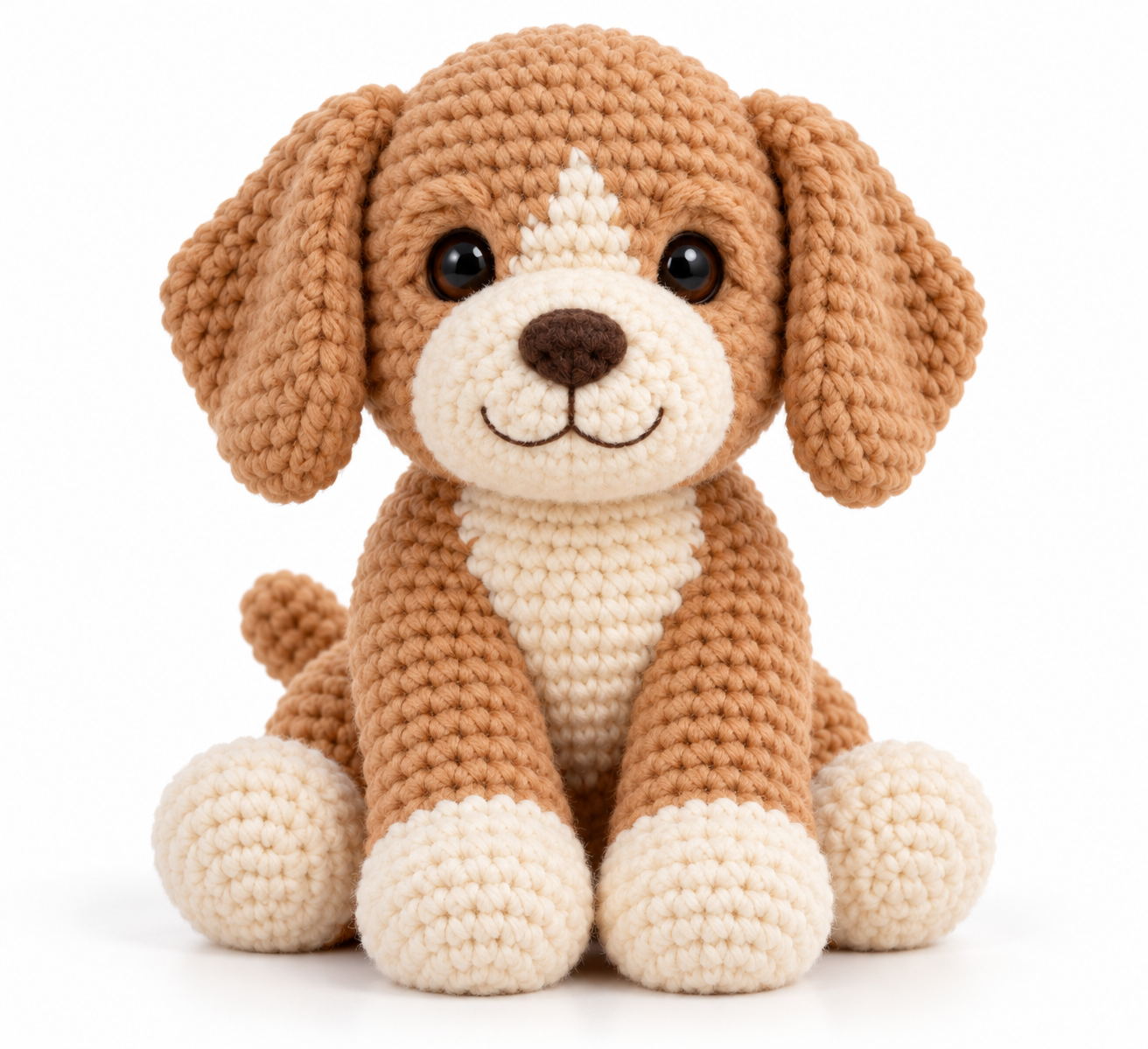
Hand-crocheted plush costs more than machine-made plush because each piece is stitched by hand, not run off a line. This article explains how labor time, yarn choice, and MOQ drive the quote, and what to send a supplier for an accurate price.
Pricing & Sourcing Guide
A hand-crocheted stuffed animal is priced per piece, not per run. The gap against machine-made plush comes from stitched labor time, tighter yarn selection, and an MOQ that grows with trained hands rather than machine speed. Here is how that cost structure works — and what to send a supplier to get a real quote.
The short answer: why crochet plush costs more
If you are comparing quotes for crochet stuffed animals against standard machine-made plush, expect the hand-worked option to sit higher per piece. Machine-made plush spreads a fixed setup across a high-volume run. Crochet-style plush is built stitch by stitch, so the dominant cost is the time a maker spends on each animal — not the number of units a machine can push out in an hour.
That single difference reshapes everything a buyer plans around: the unit price, the minimum order, the lead time, and the way quality is checked. The rest of this article walks through each one so your quote request matches how the work is actually done.
Key takeaways
- Labor time per piece, not machine throughput, is the biggest driver of crochet plush pricing.
- Yarn material and stitch consistency need checking piece by piece, not by sampling a batch.
- Capacity grows with trained hands, so MOQ and lead time work differently from standard plush.
- A precise quote needs size, yarn type, colors, stitch detail, and quantity up front.
How hand labor changes the cost structure
In standard plush production, the cost model is straightforward: fabric is cut, sewn, and stuffed on a line, and the per-unit cost drops as volume rises because setup and machine time are shared across many pieces. Hand-crocheted work does not compress that way. Each animal is a small project.
Time per piece replaces machine throughput
A crocheted body, limbs, and face details are formed stitch by stitch. The cost you pay reflects the hours a skilled maker puts into one animal. When a design has more stitch detail — textured shells, color changes mid-row, shaped ears or snouts — the time per piece rises and the quote follows. This is why two crochet plush designs of the same size can price very differently: the labor content is not the same.
Yarn material and stitch consistency
Yarn choice drives both feel and cost. A softer, finer yarn may take longer to work and can behave differently across colors. Stitch consistency also has to be checked on the finished piece — tension, gauge, and how evenly color changes land. A supplier producing handcrafted-style plush will usually review these at the piece level rather than relying on a single batch sample.
Capacity grows with trained hands
Machine plush capacity scales by adding machines. Crochet-style capacity scales by training and retaining makers. That has a direct effect on planning: a supplier can commit to a large quantity, but the schedule reflects how many skilled hands are available, not how fast a line runs. Lead time and MOQ are therefore negotiated around labor availability, and it helps to discuss volume early.
How MOQ works for handmade-style production
MOQ for hand-crocheted plush is set by the reality of hand work. A supplier has to justify setting up yarn sourcing, color matching, and maker time for a design. Very small runs can be possible in theory but often do not make sense for either side once setup effort is counted.
For buyers sourcing through a custom plush program, the practical starting point is a MOQ of 1,000 pieces — that figure is the baseline for the custom plush stuffed animal program, where designs are built to your specification. Be clear about what it does and does not cover: it is the program baseline for custom plush production generally, not an automatic commitment for every hand-crocheted design. Whether a specific crochet-style design can be produced at that quantity is confirmed per design, because stitch complexity, yarn availability, and color count all change the labor hours behind each piece. If a design needs a different quantity than the baseline, that is negotiated as part of the quote rather than assumed. Confirm feasibility and MOQ together per design before committing.
| Cost factor | Standard machine plush | Hand-crocheted / handcrafted-style plush |
|---|---|---|
| Main cost driver | Machine throughput and shared setup | Labor time per piece |
| How cost scales with volume | Falls as quantity rises | Falls slowly; labor remains the base |
| Quality check focus | Batch sampling | Piece-level stitch and tension review |
| Capacity lever | More machines | More trained makers |
| MOQ logic | Set by line setup | Set by labor and yarn setup |
Comparison is structural, not a price table. Actual quotes depend on your design and order details.
What to send a supplier for an accurate crochet quote
A vague inquiry gets a vague price. Because crochet-style plush is labor-driven, the supplier needs enough detail to estimate time per piece. Prepare the following before you ask for pricing.
- Size: finished height or dimensions. Custom plush stuffed animals are available in sizes from 20–60 cm; state where your target falls.
- Yarn type: the fiber and feel you want (for example, a soft acrylic or cotton blend), plus any skin-sensitivity or safety requirements.
- Colors: a color list or Pantone references, and how many color changes appear in the design.
- Stitch detail: reference images or a sketch showing texture, shell patterns, facial features, and any shaped parts.
- Quantity: your target order volume and whether it is a one-time run or a repeat program.
- Compliance needs: the market you sell into, so the supplier can confirm which standards apply. Custom plush from the program is EN71 / ASTM F963 compliant; for a specific crochet-style design, test requirements are confirmed against that design's materials and your target market, so list both in your first inquiry.
If you are unsure how to frame the request, the custom plush stuffed animal page shows the specification fields a quote request should cover — size, color, design, and quantity — so you can send a complete brief in one go.
Next step: confirm feasibility, then request pricing
Crochet-style plush is priced by the hand work inside each piece. Once you have a size, yarn direction, color list, stitch reference, and quantity, a supplier can tell you whether the design fits a handcrafted-style production run and what the per-piece cost looks like.
Send your design brief and target quantity to Fujian Lequ Wanwan Co., Ltd. through the inquiry form, and ask specifically whether your crochet-style design can be produced within the custom plush OEM/ODM program — and at what MOQ. Feasibility and MOQ are confirmed per design, so include as much detail as you can in the first message.


