
Indoor RC toys are judged on floor surface, turning radius and noise. Here is what to check so a product suits living rooms rather than car parks.
An RC toy sold for indoor use is judged in a living room, not on gravel. The specification that matters is how it behaves on tiles, laminate and short carpet, and how much space it needs to turn.
Match the wheels to the floor
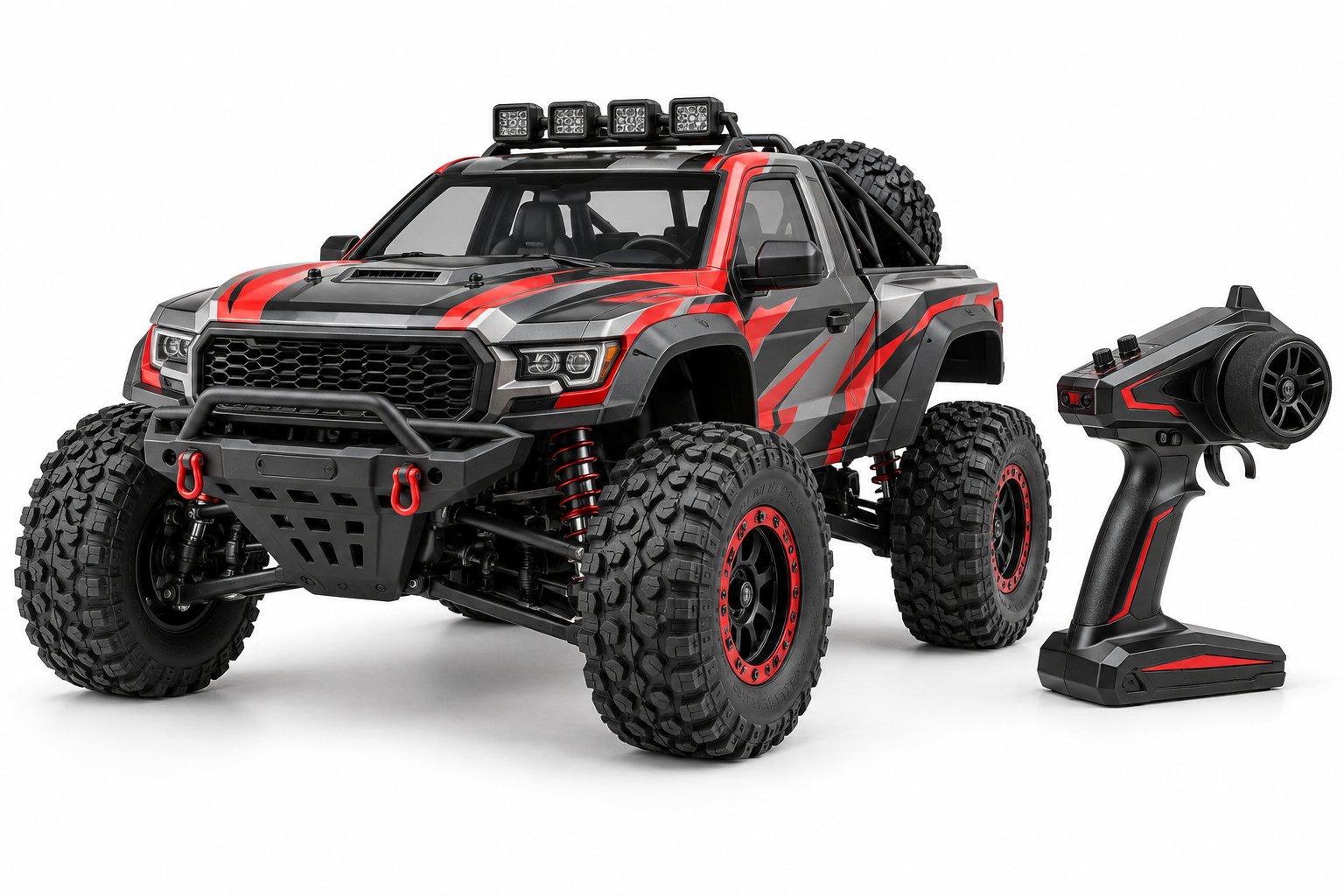
Soft rubber wheels with a deep tread grip laminate and tiles without marking them, and they reduce slipping on smooth surfaces. Hard plastic wheels slide and scratch, which is the fastest way to get a product returned.
Check the turning radius and the chassis height
A low chassis reduces tipping during sharp turns, which matters in a room with furniture. Ask what turning radius the product needs and whether it can spin in place. A stunt car that performs a 360-degree spin needs less floor space than one that has to drive a wide arc.
Think about noise and speed
- Is the top speed suitable for a room, or does it need a garden?
- How loud is the motor at full speed?
- Does the product have a speed setting, or only full power?
Consider the walking robot format
Walking robots are a good fit for indoor play because they move slowly and turn in a small area. Check the foot material: rubber pads reduce slipping on tiles and laminate, and the joints should be moulded from impact-resistant plastic because they take repeated knocks against furniture.
Decide the surface before the product
Write down the intended surface first, then choose the product. Our indoor-oriented options include the RC walking robot with LED lights and the RC stunt car with 360-degree spin. Send us the intended surface and room size and we will confirm which product fits.