
A practical guide for buyers and preschool staff on cleaning solid wood toys with water-based finishes and glued parts, plus honest care claims sellers can print.
Key takeaways for buyers and preschool staff:
- Water-based finishes on solid wood tolerate a damp cloth, not soaking.
- Glued joints and removable parts need spot cleaning, not immersion.
- Care claims on retail packaging should match what the finish can actually withstand.
Wooden toys for preschools and retail shelves share a problem: they get handled constantly, and staff need to clean them without dulling the finish or loosening glued parts. Most cleaning advice online is written for unfinished wood or furniture, not for solid wood toys with a water-based coating. This guide covers methods that protect the finish and glued joints, and explains what care instructions a seller can honestly print on the box.
Why water-based finishes need a different approach
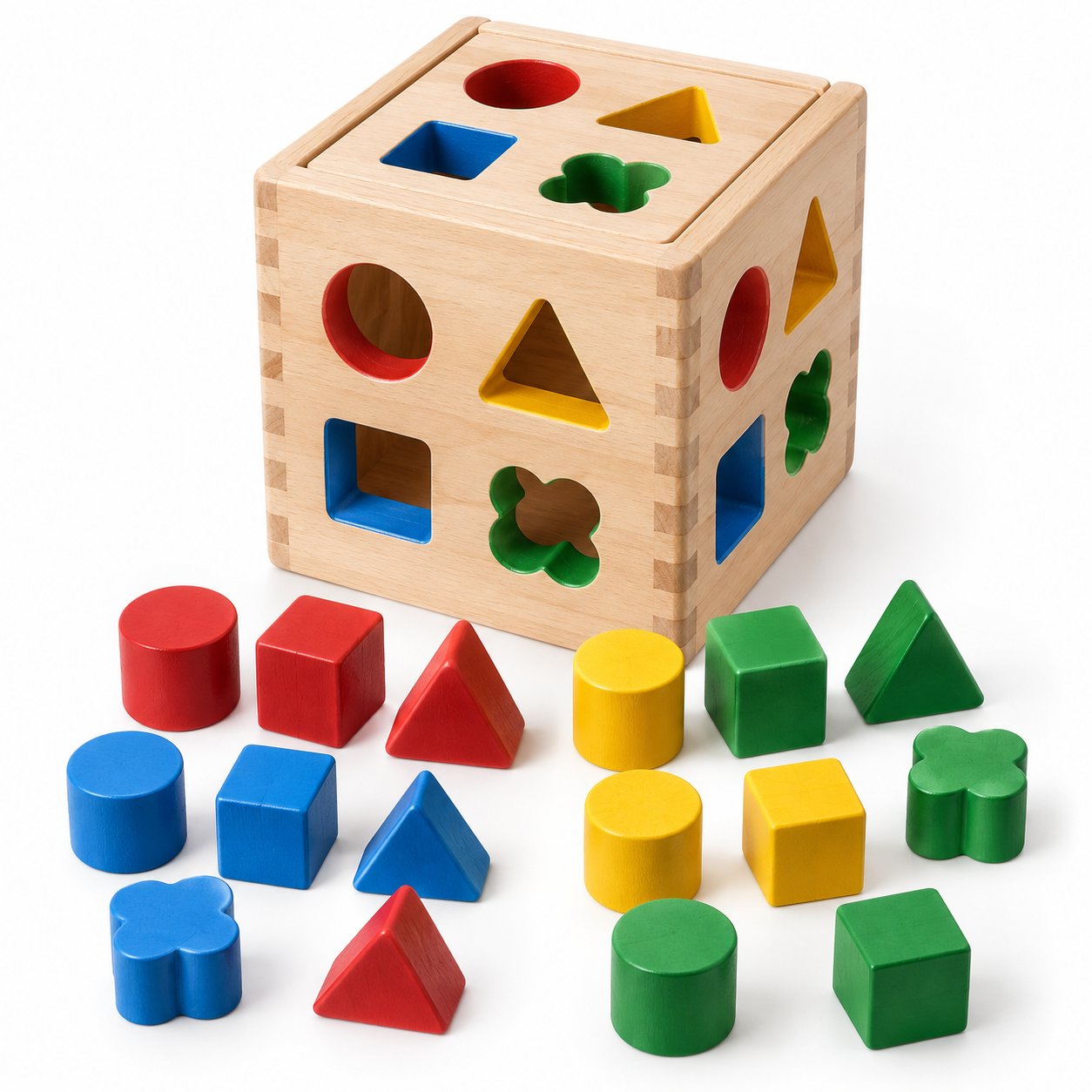
Many solid wood toys, including the Wooden Shape Sorter Cube and Wooden Number Puzzle Board, use a non-toxic water-based finish. This coating forms a thin film on the wood surface. It resists everyday handling but is not waterproof in the way a plastic toy is. Prolonged exposure to standing water, soaking, or harsh chemicals can soften the film, raise the wood grain, or leave a cloudy patch.
Glued parts are the second concern. Joints in toys like puzzle boards or shape sorters rely on adhesive that holds best when kept dry. Repeated soaking can weaken the bond over time, especially at edges where water seeps in.
For buyers writing care instructions, this means the cleaning method must be described in terms of what the finish can tolerate: a damp cloth, mild soap if needed, and immediate drying. Anything beyond that should be flagged as not recommended.
Routine cleaning: the damp-cloth method
For daily or weekly cleaning in a preschool or retail setting, a damp cloth is usually enough. The goal is to lift dust, fingerprints, and light grime without leaving moisture on the surface.
- Wipe with a cloth wrung out in clean water. The cloth should be damp, not dripping. A microfiber cloth works well because it picks up dust without requiring much moisture.
- Use a mild soap only for sticky residue. If a toy has food residue or sticky marks, add a small amount of mild dish soap to the water. Avoid anything labeled as a disinfectant, bleach, or abrasive cleaner unless the supplier has confirmed it is compatible with the finish.
- Dry immediately with a soft towel. Do not let water sit on the surface. Pay attention to edges, corners, and any recessed areas where moisture can collect.
- Air-dry fully before storage. Standing the toy upright or leaving it in a ventilated area for a short time helps any remaining moisture evaporate.
This method works for most solid wood toys with a water-based finish, including shape sorters and puzzle boards. For toys with removable parts, such as the lid on the Shape Sorter Cube, take the lid off before wiping so both surfaces can be cleaned and dried separately.
What to avoid: soaking, harsh chemicals, and rough scrubbing
Some cleaning habits that work for plastic toys can damage wooden ones. These are the main ones to avoid:
- Soaking or submerging. Immersion lets water penetrate joints and any exposed wood grain. Even a short soak can cause swelling or dull the finish.
- Dishwasher or washing machine. The combination of water, heat, and agitation is too aggressive for glued wooden toys.
- Bleach, alcohol, or ammonia-based cleaners. These can break down the finish film or leave a hazy residue. If disinfection is required by a facility's policy, check with the supplier for a compatible method first.
- Abrasive sponges or scrubbing pads. These scratch the finish and remove the protective layer, leaving the wood more vulnerable to moisture.
For preschool staff, it helps to treat wooden toys differently from plastic ones in the cleaning routine. A separate damp-cloth station or a labeled bin for wooden items can prevent them from being tossed into a sink or dishwasher by habit.
Cleaning toys with glued parts and removable components
Toys with glued joints, such as puzzle boards or learning sets, need extra care around seams. The Wooden Montessori Learning Set uses child-safe wood with a non-toxic finish, and like any glued wooden toy, it should be cleaned with a damp cloth rather than washed.
When cleaning around glued seams:
- Wipe along the seam with a barely damp cloth, then dry immediately.
- Avoid letting water pool in the seam or any gap between pieces.
- If a joint feels loose or looks cracked, stop cleaning with water and inspect it. A compromised joint is more vulnerable to moisture.
Removable parts, like the lid on the Shape Sorter Cube, should be cleaned separately and dried before reassembly. This prevents moisture from being trapped between the lid and the box.
What care claims can a seller honestly print?
Care instructions on retail packaging or in a product listing need to match the actual finish. Overstating cleanability can lead to returns or complaints if a buyer follows the instructions and the finish dulls.
Honest care claims for solid wood toys with a water-based finish typically include:
| Claim | What it means in practice |
|---|---|
| Wipe clean with a damp cloth | Surface cleaning only; no soaking or submerging. |
| Do not immerse in water | Keep water off the finish and out of joints. |
| Dry immediately after cleaning | Remove moisture before storage. |
| Use mild soap if needed | Avoid harsh chemicals unless confirmed by the supplier. |
Claims to avoid unless the supplier has confirmed them for the specific finish: "dishwasher safe," "fully waterproof," "sterilizable," or "can be soaked." These are rarely accurate for water-based finishes on solid wood.
For wholesale buyers, ask the supplier for the recommended cleaning method in writing. That documentation can be passed on to retail customers or preschool staff and helps align expectations.
Storage and handling between cleanings
How toys are stored affects how often they need deep cleaning and how well the finish holds up. Damp storage can cause more damage than occasional cleaning.
- Store in a dry, ventilated area. Avoid storing wooden toys in damp basements or near sinks.
- Keep them away from direct heat sources. Radiators or heaters can dry out the wood and stress glued joints.
- Do not stack wet toys. If toys are cleaned in a batch, let them dry completely before stacking or storing.
For preschools, a simple drying rack or a towel-lined tray can help toys air-dry after wiping. This reduces the chance of moisture being trapped in a storage bin.
FAQ
Check with the supplier first. Many disinfecting wipes contain alcohol or other ingredients that can dull a water-based finish. If disinfection is required, ask for a compatible method rather than assuming a standard wipe is safe.
In a preschool setting, a weekly wipe-down with a damp cloth is typical for routine cleaning, with spot cleaning as needed for sticky residue. Retail displays may need less frequent cleaning, but dust should be wiped regularly to keep the finish looking good.
Clean removable parts separately and dry them before putting them back. This prevents moisture from being trapped in enclosed spaces.
That depends on the finish. Some water-based finishes do not require or accept oil. Ask the supplier for guidance before applying any product to the wood.
Next steps for buyers and retail staff
If you are sourcing wooden toys for a preschool or retail range, confirm the cleaning method with your supplier and include it in your care instructions. For questions about the finishes on products like the Shape Sorter Cube, Number Puzzle Board, or Montessori Learning Set, you can view the product details or contact the supplier directly.


