A sourcing guide for B2B buyers on the difference between 'plush' and 'stuffed animal'—how the terms overlap, where usage diverges, and why precision matters in specs, customs descriptions, listings, and marketing copy. Includes a terminology checklist for RFQs.
If you’re writing a product spec, a customs declaration, or a listing for an online marketplace, mixing up “plush” and “stuffed animal” can cost you time and money. These two terms are often used interchangeably in casual conversation, but in B2B sourcing, they are not synonyms. This guide explains how the terms overlap, where usage differs, and why precision matters—so you can communicate clearly with suppliers, customs officials, and your customers.
Key Takeaways
- Plush refers to a type of fabric (a soft, raised-pile textile) and by extension to products made from it.
- Stuffed animal describes a finished product: a toy shaped like an animal and filled with stuffing.
- In practice, a “plush stuffed animal” is a stuffed animal made from plush fabric—the terms are not mutually exclusive.
- Regional usage varies: “plush” is common in manufacturing and retail, while “stuffed animal” is more colloquial in North America; “soft toy” is preferred in the UK and some other markets.
- Precision in terminology affects spec sheets, customs HS codes, product listings, and marketing claims—clear language reduces disputes and delays.
What Is the Difference Between a Plush and a Stuffed Animal?
The short answer: plush is primarily a material term, while stuffed animal is a product term. But the line blurs because plush fabric is the most common material for stuffed animals. Let’s break it down.
Plush (noun) refers to a textile with a cut or loop pile that gives it a soft, fuzzy hand feel. Common examples include minky, fleece, and faux fur. When used as an adjective (“plush toy”), it describes a toy made from this fabric. In the toy industry, “plush” often serves as shorthand for “plush toy” or “plush animal.”
Stuffed animal is a compound noun: an animal-shaped toy filled with soft material (polyester fiberfill, beans, or foam). A stuffed animal can be made from plush, cotton, or other fabrics—though plush is by far the most common.
So, a plush toy is not necessarily a stuffed animal (e.g., a plush ball), and a stuffed animal is not necessarily plush (e.g., a knitted stuffed bear). But in most commercial contexts, they refer to the same category of product.
A Note on Regional Usage
Terminology shifts by market:
- North America: “Stuffed animal” is the everyday term; “plush” is used in retail and manufacturing (e.g., “plush toys”).
- UK and Ireland: “Soft toy” is the standard term; “stuffed animal” is understood but less common.
- Australia and New Zealand: “Soft toy” and “plush toy” are both used.
- Asia (manufacturing hubs): “Plush toy” is the default in supplier communications.
If you’re sourcing from a manufacturer like Fujian Lequ Wanwan Co., Ltd., using “plush toy” in your RFQ aligns with industry norms and reduces confusion.
Where Precision Matters in B2B Sourcing
Buyers writing specs, customs documents, and marketing copy must choose terms carefully. Here’s why.
1. Specification Sheets and RFQs
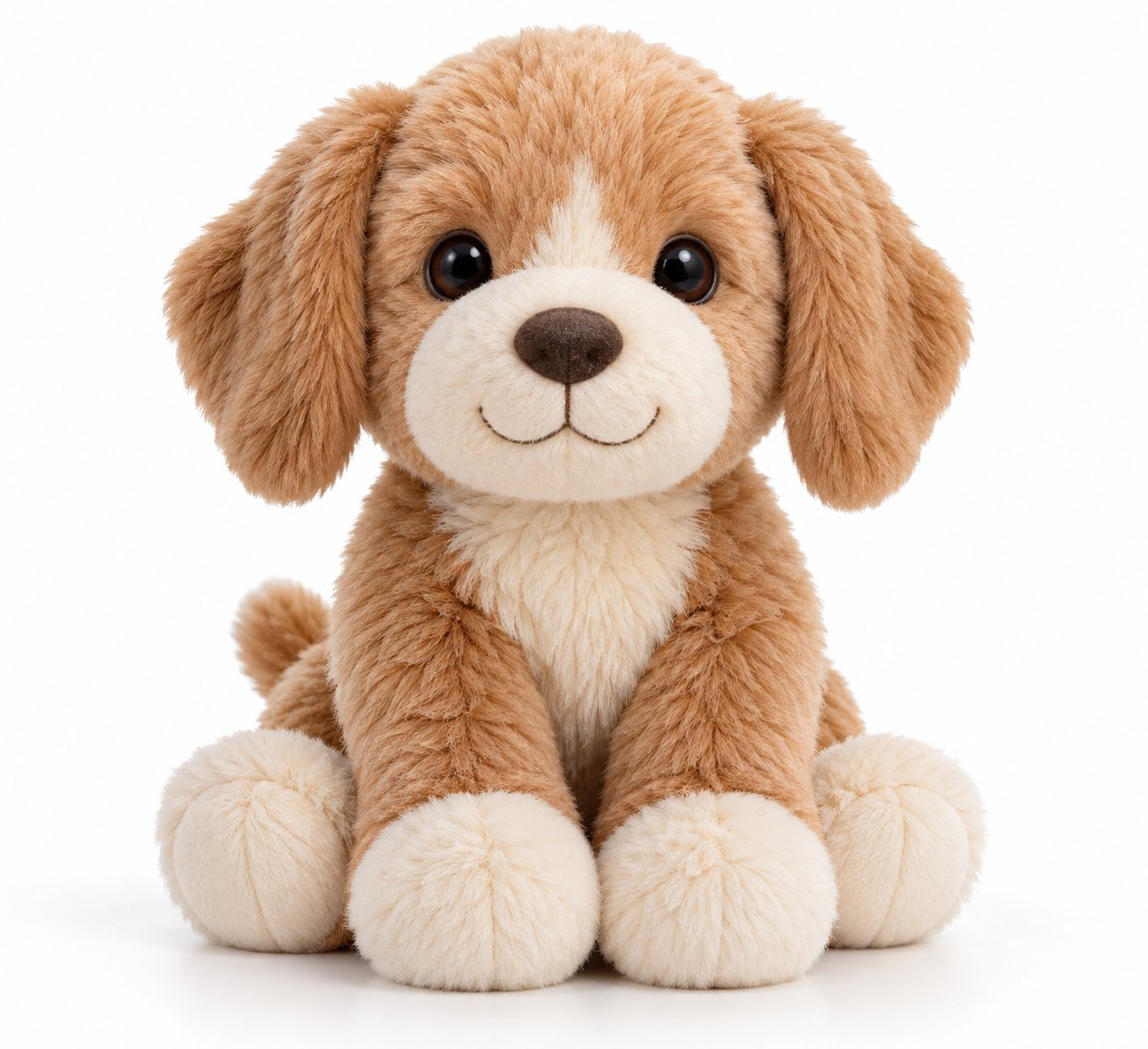
When you request a quote, your terminology sets expectations. “Plush” signals a fabric requirement (e.g., short-pile plush, hypoallergenic filling), while “stuffed animal” signals a product form (animal shape, size, filling). Combining both—“plush stuffed animal”—gives suppliers a complete picture. For example, our Custom Plush Stuffed Animal with Hypoallergenic Filling is described with both terms to cover material and product type. It uses soft plush fabric, hypoallergenic filling, child-safe materials, and durable stitching; available in sizes 20–60 cm with MOQ 1000 pcs.
If you specify only “stuffed animal,” a supplier might quote a lower-cost fabric; if you specify only “plush,” they might quote a non-animal shape. Precision avoids mismatched samples.
2. Customs and HS Codes
Customs authorities classify goods by product type, not fabric. Stuffed animals typically fall under HS heading 9503 (toys), while plush fabric alone falls under textile chapters (e.g., 6001 for pile fabrics). Misclassifying a finished stuffed animal as fabric can lead to wrong duty rates, delays, or penalties. Always describe the finished product clearly: “plush stuffed animal toy” or “stuffed toy of plush fabric.”
3. Product Listings and Marketplaces
On Amazon, Etsy, or your own site, keywords drive discovery. “Stuffed animal” is a high-volume search term in the US, while “plush” attracts buyers looking for soft toys. Using both in titles and descriptions can improve visibility. But avoid keyword stuffing—write for humans first. For example: “Soft plush stuffed animal, 30 cm, hypoallergenic filling—perfect for gifting.”
4. Marketing Claims and Compliance
Terms carry legal weight. Calling a product “plush” when it’s made of cotton could mislead buyers. Conversely, “stuffed animal” implies a filling, so if you’re selling an unstuffed shell, use “plush animal cover” instead. Also, note age labeling: our plush stuffed animals are age 0+ and comply with EN71 / ASTM F963. Clear terminology supports accurate safety messaging.
Terminology Checklist for RFQs
Use this checklist to keep your inquiries precise and comparable:
RFQ Terminology Checklist
- Product type: stuffed animal / plush toy / soft toy (choose based on target market).
- Material: specify fabric type (e.g., short-pile plush, minky) and filling (e.g., polyester fiberfill, hypoallergenic).
- Size: give dimensions (e.g., 20–60 cm) and measure seated or standing height.
- Compliance: list required standards (e.g., EN71, ASTM F963) and age grading.
- Packaging: poly bag, display box, or other; specify quantity per carton.
- MOQ: state your target (e.g., 1000 pcs) to filter suppliers.
- Customization: note OEM/ODM needs, logo placement, and artwork.
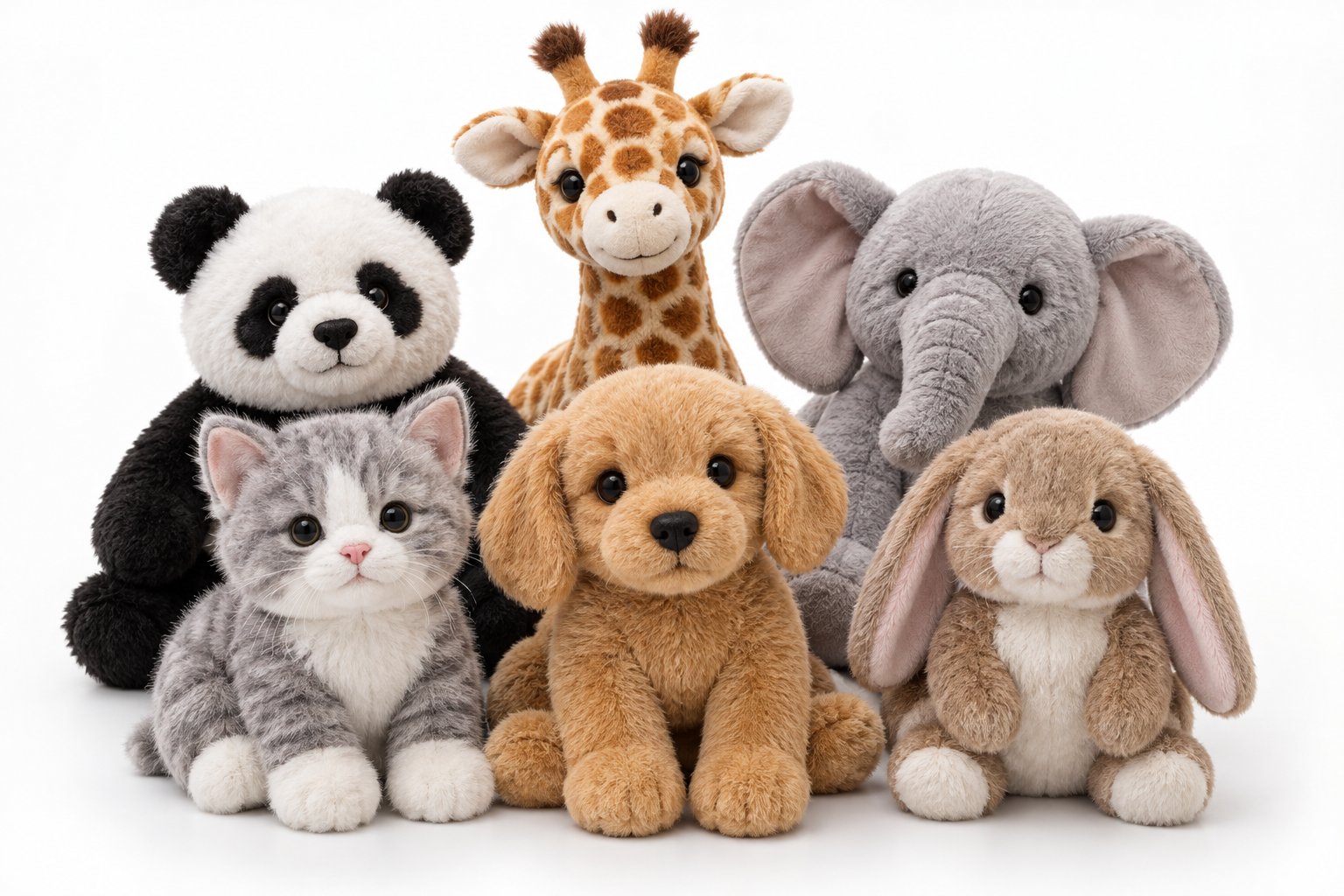
For larger assortments, our Plush Animal Assortment in Counter Display Box includes six species per display box, short-pile plush with polyester fibre filling, embroidered facial features, double-stitched seams, 18 cm seated height, MOQ 1000 packs, and 12 boxes per carton. This product is also EN71 / ASTM F963 compliant.
Frequently Asked Questions
A: In most consumer-facing contexts, yes—both terms are understood. But for customs and technical specs, use the precise term: “stuffed animal” for the finished toy, “plush” for the fabric.
A: It depends on your market. In the US, “stuffed animal” has higher search volume; “plush” is also popular. Use both naturally in titles and descriptions to capture both audiences.
A: Then “plush toy” is the accurate term. “Stuffed animal” specifically implies an animal shape.
A: It helps. Specifying “plush stuffed animal” clarifies both the material and the product type, reducing the chance of miscommunication.
Next Steps
Ready to source plush stuffed animals with confidence? Fujian Lequ Wanwan Co., Ltd. manufactures custom plush toys with hypoallergenic filling, child-safe materials, and compliance with EN71 / ASTM F963. Whether you need a single design or an assortment, we support OEM/ODM and offer flexible sizing (20–60 cm) with MOQ 1000 pcs. View our custom plush stuffed animal or explore the display pack assortment to see specifications. For tailored advice, contact our team with your requirements—we’ll help you choose the right terminology and product for your market.