
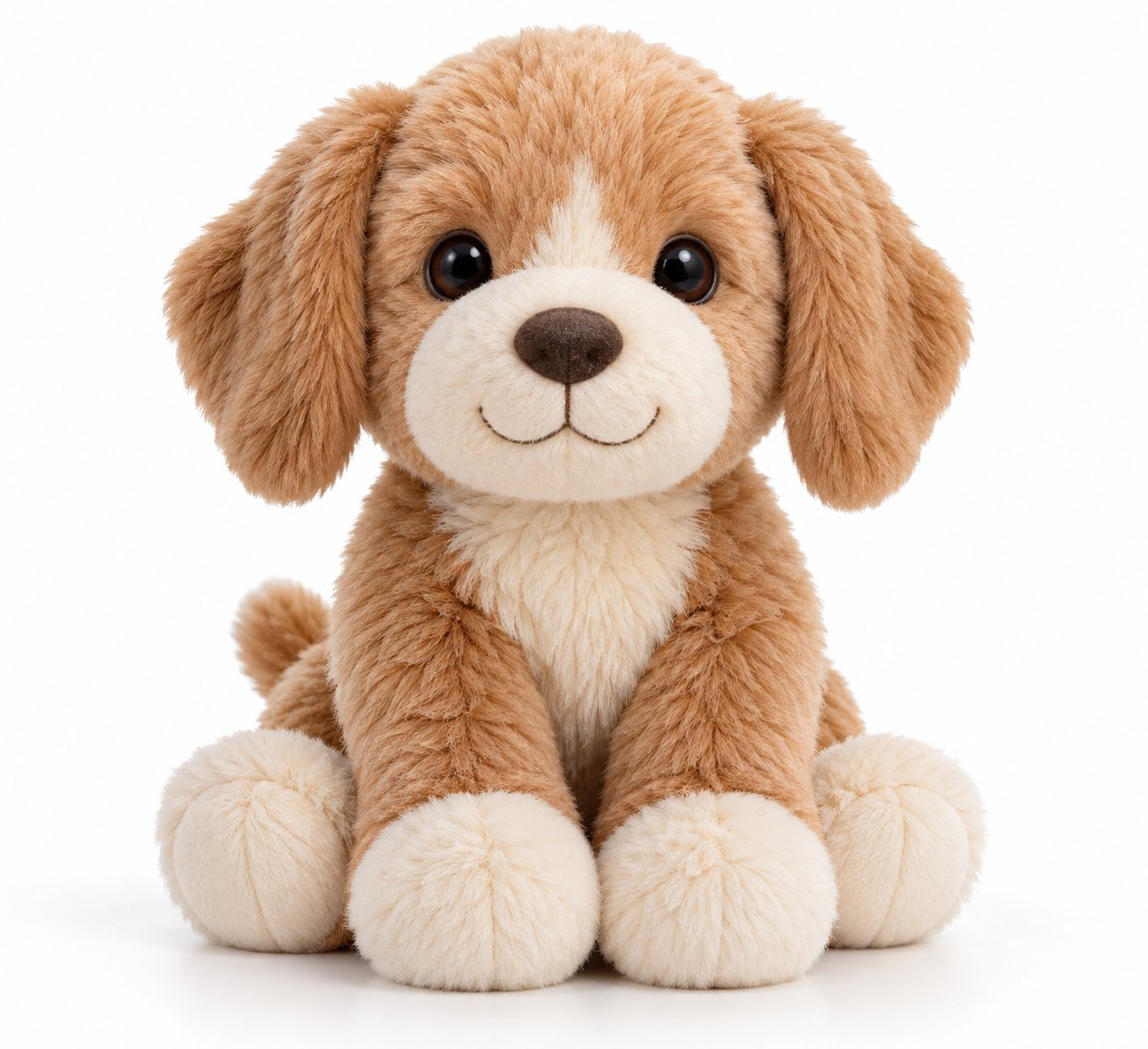
Stuffed animal fur is not animal hair—it's a man-made pile fabric (faux fur) produced on knitting or weaving machines. This article explains the material and gives buyers a verification checklist for fiber composition, pile density, shedding, seams, and filling specifications before ordering.
Buyer's Guide
Stuffed animal fur is not animal hair. It is a man-made pile fabric—commonly called faux fur—produced by knitting or weaving machines that lock fibers into a backing cloth and then brush or cut the surface to create a soft pile. The material you see and touch on a plush toy is a textile, not a hide. For buyers, that distinction matters because the outer fur layer is specified, tested, and verified like any other fabric, not like an animal by-product.
This article answers the material question directly and gives you a practical checklist for verifying the fur layer before you place an order. It focuses on the outer fabric and how to confirm what you are buying. If you are choosing between fabric types for different parts of a plush toy, see our separate guide on plush fabric types.
What this article covers
- Why stuffed animal fur is faux fur, not animal hair
- How faux fur pile fabric is made
- How to verify fiber composition disclosure
- How to check pile density and shedding
- How to inspect seams and stitching
- How to confirm filling and outer fabric specifications
- FAQ for buyers
Why Stuffed Animal Fur Is Faux Fur, Not Animal Hair
Commercial plush toys are built from textiles. The outer surface is a pile fabric: a backing cloth with a raised surface of fibers. Those fibers are synthetic, produced from man-made polymers, and are attached to the backing either by knitting (the pile is knitted into the backing) or by weaving (pile yarns are woven in and then cut). Neither process uses animal hair.
The word “fur” in the trade is descriptive—it refers to the look and feel of the pile, not to its origin. When a buyer asks “what is stuffed animal fur made of,” the accurate answer is that it is a manufactured pile fabric, often called faux fur or plush fabric. The product record for a custom plush stuffed animal with hypoallergenic filling, for example, lists the outer material simply as soft plush fabric, with hypoallergenic filling inside. No animal fiber appears in that specification.
This matters for compliance and for product safety. A faux fur outer layer can be specified, sampled, and tested as a textile. You can ask for fiber composition, pile height, backing weight, and colorfastness in the same way you would for any other fabric. You can also confirm that the finished toy meets the safety standards you require, such as EN71 or ASTM F963, without dealing with animal-derived material declarations.
How Faux Fur Pile Fabric Is Made
Faux fur for plush toys is produced on industrial knitting or weaving machines. The process has three broad stages:
- Pile formation. Fibers are knitted or woven into a backing substrate. The density of the pile—how many fibers per unit area—determines how full and soft the surface feels.
- Surface finishing. The pile may be brushed, sheared, or heat-set to create a uniform length and a particular hand-feel. Some finishes produce a short, smooth pile; others create a longer, shaggier look.
- Backing and stabilization. The back of the fabric may be treated or laminated to lock fibers in place and reduce shedding. This backing is what gives the fur dimensional stability when the toy is cut and sewn.
Because the pile is mechanical rather than natural, its properties are predictable. A well-made faux fur will have consistent pile height across the roll, a backing that does not crack when folded, and fibers that stay anchored during normal handling. Those are the characteristics you can check in a sample.
Buyer Verification Checklist for Stuffed Animal Fur
Before you approve a bulk order, verify the fur layer against the specification. The checklist below covers the points that most often cause disputes: undisclosed fiber content, patchy pile, shedding, and seam failure.
1. Ask for Fiber Composition Disclosure
Request the fiber composition of the outer pile fabric in writing. The supplier should be able to state the generic fiber family and the nominal percentages used in the pile and backing. You do not need to accept a vague description such as “soft plush”; ask for the composition that will appear on the production specification.
Confirm that the disclosed composition matches the sample you approve. If the supplier cannot provide a composition statement, treat that as a gap in the specification, not as a minor detail. Composition affects hand-feel, durability, and how the fabric takes color, so it belongs in the purchase order.
2. Check Pile Density and Shedding
Pile density is best judged by feel and by sight under light. A dense pile looks full and does not show the backing when you part the fibers. A sparse pile looks thin and may reveal the backing cloth at seams or high-wear areas.
For shedding, perform a simple rub test on the sample: rub the pile firmly with a light-colored cloth or your finger and check for loose fibers. Some surface fuzz is normal on a new fabric, but continued shedding after a light rub suggests the pile is not well anchored. Ask the supplier how the backing is stabilized and whether the fabric is finished to reduce fiber release.
3. Inspect Seams and Stitching
The fur layer is only as good as the seams that hold it. Check the sample for secure seams and durable stitching along the main seams, around the eyes and nose, and at stress points such as arm and leg joints. Look for skipped stitches, loose thread ends, and gaps where the pile pulls away from the seam.
A well-made plush toy will have seams that lie flat and do not pucker. The product record for a custom plush stuffed animal with hypoallergenic filling describes child-safe, huggable fabrics with durable stitching and secure seams—those are the characteristics to confirm on the sample, not just on the spec sheet.
4. Confirm Filling and Outer Fabric Specifications
The outer fur and the filling are specified together because they determine how the toy feels and how it is cleaned. Ask for the filling specification in writing: the product record for the custom plush stuffed animal lists hypoallergenic filling, which is a relevant point for buyers targeting sensitive users or gift markets.
Also confirm the finished toy’s dimensions and age grading. The same product record lists a size range of 20–60 cm, age 0+, and EN71 / ASTM F963 compliance. Those are the parameters to verify against your order, along with the packaging format (poly bag plus export carton) and the minimum order quantity of 1000 pieces.
Key takeaway: The fur on a stuffed animal is a pile fabric, not animal hair. Verify it as a textile: get the fiber composition in writing, check pile density and shedding on a sample, inspect seams and stitching, and confirm that the filling and outer fabric are specified together on the purchase order.
What to Put in Your Purchase Order
A clear purchase order reduces the risk of substitution. The table below summarizes the fur-related items to specify and what to check on the sample.
| Specification item | What to ask for | What to check on the sample |
|---|---|---|
| Fiber composition | Written composition of pile and backing, with nominal percentages | Matches the approved sample; no vague “plush” description |
| Pile density | Description of pile height and density, or a retained sample | Pile looks full; backing not visible when parted |
| Shedding | Finishing method and backing stabilization | Light rub test shows minimal loose fiber |
| Seams and stitching | Stitch type and seam construction at stress points | No skipped stitches or gaps; seams lie flat |
| Filling | Hypoallergenic filling specification | Filling evenly distributed; toy holds shape |
| Safety compliance | EN71 / ASTM F963 compliance for the finished toy | Confirm test reports cover the exact product and size |
Use this table as a checklist when reviewing a sample and drafting the purchase order.
For custom programs, the same product record notes that the plush toy is customizable in size, color, and design, with OEM/ODM available. If you are developing a custom plush stuffed animal, build the fur specification into the sampling stage so that the approved sample and the bulk order share the same composition and pile characteristics.
FAQ for Buyers
Is stuffed animal fur real animal hair?
No. Commercial stuffed animal fur is a man-made pile fabric, commonly called faux fur. It is produced on knitting or weaving machines from synthetic fibers attached to a backing cloth. The term “fur” describes the texture, not the origin.
How can I tell if the fur will shed?
Do a light rub test on the sample with a light-colored cloth. Some surface fuzz is normal, but continued fiber release after a firm rub suggests the pile is not well anchored. Ask how the backing is stabilized and whether the fabric is finished to reduce shedding.
What should be disclosed about the filling?
Ask for the filling specification in writing. For products positioned as hypoallergenic, confirm that the filling is described as hypoallergenic and that the outer fabric is specified alongside it. The custom plush stuffed animal in our product record lists hypoallergenic filling, age 0+, and EN71 / ASTM F963 compliance; verify these against your order.
What is the minimum order for a custom plush stuffed animal?
The product record lists a minimum order quantity of 1000 pieces, with size customizable from 20–60 cm and customization available in size, color, and design. OEM/ODM is available. Confirm current terms with the supplier for your specific program.
If you are verifying a plush supplier for an upcoming order, start with the fur specification: composition, pile, seams, and filling. A supplier who can document those points in writing is easier to audit and easier to hold to a consistent standard across shipments.


