
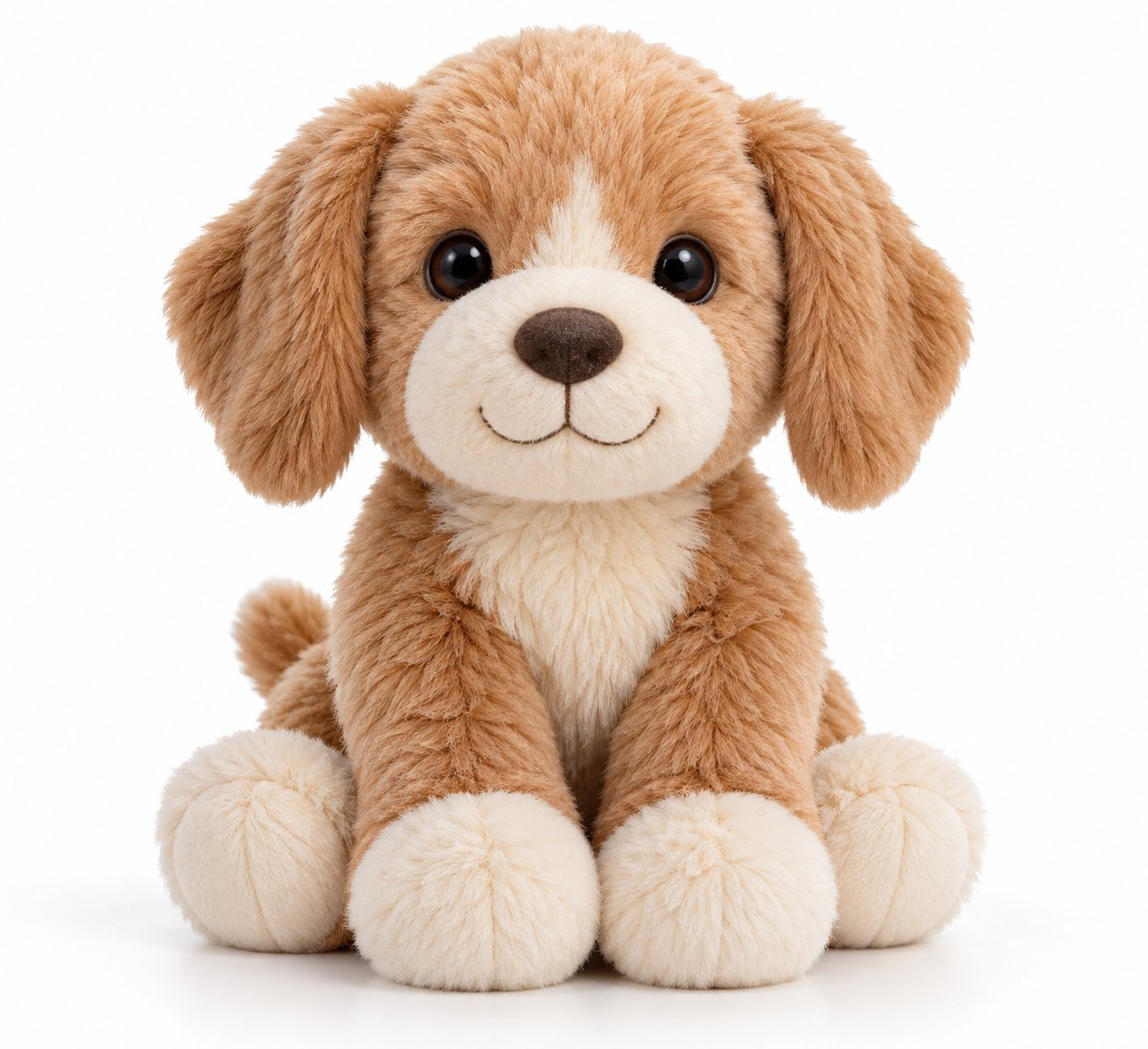
Turning a dog photo into a custom plush toy involves more than matching fur color. This guide walks through the real production process—reference photos, design and prototyping, sample approval, production, and safety testing—and explains what retail and gift buyers should confirm with a manufacturer before committing to an order.
A stuffed animal of your dog starts with a photo, but the photo is only the beginning. Between that image and a finished, shelf-ready plush sits a sequence of design, prototyping, sample approval, production and safety work. For consumers commissioning a single keepsake and for gift buyers sourcing a custom pet plush line, understanding that sequence is what separates a smooth order from a costly surprise.
Key takeaways
- A custom dog plush is built from structured reference photos plus design choices—coat, markings, pose and size—not from one picture alone.
- The process runs through design, prototyping, sample approval, production and safety testing. Approval of the physical sample is the buyer's main control point.
- For retail and gift buyers, confirm MOQ, materials, age grading, certification (EN71/ASTM F963), packaging and size range before ordering.
- Our Custom Plush Stuffed Animal with Hypoallergenic Filling is offered from MOQ 1,000 pcs in sizes 20–60 cm, age 0+, OEM/ODM available.
Why a photo alone isn't enough
People searching for how to get a stuffed animal of their dog usually imagine sending one photo. In practice, a plush replica is a set of design decisions: the coat length and color, the placement of markings, ear shape, muzzle proportions, eye style and body pose. A single front-facing snapshot leaves most of these unclear. Good reference material shows the dog from several angles and in different light, so the designer can interpret markings and proportions rather than guess.
This is where custom pet plush work differs from a standard catalog toy. The design team is translating a specific animal, not selecting from a stock pattern. The clearer the reference set and the earlier the buyer or pet owner settles priorities—exact marking placement versus a friendlier, simplified look—the fewer revisions the sample needs.
The real process, step by step
Any custom dog stuffed animal follows the same broad pipeline. The detail and depth differ by order size and complexity, but the stages are consistent.
-
Brief and reference photos
The buyer or pet owner supplies photos plus a written brief: dog breed or mix, coat and marking notes, size, pose, intended use (gift, retail, promotional) and age group. For OEM/ODM programs this brief is the foundation of the whole build.
-
Design and pattern development
The design team turns the references into a pattern—a flat template for each fabric piece—and a materials plan covering plush fabric, stuffing, stitching and seam placement. In-house design and engineering teams work from the brief to a documented design.
-
Prototyping
A prototype is sewn from the pattern so the design can be judged in three dimensions. This is where muzzle proportions, ear set and marking placement get tested against the reference. Prototyping is iterative: a first sample often reveals adjustments that flat drawings cannot.
-
Sample approval
The buyer receives a physical sample and signs off—or requests changes. Approval should cover the actual article: fabric hand-feel, color, size, stitching, stuffing firmness, labeling and packaging. Once approved, the sample becomes the reference standard for production.
-
Production
Approved samples move to the line, where fabric is cut, sewn, filled, closed and trimmed. Quality control checks seams, fill and finish against the approved standard. Durable stitching and secure seams matter here because a plush that splits at a seam fails both the buyer and the end user.
-
Safety testing and documentation
Depending on the target market, the finished product is tested against applicable toy safety standards. EN71 (Europe) and ASTM F963 (US) are the relevant benchmarks for plush toys; the buyer should confirm which applies and that the testing covers the actual product and materials being shipped.
-
Packing and shipment
Finished plush is packed—for example in poly bags within export cartons—and prepared for shipment. Packaging choices affect retail presentation, protection in transit and how the product is presented on shelf.
What retail and gift buyers should confirm with a manufacturer
For a consumer commissioning one keepsake, the sample is the main checkpoint. For a retail or gift buyer sourcing custom pet plush at scale, the questions go wider. Confirm each of the following before placing an order, because these are the points that most affect shelf-readiness, compliance and reorder consistency.
| What to confirm | Why it matters | What to ask |
|---|---|---|
| MOQ | Determines whether a custom run fits your volume and budget | What is the minimum order quantity for a custom design? |
| Materials | Affects feel, durability and allergy-sensitive buyers | What plush fabric and filling are used? Is hypoallergenic filling available? |
| Age grading | Drives labeling, testing and market eligibility | What age group is the product graded for? |
| Certification | Required for legal sale in many markets | Does the product meet EN71 / ASTM F963, and which applies to my market? |
| Size range | Affects cost, display and shipping | What sizes are available, and can size be customized? |
| Packaging | Affects retail presentation and transit protection | What packing format is standard, and can it be customized? |
| Sampling | Defines the reference standard for production | Is a physical sample provided for approval before production? |
Materials and safety grading
Plush fabric and filling are the two material decisions that shape both feel and compliance. Hypoallergenic filling addresses buyers who are cautious about allergens. Durable stitching, secure seams and a smooth surface support the age-0+ grading many plush lines carry—meaning the product is designed to be safe for the youngest users, which in turn demands attention to small parts, seam integrity and surface finish. Confirm that the age grading and the safety testing match the exact product and materials you approve, since a certification or test report covers what it was issued for.
Size and MOQ
Size is a design and commercial variable. Custom sizes from 20 to 60 cm allow the same design to serve a small keepsake gift and a larger retail display piece. MOQ defines the threshold at which a custom run becomes practical: our custom plush stuffed animal for gifting is offered from MOQ 1,000 pcs, which suits retail and gift programs rather than single-piece commissions. Buyers planning a single custom dog stuffed animal should confirm the manufacturer's sampling and one-off policy, since MOQ-based production and individual commissions are different services.
Packaging
Standard packing—poly bag plus export carton—protects the product in transit. For gift and retail channels, confirm whether branded or display packaging can be added and how packaging affects the product's presentation and labeling. Packaging is often where a compliant product becomes a shelf-ready one.
Where a manufacturer's capability actually shows
Custom pet plush work concentrates risk in two areas: whether the sample matches the brief, and whether production matches the sample. A manufacturer with in-house design, engineering and quality control can keep those two stages connected. Fujian Lequ Wanwan Co., Ltd. operates a 12,000 sqm facility with 180 staff and runs OEM/ODM sampling from brief to approved sample, with design, engineering and quality control teams handling the transition to production. That structure is relevant to buyers because it means the brief, the prototype and the production standard are managed by the same organization rather than handed between separate vendors.
Commissioning your first custom dog plush
The route from a dog photo to a finished stuffed animal is well defined: reference material, design and pattern, prototype, approved sample, production, safety testing and packing. Whether you are a consumer commissioning a keepsake or a buyer sourcing a custom pet plush line, the sequence and checkpoints are the same. Start with clear references and a written brief, and treat the physical sample as your decision point. For retail buyers, lock down MOQ, materials, age grading, certification and packaging before production begins, and confirm that any certification covers the exact product you approve.
To review the base specification—hypoallergenic filling, age 0+, customizable 20–60 cm sizing, MOQ 1,000 pcs, EN71/ASTM F963 compliance and OEM/ODM availability—see the product page.
Frequently asked questions
Can I order just one stuffed animal of my dog?
Our custom plush line is produced from a MOQ of 1,000 pcs, which is set up for retail and gift programs. If you need a single keepsake, ask the manufacturer directly about sampling or one-off options, since that is a separate service from MOQ-based production.
What photos should I provide?
Provide several angles and clear views in good light so coat, markings, ear shape and muzzle proportions are visible. There is no fixed count; the goal is enough views that the designer can interpret the dog accurately rather than guess.
Is the plush safe for young children?
The custom plush stuffed animal for gifting carries an age-0+ grading and uses a smooth surface, durable stitching, secure seams and hypoallergenic filling. Confirm that the age grading and EN71/ASTM F963 testing apply to the exact product and materials you approve.
Which safety standard applies to my market?
EN71 is the benchmark for Europe and ASTM F963 for the US. Confirm with the supplier which standard applies to your destination and that it is tested for the finished product you are ordering.


