
Toy-grade drones need batteries that are safe, simple to charge, and backed by spare-pack supply for retail. This buying guide explains what "best" means for a toy drone program, compares it with hobby racing packs, and gives a five-point RFQ checklist.
"What is the best drone battery" has no universal answer. A racing pilot judged a LiPo pack on discharge rate; a toy program manager should judge it on three other things: whether the pack is safe for a child-facing product, whether its specs are declared in writing on the quotation, and whether the buyer can restock spare packs after the first retail order. For toy-grade models, the "best" battery is the one that ships with clear declared values, charges from a standard USB source at home, and can be replenished in a second shipment.
- Best for a toy program means safe, fully declared, USB-charged, and supportable with spare packs — not highest discharge rating.
- Write the five battery requirements into the RFQ: declared voltage, USB charging, flight-time claim, spare-pack supply, compliance paperwork.
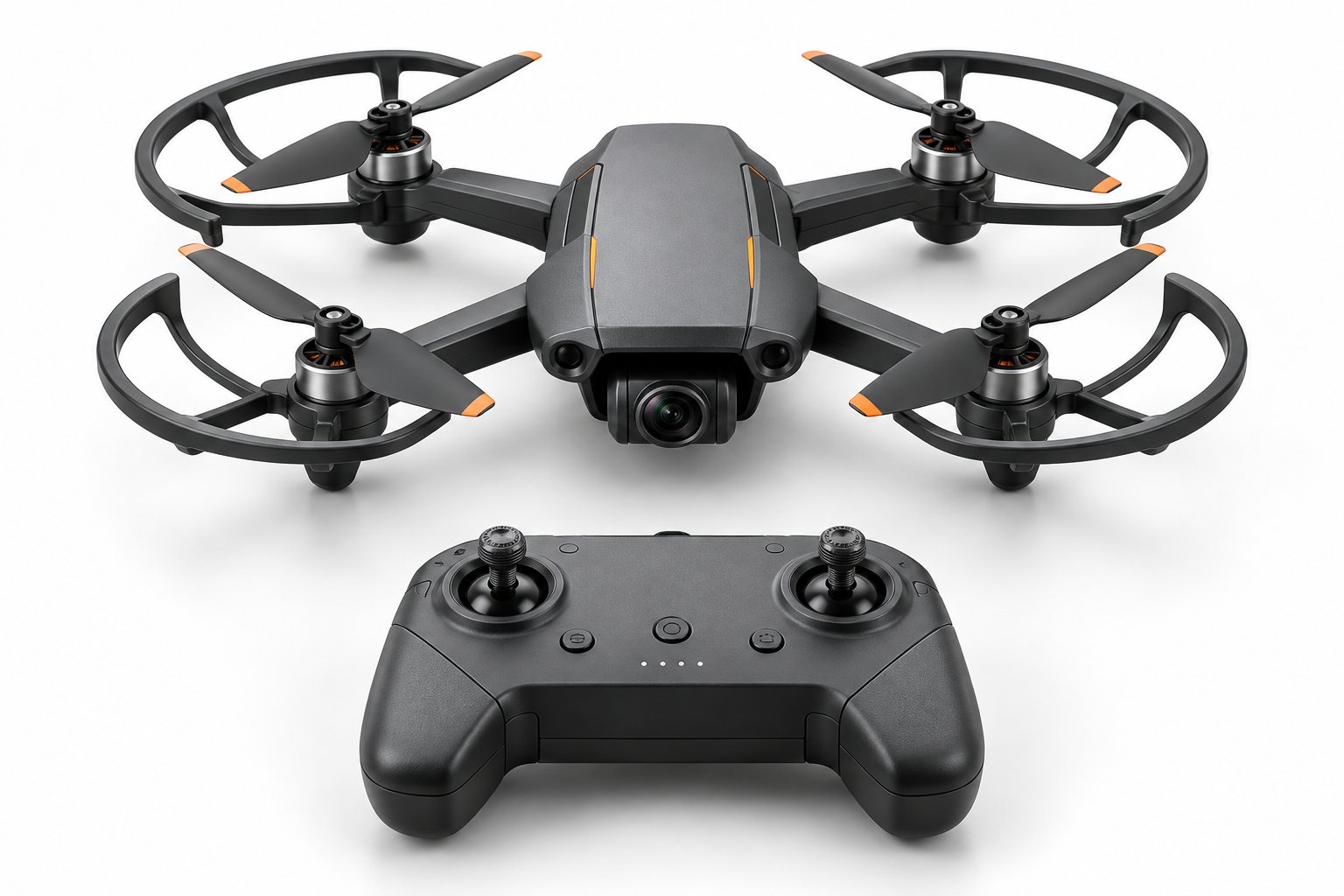
- Example from our Mini RC Drone with 720p Camera and Altitude Hold: 3.7 V rechargeable battery, USB charging, about 8 minutes flight time, ages 8+.
The rest of this article explains how to specify that battery, what to demand from the factory, and what to verify before you sign the purchase order.
What "best" means for a toy-grade drone battery
A toy-grade drone is sold to retailers, distributors and promotion buyers, and ultimately used by consumers, often children aged 8 and up. The battery decision therefore has to answer a different set of questions than a hobby-grade pack.
- Safety and child-use limits. The pack must be designed for the age group and the declared compliance standard. For our product the battery is part of a model declared compliant with EN71 and ASTM F963, aimed at ages 8+.
- Simple, standard charging. End users should not need a special LiPo charger. USB charging lets them use a phone charger or computer port — one less after-sales complaint.
- Supplier-declared specs. The quotation should state the voltage and the flight-time claim the factory is willing to print, not just "long battery life."
- Spare-pack supply. A retailer that cannot order replacement packs will field complaints it cannot resolve.
- Compliance paperwork. The battery and the model need documentation that matches the standard on the box.
For the Mini RC Drone with 720p Camera and Altitude Hold, the listed battery is a 3.7 V rechargeable with USB charging, and the listed flight time is about 8 minutes. Those are the values a purchase order should quote back.
Toy-grade vs. hobby racing battery: why the criteria flip
The same question — "which battery is best" — produces different answers because the product context differs.
| Decision factor | Toy-grade (retail / promotion) | Hobby racing drone |
|---|---|---|
| What the buyer optimizes for | Safe child-facing use, simple charging, replaceable packs, compliance | Power-to-weight, burst current, tuning compatibility |
| Charging method | USB charging expected | Balance charger, often external |
| Specs the buyer needs from supplier | Declared voltage, flight-time claim, age grading, compliance | Discharge rating, cell count, plug type |
| After-sales need | Spare packs in retail packaging | Individual replacement packs for enthusiasts |
| Primary risk | Unsafe or undeclared battery reaching a child | Under-rated pack damaging electronics |
If you are buying for a retail shelf or a promotional program, the racing criteria are mostly noise. What matters is the declared voltage, the USB charging path, the flight-time claim, and whether the factory can keep supplying the pack as a SKU of its own.
The RFQ checklist: five items to put in writing
An RFQ that asks only for "good battery" will get an answer that is hard to compare. These five items force a specific reply.
1. Declared voltage
Ask for the nominal voltage the factory will state in the product datasheet and on the label. For our drone this is 3.7 V. You want the number the factory stands behind, not a range. If the reply gives a range or omits the voltage, the RFQ is not finished.
2. USB charging for end users
Ask explicitly: does the drone charge from a standard USB source, and what cable or adapter is included in the box? Our Mini RC Drone uses USB charging. Confirm this in the sample stage by charging from a common phone charger and a laptop port. A pack that only works with a proprietary charger is a support cost you inherit.
3. Flight-time claim honesty
Ask the factory to state the flight time it will print, and under what conditions that number was obtained. Our listed figure is about 8 minutes. Treat that as the supplier's declared marketing claim, not a guarantee for every flight; altitude hold, camera use and wind all change what a user sees. What you can control is that the art file, listing and manual all quote the same number and the same "about" qualifier.
4. Spare battery availability and packing
Batteries are a wear item, and spare-pack supply is a decision you must close in writing, not leave open. Our current listing for this drone does not include a separate spare-pack SKU, so treat it as an open point and get the factory to answer four questions before the main order: (1) Is the pack available as a separate order code? (2) How is a spare pack packaged for retail or accessory sale? (3) Can spare packs ride inside the retail carton, or ship as a separate accessory pack? (4) What is the minimum order quantity for replenishment? If you plan to sell a "two-battery" bundle, confirm these before tooling artwork. A retailer with no spare-pack channel will get returns it cannot fix.
5. Compliance paperwork
Ask which standard the model is declared against and request the paperwork that matches the SKU you are buying. Our product is declared EN71 / ASTM F963 compliant. Check that the certificate or declaration names the model and the standard, and that the age grading on the artwork matches the submitted document. The battery is part of that declaration; do not accept a file that covers only the drone shell. One caution: a model-level declaration does not automatically describe every battery-level test. Ask the factory to confirm which battery safety items sit inside the EN71 / ASTM F963 file for this model, rather than assuming the whole certificate covers the pack.
Why USB charging is the right default for a toy program
USB charging reduces the most common charging-related support questions: there is no balance charger to lose and no separate power supply to buy, so the end user plugs the drone into a phone charger or a computer port. It does not eliminate after-sales work — cable compatibility and charging behavior should still be checked at the sample stage. For a retail or promotion buyer, this also simplifies the box: fewer accessories, fewer customs questions and a shorter setup for the user. When a factory quotes a toy-grade drone, USB charging should be treated as a baseline requirement, not an upgrade.
A worked example: the Mini RC Drone with 720p Camera and Altitude Hold
Our Mini RC Drone with 720p Camera and Altitude Hold is a concrete case of the toy-grade battery profile described above. The listed facts are:
| Specification | Listed value |
|---|---|
| Battery | 3.7 V rechargeable, USB charging |
| Flight time | About 8 minutes |
| Camera | 720p with microSD recording |
| Control range | Up to 50 m |
| Flight features | Four-axis with altitude hold, one-key take-off and landing, headless mode |
| Safety | Propeller guards on all four arms |
| Compliance | EN71 / ASTM F963 compliant |
| Age grading | Ages 8+ |
| MOQ | 500 pieces |
The battery values fit the pattern a toy buyer is looking for: a low-voltage 3.7 V pack charged over USB, matched to a drone with altitude hold and propeller guards, and declared against EN71 and ASTM F963. The 720p camera, microSD recording, headless mode and 50 m control range describe the feature set that accompanies that battery choice, not separate battery claims. The MOQ of 500 pieces sets the program size at which this configuration is practical.
This example also shows what an RFQ answer should sound like. The voltage is a single number, not a band. The charging method is a standard interface. The flight-time claim is stated with a qualifier. The compliance line names the standard. And the spare-pack question can be answered before tooling.
What to confirm before you sign
Even with a clean RFQ reply, a few points need confirming on the sample and paperwork rather than on the quotation:
- Sample charge test. Charge the sample through a standard USB source and time it. The product does not list a charge duration; measure what your program will experience.
- Flight-time under your use case. Test the sample with the camera recording and altitude hold engaged, and note the result. This is your own acceptance test, not a replacement for the supplier's claim.
- Paperwork scope. Confirm the EN71 / ASTM F963 documents name this model, that the age grading matches the retail artwork, and that battery safety items are included in the file.
- Spare-pack SKU and packing. Get the pack's separate order code and retail packaging spec in writing; our listing does not state one, so this must be confirmed.
- Artwork consistency. Check that the manual, listing and box all show the same declared voltage and the same flight-time claim with the word "about."
FAQ
Is a higher-capacity battery always better for a toy drone? Not necessarily. For a toy program the declared voltage, the USB charging path and the packing matter as much as capacity. Ask the factory to state the values it will print and test a sample against them.
Can I order spare battery packs separately? Our current listing does not state a separate spare-pack SKU, so this needs written confirmation in the RFQ. Ask the factory whether the pack is available as a separate order code, how it is packaged, and the minimum quantity for replenishment, and put the answer in your commercial file before you sign.
What compliance documents should I request? Request the EN71 / ASTM F963 declaration that names the exact model and the age grading, and confirm that battery safety items are covered in the file. Check that the document and the retail artwork agree.
Planning a toy drone program with a USB-charged battery and spare-pack supply? Our Mini RC Drone with 720p Camera and Altitude Hold is available from 500 pieces, with EN71 / ASTM F963 compliance, propeller guards on all four arms, and a 3.7 V USB-rechargeable battery. Contact us to request the current specification sheet and packing options before you finalize your RFQ.


