A B2B guide to sourcing soft toys: compare sourcing channels and use a six-point supplier vetting checklist covering fabric, filling, seams, small parts, certification, and retail packaging.
Buyers sourcing soft toys for retail or distribution face a wide range of channel options, each with different minimums, vetting requirements, and flexibility. This article compares the main channels and provides a supplier vetting checklist specific to soft toys—covering fabric, filling, seams, small parts, certification, and retail packaging—so you can make an informed decision that goes beyond generic teddy-bear guides.
Key Takeaways
- Soft toys can be sourced through domestic wholesalers, importers, online B2B marketplaces, trade shows, or direct from manufacturers.
- Each channel has trade-offs in MOQ, customization, price, and compliance support.
- A six-point checklist—fabric, filling, seams, small parts, certification, and packaging—helps you vet suppliers on what matters for soft toys.
- Concrete product specifications from your supplier (e.g., short-pile plush, polyester fibre filling, EN71/ASTM F963 compliance) should be verified before ordering.
Sourcing Channels for Soft Toys
Where you buy soft toys depends on your order volume, need for customization, compliance requirements, and whether you want to manage the supply chain directly. Below is a comparison of the main channels.
1. Domestic Wholesalers and Distributors
Wholesalers stock finished goods, often from multiple brands or manufacturers, and sell in smaller quantities. They are useful for testing a market or filling gaps quickly, but product customization is limited and pricing typically includes a distributor margin. Vetting focuses on the wholesaler’s ability to provide product traceability and documentation from the original manufacturer.
2. Importers and Trading Companies
Importers and trading companies act as intermediaries between you and overseas factories. They can simplify logistics and offer a curated range, but you may have less visibility into the actual production site. Ask for the factory name and audit reports to ensure the toys meet your compliance standards.
3. Online B2B Marketplaces
Platforms like Alibaba, Global Sources, and Made-in-China list thousands of suppliers. They offer convenience and broad choice, but quality varies widely. The key is to verify suppliers independently—request samples, check certifications, and confirm production capabilities. Marketplaces are best used as a discovery tool, not as a sole vetting mechanism.
4. Trade Shows
Trade shows (e.g., Nuremberg Toy Fair, Canton Fair) allow face-to-face meetings, physical sample inspection, and relationship building. They are excellent for finding specialized manufacturers, especially for custom designs. However, travel costs and time commitments can be significant, and follow-up due diligence is still necessary.
5. Direct from Manufacturers
Sourcing directly from a soft toy manufacturer gives you the most control over specifications, materials, and packaging. It typically requires higher MOQs but offers the best opportunity for customization (OEM/ODM) and cost efficiency at scale. This channel demands a thorough vetting process, as you bear more responsibility for compliance and quality.
Supplier Vetting Checklist for Soft Toys
Soft toys have specific safety and quality considerations. Use this checklist to evaluate any potential supplier, regardless of channel.
| Checkpoint | What to Verify | Example Specification (from supplier) |
|---|---|---|
| Outer Fabric | Fabric type, pile height, durability, colorfastness, and suitability for the intended age group. | Short-pile plush; smooth fabric backing on some items. |
| Filling | Filling material, cleanliness, and firmness. Ensure it is appropriate for the product (e.g., polyester fibre). | Polyester fibre filling. |
| Seams | Stitching quality, seam strength, and whether seams are double-stitched to prevent opening. | Double-stitched seams. |
| Small Parts | Attachment of eyes, noses, ribbons, and other components. Embroidered features are preferable for young children. Ensure no loose parts that could detach. | Embroidered facial features; no loose ribbons or detachable parts on baby items. |
| Certification | Compliance with relevant safety standards (e.g., EN71 for Europe, ASTM F963 for US). Request test reports. | EN71/ASTM F963 compliant. |
| Retail Packaging | Packaging type, labeling, and suitability for your sales channel (e.g., display boxes, gift boxes). | Counter display box, gift box packaging. |
These checkpoints are not exhaustive but cover the most critical areas for soft toys. Always request samples and verify documentation before placing a bulk order.
Applying the Checklist: Product Examples
To illustrate how specifications map to sourcing decisions, consider these two product types.
Plush Animal Assortment
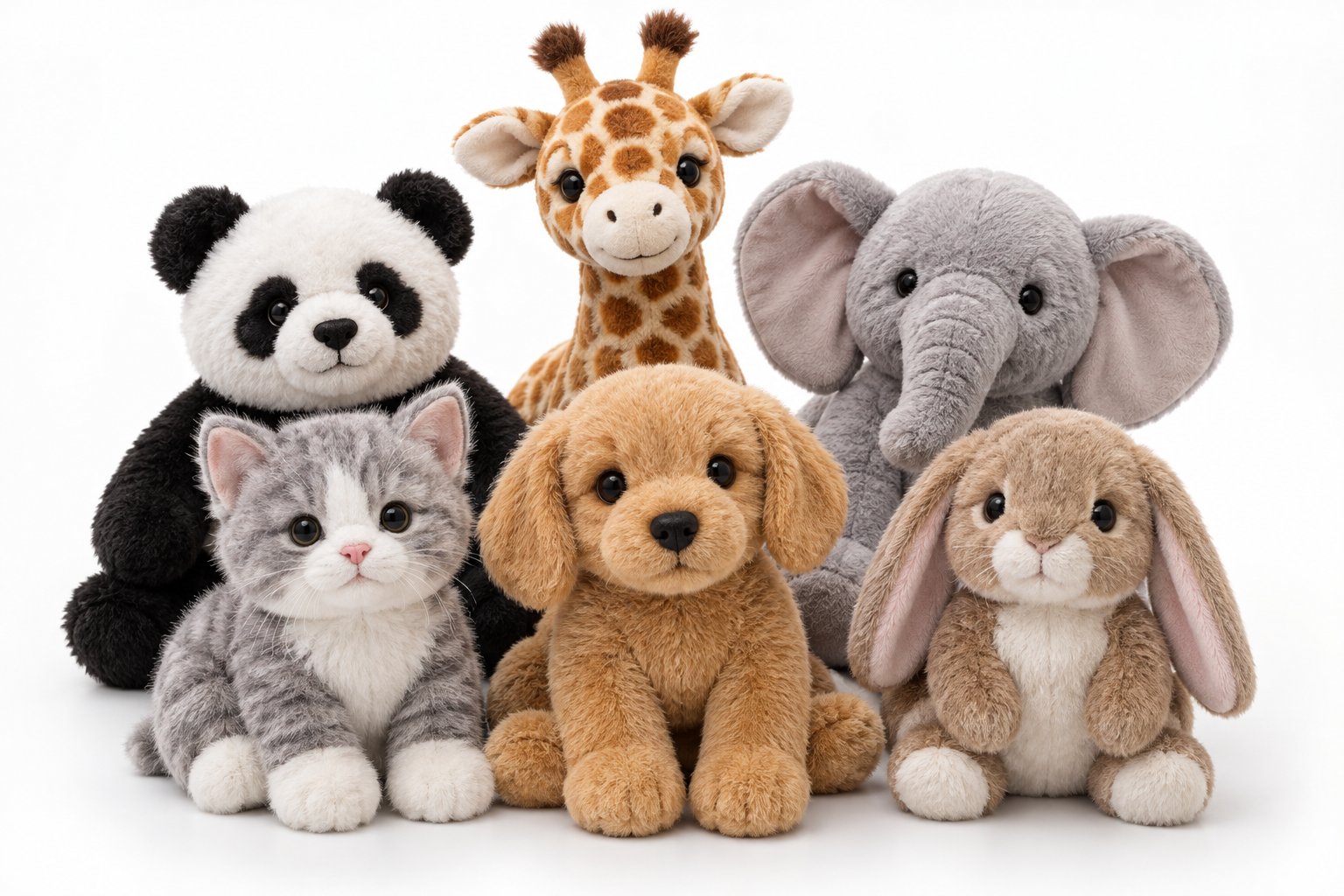
A plush animal assortment that covers six species in one counter display box can be an efficient way to offer variety. Key specifications might include: short-pile plush with polyester fibre filling, embroidered facial features, double-stitched seams, animals at 18 cm seated height, MOQ 1,000 packs, 12 display boxes per carton, and EN71/ASTM F963 compliance. OEM/ODM is available for customization. When vetting a supplier for such an assortment, confirm that all species meet the same safety and quality standards and that the display box is sturdy enough for retail.
Baby Comforter Set
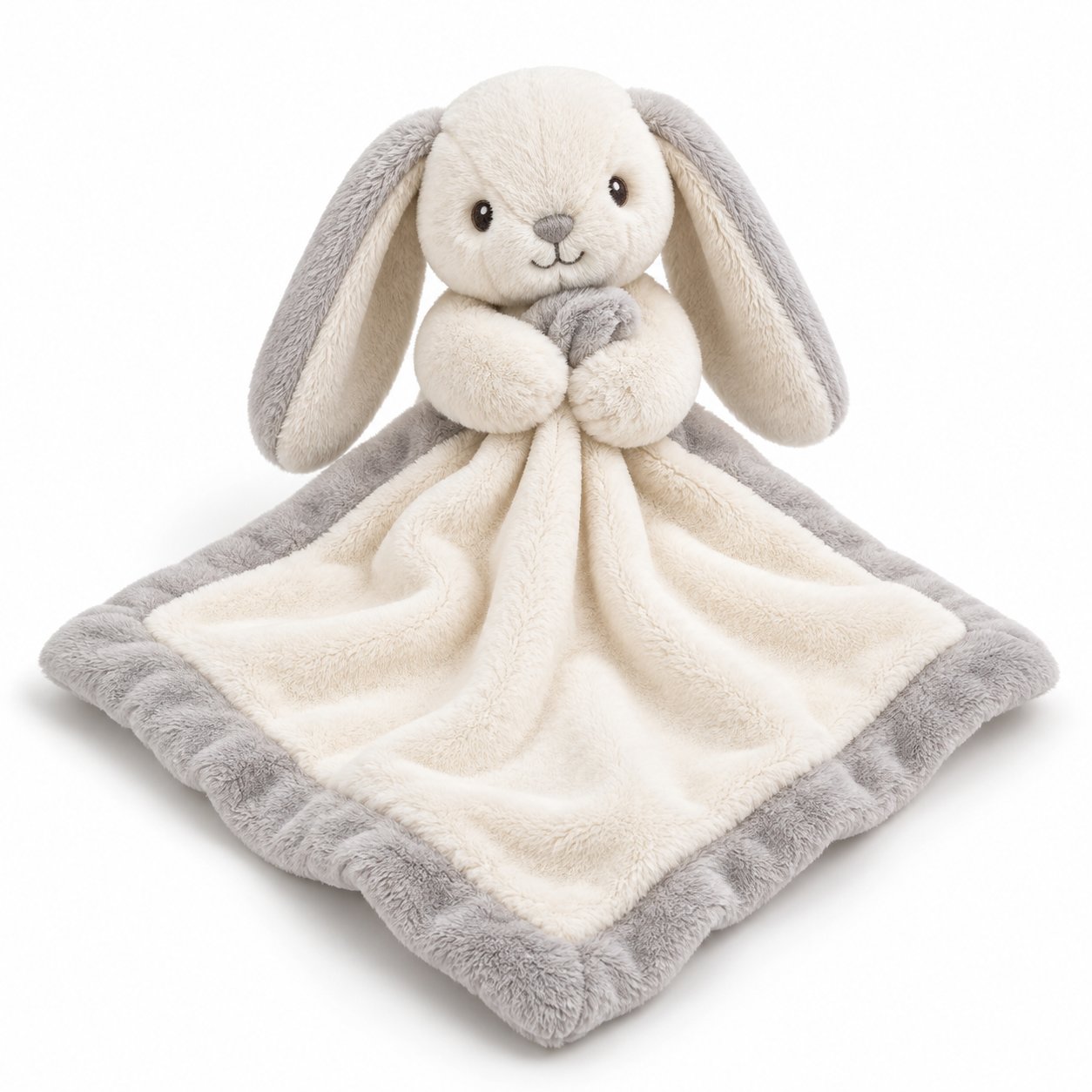
A baby comforter set typically includes a comforter blanket (e.g., 30x30 cm) and a small soft toy (e.g., 15 cm). Because it is for ages 0+, safety is paramount: look for short-pile plush face with smooth fabric backing, no loose ribbons or detachable parts, and compliance with EN71/ASTM F963. MOQ might be 1,000 sets, with 48 sets per carton and gift box packaging. Request the test reports specifically for the baby product, as requirements can differ from general toys.
Frequently Asked Questions
What is the typical MOQ for soft toys?
MOQs vary by supplier and product complexity. For custom soft toys, MOQs often start at 1,000 pieces per design, but some suppliers may offer lower MOQs for stock items. Always confirm MOQ before requesting samples.
Which certifications should I require?
At minimum, soft toys should comply with the safety standards of your target market—EN71 for the EU and ASTM F963 for the US. Other certifications may be relevant depending on the age group and materials. Always ask for valid test reports from an accredited laboratory.
How can I verify a supplier's quality without visiting the factory?
Request product samples, ask for test reports and audit certificates, and check references. You can also use third-party inspection services for pre-shipment inspections. Clear communication and a supplier’s willingness to provide documentation are good signs.
Are embroidered facial features safer than plastic eyes?
Embroidered features eliminate the risk of small parts detaching, which is particularly important for toys intended for children under three. For older children, plastic eyes may be acceptable if securely attached and tested for pull strength.
What packaging options are common for soft toys?
Common retail packaging includes polybags, display boxes, and gift boxes. For display boxes, ensure they are designed to protect the toys and present them well on shelf. Gift box packaging is often used for premium or gift-oriented products.
By following this guide, you can navigate the sourcing channels and vet suppliers effectively, ensuring your soft toy purchases meet quality and safety expectations.