
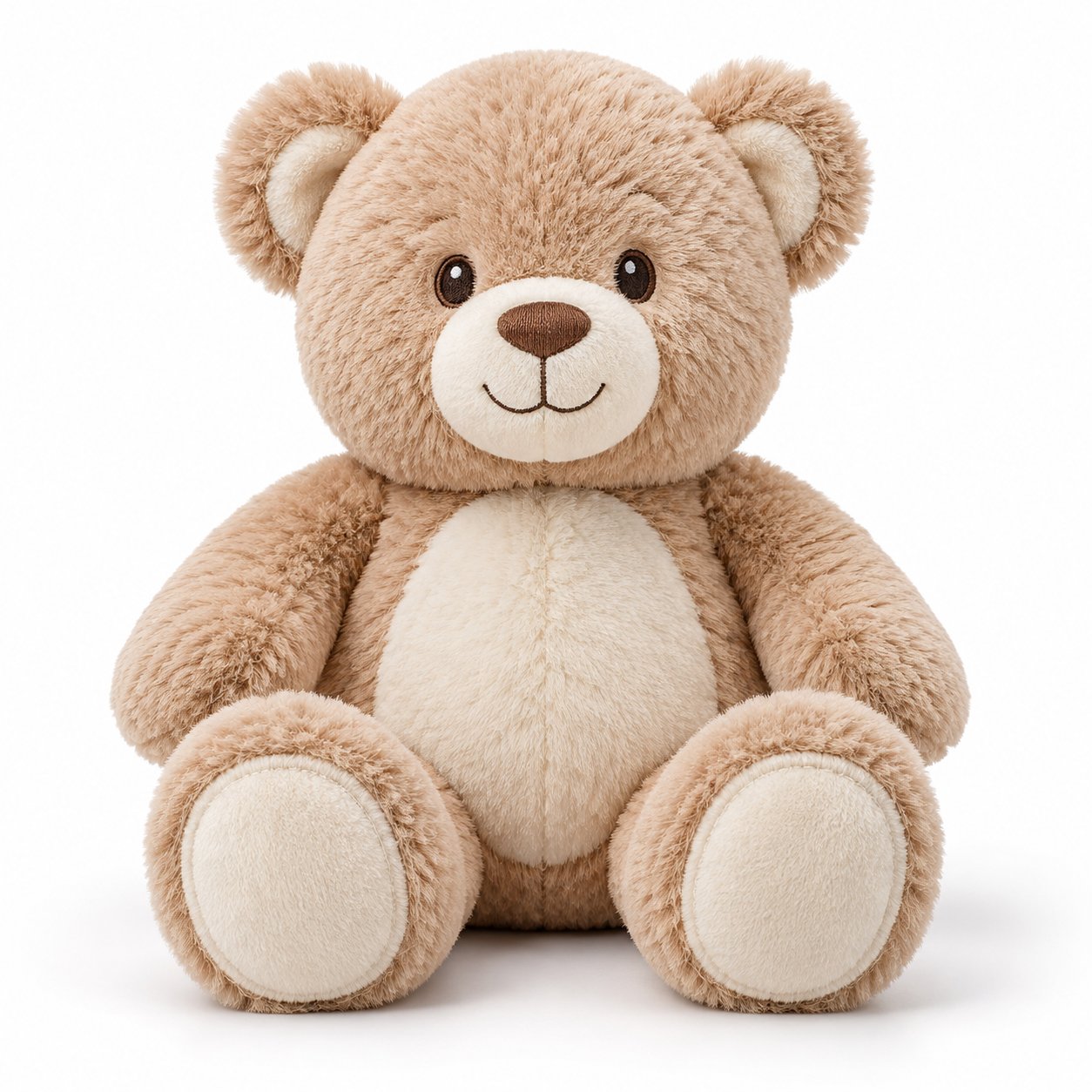
A plush doll is a soft-bodied, fabric-covered figure built for handling rather than display. This explainer covers the face fabric, filling and construction decisions that change quality and cost, briefly separates the common trade terms, and gives wholesale buyers a specification checklist for size, pile, filling, features, stitching, certification and MOQ.
Buyer Explainer
A plush doll is a soft-bodied, fabric-covered figure made to be handled, not displayed behind glass. In sourcing terms, the category is defined less by the shape of the figure than by how it is built: a plush face fabric over a soft filling, with features and seams chosen so the item survives repeated use. That construction profile is what separates a plush doll from a hard-body doll, a plastic figure, or a novelty item with attached trim.
Two buyers ordering "a plush doll" can receive very different products. The gap sits in pile height, filling type, how the eyes and nose are attached, and how the seams are closed. This article covers those variables, keeps the term comparison short because terminology is covered elsewhere, and ends with a specification checklist you can paste into an RFQ.
- A plush doll is a fabric-covered soft figure; the face fabric, filling and construction set its quality and cost.
- Short-pile plush face fabric with hypoallergenic polyester fibre filling is the common baseline build; pile height and density are the first cost lever.
- Embroidered eyes and nose remove detachable small parts; plastic features change both tooling cost and compliance review.
- Double-stitched seams support repeated handling; a wipe-clean surface simplifies care instructions.
- EN71 and ASTM F963 test scope set per target market, and an MOQ of 1,000 pieces per style, are the commercial frame for most programs.
Definition: what makes a doll a plush doll
Plush dolls are soft figures whose outer surface is a textile — typically a knitted or woven pile fabric — filled with fibre or other soft material. The body may be fully soft, or have a soft body with a firmer internal shape, but the surface a user touches is fabric. That fabric surface is also the part that receives the printed, embroidered or moulded features.
The category therefore turns on three decisions: what the face fabric is, what goes inside, and how the parts are joined to the body. Everything a buyer cares about — hand feel, durability, safety review, landed cost — follows from those three.
Face fabric, filling and construction
Face fabric and pile
The face fabric is the visible outer layer, and pile is the variable buyers feel first. Short-pile plush gives a tighter, smoother surface that takes embroidery cleanly and holds its shape; longer pile reads softer but can hide stitch detail and collect lint. Pile height and density are the main cost levers inside the fabric line: more pile and higher density add material weight per unit, which moves both unit cost and carton weight.
Pile also interacts with finishing. A short-pile surface makes a wipe-clean finish more practical and keeps embroidered features legible from a distance — relevant for retail shelf presentation and for small-format items on a counter display.
Filling
Filling determines shape retention, weight and how the figure settles after compression. Hypoallergenic polyester fibre filling is the common baseline: it is consistent, holds loft, and recovers well after packing. Buyers specifying a softer or firmer hand should treat fill weight per unit as a separate line item, since it changes cost independently of the outer fabric. Where the figure needs to sit upright — a seated-height product, for example — filling density in the base matters more than overall softness.
Features: embroidered versus plastic
Eyes and nose are the most consequential feature decision. Embroidered eyes and nose are stitched directly into the face fabric, so there are no detachable small parts to manage in testing, in packaging or in use. Plastic or moulded features add a component supply line and a separate attachment step, and they introduce a small-parts review that embroidered features avoid.
This choice is not only a safety question. Embroidery adds machine time and design-file work; plastic features add tooling and per-part cost. Which is cheaper depends on volume and design complexity, so the comparison belongs in the quotation stage rather than in a general rule.
Seams, finishing and surface care
Seams are where soft products fail first. Double-stitched seams are specified where the figure is expected to be handled repeatedly — promotional giveaways, retail toys that get squeezed on shelf, characters used in play. Closing seams at the base and around limb attachments deserve explicit mention in the spec, because a tighter seam allowance is a cost decision the factory can quote to.
A wipe-clean surface keeps care instructions simple: surface cleaning rather than machine washing, which matters for items sold with limited labelling space or used in settings where washing is impractical. If your program requires machine-washability, raise it during sampling; it changes filling and seam construction and should be confirmed with the supplier for your spec.
The trade terms, briefly
The terms overlap in retail but not in sourcing. Our article What Are Stuffed Animals Called? Terms Buyers and Sellers Actually Use covers the vocabulary in detail; for ordering purposes the distinctions that matter are these:
| Term | What it typically signals in an order |
|---|---|
| Plush doll | Fabric-covered soft figure; construction and feature detail are the defining spec. |
| Plush toy | Broader category term; may cover soft figures, cushions, and shaped accessories. |
| Stuffed animal | Usually an animal form; often implies a softer, more traditional fill and longer pile. |
| Doll | Figure form; may be hard-bodied or soft-bodied, so the material must be specified. |
Practical consequence: don't write "plush doll" on a purchase order and stop there. Name the face fabric, the filling, the feature method and the size, and the term stops being ambiguous.
Specification checklist for wholesale buyers
The checklist below reflects the construction our product records cover. Use it as an RFQ template and confirm any item that your program or market requires but the list does not settle.
| Spec item | What to state | Why it changes the order |
|---|---|---|
| Size | Finished dimension and whether it is measured standing or seated. Our range includes a 30 cm seated-height teddy bear, 18 cm seated-height animals in a six-species counter display assortment, and custom plush from 20 to 60 cm. | Drives fabric consumption, fill weight, packaging and carton count. |
| Face fabric and pile | Short-pile plush as the baseline; state pile height and density if a softer or tighter hand is required. | Main material cost lever; affects embroidery legibility and finishing. |
| Filling | Hypoallergenic polyester fibre; state fill weight per unit and any firmness requirement. | Controls loft, recovery after compression and seated stability. |
| Features | Embroidered eyes and nose versus plastic parts; if plastic is required, confirm the attachment method. | Changes small-parts review, tooling and per-unit cost. |
| Stitching | Double-stitched seams; call out base and limb seams specifically. | Durability under repeated handling. |
| Surface care | Wipe-clean surface; state if machine-washability is required and confirm with the supplier for your spec. | Sets care labelling and usable sales channels. |
| Compliance | EN71 and ASTM F963 compliance for the target markets. | Determines test scope and documentation at order stage. |
| MOQ | 1,000 pieces per style. | Sets program scale; colours and sizes are styles for MOQ purposes. |
| Customisation | OEM/ODM available; provide artwork, feature method and target size. | Defines the sampling route and what changes between styles. |
Lead times, sampling fees, carton dimensions and test-report scope are not fixed by the specs above; confirm with the supplier for your spec.
Choosing between a stock form and a custom build
If your program is a gift-with-purchase or a seasonal shelf item, an existing form removes sampling from the critical path. The plush teddy bear comfort toy shows the baseline build at 30 cm seated height with embroidered features. Programs that need several characters at small size can use the plush animal assortment display pack, which pairs six species at 18 cm seated height with a counter display — the display unit is part of the pack, so plan shelf space around it rather than per unit. If the design is yours, custom plush is available from 20 to 60 cm under OEM/ODM; larger formats and more complex shaping should be quoted rather than assumed.
Questions buyers ask before ordering
Is a plush doll the same as a stuffed animal?
They overlap heavily. "Stuffed animal" usually describes an animal form with a softer, more traditional fill; "plush doll" is used more broadly for any soft fabric-covered figure and puts the emphasis on construction. For sourcing, the material spec matters more than which term appears on the order.
Can embroidered features replace all plastic parts?
Eyes and nose can be embroidered, which removes detachable small parts. Whether other components — for example a nose with a textured finish or decorative accessories — can also be converted depends on the design. Ask the supplier to confirm per style for your spec.
What size should I order?
Size selection is usually driven by shelf or counter space and by packaging. Our range covers 18 cm and 30 cm seated-height items and custom builds from 20 to 60 cm. State whether the dimension is standing or seated, and confirm how the measured size relates to the finished product.
What is the minimum order?
MOQ is 1,000 pieces per style. Treat each colour and size combination as a style when planning the program.
Which certifications apply?
Compliance is assessed per item and destination market — EN71 for EU programs and ASTM F963 for US programs are the common references. Ask for the report that matches the product and market you are ordering, since test scope follows the item and destination, not the product range as a whole.
For a program built on a specific size, fabric and feature set, the soft plush stuffed animal toy range is a reasonable starting point for a like-for-like comparison. Send the checklist above with your target size, pile, filling and feature method, and the quotation can be built against a defined spec rather than a category name.


