
A sourcing comparison for retailers, preschools and importers: how manufacturer-direct, trading-company and marketplace channels fit different order types, plus what to verify with a wooden-toy manufacturer on finish, certification paperwork and sampling before you place a bulk order.
The answer to "where to buy wooden toys" depends less on which channel looks cheapest and more on what kind of order you are placing. A 500-set OEM program, a 40-set preschool top-up and a mixed pallet for a retail test do not belong in the same purchasing route. This article compares the three common channels — manufacturer direct, trading company, marketplace — by order type, then sets out what to check with a wooden-toy manufacturer on finish, certification paperwork and sampling.
Key takeaways
- Manufacturer direct fits planned, repeatable volume where custom colors, sizes or packaging are involved, and where you need to see the production line behind the paperwork.
- Trading companies fit fragmented baskets that span several unrelated categories, but the factory behind the order stays less visible.
- Marketplaces fit small trial quantities and urgent replacement, not a bulk program with a fixed compliance file.
- Whichever channel you use, three things decide whether the order is repeatable: surface finish, certification documents matched to the actual product, and a sample round you control.
In this article
The three channels by order type
Most buyers searching for a wooden toys wholesale supplier start by comparing price per unit. That comparison is only meaningful once the order type is fixed, because each channel is built around a different order profile.
| Order type | Best-fit channel | What you gain | What to watch |
|---|---|---|---|
| Custom OEM program — own colors, sizes, packaging, carton marks | Manufacturer direct | Changes happen at the source; sampling reflects the line that will run your order | Minimum order quantities apply per design; confirm them before you design the range |
| Repeat stock of a proven SKU, annual or seasonal volume | Manufacturer direct | Stable specification across reorders | Ask how a repeat order is checked against the original approved sample |
| Mixed basket across unrelated categories (wood, plush, plastic, stationery) | Trading company | One purchase order, one contact, consolidated documents | The wooden line's factory may be an unknown third party; ask who actually makes it |
| Preschool or classroom restock of a small, fixed quantity | Marketplace, or distributor stock if available | Fast, low commitment, single-unit purchase | Specification and finish can change between listings; compliance file is often a generic PDF |
| Retail assortment trial before a seasonal buy | Manufacturer sample order, then bulk direct | You buy the sample from the same source that would produce the bulk | Do not assume sample quantity pricing carries into bulk |
Trading companies and marketplaces are not poor choices — they are choices for different order shapes. The problem starts when a buyer uses a marketplace to test a product and then places a bulk order through a different route: the article number, the finish and the compliance documents may no longer describe the same item.
When manufacturer direct is the right route
Go direct when at least two of the following are true: you need custom colors, sizes or packaging; you expect repeat orders of the same design; you need the certification file to match a specific product and a specific factory; or your buyer requires a factory-level audit rather than a trader's paperwork.
Fujian Lequ Wanwan Co., Ltd. is a toy manufacturer and exporter operating since 2013, with 180 staff and a 12,000 sqm facility. The company runs OEM/ODM programs with custom colors, sizes and packaging, maintains EN71/ASTM F963 compliant ranges, and operates an in-house QC lab. Those facts matter at the point where you are deciding whether the source can control changes — not as a badge on a homepage.
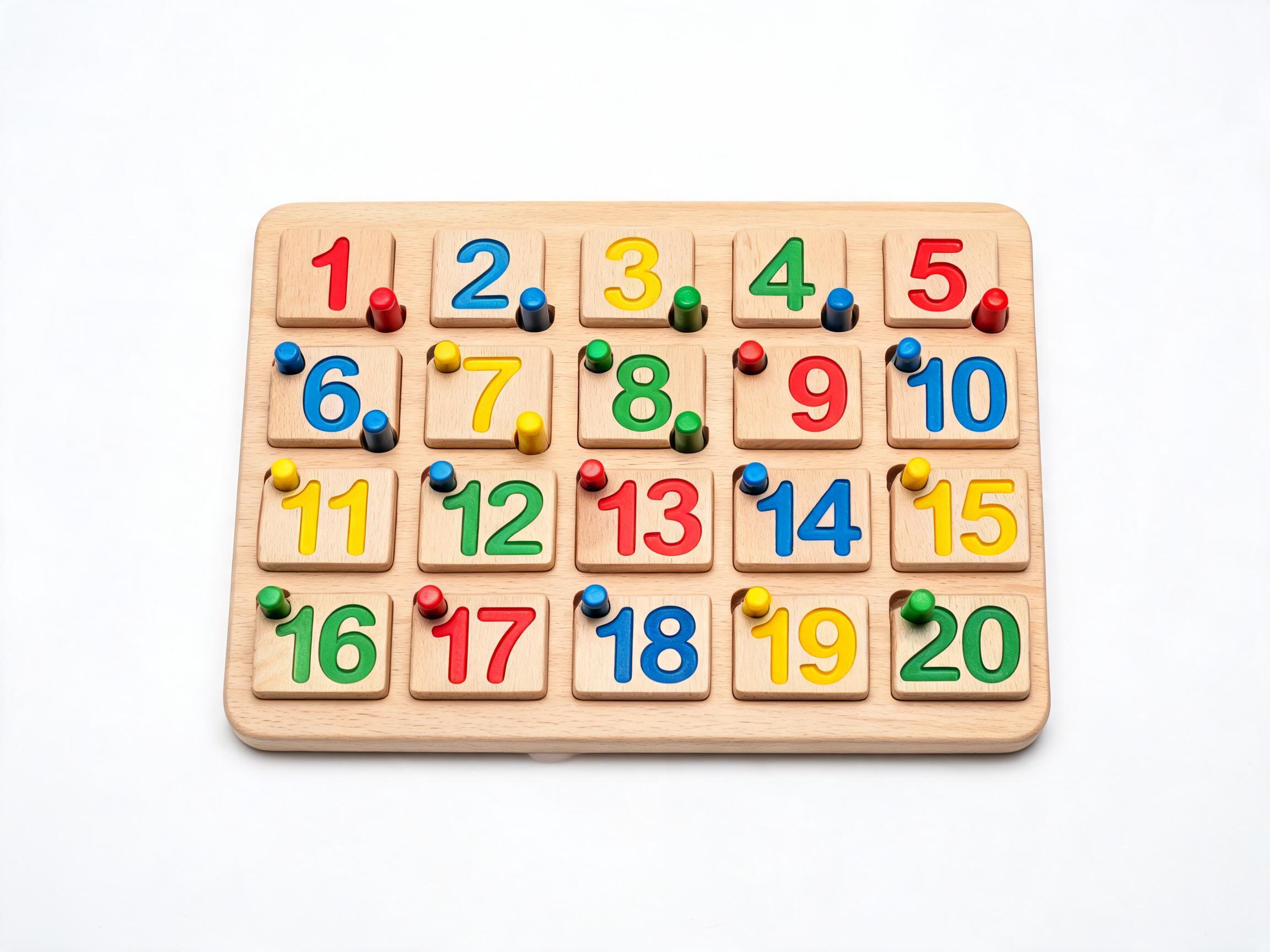
Order quantities are set per design, so check the MOQ of the specific item before you plan an assortment. As an example of how the numbers look in practice, the Wooden Number Puzzle Board has an MOQ of 500 sets with 40 sets per carton; the Wooden Shape Sorter Cube also has an MOQ of 500 sets, packed 24 sets per carton. The difference in carton count changes your storage and freight planning more than the unit price does, so ask for both figures together.
What to verify on finish
Finish is where most wooden-toy complaints originate, and it is also the part of a specification that is hardest to describe in a purchase order. A photo of a sample board is not a specification. Before you approve a finish, agree on these points in writing:
- Which surfaces are finished and which are left raw. State it by part, not by product. A puzzle board's tile faces, edges and board cavity can each be treated differently.
- Edge and corner treatment. Ask for the agreed edge condition on the parts a child handles, and confirm it on the sample rather than from a rendering.
- Color approval method. If you are buying custom colors, agree the reference — a physical approved swatch or an approved sample part — and keep that reference with the order file. A screen color is not a reference.
- Consistency across parts within one set. For a multi-piece item, the question is not only whether one part matches the swatch, but whether all parts in the set match each other.
- How the finish is checked before packing. Ask what the factory inspects and at what stage. A manufacturer with an in-house QC lab can describe its own inspection points.
Keep the approved sample, sealed and dated, in your own office. Every dispute about finish is settled by comparing production against that sealed piece, and nothing else.
Certification paperwork: what a document proves
A certificate on a website proves that some product, tested at some point, met a standard. It does not automatically prove that the item in your carton is covered. When you request documents, read them for four things:
- The tested item. Does the report name the product or model family you are buying, or something adjacent to it?
- The scope and limits. Reports state what was tested and under what conditions; the conclusion does not extend beyond that.
- The date and version. Standards are revised. Confirm you are reading a current document, not an older edition.
- The party named. Check whether the applicant is the factory you are dealing with or a third party.
For destination-specific requirements — EN71 for the EU and UK, ASTM F963 for the United States — ask which document applies to the exact item you are ordering, and whether the same item will be produced on the same line for your order. Fujian Lequ Wanwan maintains EN71/ASTM F963 compliant ranges; confirm the specific report for your chosen SKU and finish before you commit, especially if you have changed colors or components from the tested version.
Sampling: the round before the bulk order
Sampling is not a formality before a purchase order; it is the step where the specification becomes enforceable. Run it in three stages:
- Reference sample. Ask for an existing production sample of the design, so you can judge the base construction, size and finish before any customization.
- Custom sample. Once colors, sizes or packaging are agreed, request the customized version. Approve it as a physical object, signed and dated, and describe in writing what you approved.
- Pre-production check. Before bulk runs, confirm that the approved custom sample — not the reference sample — is the standard the line will use, and ask how the first output is compared against it.
For a multi-item range such as the Wooden Montessori Learning Set, sample the set as a set. Approving components individually can hide a mismatch in color or size between pieces that only shows when the box is opened by a customer.
A short supplier checklist
- MOQ and carton quantity for each specific design, quoted together.
- A sealed, dated approved sample held on your side.
- The finish specification written by part: surfaces, edges, color reference.
- Certification documents naming the product you are buying, with date and version.
- A clear statement of who manufactures the goods and where.
- Custom packaging, carton marks and any labeling requirements confirmed on the sample, not after production.
FAQ
Is a trading company ever the better choice for wooden toys?
Yes, when your order mixes categories and you want one purchase order and one consolidated document set. The trade-off is visibility: ask directly which factory produces the wooden line, and request that factory's documents for the item rather than the trader's general file.
Can I start with a small marketplace order and then go direct?
You can, but treat them as two separate purchases. The marketplace item and the direct-order item may differ in finish, dimensions or packaging. Re-approve a sample from the direct manufacturer before bulk, and do not carry the marketplace listing's documents over to the new order.
What MOQ should a preschool expect?
Manufacturer MOQs are set per design and are typically far above a single classroom's needs — the number puzzle board and shape sorter cube both carry an MOQ of 500 sets. A preschool buying small quantities is normally served by a distributor or marketplace, while a preschool group or supplier buying for multiple sites can approach a manufacturer directly.
Do I need to visit the factory?
Not always, but the documents and samples you receive should let you answer who makes the product, what it is made of, how the finish is controlled and which report covers it. If those four answers are missing, the channel is not yet verified, whatever the price.
Comparing channels for a specific wooden toy program? Send the design, target quantity and destination market, and ask for the MOQ, carton quantity, sample route and the certification document that applies to that item.
Contact the manufacturer

