
Toy-grade RC cars are built for play value, hobby-grade for speed. This guide explains which specifications actually determine RC car performance—motor type, voltage, gearing, drivetrain, and control frequency—and how retailers can build a profitable assortment across speed tiers.
Retailers searching for the fastest remote control car usually get one of two answers: a marketing number from a toy listing, or a hobby-shop lecture about brushless motors. Neither helps you decide what to stock. The straight answer is that toy-grade RC cars are built for play value, while hobby-grade and race-grade cars are built for speed—and the specifications that separate them are motor type, battery voltage, gearing, drivetrain, and control frequency. This guide explains what each spec actually does, so you can classify products into performance tiers and build an assortment that matches your shelf space and your customers.
Key takeaways
- Toy-grade and hobby-grade are different product categories, not different quality levels—they target different buyers.
- Motor type (brushed vs. brushless) is the single biggest speed indicator, followed by battery voltage.
- Gearing and drivetrain decide how well a car uses the power it has, especially off-road.
- 2.4GHz control does not make a car faster—it makes multiple cars raceable together without interference.
- For retail, stock a spread across tiers rather than chasing one "fastest" claim.
In this article
What actually decides RC car speed
Speed is the output of a chain: battery delivers voltage, the motor converts it into rotation, gearing translates that rotation into wheel RPM, and the drivetrain puts it on the ground. Any weak link caps the result. A high-voltage battery behind a weak motor produces heat, not speed. A strong motor with tall gearing accelerates slowly. A fast car with a poor drivetrain spins its wheels and goes nowhere.
For a buyer, the practical takeaway is that a single "top speed" claim tells you almost nothing on its own. Two cars with the same claim can differ completely in how they reach it—and most toy-grade listings do not state a verified speed at all. What you can compare reliably is the spec list: motor type, voltage, gearing, drivetrain, and frequency band.
Motor type: brushed vs. brushless
Motor type is the clearest dividing line between performance tiers.
- Brushed motors use physical carbon brushes to transfer current to the rotating armature. They are inexpensive, easy to replace, and standard in toy-grade cars. They are also less efficient and wear out faster under continuous load—which is acceptable for a toy used in short play sessions.
- Brushless motors transfer current electronically, with no brushes to wear. They deliver more power for their size, run cooler, and last longer. They are the norm in hobby-grade and race-grade cars, and they are one reason those cars cost more.
When a supplier lists "brushed" or "brushless," treat it as a tier signal, not a speed figure. Brushed points to toy-grade positioning; brushless points to hobby-grade. Neither tells you a number in km/h or mph, and a responsible supplier will not invent one.
Voltage and battery
Voltage sets the ceiling on how fast a motor can turn. Within the same motor class, a higher-voltage pack generally supports higher RPM—but it also demands a motor, ESC (electronic speed controller), and drivetrain rated for that voltage. Upgrading voltage alone is how hobbyists burn out toy-grade electronics.
For retail purposes, voltage is useful mainly as a classification clue and a safety/compliance detail. Toy-grade rechargeable packs commonly sit in the 3.7V–7.4V range and use USB charging for convenience. Hobby-grade cars run higher-voltage packs, often with removable, balance-charged batteries. When you see USB charging and integrated batteries, you are usually looking at toy-grade; when you see specified connector types and removable packs, hobby-grade.
Battery chemistry and charging method also affect your after-sales load. USB-charged integrated packs reduce the number of accessories in the box and lower the risk of a customer using the wrong charger.
Gearing and drivetrain
Gearing converts motor RPM into wheel speed and torque. Tall gearing (larger pinion, smaller spur) favors top speed; short gearing favors acceleration and climbing. The same motor can feel fast or sluggish depending on gearing, which is why two similarly powered cars can behave very differently.
Drivetrain layout matters just as much off-road:
- 2WD is simpler, lighter, and cheaper to produce. It suits flat surfaces and younger users.
- 4WD puts power to all four wheels, improving traction, climbing, and stability on rough ground. It is the better choice for outdoor and off-road use, and it is a stronger selling point for gift buyers who see "4WD" as a durability signal.
- Independent suspension lets each wheel react to terrain separately, keeping tires in contact with the ground. Combined with rubber tires, it directly affects usable performance on gravel, grass, and dirt.
None of these specs produces a specific top speed on its own. What they tell you is how the car will behave in the conditions your customers actually use it in—which is what drives repeat purchases and low return rates.
Where 2.4GHz fits in
A common misconception is that 2.4GHz makes a car faster. It does not. Frequency band affects control, not propulsion.
Older 27MHz and 49MHz systems had a limited number of channels, so two cars on the same channel interfered with each other. 2.4GHz systems bind a transmitter to a receiver, allowing many cars to run side by side without cross-talk. For a retailer, this matters because it supports the way kids actually play—racing together—and it reduces support complaints about "my car stopped responding when my neighbor's car was on."
Control range is a separate spec from frequency. Range is worth stating because it affects perceived quality, but it is not a speed indicator.
Toy-grade vs. hobby-grade: how to classify
Rather than asking which car is "fastest," classify products into tiers. The table below maps the specs discussed above to tiers. Treat it as a classification framework, not a set of speed thresholds.
| Spec | Toy-grade | Hobby / race-grade |
|---|---|---|
| Motor | Brushed | Brushless |
| Battery | Integrated, USB-charged, lower voltage | Removable, higher voltage, dedicated charger |
| Gearing | Fixed, optimized for balance | Adjustable ratios for tuning |
| Drivetrain | 2WD or 4WD, sealed | 4WD, serviceable, adjustable suspension |
| Control | 2.4GHz, plug-and-play | 2.4GHz, paired, often with telemetry |
| Target buyer | Parents, gift buyers, ages 6+ | Enthusiasts, racers, older teens and adults |
| Retail role | Volume, impulse, seasonal gifts | Margin, repeat customers, parts and upgrades |
The two tiers serve different shelves. A toy-grade car sold next to a hobby-grade car is not competing on speed—it is competing on price, safety, and ease of use for a younger user. Presenting it as a race machine invites returns.
Retail assortment advice
Buyers who search for the fastest remote control car often end up over-indexing on top-end performance. A more profitable approach is a tiered assortment:
- Entry tier (ages 6+, high volume). Look for 2.4GHz control, USB-charged integrated batteries, impact-resistant bodies, and simple controls. These sell on gift appeal and low risk, not speed claims. Custom colors and body designs help differentiate your listing.
- Mid tier (4WD, outdoor use). 4WD, independent suspension, and rubber tires are the specs that justify a higher price to gift buyers and parents. This is where "fastest RC truck" searches tend to land, because off-road capability reads as performance.
- Hobby tier (enthusiast repeat customers). Brushless motors, removable batteries, adjustable gearing, and parts availability. Lower volume, higher margin, and a customer base that buys upgrades.
When ordering, confirm with your supplier which tier each SKU is positioned in and which specs support that positioning. Do not accept a speed figure that cannot be verified under a stated test condition.
Reading a real spec list
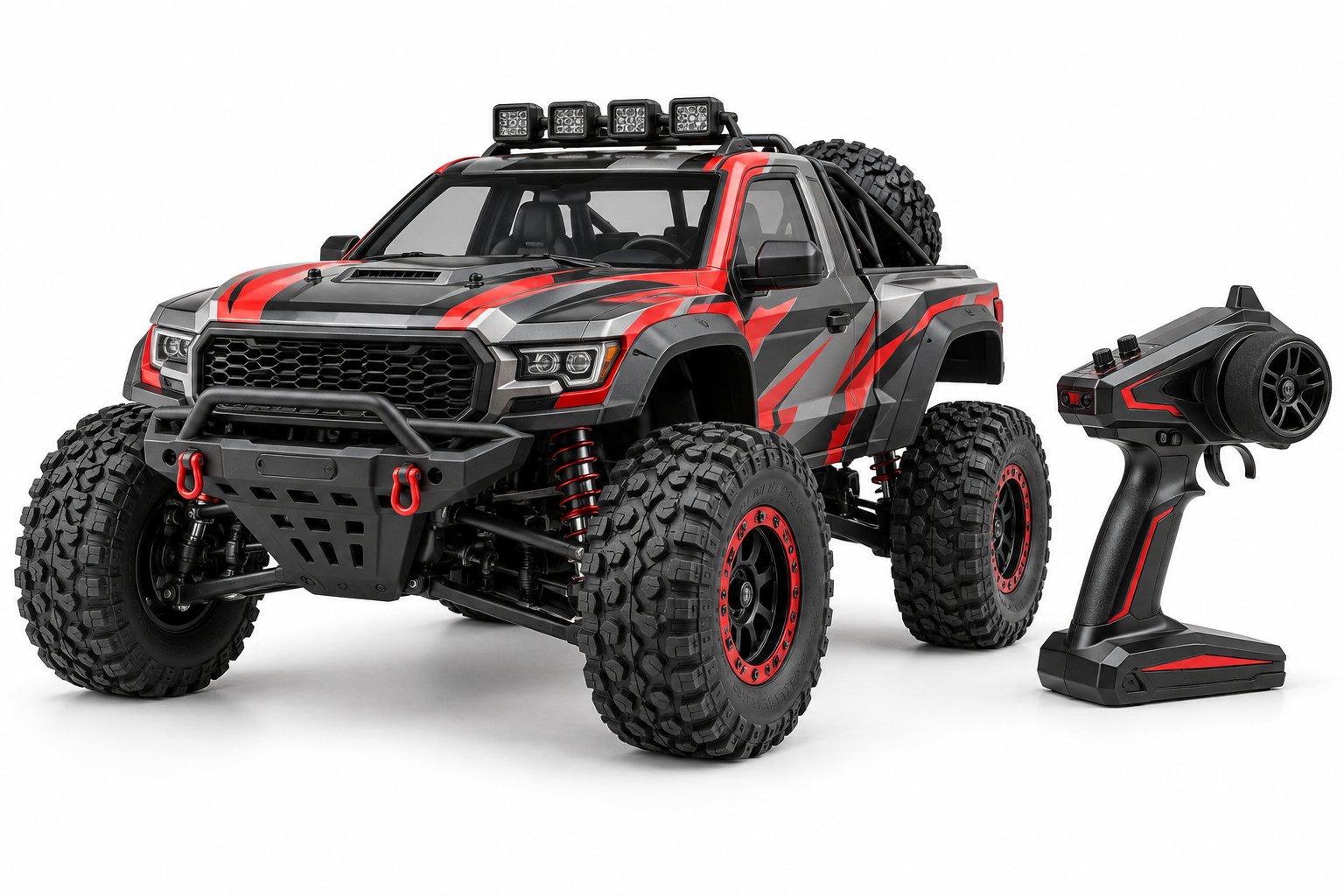
Here is how a toy-grade off-road specification looks when it states facts instead of speed claims. The 4WD RC Off-Road Truck below lists 4WD with independent suspension, an ABS impact-resistant shell, rubber tires, a control range up to 40 m, a body size of 32×20×14 cm, a 7.4V rechargeable USB-charged battery, 2×AA batteries in the controller, and an age rating of 6+. From these facts a buyer can classify it as mid-tier toy-grade: the 4WD drivetrain and suspension suit outdoor terrain, while the USB-charged integrated battery and 6+ age rating keep it in the toy category. Nothing here states a speed, and no responsible listing should infer one.
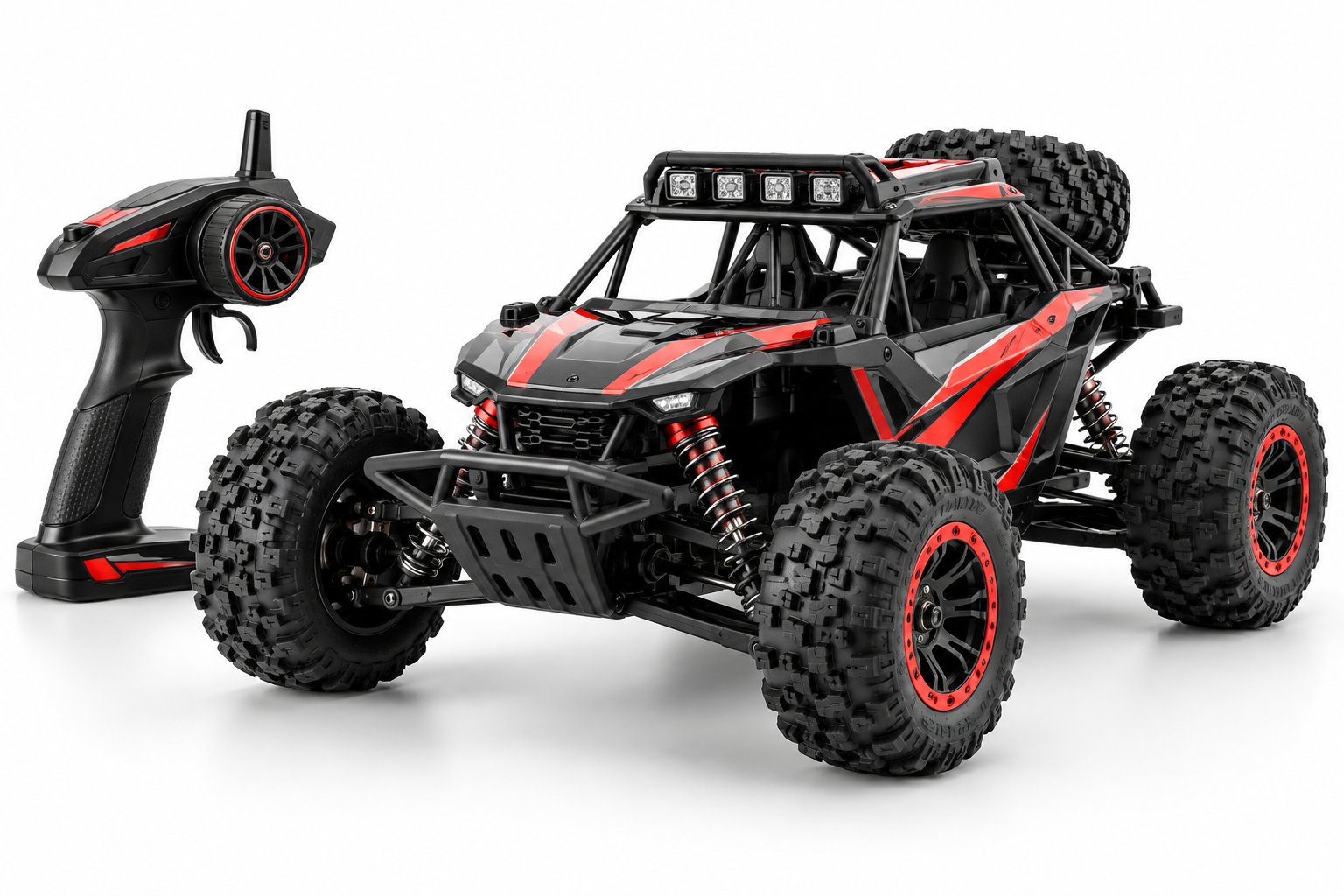
For a simpler entry-tier option, the 2.4GHz Remote Control Off-Road Car pairs a handheld 2.4GHz controller with a rechargeable USB-charged battery, ages 6+, and customizable colors and body. Both products are available for OEM/ODM programs with an MOQ of 500 units.
FAQ
What is the fastest remote control car?
There is no single answer, because "fastest" depends on category. Hobby-grade and race-grade cars are faster than toy-grade cars by design—they use brushless motors and higher-voltage batteries. Toy-grade cars are built for play value, safety, and ease of use, and they generally do not publish verified top speeds. Classify by tier rather than chasing a single number.
Does 2.4GHz make an RC car faster?
No. 2.4GHz affects control, not propulsion. It allows many cars to run simultaneously without interference. Speed is determined by motor type, voltage, gearing, and drivetrain.
Is a 4WD RC truck faster than a 2WD one?
4WD does not automatically mean higher top speed. It primarily improves traction, climbing, and stability on rough surfaces. For outdoor use, 4WD is usually the better choice regardless of top speed.
Can I upgrade a toy-grade car for more speed?
Upgrading voltage on toy-grade electronics can damage the motor, ESC, or battery and may void compliance. Toy-grade cars are designed as complete, safe play products. Buyers seeking upgradeable platforms should source hobby-grade cars that specify serviceable parts.
What should I confirm with a supplier before ordering?
Confirm the motor type (brushed or brushless), battery voltage and charging method, drivetrain, control range, age rating, and applicable compliance such as EN71 or ASTM F963 for your destination market. Ask for the compliance certificate covering the specific model, not just the company.
Next step for buyers: if you are building an RC assortment, decide your tier mix first, then request spec sheets and compliance documents for the models you are considering. LequToys supports OEM/ODM programs for RC toys, plush, wooden and educational toys, and outdoor products with an MOQ of 500 units. Share your target market and ages so we can recommend the right tier.