Custom plush pricing is not a single number — it is the sum of design complexity, materials, size, and order quantity. This guide explains what actually moves the price of OEM custom plush and exactly what to send a factory so you get a quote you can compare.
OEM Custom Plush Sourcing
If you are sourcing a private-label plush toy — a branded character, a gift-with-purchase item, or a retail plush line — the first question from your manager is usually "what will it cost per piece?" The honest answer is that no factory can give you a real number from a sentence. Cost comes from four things: design complexity, materials, size, and order quantity. This guide walks through how each one moves the price, and what to send so your quotes come back comparable instead of all over the map.
Key takeaways
- There is no single "custom plush price." Two puppies the same height can differ in cost if one has embroidered spots and the other has printed ones.
- Size and quantity are the two biggest levers. Larger patterns use more fabric and filling; higher quantities spread fixed setup work across more units.
- What you send determines quote accuracy. A sketch plus dimensions beats "a plush dog, medium."
- Compare quotes on the same spec sheet, so you are pricing the same toy each time.
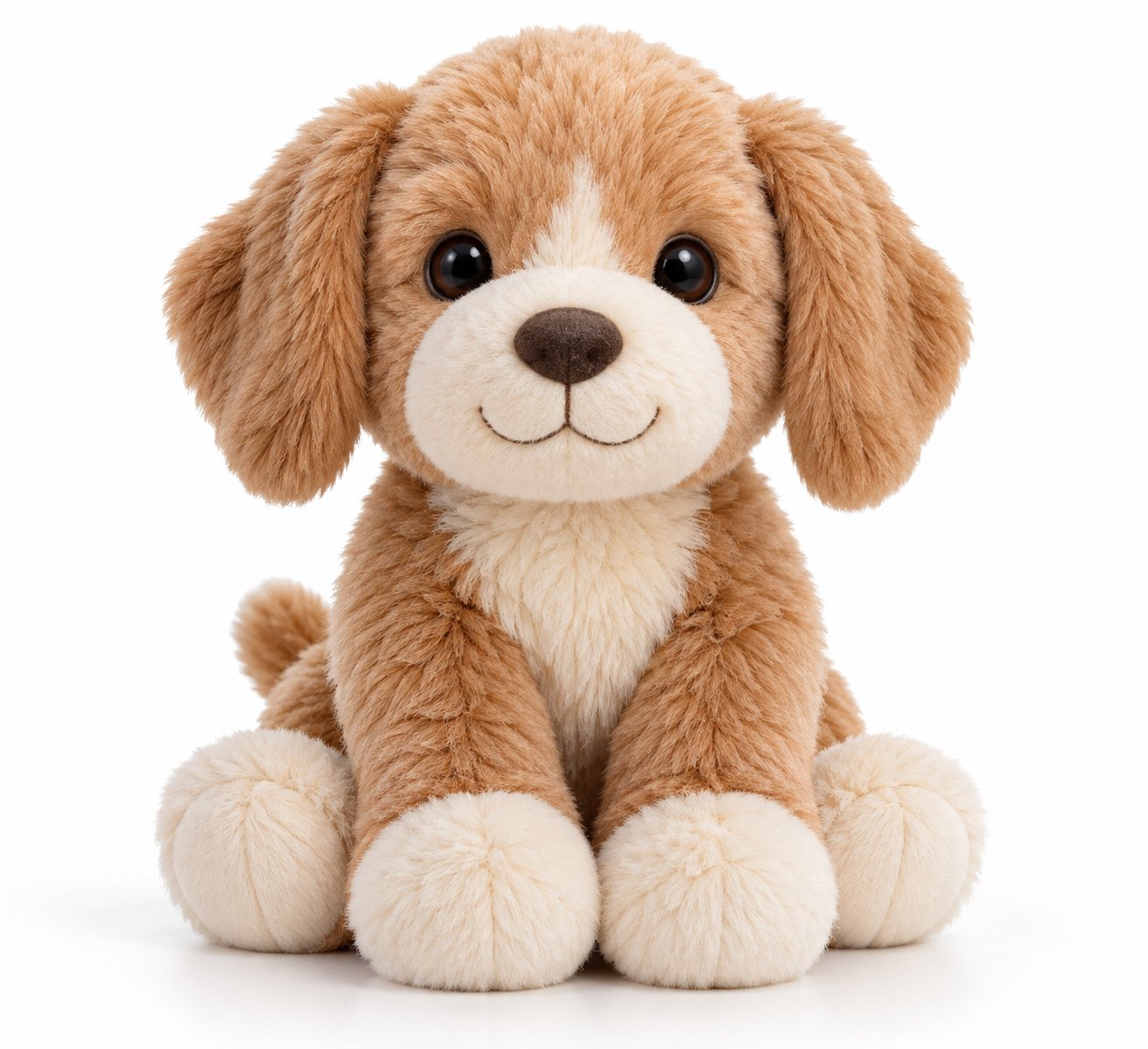
What actually drives the price of a custom plush
Custom plush is a sewn product, so cost tracking looks similar to any cut-and-sew item: fabric, filling, labor time, trims, testing, and packaging. The variables below are the ones buyers can influence before they request a quote.
| Cost driver | What raises cost | What keeps it lower |
|---|---|---|
| Design complexity | Many separate panels, curved seams, small appendages, multi-color appliqué | Simple silhouette, larger uninterrupted panels, fewer pattern pieces |
| Decoration | Multiple embroidery positions, 3D features, printed detail on textured fabric | One or two embroidery placements, printed facial features |
| Materials | Premium plush, specialty pile fabrics, extra trims | Standard plush with hypoallergenic filling |
| Size | Larger finished height and girth | Smaller sizes within the standard range |
| Order quantity | Very small runs | Higher volumes that absorb setup |
| Compliance & testing | Extra test standards or markets | Standards already covered by the factory's standard build |
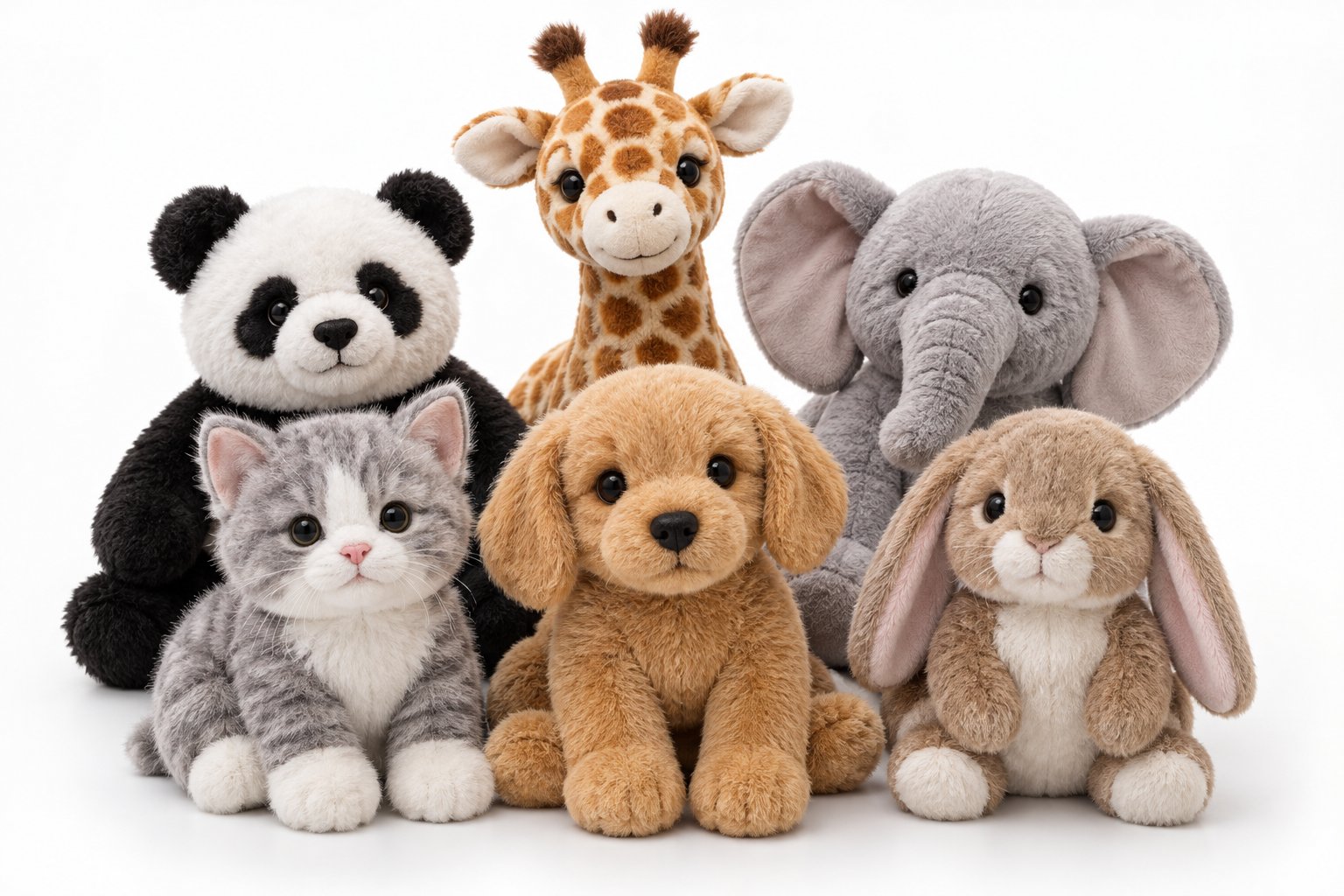
Notice that none of these rows has a number attached. That is deliberate: a supplier who quotes you a per-piece price before seeing your design is guessing. Our own soft plush stuffed animal toy is built to EN71 and ASTM F963 requirements with hypoallergenic filling and durable stitching — those are the kind of baseline decisions that belong in the spec sheet, not in a vague email.
Size and quantity: the two biggest levers
Size
Finished size is usually expressed as height, and our range runs from 20 to 60 cm. As height increases, the surface area of the pattern grows faster than the height number suggests, so fabric consumption and filling weight rise disproportionately. A 60 cm plush is not simply three times a 20 cm plush in material terms — the pattern pieces get larger in two dimensions, and stuffing volume grows with the third.
Practical implication: if your budget is tight, test the design at a smaller size first. You can validate whether the character reads well and whether the embroidery details hold up before committing to the largest size.
Order quantity
Custom plush has fixed, one-time work: pattern development, a sample for your approval, and production setup. That work costs the same whether you order 500 pieces or 5,000. Spread across more units, the per-piece share of that fixed work drops. This is why the per-unit price at MOQ 1,000 pieces is lower than the per-unit price on a short run of the same design.
Quantity also changes your options. Above the MOQ, you can often absorb small design variations across sizes or colorways without a second full setup. Below it, you are paying for the same fixed work with fewer units to carry it.
Materials and construction
Buyers often ask to "keep it cheap" without specifying which part should be cheap. In plush, the levers are more granular than that.
- Outer fabric. Standard short-pile plush versus a longer, softer pile changes both material cost and how the fabric behaves in the sewing room. Long pile hides pattern seams less predictably, which can add labor.
- Filling. Hypoallergenic filling is the base of our build. Different fill densities change the hand feel and the amount of material used per unit.
- Stitching and seams. Durable stitching is not a marketing term here — it is a construction choice. More seam reinforcement means more machine time, especially on small appendages that are handled separately.
- Decoration. Embroidery versus printing is a cost and durability trade-off. Embroidery adds thread and machine time; printing can be faster but sits differently on textured pile.
Because we offer both OEM and ODM, the starting point differs. With OEM, you bring the design and we build to it. With ODM, we start from an existing concept and adapt it, which can reduce pattern development work. Ask which path your project falls under before comparing quotes — the same "custom plush" brief can sit in either category.
What to send so your quote is accurate
Most slow or unusable quotes trace back to an incomplete brief. Send these eight items and any competent factory can quote the same toy you are picturing.
- Design reference. Front, side, and back views. A flat sketch or reference image is fine; a single photo of a character from one angle is not enough.
- Finished size as a height range in centimeters (for example, 30 cm), and whether that is a target or a hard limit.
- Material direction. Preferred fabric type and pile length if you have one, or "recommend a standard option" if you do not.
- Color spec. Pantone references for each color area. "Brown and cream" is a description; a Pantone number is a spec.
- Decoration method per feature. For each facial feature and marking, state embroidered or printed.
- Order quantity for the first run, plus an indication of repeat volume if you have one.
- Compliance and market. Which markets you are selling into, so the factory can confirm the applicable standard. Our build targets EN71 and ASTM F963 compliance; confirm the final applicable standard against your destination market in the quote.
- Packaging and labeling. Retail hangtag, poly bag, or bulk carton; any barcode or care-label text you need printed.
If a sample is required before mass production, say so up front. Sampling is a separate line item from unit price, and it affects the timeline you are quoting against.
Where to get custom plushies made
"Where" is really a question of capability, not geography. When you screen potential factories, evaluate them on four points that map directly to the cost drivers above:
- Pattern and sampling capability. Can they turn your sketch into a physical sample and iterate? A factory that only executes existing patterns will struggle with a new character.
- Material sourcing. Can they source the pile fabric and trims your design needs, or do they only work with one house fabric?
- Compliance experience. Can they speak to EN71 and ASTM F963 testing for plush, and route the testing appropriately? Ask which standards they routinely build to.
- Production scale. Can they handle your MOQ and repeat volume without subcontracting the sewing? Ask directly.
You can see the kind of finished product these capabilities produce on our custom plush stuffed animal product page, which lists the size range, MOQ, and compliance targets in one place. Use it as a reference point when comparing what other suppliers promise.
Frequently asked questions
Can I get a per-unit price without ordering a sample first?
Yes, you can get an indicative per-unit range from a complete brief, but treat it as provisional. Final pricing follows the approved sample, because sampling often surfaces construction details that change labor time. Ask your supplier to state what the indicative price assumes.
Does a smaller order always cost more per piece?
Usually, because fixed setup work is spread over fewer units. The exception is when a smaller order also removes complexity — fewer decoration positions, a simpler pattern — in which case the trade-off depends on your specific design.
How do OEM and ODM affect the quote?
OEM means you supply the design and the factory builds to it. ODM means the factory adapts an existing design or concept. ODM can reduce pattern development work, but the material and decoration spec still drives the unit cost. Confirm which path applies to your project before comparing quotes.
What compliance information should be in the quote?
Ask the supplier to name the standard the build targets for your market. Our products are built to EN71 and ASTM F963 requirements; the specific applicable standard should be confirmed in writing for your destination market and order.
Which sizes are available?
Our custom plush range covers 20 to 60 cm in finished height, and size is customizable within that range. If your target falls outside it, ask before assuming it is feasible.
Ready to price your design?
Send us your sketch, target size, decoration method per feature, quantity, and destination market. We will confirm the applicable compliance standard, the MOQ, and the next step toward a sample.
Request a custom plush quote