Teddy bear wholesale prices depend on size, material, plush type, and order volume. This guide breaks down the cost factors importers and retailers need to know before requesting quotes, including MOQ, sampling, and landed cost considerations.
Wholesale Sourcing Guide
If you are sourcing teddy bears for retail, promotions, or distribution, the first question is usually the same: what will they actually cost per unit? The answer is not a single number. Teddy bear wholesale prices are driven by a combination of size, material, construction, and order quantity. A 20 cm promotional bear and a 90 cm gift bear can differ in unit cost by a factor of ten or more.
This guide explains the main variables that determine teddy bear cost, the typical price bands you will encounter, and the questions to ask a plush teddy bear manufacturer before you commit to a purchase order.
Key Takeaways
- Unit price is primarily a function of size, fabric type, and order volume.
- Small promotional bears (15–25 cm) are typically the lowest unit cost; large gift bears (60 cm+) cost significantly more.
- MOQ, sampling fees, and packaging add to the total landed cost and should be confirmed before ordering.
- Requesting a full cost breakdown (unit price, packaging, freight) helps you compare suppliers accurately.
What This Guide Covers
What Determines Teddy Bear Cost
Several factors interact to set the wholesale price of a teddy bear. Understanding them helps you compare quotes on equal terms rather than chasing the lowest headline number.
Size
Size is the single biggest cost driver. Larger bears require more fabric, more filling, and more labor time per unit. As a rule of thumb, doubling the height of a bear increases material consumption substantially more than double, because fabric usage scales with surface area rather than linear dimension. A 60 cm bear is not simply twice the cost of a 30 cm bear.
Fabric and Plush Type
The outer material affects both cost and perceived quality:
- Short-pile plush: Generally the most economical option, common for promotional bears.
- Medium-pile plush: A middle ground used for general retail bears.
- Long-pile or specialty plush: Higher cost, used for premium or gift-market bears.
- Woven or knitted fabric: Less common for standard teddy bears but affects pricing where used.
Fabric weight (measured in grams per square meter) also matters. Heavier fabric costs more but tends to hold shape better.
Filling and Construction
Polyester fiberfill is the standard stuffing. Higher-quality bears may use denser fill or added weight for a firmer feel. Construction details such as jointed limbs, embroidered versus plastic eyes, and sewn-in versus attached accessories all add labor and material cost.
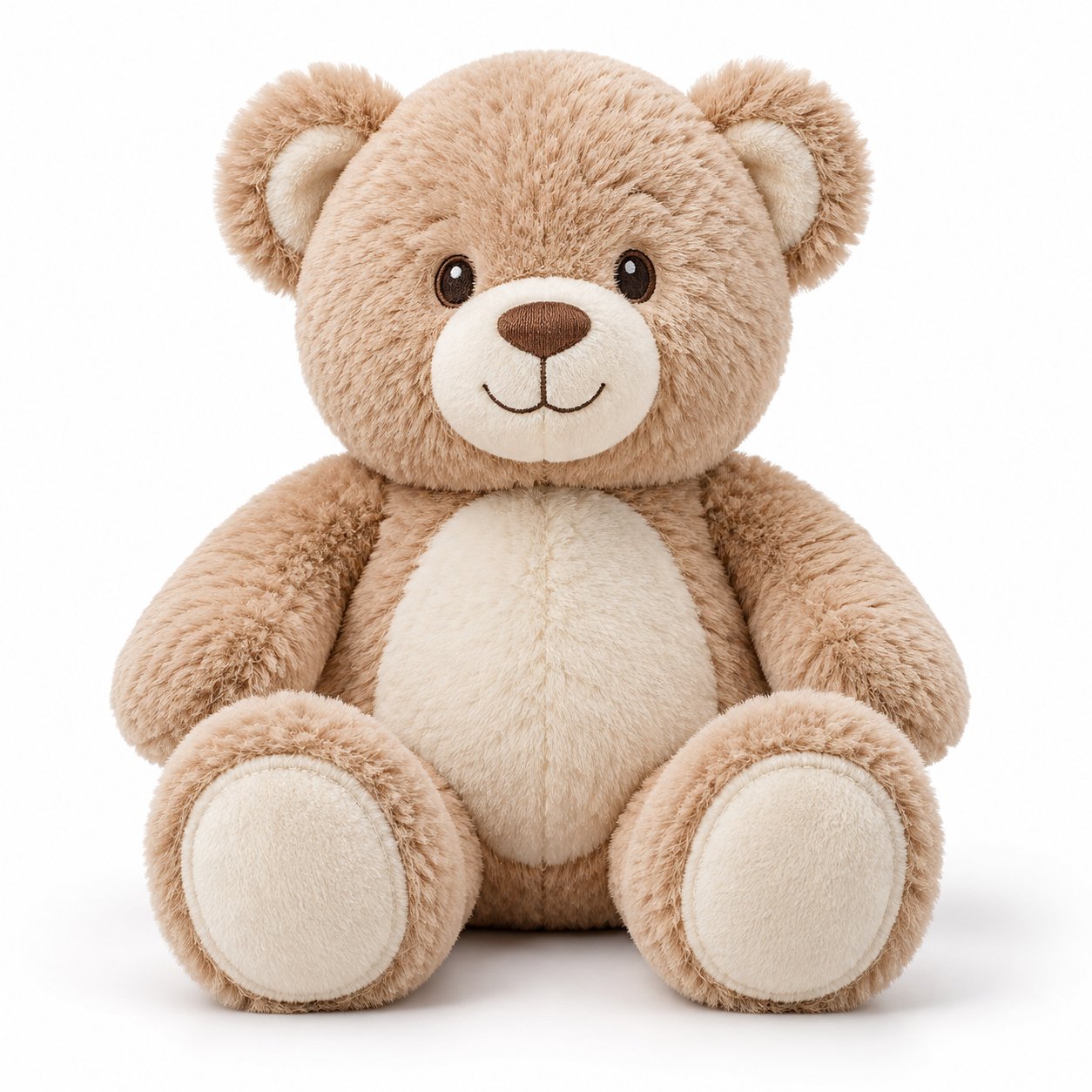
For younger-age comfort products, construction choices also carry safety implications. An example from our own range: a plush teddy bear comfort toy with embroidered features, where the eyes and nose are embroidered rather than plastic, with no detachable small parts and double-stitched seams — construction choices that add labor cost but reduce choking and loosening risks for infant comfort use.
Order Quantity
Unit price falls as order volume rises. This is due to fixed setup costs (pattern making, cutting die preparation, machine setup) being spread across more units. A 500-piece order and a 5,000-piece order for the same bear will carry different unit prices.
Typical Wholesale Price Bands
The table below gives indicative wholesale price ranges for common teddy bear categories. These are starting points for negotiation, not fixed quotations. Actual prices depend on specifications, current material costs, and order volume.
| Category | Typical Height | Indicative Unit Price (USD) | Common Use |
|---|---|---|---|
| Small promotional bear | 15–25 cm | $0.80–$2.50 | Giveaways, party favors, add-on gifts |
| Standard retail bear | 30–45 cm | $2.50–$6.00 | Retail shelves, gift shops |
| Large gift bear | 50–70 cm | $6.00–$15.00 | Gift market, holiday promotions |
| Oversized showpiece bear | 80–120 cm | $15.00–$40.00+ | Display, premium gifting, events |
Note: These ranges are indicative and vary by supplier, material, and order quantity. Always request a current quotation for your specific specification.
MOQ and Volume Discounts
Most plush teddy bear manufacturers set a minimum order quantity (MOQ) per design and per size. MOQ levels vary by supplier and by how much customization the design carries; for reference, our own plush line sets a minimum of 1,000 pieces per design.
Volume discounts are usually tiered. A typical structure might look like this:
- 500–999 pieces: base unit price
- 1,000–2,999 pieces: 5–10% reduction
- 3,000–4,999 pieces: 10–15% reduction
- 5,000+ pieces: negotiable, often 15–25% reduction
These percentages are illustrative. The actual discount curve depends on the manufacturer's cost structure and how much of the price is material versus labor. For small bears with high labor content, volume discounts may be smaller than for large bears where material dominates.
When comparing suppliers, compare unit prices at the same quantity tier. A supplier with a low MOQ but a higher unit price may be more appropriate for a test order, while a high-MOQ supplier may offer better economics for established programs.
Sampling and Tooling Costs
For custom teddy bears, expect a sampling phase before mass production. Sampling costs typically include:
- Sample development fee: Covers pattern making and a pre-production sample. This fee may be credited against the production order in some cases, but this is a commercial term to confirm with each supplier.
- Sample shipping: Courier cost to send the sample to you for approval.
- Modifications: If the first sample needs changes, additional sample rounds may incur extra charges.
Sampling is a real cost of doing business, but it reduces the risk of a large production order that does not match your expectations. Budget for at least one round of sampling for any custom design.
Landed Cost: What Else to Budget
Unit price is only part of the picture. Your landed cost per bear includes several additional components:
| Cost Component | What It Covers | Notes |
|---|---|---|
| Packaging | Poly bags, hang tags, retail boxes | Confirm whether basic packing is included or charged separately |
| Freight | Sea, air, or express shipping | Plush bears are bulky; freight can be a significant percentage of total cost |
| Duties and taxes | Import duties, VAT, tariffs | Varies by destination country and product classification |
| Inspection | Third-party QC or pre-shipment inspection | Optional but common for larger orders |
| Payment fees | Bank charges, currency conversion | Confirm payment terms and any associated costs |
Because teddy bears are lightweight relative to their volume, freight is often calculated on volumetric weight rather than actual weight. This means a shipment of large bears can cost more to ship than the same weight of compact goods. Ask your supplier for carton dimensions and quantities per carton early in the process so you can estimate freight accurately.
Questions to Ask Before You Order
Before placing a teddy bear bulk buying order, get clear answers to these questions:
- What is the unit price at my target quantity, and how does it change at higher volumes?
- What is the MOQ per size and per color?
- Is the quoted price FOB, EXW, or another Incoterm? What is included?
- What is the sampling process, cost, and timeline?
- What are the carton dimensions and units per carton?
- What is the production lead time for my quantity, and how does it change for repeat orders?
- What payment terms are offered?
- Can the supplier provide a sample for approval before production?
These questions help you build a complete cost model and compare suppliers on a like-for-like basis.
FAQ
How much does a single teddy bear cost wholesale?
Small promotional bears (15–25 cm) typically start under $1.00 per unit at volume. Standard retail bears (30–45 cm) generally range from $2.50 to $6.00. Large gift bears (50–70 cm) range from $6.00 to $15.00. Exact pricing depends on specification and order quantity.
What is the typical MOQ for custom teddy bears?
MOQs vary by manufacturer and design. Many set minimums in the hundreds to around a thousand pieces per design — our own plush line, for example, works from 1,000 pieces per design. Confirm the exact MOQ for your specific design before planning an order.
Do teddy bear prices include shipping?
Usually not. Most wholesale quotes are FOB or EXW, meaning shipping, duties, and insurance are separate. Always clarify the Incoterm and what costs are included in the quoted price.
Can I get a lower price by ordering more?
Yes, unit prices generally decrease as order volume increases. The size of the discount varies by supplier and product. Ask for a price break schedule at different quantity tiers.
Why do two teddy bears of the same size have different prices?
Size is only one factor. Fabric type, pile length, filling density, construction details, accessories, and packaging all affect cost. Two bears at the same height can differ significantly in price if one uses heavier plush, embroidered features, or retail packaging.
Next Steps
To get an accurate teddy bear wholesale price for your project, prepare a specification that includes size, quantity, fabric preference, and any customization requirements. A detailed specification lets a plush teddy bear manufacturer give you a realistic quote rather than a broad estimate.
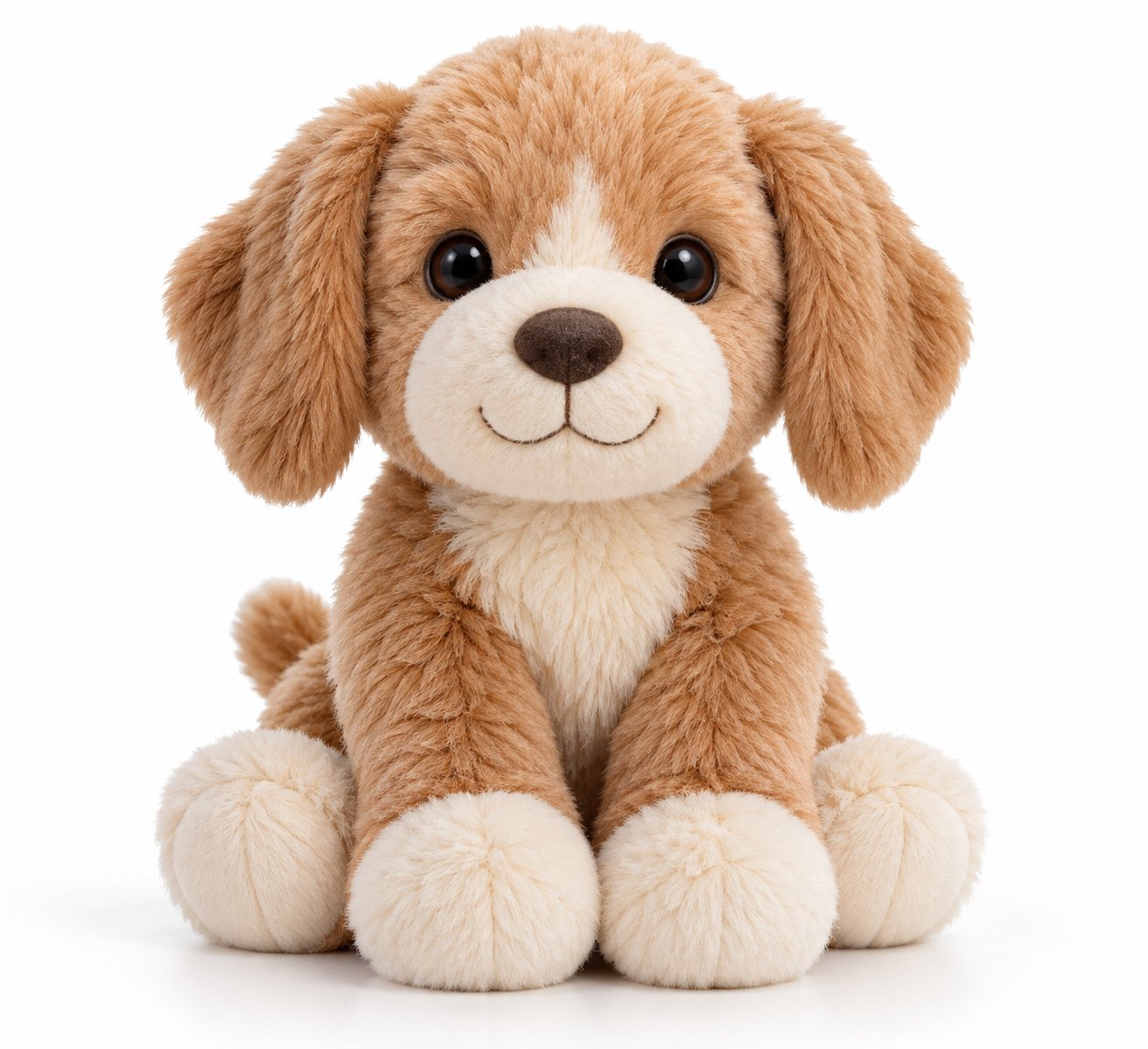
If customization is part of your plan, look at what is actually adjustable before you quote: a custom plush stuffed animal with hypoallergenic filling can be ordered with your own size, color, and design for OEM, gift, and promotional programs, which is often more cost-effective than commissioning a fully new sculpt. For infant and comfort ranges, review safety construction such as embroidered features and double-stitched seams in our plush teddy bear comfort toy before comparing prices.
If you are comparing suppliers, request quotes at the same quantity tier and with the same Incoterm. Ask for a sample before committing to a production order, and confirm packaging, carton dimensions, and lead times as part of the quotation. These steps turn a headline unit price into a reliable landed cost figure you can plan around.