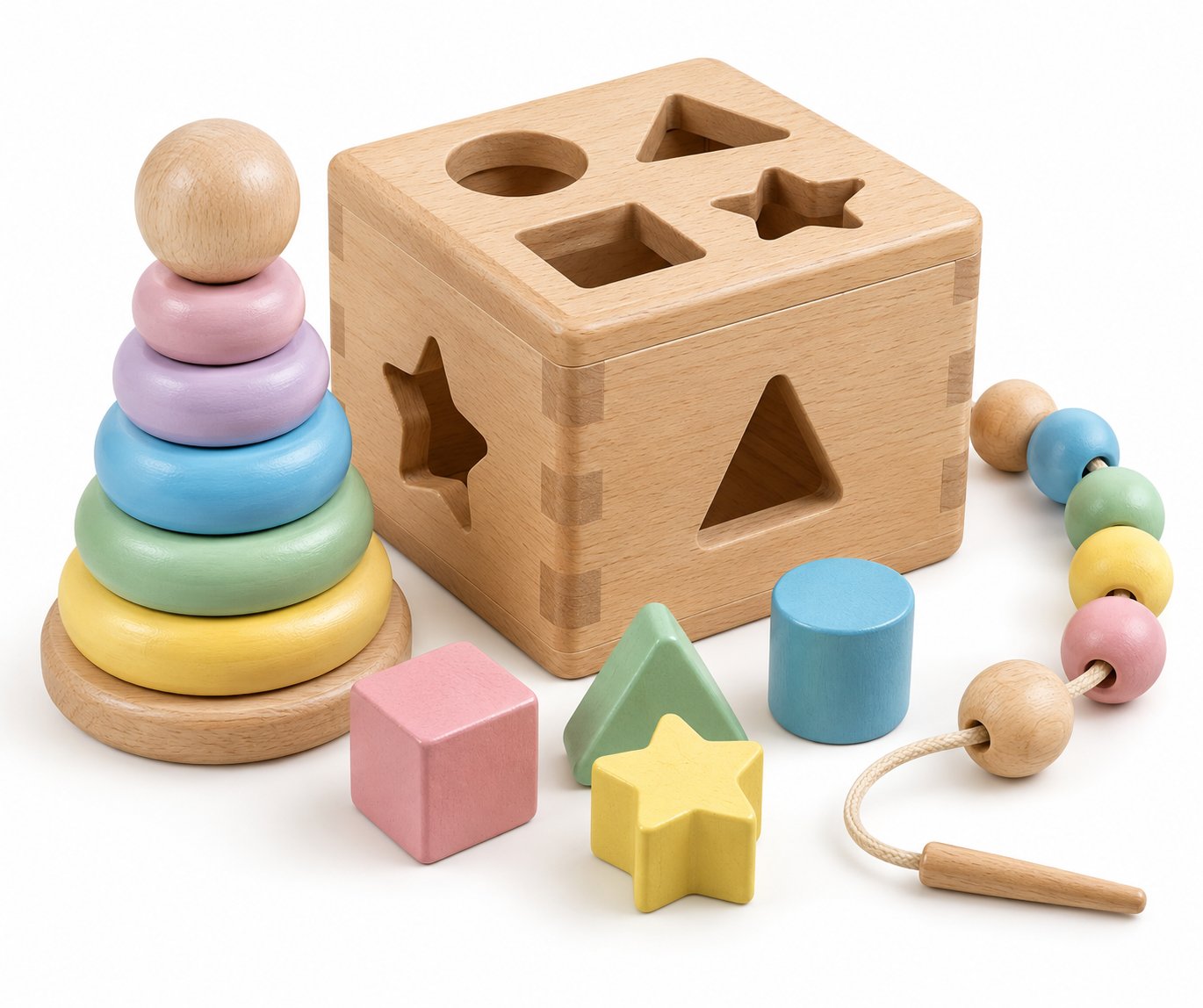
A practical B2B guide comparing sourcing channels for beach balls—domestic wholesalers, importers and agents, direct overseas factories, and B2B marketplaces. Covers typical MOQ ranges, lead times, material and compliance checks, and a supplier vetting checklist.
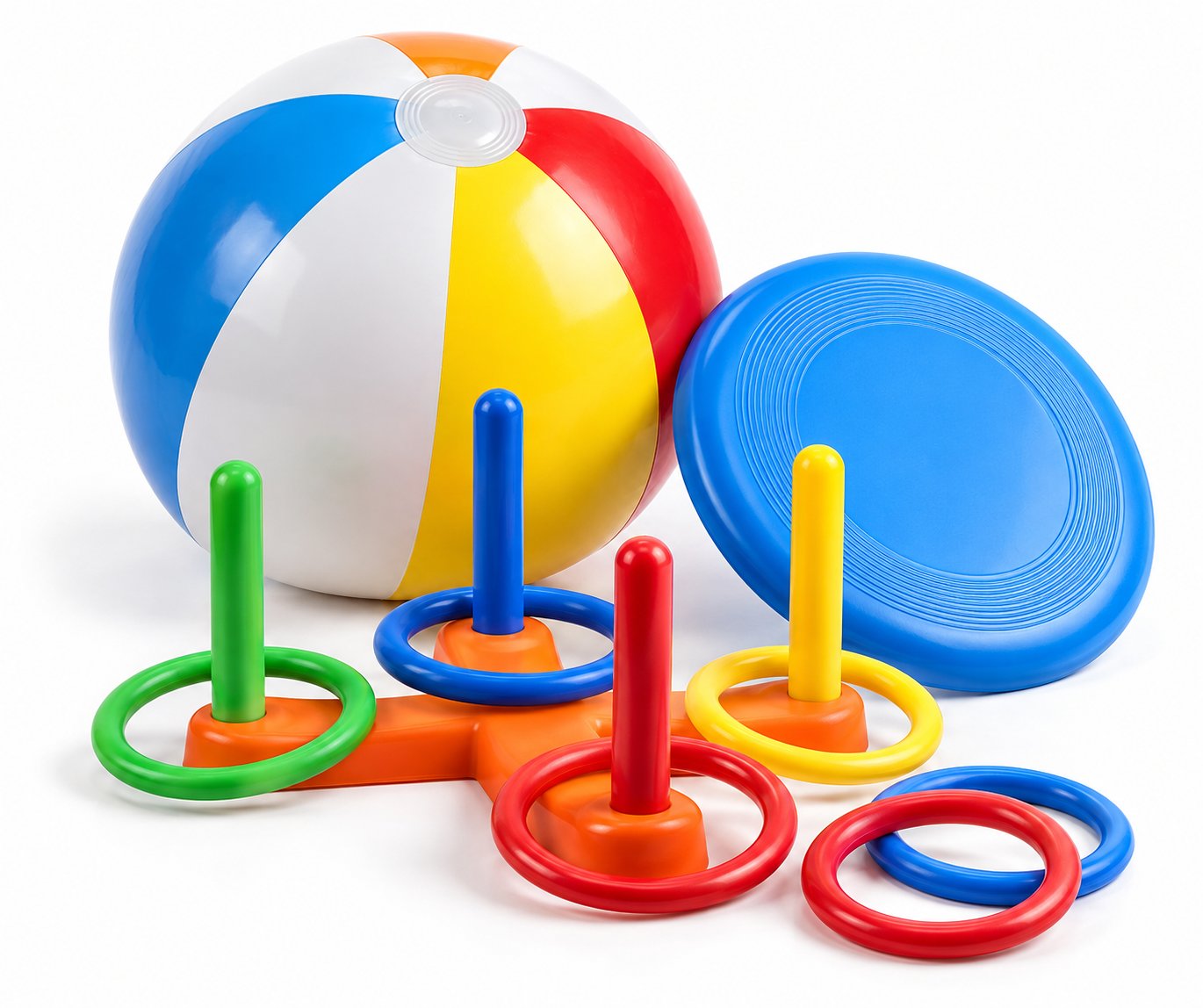
For retail buyers, importing beach balls is rarely a one-channel decision. The right source depends on your order volume, timeline, branding needs, and how much control you want over quality—not just the lowest unit price. This guide breaks down the four main sourcing channels, what each one is actually good at, and how to vet a beach ball supplier before you commit. See our outdoor sports toy set with beach ball, flying disc and ring toss for a ready-made group-play reference.
Key Takeaways
- Four main channels exist: domestic wholesalers, importers/trading companies, direct overseas factories, and online B2B marketplaces.
- Beach balls are typically PVC or TPU; material choice affects durability, phthalate compliance, and inflation retention.
- Typical MOQs range from 500 to 3,000 units per size/design when buying beach balls wholesale; smaller trial runs are often possible at a higher unit cost.
- Lead times vary by channel and season—spring and early summer are peak, so book production slots early.
- Always request a pre-production sample and confirm EN71 / ASTM F963 compliance for the destination market.
Why the Sourcing Channel Matters More Than the Unit Price
A beach ball is a deceptively simple product. It is a welded PVC or TPU sphere, printed with one to six panels, packed flat or inflated, and shipped in a carton. The differences between suppliers show up in things buyers only discover later: seam strength, valve quality, print registration, phthalate content, and whether the factory can repeat the same spec on the next order.
Your sourcing channel determines how much visibility you have into those details. A domestic wholesaler gives you speed and low minimums. A direct factory gives you control and better unit economics at volume—but requires more vetting. The goal is to match the channel to your actual order profile, not to chase the cheapest quote on a marketplace listing.
Channel 1: Domestic Toy Wholesalers and Distributors
These are importers or distributors who hold stock in your market and resell in smaller quantities. They are the fastest route to shelf, often shipping within days.
- Best for: urgent replenishment, test orders under 1,000 units, buyers without import experience.
- Typical MOQ: 100–500 units, often mixed across designs.
- Trade-off: highest unit cost; limited customization (you take their existing prints and sizes); no control over the factory that made the goods.
If you need a small run for a summer promotion and cannot wait eight weeks, this channel solves the immediate problem. It is less suitable if you want your own brand printed on the ball or need consistent bulk pricing across seasons.
Channel 2: Importers and Sourcing Agents
These companies sit between you and overseas factories. They handle supplier identification, sample coordination, quality inspection, and shipping documentation—usually for a commission or a markup on the ex-works price.
- Best for: first-time importers, buyers who want a single point of contact, orders in the 1,000–10,000 unit range.
- Typical MOQ: 1,000–3,000 units, depending on the agent's factory relationships.
- Trade-off: you pay for coordination; you may not know which factory actually produces your order unless the agent discloses it.
Ask an agent which factories they use, whether they conduct in-line inspections, and how they handle a quality dispute. An agent who cannot answer those questions is passing risk back to you.
Channel 3: Direct Overseas Factories
This is the channel most experienced retailers move toward once volumes justify it. You work directly with the manufacturer, specify the material, size, print, and packaging, and negotiate pricing against your own target.
- Best for: repeat seasonal programs, custom branded balls, orders above 3,000 units per design.
- Typical MOQ: 1,000–5,000 units for custom prints; lower for existing designs, depending on the factory.
- Trade-off: you own the vetting, sampling, inspection, and logistics. Communication and time-zone management are real costs.
Direct sourcing is where you can lock in a spec sheet: material thickness (for example, 0.18–0.25 mm PVC), panel count, valve type, print method (screen or UV), inflation instructions, and carton configuration. That spec is what protects you across repeat orders. Without it, every shipment is a new negotiation.
Channel 4: Online B2B Marketplaces
Marketplaces aggregate thousands of listings and make it easy to compare quotes. They are useful for price discovery and for finding factory names you can then vet independently.
- Best for: initial research, comparing material and MOQ options, identifying potential direct suppliers.
- Typical MOQ: varies widely; many listings show 500–1,000 units, but confirm before assuming.
- Trade-off: listing quality is uneven. A polished page does not prove factory capability, and many "manufacturers" on marketplaces are trading companies.
Treat marketplace listings as a starting point, not a sourcing decision. Verify the business license, ask for a factory video walkthrough, and request a sample before placing a bulk order.
Channel Comparison at a Glance
| Channel | Typical MOQ | Custom Printing | Unit Cost | Lead Time | Best For |
|---|---|---|---|---|---|
| Domestic wholesaler | 100–500 | No | Highest | Days | Urgent small runs |
| Importer / agent | 1,000–3,000 | Yes | Mid | 4–8 weeks | First-time importers |
| Direct factory | 1,000–5,000 | Yes | Lowest at volume | 5–10 weeks | Repeat seasonal programs |
| B2B marketplace | Varies | Varies | Varies | Varies | Research and price discovery |
Figures are typical ranges; actual terms depend on the specific supplier, order size, and season. Confirm directly with each candidate.
What to Check Before You Choose a Beach Ball Supplier
Whichever channel you use, the same evaluation criteria apply. A supplier's answers—or evasions—tell you most of what you need to know.
Material and construction
- Is the ball PVC or TPU? TPU generally offers better elasticity and puncture resistance; PVC is more common and lower cost.
- What is the material thickness? Thicker walls resist punctures but increase weight and freight cost.
- How are the seams welded—heat-sealed or glued? Heat-sealing is standard for durable balls.
- What valve type is used, and is it recessed or flush?
Compliance
- Confirm the supplier can provide EN71-3 (EU) or ASTM F963 (US) test reports for the exact material and print inks used on your order.
- Ask about phthalate content—DEHP, DBP, and BBP are restricted in many markets.
- Check whether the age grading on the packaging matches your target market's requirements.
Production and capacity
- What is the monthly capacity for your size and print configuration?
- Can the factory hold your spec across repeat orders? Ask for the spec sheet they will use.
- What is the production lead time in peak season versus off-season?
Sampling and quality control
- Is a pre-production sample provided, and is it made on the same line as bulk?
- What inspection stages are available—in-line, pre-shipment, or both?
- What is the defect policy if a shipment fails your inspection criteria?
Red Flags When Buying Beach Balls Wholesale
- The supplier cannot name the material or thickness in writing.
- No test reports are available for the exact material—only generic certificates.
- The quoted price is far below other suppliers without a clear reason (thin material, weak seams, or uncertified inks).
- The company avoids a video call or factory walkthrough.
- MOQ and lead time change after you request a sample.
Pricing, MOQ, and Lead Time: What to Expect
Beach ball pricing depends on size, material, panel count, print complexity, and order quantity. As a general rule, larger sizes (for example, 40–60 cm inflated diameter) use more material and weigh more, which affects both unit cost and freight. Custom multi-color printing adds setup and per-unit cost. Inflation vs. flat packing changes carton volume, which changes container utilization.
MOQs are negotiable but usually follow the pattern above. If you need a smaller trial order, ask whether the factory will run it at a higher unit price or combine it with an existing production run. Lead times typically run 5–10 weeks from deposit to shipment for direct factory orders, and can extend during the February–May peak when Northern Hemisphere buyers place summer stock orders.
FAQ
Domestic wholesalers and distributors are the most practical channel for orders under 1,000 units. They hold stock and ship quickly, though unit costs are higher and customization is limited.
Most factories quote 1,000–5,000 units per design for custom printing. Some will accept 500 units for simpler designs or as a trial order. Always confirm the MOQ in writing along with the unit price at that quantity.
Ask for the test report number and the name of the testing lab, then check that the report covers the exact material and ink formulation used on your order. A report for a different product or a generic certificate is not sufficient.
Flat-packed balls take up far less container space and reduce freight cost per unit. Inflated balls are ready for retail display but cost significantly more to ship. Most importers choose flat packing and inflate at the destination.
Next Step
Start by defining your spec: size, material, print design, packaging, target quantity, and destination market. Then request quotes from at least two channels—for example, one importer and one direct factory—using the same spec sheet. Compare not just unit price but MOQ, lead time, compliance documentation, and sampling terms. That comparison is what tells you which beach ball supplier can actually deliver your program, season after season.