A buyer-facing checklist for the care label or insert card that should ship with every plush order: material and filling disclosure, a cleaning method that matches the actual fabric, age and safety reminders, and storage and drying guidance. Includes how care claims must track real construction, with two product examples, and how clear care content lowers avoidable complaints and returns.
Buyer guide · plush care content
Your customer will not read a care label until something goes wrong. By then the label — or its absence — decides whether the problem ends with a question or a return. For buyers and gift-program managers, care guidance is a purchasing decision, not a packaging formality.
What this checklist covers
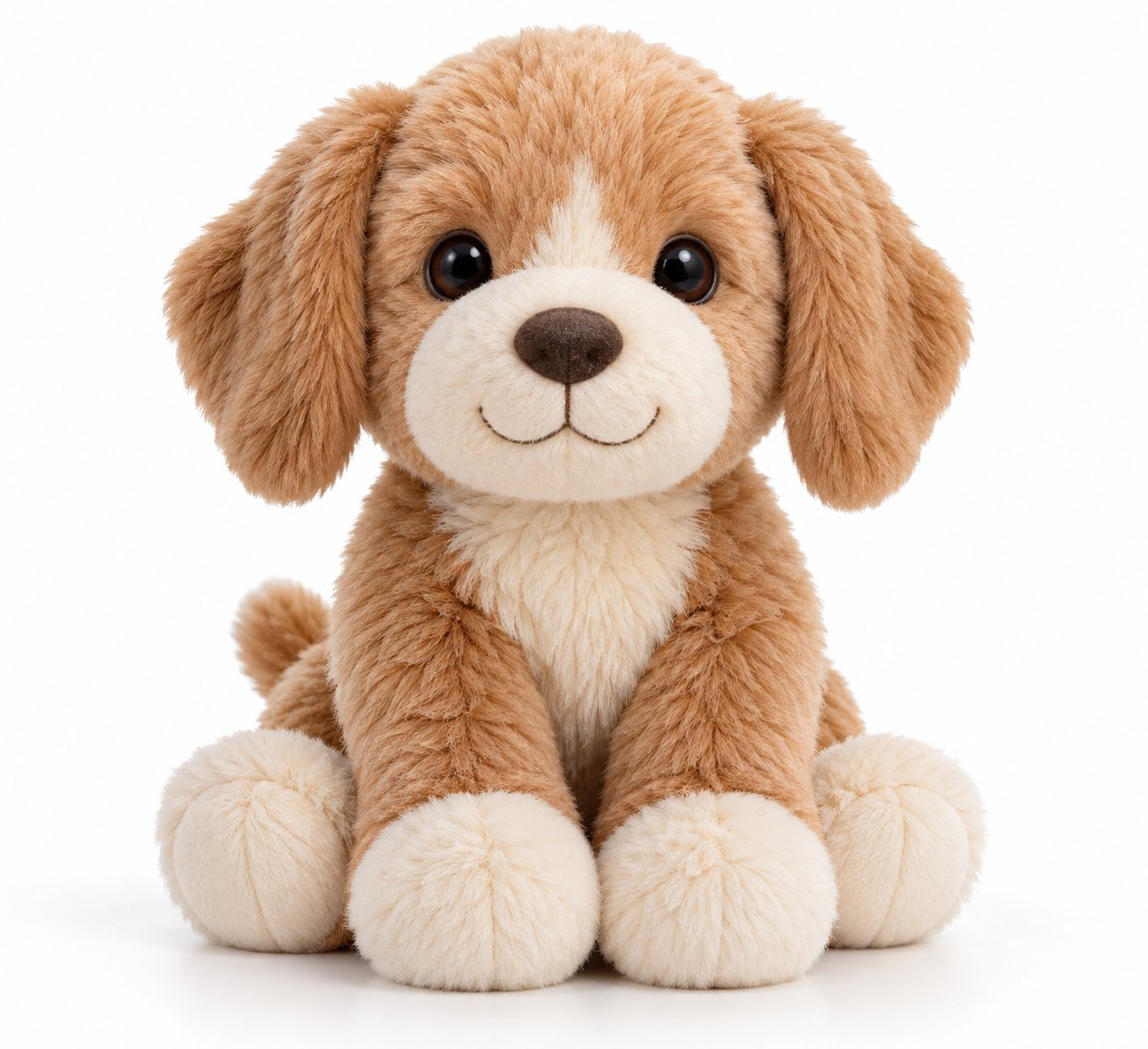
- Four care-label sections that pay for themselves: material and filling, a cleaning method the fabric can survive, age and safety reminders, storage and drying.
- Why a care claim that doesn't match the plush's real construction is worse than no claim at all.
- Two product examples that show how construction details change what an honest label can say.
- How to turn this into a specification you hand your supplier before sampling.
Why care guidance belongs in the purchase order
Most plush complaints that reach a retail buyer are not manufacturing failures. They are mismatches between what the customer did and what the product could take: a plush washed in a way the fabric and filling were never built for, a detail pulled loose, a toy kept in a damp place. The product behaved as made; the customer behaved as informed — by whatever the packaging said, or didn't say.
That is the buyer's risk to manage. A care label or insert card is the cheapest intervention you have between your customer and a return, because it sets expectations before the first wash, the first tug, the first storage season. This article does not repeat cleaning steps; it covers what the care content should contain, and how to make sure it is true for the specific product you are buying.
The care-label checklist
Four sections do most of the work. Treat each as an item to be specified, not left to the supplier's template.
1. Material and filling disclosure
The customer needs to know what the outer fabric is and what is inside before deciding how to treat it. A short-pile plush face behaves differently from a smooth woven backing, and a hypoallergenic filling is a claim the label should state plainly rather than leave to the sales page. Disclosure also serves you: if the label names the materials, the customer can tell whether their own routine — or their household's allergies — is compatible.
Ask the supplier to list every surface material and the filling type as they actually are in the approved sample, not as they were in an earlier version of the product.
2. A cleaning method that matches the fabric
This is where most care content goes wrong. The label should describe one cleaning route that the actual construction supports, and stay silent about routes it does not. If a plush has a smooth backing or fixed elements that would not survive a full immersion, the label should point to surface cleaning and explain why. If the product is built for deeper cleaning, say so with the appropriate caution.
Do not over-specify. Exact temperatures and machine settings vary by household equipment and are hard to word safely for a global label; what the customer needs first is the correct category of care and the reason behind it. In practice the category decision is binary: if the approved sample's face, backing, and fixed parts would not survive full immersion, the label belongs in the surface-cleaning category; only a construction that tolerates soaking belongs in the washable category. Judge the category from the approved sample, not from the design intent.
3. Age and safety reminders
A plush sold for the youngest users should carry the age guidance on the label itself. State the age range the product was designed and tested for, and add the practical reminders that follow from the construction: check stitching and attached parts periodically, and remove the item from use if any part comes loose. Where the product has been tested to a safety standard such as EN71 / ASTM F963, present the age grade on the label as the tested guidance it is — and let the periodic seam check complement, not replace, that testing. For gift programs, this section also helps the recipient's household decide quickly whether the item suits the child it was bought for.
4. Storage and drying guidance
Plush failures are often storage failures. Damp storage, compression in a sealed bag, or drying in direct heat can change how a filling sits and how a plush face feels. A line or two on drying — air-dry in a ventilated place, reshape while damp — and on storage — clean and fully dry before packing away — prevents a class of complaints that never involve the factory at all.
Matching care claims to construction
A care label is a promise about performance. If the label says the product can be cleaned a certain way, the customer will test that promise. Two product examples show how the promise has to follow the build.
Example: a custom plush stuffed animal
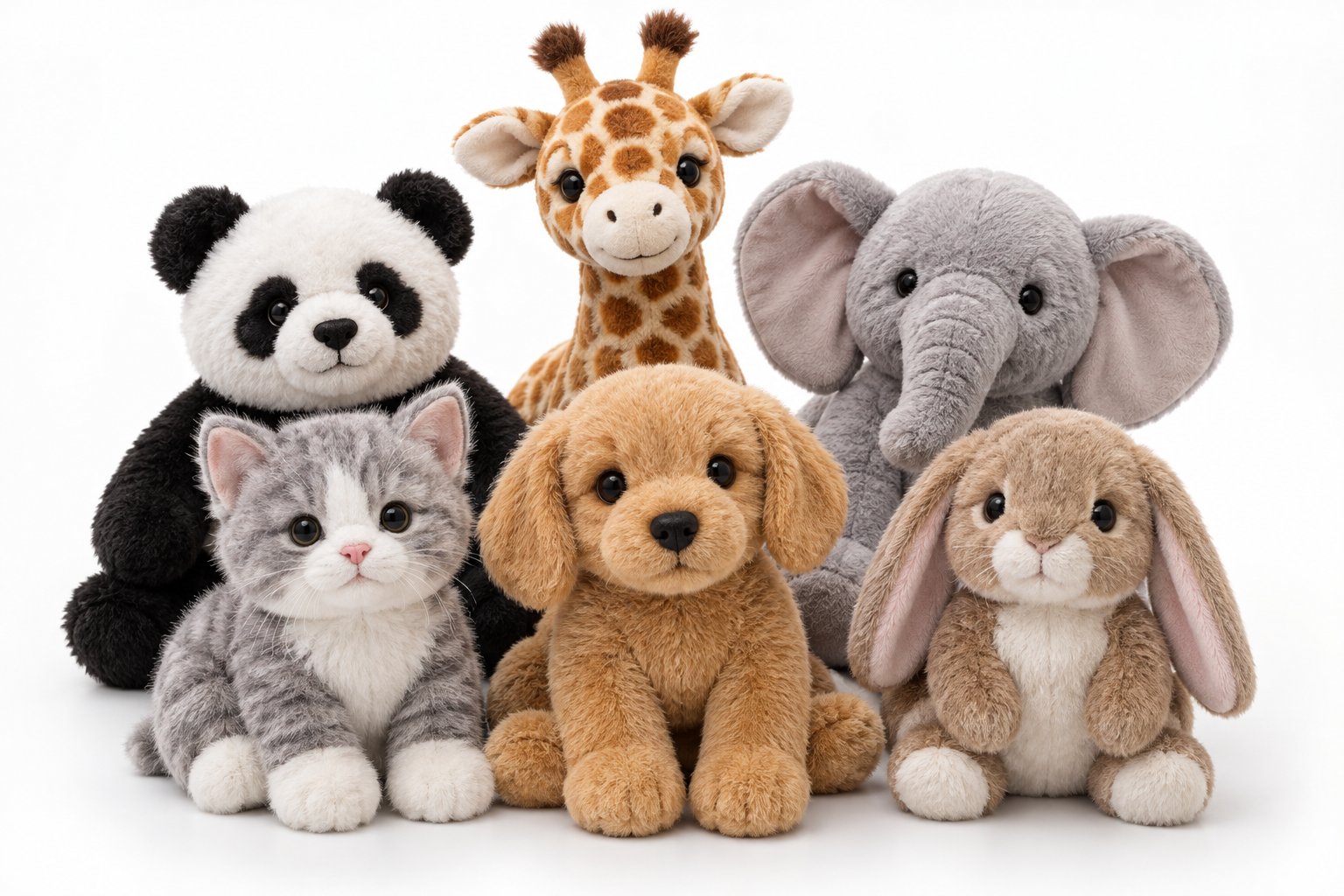
A custom plush stuffed animal is built from soft plush fabric with hypoallergenic filling and durable stitching, offered in sizes from 20 to 60 cm, rated for 0+ years, and compliant with EN71 / ASTM F963. Several of those facts shape the label directly. The hypoallergenic filling should be disclosed, because it is a claim the buyer's customer will rely on. The durable stitching should be paired with a periodic-check reminder, because a plush handled by very young children benefits from a habit of inspecting seams and attached details. And because the product is tested to EN71 / ASTM F963, the age grade on the label should be presented as tested guidance, with the seam-check reminder complementing rather than replacing it.
The size range matters too. A 20 cm plush and a 60 cm plush can share materials but not handling: the larger item is heavier when damp and needs more drying care. If the care card is shared across the range, word the drying guidance for the largest size in the range so it remains true for every SKU.
Example: a plush baby comforter blanket set
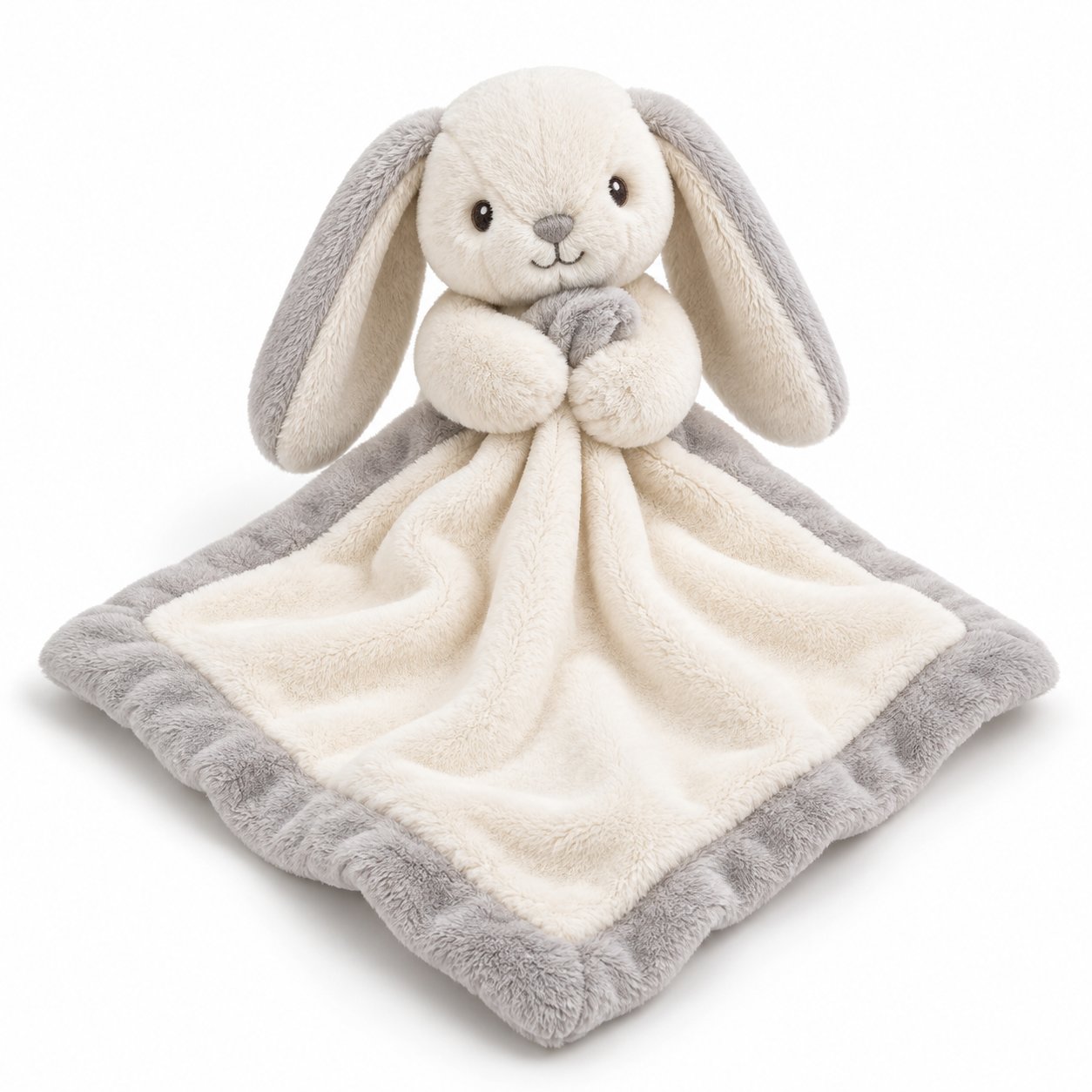
The plush baby comforter blanket set is rated 0+ years, built with a short-pile plush face and a smooth fabric backing, and compliant with EN71 / ASTM F963. It has no loose ribbons or detachable parts, is sized for prams and cots, and ships in gift-box packaging. The construction here is the care argument: the label should name both faces of the item, tell the customer the item has no loose ribbons or detachable parts by design, and — because pram and cot use means frequent handling and outdoor exposure — lean on surface cleaning and thorough drying rather than describing a routine the mixed face-and-backing build may not take equally well.
Gift-box packaging adds one more line worth writing: a recipient who receives the set without a sales page needs the age guidance and the no-detachable-parts note on the insert card itself.
| Label section | What to specify with the supplier | What it prevents |
|---|---|---|
| Material and filling | Exact face, backing and filling as approved in the sample | Customers treating the item against the wrong assumptions |
| Cleaning method | One route the construction supports, plus the reason | Damage from care the product was never built for |
| Age and safety | Tested age range and a periodic seam and part check | Use outside the intended age group; missed wear |
| Storage and drying | Air-dry and dry-before-storage guidance | Damp-storage complaints and shape loss |
One rule above all: never let the label outrun the product. A generic care card reused across a range will eventually describe a cleaning method one SKU cannot survive. Write the label from the approved sample, then re-check it whenever the fabric, filling or trim changes.
How clear care content reduces returns and complaints
The mechanism works step by step, and each step can be checked against your own order data rather than taken on trust:
- Less cleaning damage, by construction. When the label names the filling and the supported cleaning route, customers stop cleaning the plush in ways its construction was never built for — the most common self-inflicted failure. You can verify this by comparing damage-related return reasons before and after the label is introduced.
- Fewer "not as expected" returns. Named materials and a stated, tested age range close the gap between the sales page and the physical product. Check your return reasons for "not as described" entries and match them against the label wording: anything the label now covers should stop generating that reason.
- Fewer repeat support questions. A complete insert card answers the cleaning, storage, and age questions your customer service would otherwise answer one order at a time, and ticket volume on those topics is directly countable.
- Clearer gift-program outcomes. When the recipient, not the buyer, opens the box, the insert card is the only guidance in the room, and feedback on gift orders can be tracked separately from your general returns.
Next step: specify the care content before sampling
Care content is easiest to get right when it is part of the brief. When you request samples, ask for the proposed care label or insert card alongside the product, written for the exact construction being quoted. Compare the label against the sample: does the filling named on the card match what is inside? Does the cleaning route suit the face and backing? Is the age range stated? Is there drying and storage guidance?
Then tie the approved wording to your change process: the label text is confirmed at sample approval, and any revision to fabric, filling or trim should trigger a label review before the next production run. That single habit keeps the promise on the card aligned with the product in the box — and keeps how to care for stuffed animals from becoming a customer-service topic at all.