A practical cleaning and inspection workflow for buyers receiving bulk bath toys. Learn pre-sale checks, hygiene verification, mold-hole risk awareness, and when to request supplier QC documentation.
Maintenance & Hygiene Guide
Key Takeaways
- Inspect bulk bath toys for mold-hole risk before cleaning or resale; internal moisture traps are the main hygiene concern.
- Confirm with your supplier whether the toys are designed for easy drainage or sealed construction.
- Use a simple pre-sale workflow: visual inspection, wash, dry, and quarantine any item that fails.
- Request relevant QC documentation (e.g., EN71 / ASTM F963) when buying for daycare or resale channels.
In this article
Why Cleaning and Inspection Matter for Resale
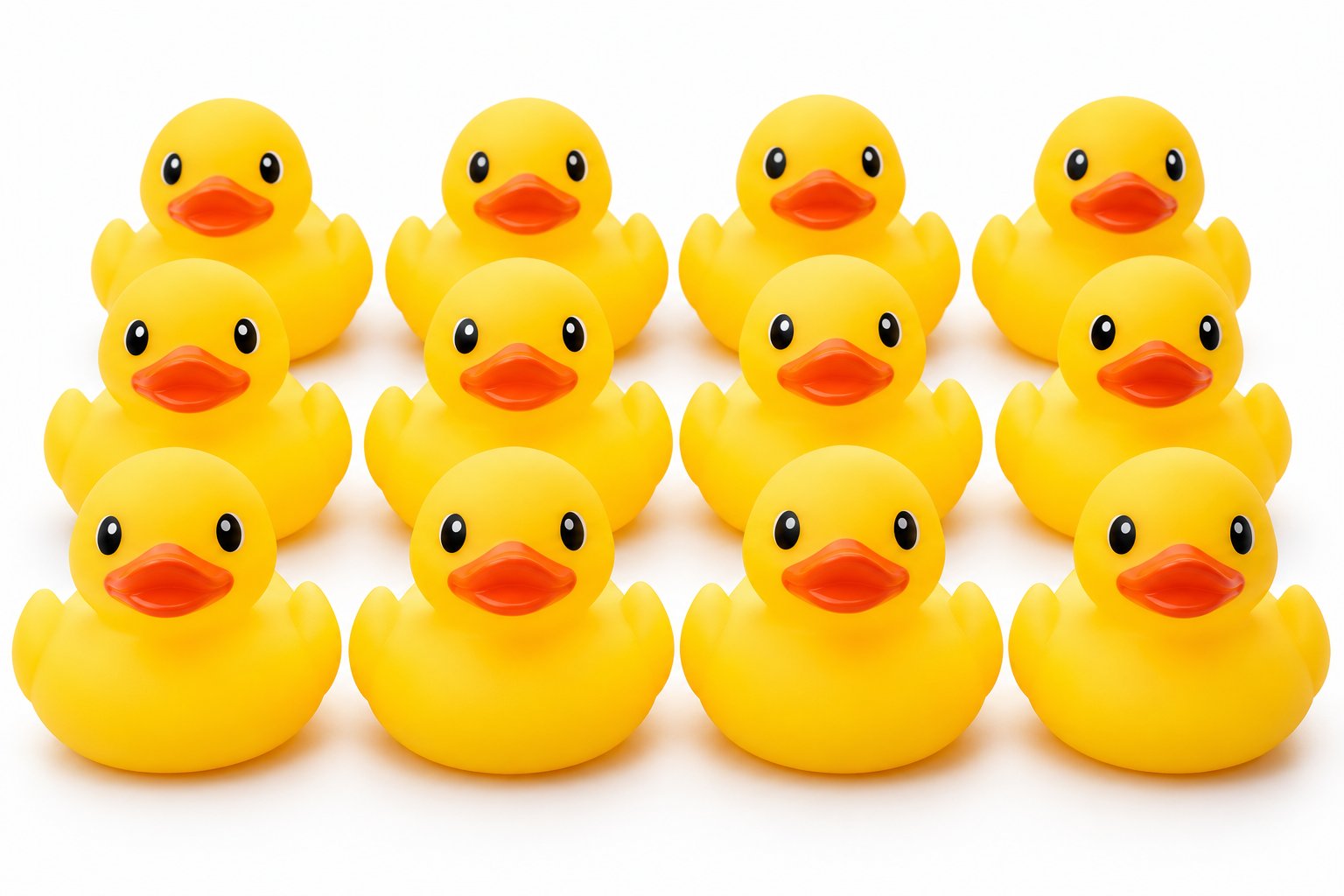
Bulk rubber ducks arrive from the supplier in packaging that protects them during transit, but they may still carry manufacturing residue, dust, or handling marks. For resale to consumers or supply to daycare centers, every duck should be visually inspected and cleaned according to a documented routine. This is not just about appearance: daycare buyers and parents increasingly ask how toys are cleaned and whether they can be fully dried. A consistent cleaning workflow protects your reputation and reduces returns.
The same workflow also gives you a practical way to catch defects before they reach your customers: missing paint, rough seams, or an odd smell are easier to spot during a batch inspection than after the product is shelved.
Pre-Sale Checks: What to Look For
Before any washing, inspect a sample from each carton. Look for:
- Surface finish: uneven color, scratches, or loose flash (excess material at the seam).
- Paint and print: any peeling, fading, or misalignment. Check the eyes and beak, where printing is most concentrated.
- Odor: a strong chemical or musty smell may indicate inadequate curing or moisture trapped inside.
- Hole and valve areas: the squeaker hole, if present, should be clean and free of debris. Any sign of water inside means the item should not be sold as-is.
These checks are visual and tactile. They do not replace lab testing, but they help you decide whether a batch is ready for cleaning or should be set aside for a supplier conversation.
Mold-Hole Risk: A Selection Criterion, Not Just a Cleaning Task
Many rubber ducks have a small hole for the squeaker. If water enters through that hole—during play or during your own washing—it can stay inside and create a dark, musty environment. This is the most common hygiene complaint for bath toys.
The best time to address mold-hole risk is at the buying stage, not after the goods arrive. Ask your supplier:
- Is the squeaker hole designed to drain, or is it a sealed cavity?
- Can the toy be fully emptied and dried if water enters?
- Are there alternative constructions (e.g., no-hole designs) available for daycare or healthcare channels?
For suppliers that offer OEM/ODM, you can request changes to the hole design or material formulation. Fujian Lequ Wanwan Co., Ltd., for example, provides OEM/ODM services and has an in-house QC laboratory that inspects materials, small parts, and finished products before packing. If you need a version that is easier to drain or clean, this is a conversation to have before placing a bulk order.
A Practical Cleaning Workflow
This workflow is designed for batches of bulk toys, not for a single item. Adjust quantities and timing to your facility. The key is consistency: every duck follows the same steps.
Step 1: Sort and Separate
Divide the batch into small groups (e.g., by carton). Set aside any duck that shows cracks, heavy odor, or signs of water inside. These should not be washed with the rest; they may need to be returned to the supplier or discarded according to your agreement.
Step 2: Pre-Rinse
Rinse each duck under running water to remove surface dust and loose particles. If the duck has a squeaker hole, point it downward so any water that enters can drain out. Do not submerge the duck and squeeze it under water—this forces water into the cavity.
Step 3: Wash with a Mild Solution
Use a mild soap or detergent suitable for toys. A soft cloth or sponge is enough for the outer surface. Avoid abrasive scrubbers that can scratch the paint. Pay attention to the seam and the area around the hole or valve. There is no universal correct water temperature or dilution ratio that applies to every material; confirm the recommended cleaning method with your supplier, because vinyl, natural rubber, and silicone respond differently to heat and chemicals.
Step 4: Rinse Thoroughly
Rinse each duck until no soap residue remains. Soap left on the surface can attract dirt and may cause skin irritation. Again, keep the hole pointing down during rinsing.
Step 5: Inspect Again
After washing, re-check each duck for any defects that were hidden by dust. If a duck still smells musty or shows discoloration near the hole, remove it from the batch.
Drying and Storage
Drying is where many cleaning routines fail. A duck that looks dry on the outside may still hold water inside. Place the ducks in a well-ventilated area, ideally with the hole facing down, so gravity helps drain any internal moisture. Avoid stacking them while wet. In humid climates, allow more time. If you suspect that water has entered the cavity, do not pack the duck for resale until you are confident it is dry.
For storage, keep cleaned ducks in clean, dry containers. Label the batch with the cleaning date and the carton number so you can trace any issue later.
When to Request Supplier QC Documentation
If you are buying for daycare centers, schools, or retail chains, your customers may ask for evidence that the toys meet safety and material requirements. This is where supplier documentation matters.
Ask your supplier which certifications apply to the specific product and batch. Fujian Lequ Wanwan Co., Ltd. holds EN71 and ASTM F963 certification covering its export range, and its in-house QC laboratory performs material inspection, small-parts testing, and finished-product checks before packing. For a daycare or resale order, request the relevant certificate or test report for the product you are buying. Confirm that the document names the correct material and that it is current.
Documentation does not replace your own incoming inspection, but it supports your due diligence and can be shared with your buyers when they ask about compliance.
FAQ
Can I wash rubber ducks in a dishwasher or washing machine?
Not all bath toys are designed for machine washing. Heat and mechanical action can damage the material, loosen paint, or force water into the cavity. Check with your supplier for the recommended cleaning method for the specific material and construction of your ducks.
How do I know if water is trapped inside a duck?
Shake the duck gently and listen for water. You can also squeeze it near your ear. If you hear or feel moisture, set it aside and let it drain in a warm, ventilated area. If it does not dry out, do not sell it.
Do I need to clean ducks that are already individually packaged?
If the packaging is sealed and the ducks are clean, you may only need a visual inspection. However, if the packaging is dusty or has been stored in a humid environment, unpack, inspect, and clean as needed before resale.
What should I ask my supplier before ordering bulk bath toys for daycare use?
Ask about the material, the squeaker hole design, whether the toy can be fully drained, and which safety certifications apply. If you need a specific construction or packaging, ask whether OEM/ODM is available. A supplier with an in-house QC lab can often provide more detailed answers about material and small-parts testing.
For specific cleaning recommendations, always confirm with your supplier. Material formulations vary, and the method that works for one batch may not suit another.