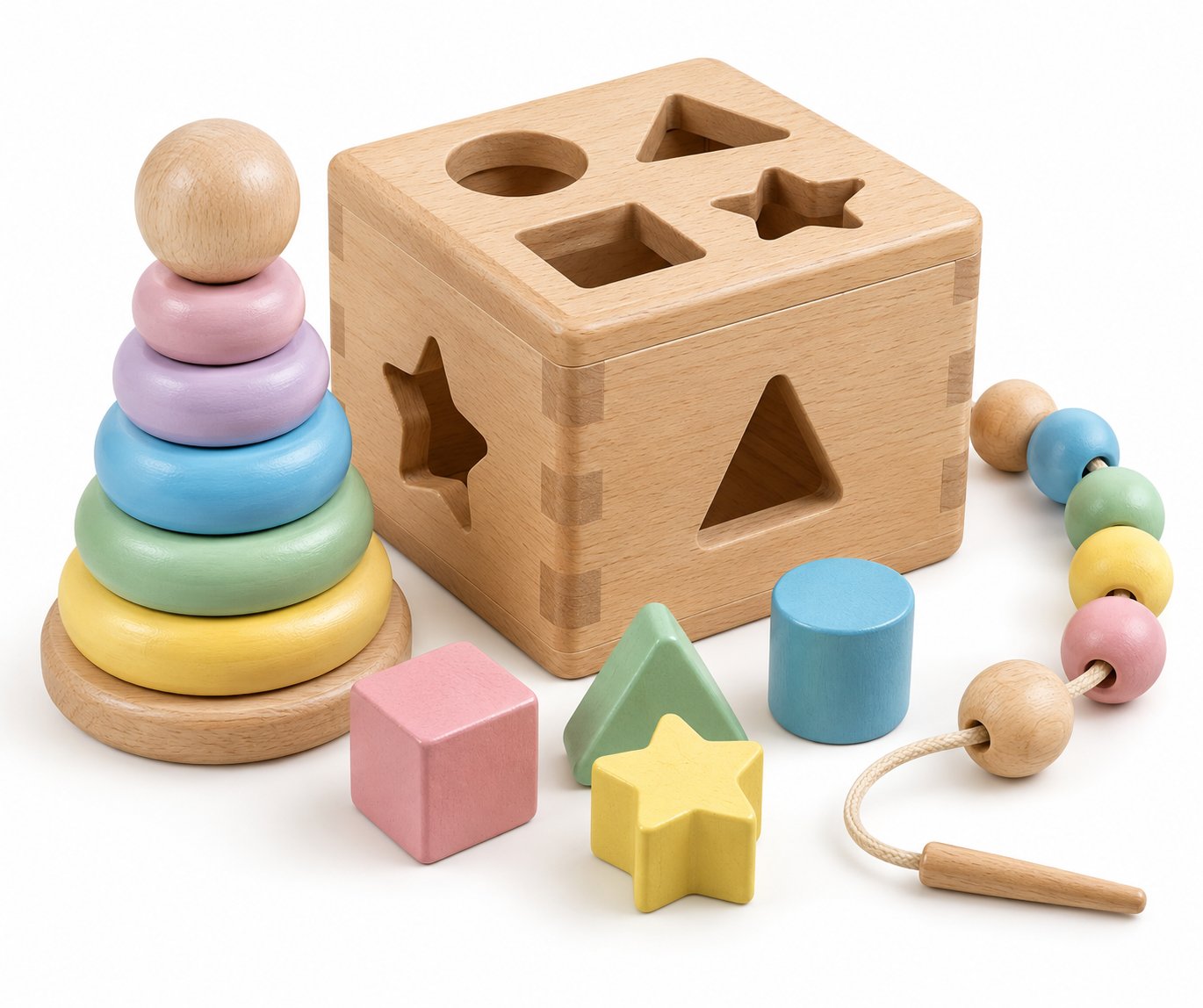
A classroom-ready cleaning routine for wooden building blocks: how to set a frequency by usage intensity, sort coated and painted pieces, clean in batches between sessions, dry and store them, run an inspection checklist, and confirm finish details with your supplier before reordering.
Classroom Routine
A practical cleaning routine for wooden building blocks in shared, high-frequency settings: set a frequency that matches how hard the blocks are used, sort by finish, clean in batches between sessions, dry and store them properly, and inspect each piece before it goes back into play.
Key takeaways
- Match cleaning frequency to usage intensity, not to a fixed calendar schedule.
- Sort coated and painted blocks before washing so you treat each finish correctly.
- Clean in batches between sessions; a removable lid lets staff reset the set quickly.
- Use a damp cloth, never a soaking wet one, and dry pieces immediately.
- Inspect every block before it goes back into play; retire cracked, chipped, or loose pieces.
- Ask your supplier to confirm the finish and care method before you standardize a classroom routine.
Set frequency by usage intensity, not by the calendar
Classrooms do not use blocks at the same rate. A set that lives on a free-play shelf and moves between groups several times a day needs a different rhythm from a set used once a week in a guided activity. Build the schedule from how the blocks are handled:
- High rotation (shared between groups most days): clean between sessions, and put the set through a full wash at the end of the day.
- Medium rotation (used most days but by one group): clean once a day, with spot cleaning for visibly soiled pieces.
- Low rotation (occasional use or stored away): clean before the set goes back on the shelf and again before it is returned to active play.
The point is to clean when contamination can move between children, not to hit a fixed number of washes. If a child has been ill, treat the set as high rotation for that period and clean the pieces that were in use before the next group touches them.
Sort blocks before you wash
Not every piece in a set should be treated the same way. Separate the blocks into groups before any cloth touches them:
- Sealed or coated pieces — solid wood with a factory-applied coating. These tolerate a damp cloth and a mild soap solution best.
- Painted or printed pieces — color applied on the surface. Clean more gently and check for flaking or fading at the edges.
- Unfinished or naturally oiled pieces — if any are present in your set. These should not be soaked and may need a different care method from the supplier.
Mixing the groups in one wash basin is the most common mistake. A piece that can take a damp wipe may sit next to one that should not get wet at all.
Clean between sessions: the batch method
Batch cleaning is faster than wiping blocks one at a time and easier to hand off between staff. The steps below work for a standard set and can be scaled up when several sets rotate through the same room.
- Clear the play area. Collect all blocks into a single tray or basin so nothing is missed under furniture.
- Remove loose debris. Brush off sand, crumbs, and dust with a dry cloth or soft brush before any moisture touches the wood.
- Prepare a mild solution. Use a cloth wrung out in a mild soap-and-water solution. The cloth should be damp, not dripping.
- Wipe each block. Work over the full surface, including edges and the recessed areas of shaped pieces. Do not submerge blocks in water.
- Wipe again with a clean damp cloth. Remove soap residue so it does not dry on the surface.
- Dry immediately. Towel-dry each piece and lay it out in a single layer with space between blocks. Do not stack wet pieces.
- Return to storage only when fully dry. Moisture trapped in a closed container is the main cause of warping, mold, and lifted coating.
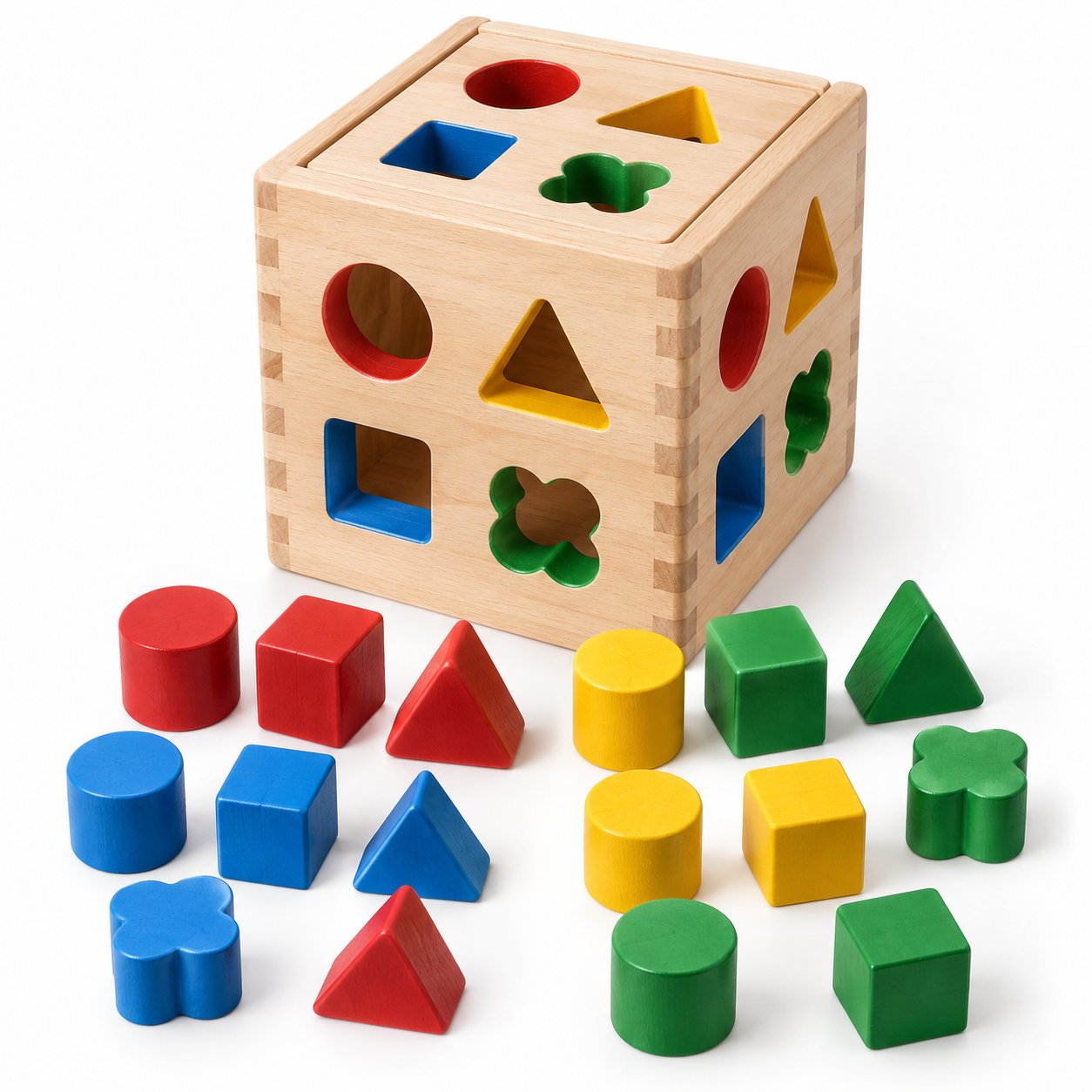
For sets that include a shape-sorting cube with a removable lid, the lid comes off so staff can lift out the blocks and reset the set quickly between sessions. That design detail shortens the cleaning cycle in a busy room, because the blocks do not have to be fished out one by one.
Dry and store so the next session starts clean
Drying is part of cleaning, not a step after it. Wood absorbs moisture through exposed end grain and any worn spot in the coating, so a block that looks dry on the surface can still hold water at the edges.
- Lay blocks flat in a single layer in a ventilated area, away from direct heat.
- Turn thicker pieces once so both faces dry evenly.
- Store in an open tray or a container with airflow rather than a sealed bin.
- Keep storage away from damp walls, floor spills, and direct sunlight that can fade painted surfaces.
If your classroom uses a fabric storage bag, confirm it is fully dry inside before the blocks go back in. A damp bag will undo a clean set overnight.
Inspection checklist before blocks go back into play
Run this check on every piece as it comes out of the drying area. It takes seconds per block and catches the problems that matter most in a shared setting.
| Check | What to look for | Action |
|---|---|---|
| Surface coating | Cracks, lifting, peeling, or a chalky feel | Remove from play and assess for retirement |
| Paint or print | Fading, flaking, or color coming off on the cloth | Set aside; do not return to a shared set |
| Edges and corners | Chipping, splinters, rough spots, or sharp points | Sand smooth only if the finish allows; otherwise retire |
| Structure | Cracks along the grain, loose joints, or a piece that flexes | Retire immediately |
| Odor | Musty or chemical smell after drying | Re-clean, dry fully, and review storage conditions |
| Size and shape | Pieces that no longer fit the sorter or match the set | Separate from the set to avoid mismatched inventory |
A block that fails any structural or coating check should not go back into a shared set, even if it still looks usable at a glance.
When to retire a block
Retirement is a judgment call, but three conditions justify pulling a piece permanently: a crack that runs through the body of the block, a coating that has lifted enough to expose bare wood, or a shape that has worn down enough to no longer fit its matching opening. Chipped paint on a single face is a borderline case; move the piece out of the shared set and inspect it again before deciding.
Keep a small retirement tray in the storage area. When staff find a failing piece during a session, it goes into the tray instead of back into the bin, and the set coordinator reviews the tray before the next order.
What to confirm with your supplier about the finish
Cleaning advice only works if it matches the finish on the actual product. Before a school or preschool standardizes a routine across a block order, ask the supplier to confirm:
- The coating type. Non-toxic water-based coatings are common on classroom blocks, but the cleaning method still depends on the specific finish used.
- Whether the wood is sealed on all faces. A fully sealed block handles a damp wipe better than one with exposed end grain.
- Recommended cleaning method and products to avoid. Ask which cleaners are compatible and which will damage the surface.
- Compliance documentation. For classroom products, confirm the applicable safety standard and request the test report for the model you are ordering.
- Spare parts and replacement pieces. Ask whether individual blocks or components can be replaced, and under what order terms.
Product reference: Wooden Shape Sorter Cube — 12 chunky blocks in 4 shapes and 4 colors, solid wood sanded smooth with rounded edges, non-toxic water-based coating, removable lid for quick reset between sessions, suitable for ages 2+, EN71/ASTM F963 compliant, MOQ 500 sets.
Product page: Wooden Shape Sorting Cube
FAQ
Can wooden blocks be disinfected after a child has been ill?
Cleaning products vary in how they interact with wood finishes, so confirm a compatible method with your supplier before applying any disinfectant. In the meantime, use a damp cloth with a mild soap solution, dry the blocks completely, and keep that set out of rotation until the routine is confirmed.
How often should classroom wooden blocks be cleaned?
Set the interval by how the set is used: clean between sessions for high-rotation sets shared by several groups, daily for sets in regular use, and before and after storage for occasional-use sets. The goal is to break the transfer path between children.
Can I put wooden building blocks in a dishwasher?
No. Dishwasher heat and prolonged water exposure will damage wood and most finishes. Use a damp cloth, avoid soaking, and dry immediately.
What should I ask a supplier before ordering classroom blocks?
Ask for the coating type, cleaning recommendations, the safety standard and test report that apply to the specific model, and whether replacement pieces are available. These answers determine how the set can be maintained in a school environment.