A practical step-by-step guide for first-time and small-volume toy importers, covering product and compliance preparation, supplier documentation, shipping, and customs paperwork. Learn what to prepare at each stage and where to confirm destination-specific requirements.
Import Guide
Importing toys for the first time involves more than placing an order and waiting for a container. The process runs from product specification through compliance checks, supplier documentation, freight booking, and customs clearance. Each stage produces paperwork that the next stage depends on, and gaps in one stage tend to surface at the border, where they are most expensive to fix.
This guide walks through the key steps from order to customs, with a focus on what first-time and small-volume buyers need to prepare. Requirements vary by destination country, so treat the steps as a framework and confirm specific regulations, duty rates, and document formats with a customs broker or freight forwarder for your market.
Key takeaways
- Start compliance research before you finalize product specifications, not after.
- Ask the supplier for a complete document package early; missing certificates delay booking and clearance.
- Customs classification, duty rates, and labeling rules differ by country — confirm them with a broker.
- Small-volume orders still need the same core documents as larger shipments; the difference is usually freight mode and consolidation.
Contents
- Step 1: Define the product and check compliance
- Step 2: Select a supplier and confirm documentation
- Step 3: Place the order and arrange pre-shipment inspection
- Step 4: Book freight and prepare shipping documents
- Step 5: Clear customs and arrange delivery
- Step 6: Post-clearance checks and recordkeeping
- Document checklist
- FAQ
Step 1: Define the product and check compliance
Before approaching suppliers, write a product specification that includes intended age group, materials, dimensions, packaging format, and any labeling or safety requirements your market applies to toys. Toy safety rules are destination-specific: the EU, the US, and other markets each have their own standards, testing protocols, and labeling obligations. A customs broker or compliance consultant can tell you which tests and certificates apply to your product category.
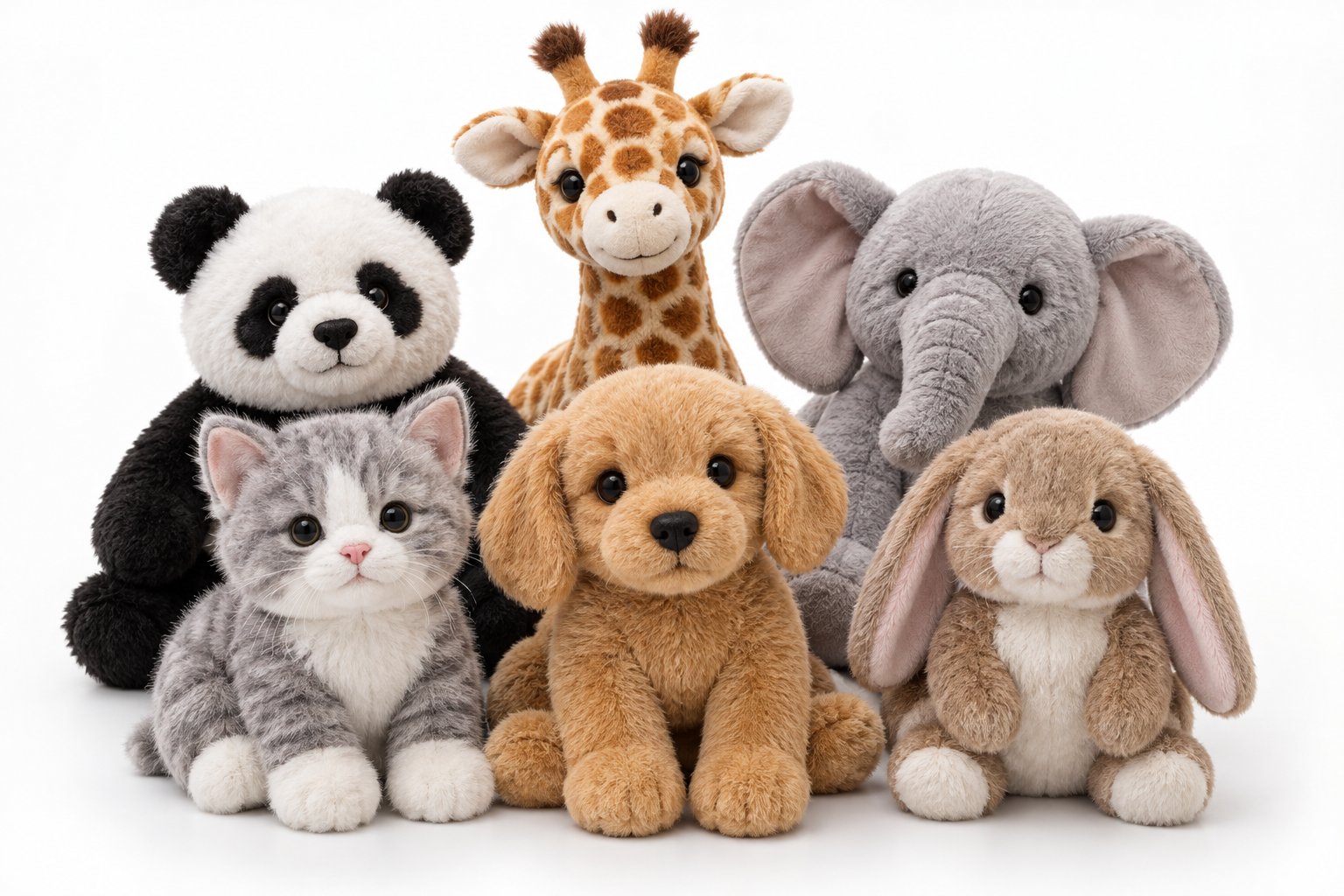
For example, a plush assortment like the Plush Animal Assortment Display Box — 6 animal styles at 18 cm with embroidered features and double-stitched seams — may require different testing than electronic or plastic toys. The supplier should be able to confirm which tests the product has undergone and provide reports where available. Ask for certificates that specifically name your product and the destination market; a general factory certificate may not cover the item you are importing.
At this stage, also decide on packaging. Retail-ready display boxes, poly bags, and master carton configurations affect both compliance (e.g., suffocation warnings, age labeling) and freight costs. Clarify with the supplier what packaging is included and whether customized packaging changes the minimum order quantity (MOQ).
Step 2: Select a supplier and confirm documentation
When evaluating suppliers, ask for a sample of the documentation they routinely provide for export shipments. A supplier with a dedicated export documentation team is better positioned to supply correct and complete paperwork. For instance, Fujian Lequ Wanwan Co., Ltd., founded in 2013, has 180 staff including a dedicated export documentation team, a 12,000 sqm factory, 6 production lines, and monthly capacity of 1,200,000 units. They support OEM/ODM from buyer brief to confirmed sample and exhibit at Spielwarenmesse, Canton Fair Phase 3, and Hong Kong toys fairs. These facts indicate experience with international buyers, but you still need to verify that the documents they provide meet your destination's requirements.
Request a proforma invoice that clearly states product description, quantity, unit price, Incoterms (e.g., EXW, FOB, CIF), payment terms, and estimated lead time. The Incoterm determines who arranges and pays for freight, insurance, and customs clearance at origin and destination, so choose it deliberately. If you are new to importing, FOB or CIF terms are common because they shift more logistics responsibility to the seller or freight forwarder.
Ask the supplier to confirm which of the following they can provide and at what cost:
- Commercial invoice and packing list
- Bill of lading or airway bill
- Certificate of origin (if applicable for preferential duty treatment)
- Product test reports or compliance certificates for your market
- Fumigation certificate or phytosanitary certificate if wooden packaging is used
Document requirements vary by country and product. Confirm the exact list with your customs broker.
Step 3: Place the order and arrange pre-shipment inspection
Once you approve a sample and place the order, agree on a production schedule and inspection points. For a first order, consider a pre-production sample approval and a pre-shipment inspection. Third-party inspection services can check quantity, specifications, labeling, and packaging before the goods leave the factory. This step is optional but helps catch discrepancies before freight costs are incurred.
Small-volume buyers may worry that inspections are only for large orders. In practice, inspection cost is often modest relative to the risk of receiving non-compliant goods. Discuss with the supplier whether they can accommodate inspection access and provide the necessary documents for the inspector.
During production, keep records of approved samples, specifications, and any changes. These records are useful if customs or your buyer asks for clarification later.
Step 4: Book freight and prepare shipping documents
Freight booking can be handled by the supplier (under CIF or similar terms) or by you (under FOB or EXW). For small volumes, less-than-container-load (LCL) sea freight or air freight may be appropriate. Your freight forwarder will advise on transit times, costs, and consolidation options.
Provide the forwarder with the commercial invoice, packing list, and product details so they can classify the goods and quote accurately. The forwarder will also tell you which shipping documents are needed for your destination. Typically, this includes:
| Document | Purpose | Who provides |
|---|---|---|
| Commercial invoice | Customs valuation and duty calculation | Supplier |
| Packing list | Details of packages, weights, dimensions | Supplier |
| Bill of lading / airway bill | Contract of carriage and title document | Carrier or forwarder |
| Certificate of origin | Proof of origin for duty preference or trade statistics | Supplier or chamber of commerce |
| Test reports / compliance certificates | Evidence of conformity with destination safety rules | Supplier or testing lab |
Check that the commercial invoice accurately describes the goods, quantity, value, and Incoterms. Under- or mis-declaration can lead to penalties and delays. Your customs broker can review the documents before shipment.
Step 5: Clear customs and arrange delivery
When the shipment arrives, customs clearance begins. Your broker will submit the entry and may request additional documents, such as product labeling, test reports, or permits. Having these ready in advance reduces the risk of storage fees and demurrage.
Duty and tax rates depend on the product classification (HS code) and the destination country's tariff schedule. Do not rely on generic rates; confirm the classification and rates with your broker. Some countries also have specific toy safety regulations that customs may check at import.
After clearance, arrange delivery to your warehouse or fulfillment center. Inspect the goods upon receipt and compare against the packing list and your order specifications. Report any discrepancies to the supplier promptly.
Step 6: Post-clearance checks and recordkeeping
Keep copies of all import documents for your records and for any post-clearance audits. Many customs authorities require importers to retain records for a set period. Your broker can advise on the retention period for your country.
Review the process after each shipment: which documents caused delays, which steps could be streamlined, and whether your supplier's documentation was complete. This feedback improves the next order.
Document checklist
| Stage | Documents to prepare | Responsible |
|---|---|---|
| Product specification | Product spec sheet, intended age group, materials list, packaging artwork | Buyer |
| Compliance | Test reports, certificates of conformity, labeling samples | Supplier / testing lab |
| Order | Proforma invoice, purchase order, sales contract | Buyer and supplier |
| Pre-shipment | Inspection report (if used), approved sample photos | Third-party inspector / buyer |
| Shipping | Commercial invoice, packing list, bill of lading/airway bill, certificate of origin | Supplier / forwarder |
| Customs clearance | Entry declaration, permits (if required), proof of payment | Customs broker |
| Post-clearance | All import documents retained for audit | Buyer |
FAQ
Do I need a customs broker?
You can clear customs yourself in some countries, but a licensed customs broker is recommended for first-time importers because classification, valuation, and document requirements are specialized and errors can be costly.
What is the minimum order quantity for toys?
MOQ varies by supplier and product. For example, the Plush Animal Assortment Display Box has an MOQ of 1000 packs. Small-volume buyers can sometimes negotiate lower MOQs or find suppliers with lower thresholds, but expect higher unit prices.
How long does the import process take?
Lead time depends on production schedule, shipping method, and customs processing. Ask your supplier for a production timeline and your forwarder for transit estimates. Add buffer for customs clearance, which can vary.
What if my goods are held at customs?
Customs may hold goods for missing documents, compliance checks, or valuation issues. Your broker will notify you of the reason and what is needed. Respond promptly to avoid storage fees.
Importing toys follows a predictable sequence, but the details are destination-specific. Build your document package early, confirm requirements with a broker, and keep records. For buyers starting with plush assortments, the Plush Animal Assortment Display Box is one example where supplier specifications and MOQ are clearly listed, which helps you plan the compliance and logistics steps.