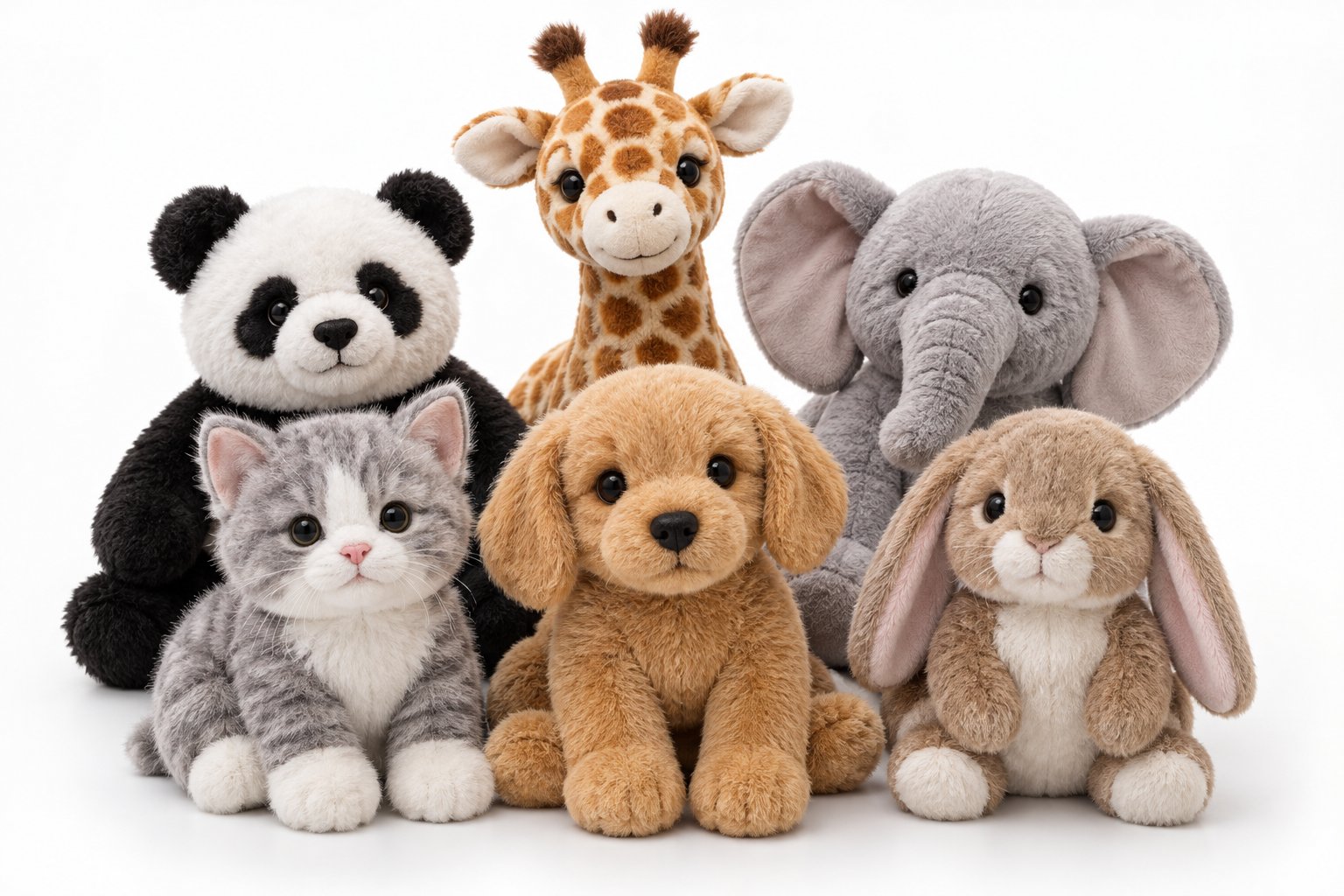
A step-by-step walkthrough of the OEM/ODM custom plush production process, from artwork and prototype sampling through buyer confirmation, mass production, quality checks, packing, and export shipment. Written for brand buyers who want to know what they provide at each stage and what the manufacturer handles.
OEM / ODM Process Guide
A custom plush order succeeds or fails long before the first carton leaves the factory. The variables buyers ask about most — likeness to artwork, sample rounds, MOQ, and whether the shipped goods match the approved prototype — are decided by the sequence of steps below. This guide walks through the standard route from your design file to export shipment, and states plainly what you supply and what the manufacturer handles at each stage.
What this guide covers
- Design artwork and the technical details a factory needs to quote and build
- Prototype and sample rounds, and how confirmation decisions are made
- Mass production, in-line and final quality checks
- Packing, compliance documentation, and shipment
Contents
Step 1 — Design and artwork handoff
Custom plush is a translation exercise: a two-dimensional design has to become a three-dimensional soft object that holds its shape. The translation starts with what the buyer sends.
What the buyer provides
- Front, side, and back views of the character or product
- Target finished size (the 20–60 cm range covers most gift and retail formats)
- Color references and any brand marks that must appear exactly
- Intended use and audience — for example, an age 0+ gifting item versus a collector item
- Packaging and labeling requirements
What the manufacturer does
- Reviews artwork for sewability and proportion, flagging features that need adjustment
- Proposes fabric, filling, and construction suited to the use case
- Confirms the customization scope: size, color, and design
- Issues a quotation and proposed specification sheet
This is also the point where compliance is scoped. Plush toys for North American and European markets normally need to satisfy EN71 or ASTM F963, and the intended age range shapes both materials and construction. A manufacturer serving those markets should be able to state which standard applies to your product and what documentation accompanies shipment.
Step 2 — Prototype and sampling
Sampling is where the design becomes real. OEM and ODM programs differ mainly in who owns the design: under OEM, you supply the artwork and the factory builds to it; under ODM, the factory can develop the concept with you, which is useful when you have a market need but no finished design file.
The sample round is collaboration, not replication. After the prototype is sewn and stuffed, the buyer typically reviews:
- Silhouette and proportion against the original artwork
- Face and feature placement, which drives most of the recognizability
- Fabric hand-feel and color accuracy
- Firmness and stuffing distribution
- Stitch quality and seam placement
Expect more than one round on a first-time design. Comments are consolidated into a written revision list, and the factory revises the pattern accordingly. The useful discipline here is to make each round address a defined set of changes rather than adding new directions, which is what stretches sampling out.
Step 3 — Buyer confirmation
Once the sample is right, it becomes the reference standard for the entire order. Confirmation is a formal step: the approved sample is signed off, and the specification sheet is frozen — dimensions, materials, colors, and packaging.
Two practical points matter at this stage:
- Color tolerance. Plush fabric is dyed in batches, so exact matches to a screen image are not a realistic standard. Confirm approval against a physical swatch or the approved sample, not a digital file.
- Change control. After confirmation, any revision restarts part of the sampling process. Requests made during production — for example, shrinking a size or swapping a fabric — affect the approved pattern and should be handled deliberately rather than informally.
The approved sample also protects both sides: it is the physical benchmark used in final inspection before shipment.
Step 4 — Mass production
Production follows the confirmed sample through a fixed sequence of operations: cutting the pattern, sewing and assembling, stuffing, closing and finishing, then attaching any accessories such as eyes, noses, or hangtags.
For an age 0+ product, filled with hypoallergenic filling, the stuffing and closure operations get particular attention because they affect safety and durability. Accessory attachment is checked during the run, not only at the end, since a loose component cannot be corrected in a finished carton.
Buyers who want visibility during the run commonly ask for progress photos at defined milestones — after cutting, mid-assembly, and pre-packing. That is a reasonable request and a normal part of working with a B2B toy manufacturer on a large order.
Step 5 — Quality checks
Quality control in plush manufacturing works on two levels: in-line and final.
| Check stage | What is inspected |
|---|---|
| Incoming material | Fabric and filling against the confirmed specification |
| In-line | Stitch integrity, seam strength, stuffing consistency, feature placement |
| Finished-goods | Dimensions, color, workmanship, accessory security, surface cleanliness |
| Pre-shipment | Packing configuration, carton markings, quantity, and documentation |
If your program requires third-party inspection, schedule it against the approved sample while goods are still in the factory. Inspection after the container is sealed is too late to correct anything.
Step 6 — Packing and shipment
Standard export packing for plush is a poly bag per piece plus an export carton. Buyers with retail programs often specify additional requirements — printed poly bags with warning text, individual hangtags, or inner cartons — and these should be settled in the specification sheet, because changing them late disrupts the packing line.
Before shipment, confirm the full documentation set:
- Packing list and commercial invoice
- Compliance documentation for the applicable standard (EN71 or ASTM F963)
- Carton markings matching your receiving requirements
- Inspection report, if a third party was involved
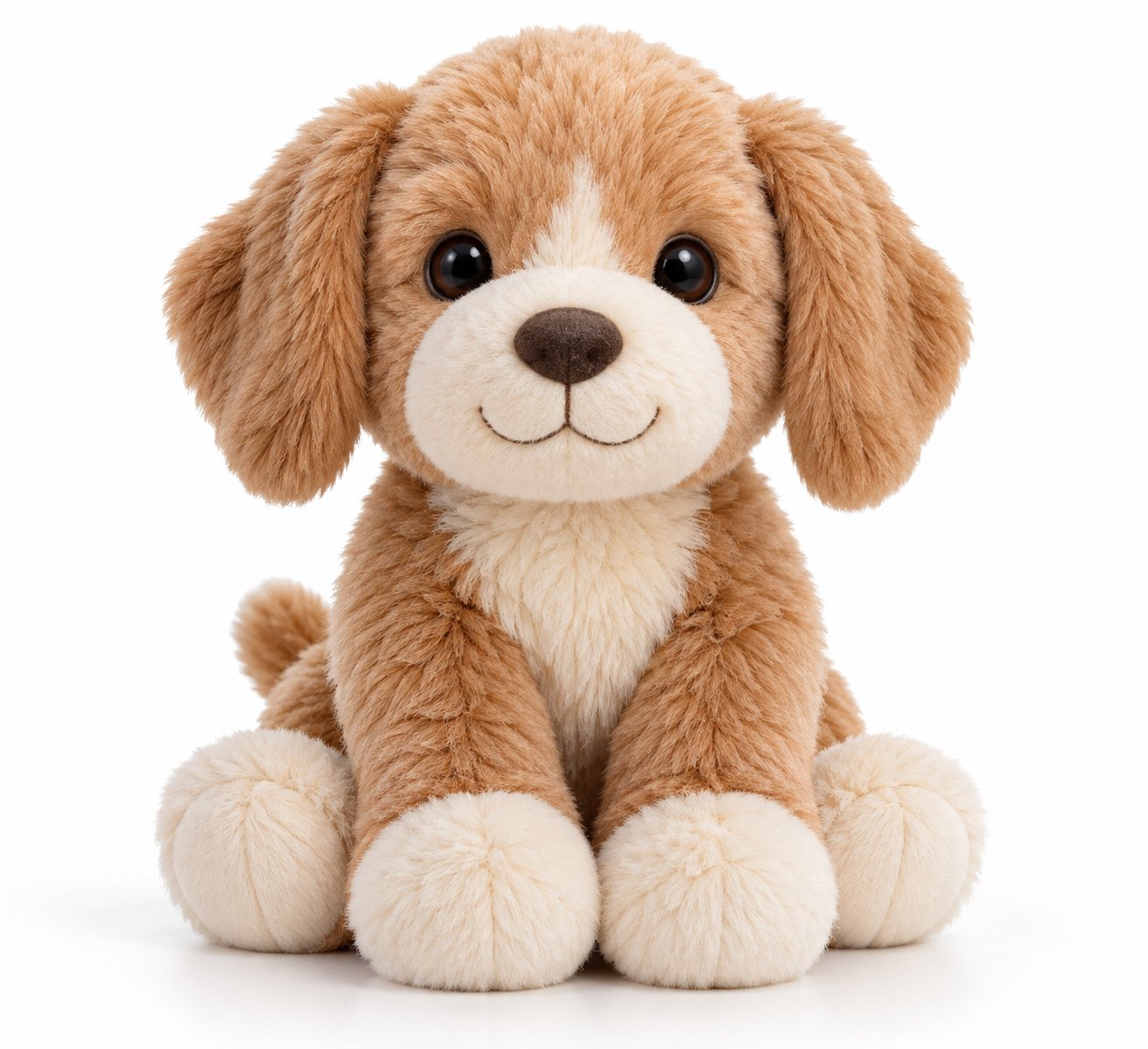
A manufacturer experienced with North American and European buyers will already know their documentation expectations. When you evaluate a supplier, ask to see a complete pre-shipment document set from an export order — it is the fastest way to judge how smoothly shipment will go. You can also review the packaging and compliance details published on a representative product page, such as this custom plush stuffed animal built for gifting programs.
MOQ and sample rhythm in practice
MOQ exists because custom plush involves pattern development, material sourcing, and production setup that only make sense at volume. A MOQ of 1,000 pcs is the point at which custom development becomes efficient for both sides. Below that, buyers are usually better served by adapting an existing design — a color or size variation on a proven pattern — rather than starting a new development. See how that logic applies in an OEM/ODM custom plush program.
On sampling rhythm, the useful way to think about it: the first round establishes the concept, the second refines details, and further rounds should be exceptions rather than the norm. If you are several rounds in with no resolution, the issue is almost always one of two things — the artwork itself is ambiguous, or feedback has been directional rather than specific. Written, itemized comments per round resolve both.
Fujian Lequ Wanwan Co., Ltd. is a B2B toy manufacturer and exporter serving North American and European buyers, offering OEM/ODM custom plush with customizable size, color, and design in the 20–60 cm range, soft plush fabric, hypoallergenic filling, and EN71 / ASTM F963 compliant production.
FAQ
How many sample rounds should I expect?
Two rounds is typical for a new design. More may be needed for complex characters or when feedback changes direction between rounds.
Can I order fewer than the MOQ?
Custom development is structured around a 1,000 pcs MOQ. For smaller quantities, ask whether an existing design can be adapted in color or size.
Who owns the design under OEM versus ODM?
Under OEM you supply the design; under ODM the manufacturer develops it with you. Discuss ownership and exclusivity terms before sampling begins.
What does the approved sample mean for inspection?
It becomes the physical reference standard. Final inspection compares the production run against it, which is why the sample must be signed off before mass production starts.
What compliance documentation ships with the order?
For North American and European markets, expect documentation for EN71 or ASTM F963 along with packing list and invoice. Confirm the exact set for your destination at order confirmation.
Getting started
The fastest way to begin is to send artwork, target size, and intended use. From there, the sequence is straightforward: prototype, approval, production, inspection, shipment. If you are planning a gifting or retail program, you can request product details and a sampling plan to move from artwork to a shipped order.