A practical guide for brand, gift and promotional buyers comparing customization options on plush toys — embroidery versus printed details, fabric color, size, hang tags and retail packaging — and how each choice affects MOQ, sampling and lead time.
If you are specifying a plush toy for a brand launch, a gift program or a promotional run, the question is rarely "can it be customized" — most factories will say yes. The useful question is which customization steps you can change cheaply and which ones push your order into a higher minimum order quantity (MOQ) and a longer sampling cycle. This guide walks through the hierarchy of options: surface decoration, fabric color, size, and the packaging and tags around the finished toy.
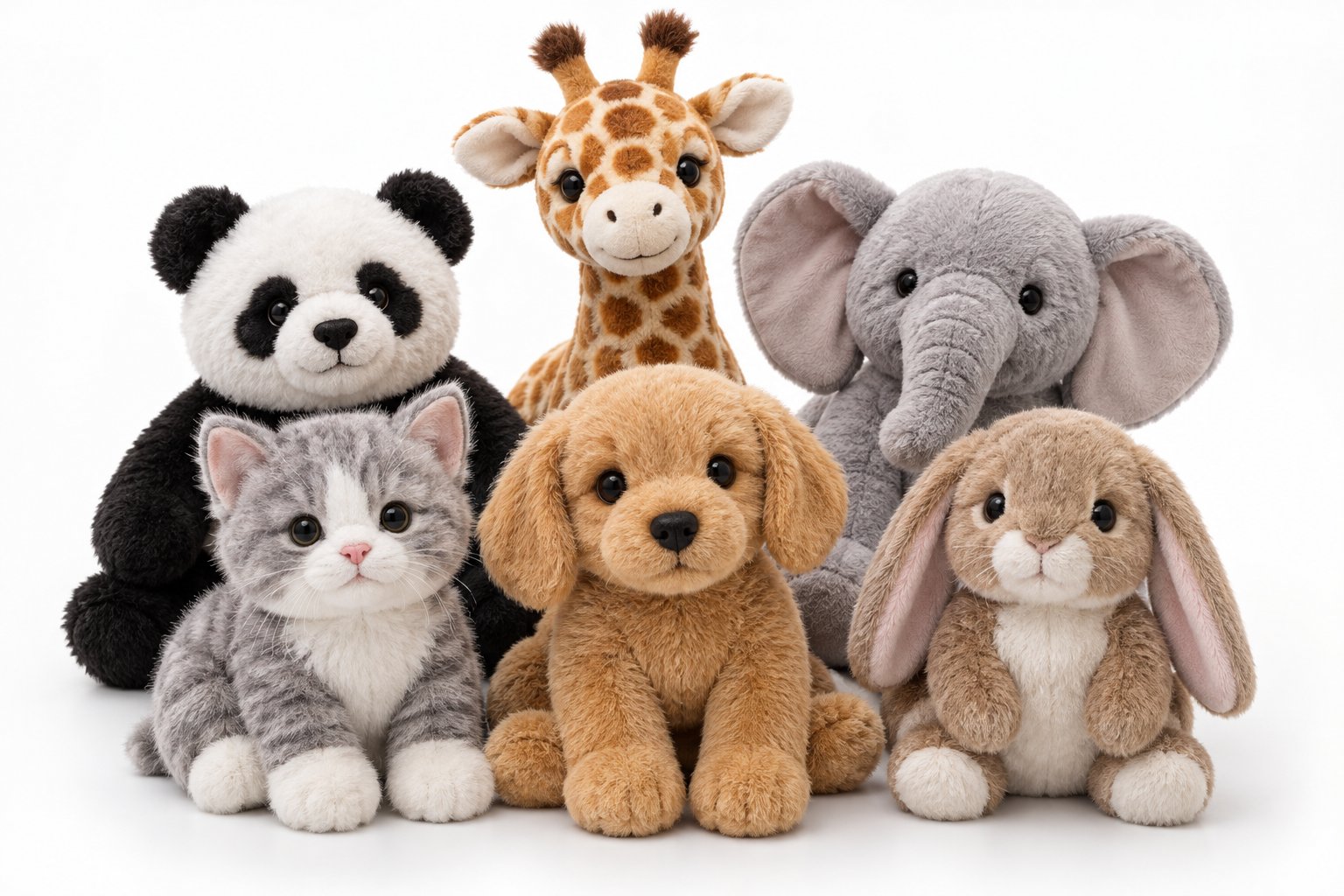
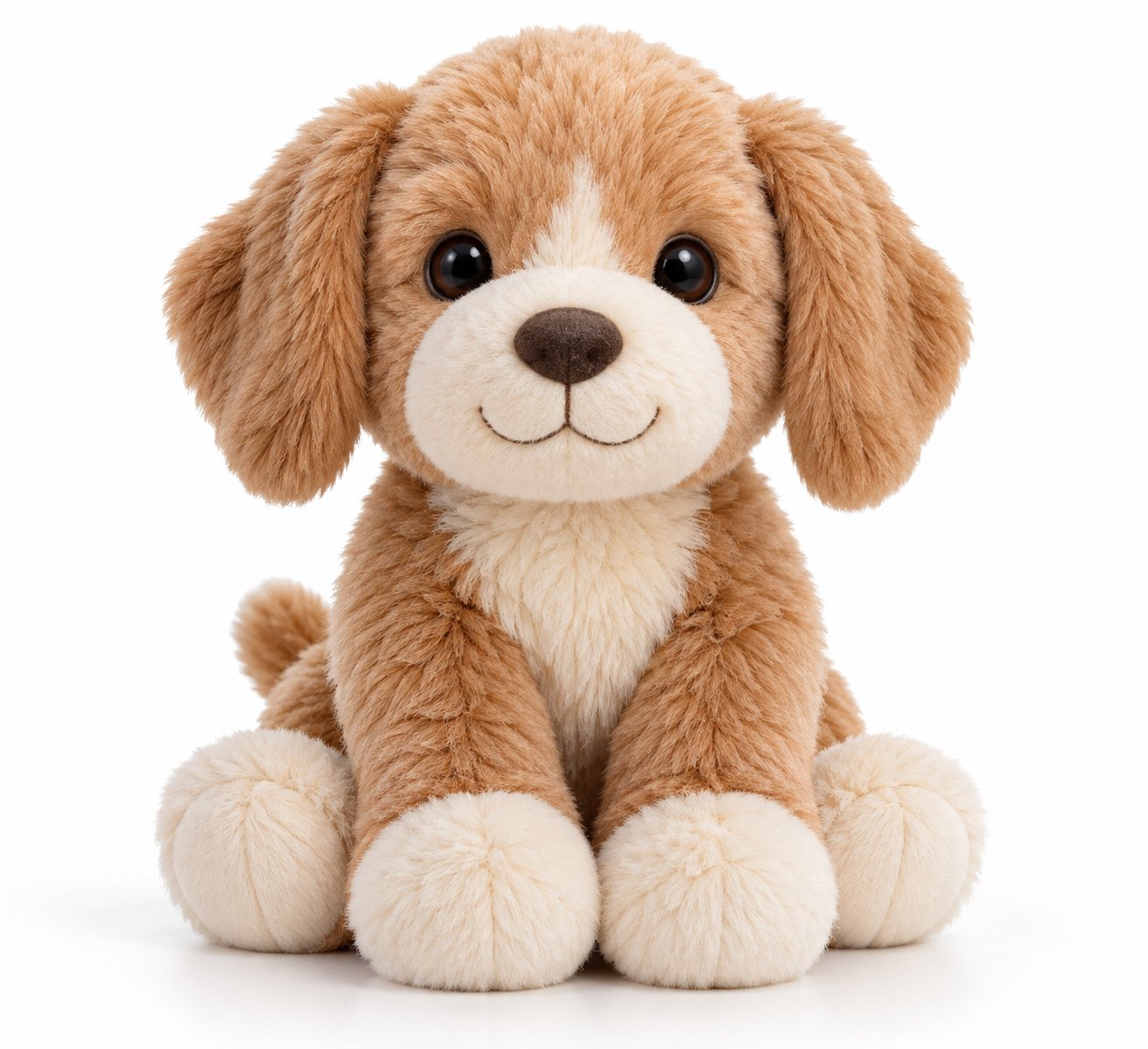
As a reference point throughout, the custom plush stuffed animal with hypoallergenic filling shows how the main variables sit together in a real OEM configuration: size, color and design are all customizable, the size range runs from 20 to 60 cm, and the finished item ships in a poly bag plus export carton.
Key takeaways
- Not every customization choice is equal — some are cosmetic changes, others require new tooling or dedicated fabric production.
- Surface decoration (embroidery vs. printing) is usually the first decision, because it drives the sampling route.
- Fabric color and size affect material planning more than they affect the assembly line.
- Tags and retail packaging are often the fastest way to add brand presence without changing the toy itself.
- MOQ and lead time move step by step as you add tooling-dependent options, not all at once.
Why customization options sit in a hierarchy
A plush toy is a sewn assembly, so every change either alters the pattern and materials, or simply alters what is applied to a finished shape. Changes that touch the pattern or the fabric generally require a sample to be cut and approved. Changes that only touch a surface or a label often move faster.
For buyers, the practical consequence is that you should confirm your decoration method and packaging format early, before the sampling round, so your sample reflects what you will actually reorder. Brand, gift and promotional buyers often start with the toy and add packaging later — which is fine, but it can mean a second sample round for the tag and bag.
Step 1: Embroidery or printed details
Surface decoration is where most personalization requests begin: a logo, a name, a slogan, a face detail, or a pattern.
- Embroidery works well for logos, lettering and facial features with defined, raised edges. It suits small-to-medium artwork and reads as premium on gift items. Because embroidery is stitched onto a shaped panel, complex multi-color artwork needs to be simplified into thread colors, and small text sizes are worth checking on a physical sample rather than on screen.
- Printing (transfer or direct print onto the plush surface) is the better route when the artwork has gradients, fine detail, or many colors that would look muddy in thread. Printed areas are typically flatter than embroidery.
Sampling matters here more than MOQ. Both methods can usually be applied to a 1,000-piece order, but the sample is where you confirm artwork scale, thread or print color, and placement on the finished body. Approve the decoration on a sample before committing to bulk.
Step 2: Fabric color and material choice
Color is usually the least disruptive customization, provided the factory can source the plush in your target shade or dye it to match. Two practical checks:
- Color match against a physical reference. Screens misrepresent plush shades, so approve against a swatch or a physical sample rather than a digital file.
- Availability of the base fabric. If your color exists in stock plush, no new tooling is involved. If it needs to be dyed or custom-produced, expect the material lead time to sit ahead of the sewing schedule.
The filling choice is separate from color. For gift and age 0+ programs, a soft plush fabric with hypoallergenic filling is the common specification, and it is worth confirming on the sample that the filling feel matches the intended audience.
Step 3: Size selection within the range
Size is the variable that most clearly separates "configure" from "tooling." The reference product supports a customizable size range of 20 to 60 cm. If your target size sits inside the range, the change is largely a matter of scaling the pattern and material usage. If you need a size outside the available range, that is a new development conversation, not a configuration change — confirm feasibility before quoting.
Size also interacts with your decoration. A logo that embroiders cleanly on a 40 cm body may need simplification on a 20 cm one. Confirm both together on the sample.
Step 4: Hang tags and retail packaging
Tags and packaging are where brand and promotional buyers get the most visible return, and they usually add the least disruption to the toy itself.
- Hang tags carry the brand, the barcode, care information and, where relevant, compliance references. Artwork is a print item, so proofing is the key step.
- Retail packaging can range from a simple poly bag to a printed bag or box. The reference configuration uses a poly bag plus export carton, which suits bulk and promotional distribution. If you need retail-ready printed packaging, specify it before sampling so the sample reflects the shelf-ready item.
Which steps need a sample or tooling?
| Customization step | Sampling / tooling need | Effect on MOQ | Effect on lead time |
|---|---|---|---|
| Embroidery (logo, face detail) | Sample required to approve artwork, thread colors and placement | Generally compatible with standard OEM MOQ | Sample round ahead of bulk |
| Printing (transfers, fine detail) | Sample required to approve print color and registration | Generally compatible with standard OEM MOQ | Sample round ahead of bulk |
| Fabric color change | Swatch or physical sample approval; new dyeing only if color is not stocked | Unchanged if fabric is available; may rise for custom dyeing | Material lead time added before sewing |
| Size within 20–60 cm | Sample to confirm scaled pattern and decoration fit | Unchanged within range | Depends on pattern re-cut |
| Size outside the range | New development and tooling | Confirmed case by case | Development cycle added |
| Hang tag | Artwork proof | Depends on print run | Print lead time ahead of packing |
| Retail packaging | Proof or mock-up of the bag/box | Depends on packaging print run | Packaging lead time ahead of shipment |
A note on MOQ: The reference OEM product has an MOQ of 1,000 pcs. Treat MOQ per line item as something to confirm in writing with your supplier once your option mix is fixed — combining decoration, custom color, a new size and printed packaging is not the same order as a stock size with embroidery.
Compliance considerations that travel with customization
Customization does not sit outside the compliance picture. The reference item is EN71 / ASTM F963 compliant and rated age 0+, and OEM/ODM is available. If you change filling, fabric or applied decoration, confirm with your supplier which compliance documentation applies to the final configuration you are ordering, and keep that documented at the sample stage.
Practical order of operations for buyers
- Lock the decoration method (embroidery or print) and artwork scale first.
- Confirm fabric color against a physical swatch.
- Confirm size within the 20–60 cm range, and check decoration fit at that size.
- Add tags and retail packaging before sampling, not after.
- Approve a physical sample that includes every customized element.
- Confirm final MOQ and schedule in writing based on that approved configuration.
Frequently asked questions
Can I personalize stuffed animals without changing the toy itself?
Yes. Hang tags and retail packaging let you add brand presence while keeping the base plush configuration unchanged. Embroidery or printed decoration applied to a stock shape is also a common route.
Does embroidery or printing have a lower MOQ?
Both are surface applications rather than new tooling, so neither inherently forces a higher MOQ. The determining factor is usually how many other changes — custom color, new size, custom packaging — sit on the same order.
What size range can be customized?
The reference product supports a customizable size range of 20 to 60 cm. Sizes outside that range are a development question rather than a configuration change.
Is a sample always required?
For any change to decoration, fabric, size or packaging, approving a physical sample is the reliable way to confirm color, scale and placement before bulk production.
Next step
If you are comparing options for a brand, gift or promotional program, start by fixing your decoration method and packaging format, then request sampling based on that full configuration. You can review the OEM plush stuffed animal specification as a baseline and confirm MOQ, sampling and schedule for your specific option mix before quoting.