A decision framework for first-time buyers and gift retailers: when an entry-level mini RC drone earns its place, when a simpler RC toy is the better buy, and which conditions to check before spending.
First-time buyers usually ask one question before anything else: will a mini RC drone actually get used, or will it end up in a drawer after a weekend? This guide answers that without spec sheets or flight lessons — just the conditions that decide whether the purchase is worth it.
Key takeaways
- A mini RC drone is worth it when the user is old enough to control it, there is usable indoor or calm outdoor space, and the buyer accepts that camera performance is secondary.
- A simpler RC toy is the better buy when the user is young, the space is tight, or the appeal is the novelty of remote control rather than flight itself.
- Spare parts availability and how easily the drone can be repaired matter more to long-term value than any single feature on the box.
- Retailers should judge these products by return risk and repeat-purchase behavior, not by feature count.
On this page
The four conditions that make a mini RC drone worth it
Whether a beginner drone justifies its cost comes down to four things, and they apply to a gift purchase and a retail stocking decision equally.
| Condition | Points toward a mini RC drone | Points toward a simpler RC toy |
|---|---|---|
| Who operates it | Older child or adult who can follow control inputs | Younger child or mixed-age group |
| Available space | A room with clear height, or a calm open area | Small indoor floor space, crowded home, no outdoor option |
| Why it is wanted | Interest in flying and aerial perspective | Interest in remote control, movement or stunts |
| Tolerance for downtime | Buyer will source spare propellers or parts | Buyer expects a toy that simply keeps working |
If three or four rows land in the left column, an entry-level mini RC drone is a reasonable purchase. If three or four land on the right, a ground-based RC toy is usually the decision that gets used more.
Age suitability: who is actually flying it
Mini RC drones are frequently bought as gifts for children, but the practical question is not age on a label — it is whether the user can make small, deliberate control inputs and accept that the drone will hit things while learning.
Drones reward patience. A user who expects instant control tends to get frustrated; a user who treats the first sessions as practice tends to stick with it. For younger children, that patience is the limiting factor far more than the aircraft itself.
For parents, this means the honest recommendation is often to start a younger child with a ground-based RC toy and move to a drone later, once the child has shown they can steer something with intent. For gift shops and small retailers, it means age-appropriate signage at the shelf does more for satisfaction than any feature list on the packaging.
Indoor vs outdoor use, and why space decides
Mini RC drones are often marketed as indoor-friendly, and many are used that way. The constraint is not the drone — it is the room. Ceiling height, lamps, shelves and people all become obstacles the moment the drone lifts off.
- Indoor use works best in a room with clear vertical space and few fragile objects, and with a user who is comfortable making small corrections rather than large stick movements.
- Outdoor use depends on weather. Light wind that feels negligible on the ground can push a small drone off course, which is why calm conditions matter for entry-level models.
If neither an indoor room with height nor a reliably calm outdoor space is available, a mini RC drone will spend more time charging than flying. That is the clearest signal to choose a ground-based alternative.
Camera expectations: what not to expect
Many entry-level mini RC drones are sold with a camera, and buyers often treat that camera as the deciding feature. It is worth checking what you actually want it for before letting it drive the purchase.
- If the camera is for casual framing and sharing the fact that you flew, a camera-equipped mini drone is a reasonable fit — see the mini RC drone with camera for the configuration we supply.
- If the camera is expected to produce stable, high-quality footage, an entry-level mini drone is the wrong tool, and the purchase will disappoint regardless of price.
For retail buyers, the practical framing is: a camera on an entry-level drone is an experience feature, not an imaging feature. Merchandising it as the latter is what generates returns.
Spare parts and repairability
This is the factor first-time buyers most often discover too late, and the one retailers should weigh most heavily.
Mini drones will contact walls, furniture and the ground. Propellers and small structural parts take the hit. Whether the product remains usable comes down to two questions:
- Are replacement propellers and other wear parts available separately, and can a buyer actually order them?
- Does the design allow a parent or shop to fit those parts without specialist tools?
A drone with a modest feature set and a clear path to spare parts usually delivers better value over a year than a higher-spec model with no parts channel. For retailers, parts availability is also a low-cost way to keep a customer rather than replace them.
When to choose a simpler RC toy instead
A mini RC drone is worth it under the conditions above. Outside them, the stronger purchase is a ground-based remote-control toy — it uses the same appeal of controlling something, without the space, weather and skill requirements of flight.
| If the buyer's real goal is… | Better starting point | Why |
|---|---|---|
| Watching something move and respond to a controller | An RC vehicle | Works on a floor or table; no ceiling height or wind involved |
| A visible trick or effect that gets a reaction | An RC stunt toy such as the RC stunt car with 360 spin | Movement and stunts stay at ground level and are easy to follow |
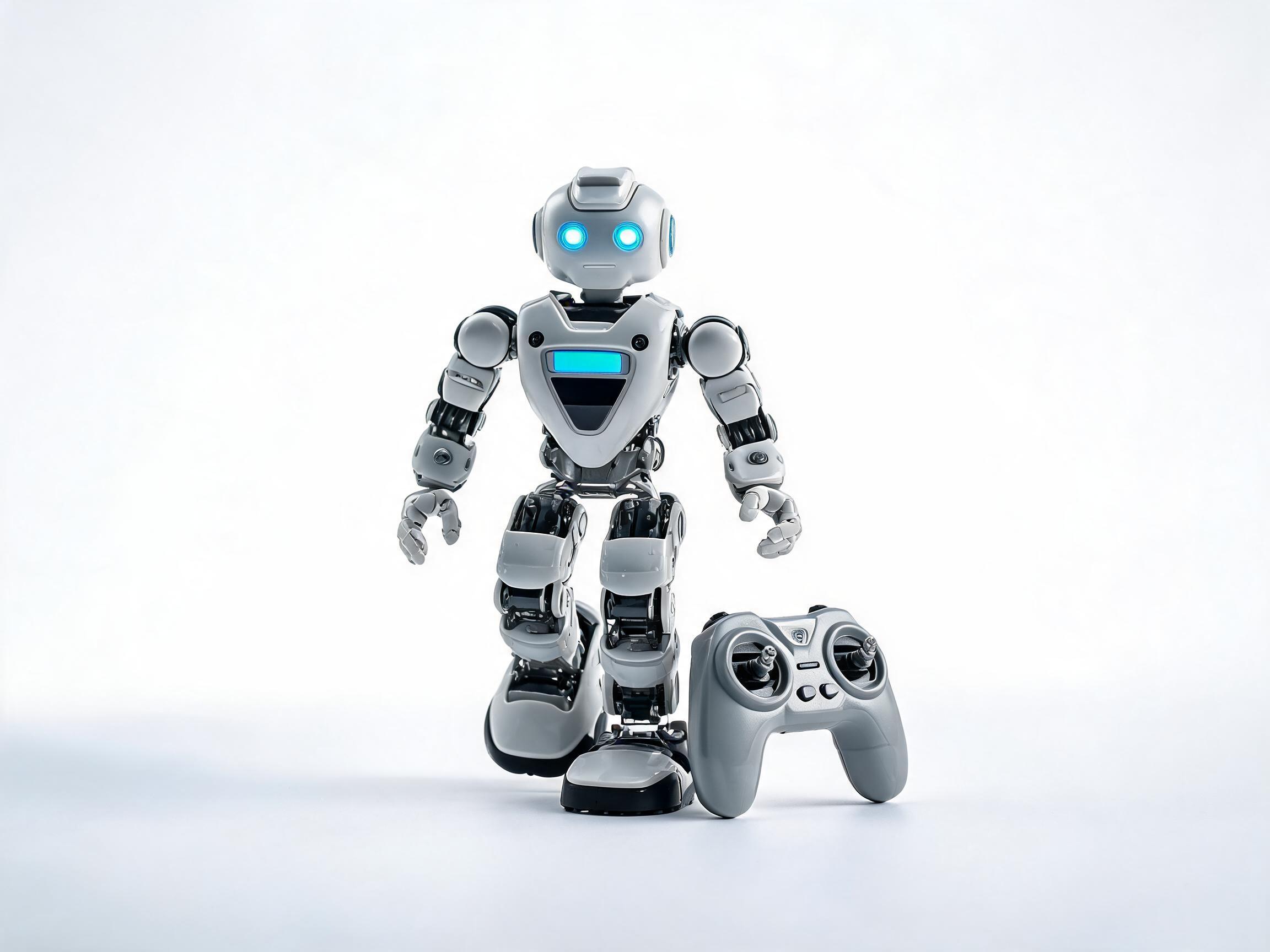
| Something character-driven for a younger child | A novelty RC toy such as the RC walking robot toy | Play pattern is closer to a toy figure than to a flying craft |
| Learning to fly and seeing from above | A mini RC drone | That is the specific thing the drone does |
These are different products for different users, not better or worse ones. The mistake is buying flight when the user wanted motion, or buying motion when the user wanted flight.
How to decide before you spend
Retailer's pre-stocking check
- Name the user. Write down the age range and prior experience this SKU is for. If it is "anyone," the shelf message is unclear and returns will follow.
- Confirm the space. Decide whether the product is being sold for indoor use, calm outdoor use, or both, and whether the packaging and signage say so honestly.
- Separate camera from purpose. Position a camera-equipped model as an experience product, not an imaging product.
- Ask about spares. Get a written list of parts the supplier can provide for each model.
- Balance the range. Stock flight and ground-based RC together. Buyers frequently make this decision at the shelf, and letting them compare reduces wrong-fit purchases.
FAQ
Is a mini RC drone worth it for a first-time buyer?
Yes, if the user is old enough to make deliberate control inputs, there is usable indoor or calm outdoor space, and the camera is understood as a casual feature. If any of those is missing, a ground-based RC toy usually gets more use.
Are mini RC drones good for indoor use?
They can be, but the room decides. Clear ceiling height and few fragile objects matter more than the drone's own size.
What breaks first on an entry-level drone?
Propellers and small structural parts are the typical wear items, because contact with walls, furniture and the ground is part of learning. This is why spare-part availability is a core buying question.
Should a gift shop stock mini drones or simpler RC toys?
Both, if the display lets buyers compare them. The drone suits users interested in flying; ground-based RC toys suit younger users or smaller spaces. Selling only one usually pushes some buyers into the wrong product.
If you are sourcing entry-level RC products for retail, the range we supply covers camera-equipped mini drones alongside ground-based alternatives such as the RC stunt car with 360 spin and the RC walking robot toy. Tell us the age range and the sell-through channel you are buying for, and we can point you to the models that fit — including which spare parts are available for each.