A practical sourcing guide for retailers and importers covering where to find robot toy suppliers, how to evaluate RC robot toy factories, what certifications to verify, and which quality checks reduce returns. Includes MOQ, lead time, and compliance considerations for B2B buyers.
Sourcing Guide
Retailers adding robot toys to a product line face a specific problem: the category looks uniform in photos, but the actual product, compliance file, and factory reliability vary widely. A robot toy that passes a drop test at one supplier may fail at another. A price that looks competitive at FOB may hide costs later — spare parts, battery certification, or a paint formula that fails a chemical test. This guide covers where buyers actually source robot toys, which supplier types fit which order sizes, and the verification steps that separate a repeatable product from a one-off shipment.
Key takeaways
- Robot toy sourcing splits into three supplier types: OEM factories, trading companies, and regional wholesalers — each with different MOQs and customization limits.
- Compliance files (EN 71, ASTM F963, CPSIA, CE) must match the exact product and batch, not just the supplier's general capability.
- RC robot toys add battery, motor, and remote-frequency considerations that standard plastic toys do not have.
- Sample evaluation should include functional testing under realistic use, not just visual inspection.
What this guide covers
Where retailers buy robot toys
There is no single sourcing channel. The right one depends on your order volume, whether you need custom branding, and how much control you want over the manufacturing process. Below are the main channels buyers use, with the trade-offs for each.
Trade shows and industry exhibitions
Events such as the Hong Kong Toys & Games Fair, Nuremberg International Toy Fair, and Canton Fair remain the most efficient way to see product samples in person and meet factory representatives. The advantage is tactile: you can operate an RC robot toy, check joint movement, test remote response, and inspect paint finish before committing to a sample order. The limitation is that many exhibitors are trading companies rather than factories, so the booth does not confirm manufacturing capability.
B2B platforms and online directories
Alibaba, Global Sources, and Made-in-China list thousands of robot toys suppliers. They are useful for initial price benchmarking and for finding suppliers who already export to your region. The trade-off: platform listings rarely show the full compliance file, and the supplier behind the listing may change production to a subcontractor. Treat platform contact as the start of due diligence, not the end.
Direct factory relationships
Importers with established volume often work directly with factories in toy manufacturing clusters — Guangdong (Shantou, Dongguan, Shenzhen) and Zhejiang (Yiwu, Ningbo) in China, plus Vietnam and India for tariff diversification. Direct factory relationships give better control over tooling, component sourcing, and production scheduling, but require more upfront verification and usually higher MOQs.
Regional wholesalers and importers
For small retailers testing the category, regional wholesalers offer lower MOQs and faster delivery from local warehouses. The cost per unit is higher, and customization is limited to existing packaging or small private-label options. This channel works for market testing, not for building a differentiated product line.
Supplier types and what they fit
The same product photo can come from three very different supplier types. Knowing which one you are talking to changes the questions you ask and the terms you can expect.
| Supplier type | Typical MOQ | Customization | Best fit |
|---|---|---|---|
| OEM/ODM factory | Often 1,000–3,000 pcs per model | Tooling, PCB, packaging, branding | Retailers building a private-label line |
| Trading company | 500–1,000 pcs | Packaging and logo, limited product changes | Buyers sourcing multiple toy categories |
| Regional wholesaler | 100–300 pcs | Usually none, or sticker/label only | Small retailers testing demand |
These ranges vary by product complexity, material, and factory workload. A simple push-along robot toy may have a lower MOQ than a multi-function RC robot toy with a rechargeable battery and 2.4 GHz remote. Always confirm the MOQ per color and per packaging variant, not just per model.
What to verify before placing an order
Supplier verification is not a single document check. It is a sequence of confirmations that reduce the risk of a shipment that fails compliance, underperforms, or cannot be reordered.
Business identity and export history
- Confirm the legal entity name, business license, and whether the supplier is a factory or a trading company.
- Ask which markets they currently export to and whether they have shipped to your region before.
- Request references from buyers in comparable markets — not testimonials, but contactable trade references.
Compliance documentation for the specific product
This is where many buyers get caught. A supplier may hold a valid EN 71 test report for one robot toy model, but the model you are ordering may use a different paint, battery, or plastic supplier. The test report must cover the exact product and production batch.
| Standard / regulation | Region | What it covers | Verify on the document |
|---|---|---|---|
| EN 71-1, -2, -3 | EU | Mechanical, flammability, migration of certain elements | Product name, model number, batch, test date, lab accreditation |
| ASTM F963 | US | Consumer safety specification for toy safety | Same as above; check for CPSC-accepted lab |
| CPSIA | US | Lead and phthalate limits, tracking label | Children's product certificate referencing the test report |
| CE marking | EU | Declaration of conformity, technical file | DoC signed by the manufacturer, not the trader |
For RC robot toys, also ask for battery documentation: UN 38.3 for lithium batteries, and the relevant transport certificate if shipping by air. A toy that passes EN 71 may still fail at customs if the battery paperwork is incomplete.
Production capacity and lead time
- Ask for current production capacity for the specific model, not the factory's total capacity across all products.
- Confirm lead time from deposit to shipment, and whether it includes packaging and compliance testing.
- Check how they handle peak season — Chinese New Year, pre-holiday shipping rushes — because lead times can extend significantly.
Payment and quality terms
Standard terms vary, but many factories request 30% deposit and 70% before shipment. For first orders, negotiate an inspection clause that allows a third-party inspection before the balance payment. Confirm whether the inspection covers function, packaging, and compliance file review, not just carton count.
RC robot toy specific checks
RC robot toys add three failure points that standard plush or plastic toys do not have: the remote control, the drive mechanism, and the power system. Each needs its own verification.
Remote control and signal
- Confirm the frequency band (2.4 GHz, infrared, or other) and whether it requires certification in your market.
- Test the control range in a realistic environment — not an open warehouse, but a room with walls and other electronics.
- Check whether multiple units can operate in the same space without interference, which matters for retail display and for families with more than one toy.
Drive mechanism and durability
- Ask about gear material (plastic vs. metal) and expected cycle life. This affects returns more than any other component.
- Request a sample that has been run for a set number of cycles, not a fresh unit.
- Check wheel traction and joint range on the actual surface the toy will be used on — carpet, tile, or outdoor pavement changes performance.
Battery and charging
- Confirm battery type, capacity, and whether it is replaceable or built-in. Built-in batteries simplify the product but create warranty and disposal issues.
- Ask for charging time and runtime under continuous use, and verify these on the sample.
- Check that the charging port and cable meet the safety requirements for your market, and that the battery has the correct markings.
Note: Battery regulations change. A lithium battery that was compliant two years ago may need updated UN 38.3 documentation or a different transport classification today. Always request current documents from the supplier for the specific battery used in your order.
Sample and production quality checks
Sample evaluation should go beyond appearance. A robot toy that looks correct on a desk may fail after ten minutes of play. Use a structured check before approving production.
Sample evaluation checklist
- Function: Operate every mode, test the remote at distance, run the drive mechanism until the battery drains.
- Safety: Check for sharp edges, small parts that could detach, pinch points in joints, and accessible battery compartments.
- Finish: Inspect paint adhesion, decal alignment, and surface defects under different lighting.
- Packaging: Confirm the retail box protects the product in a drop test and that the packaging artwork matches your market's labeling requirements.
- Documentation: Match the compliance file to the sample's model number and batch.
Production inspection points
If you cannot inspect during production, arrange a pre-shipment inspection that covers:
- Carton quantity and packaging integrity.
- Random functional testing of finished units, including remote pairing and drive function.
- Battery voltage and charging test on a sample of units.
- Compliance file review against the shipped batch.
Document any defects found and agree on the remedy before the balance payment. This is easier to negotiate before shipment than after the goods arrive.
FAQ
What is a typical MOQ for RC robot toys?
MOQ depends on the supplier type. Factories often request 1,000–3,000 pieces per model, while trading companies and wholesalers may accept 100–1,000 pieces. Custom tooling and private-label packaging usually require the higher end of the range.
Do I need separate certifications for each robot toy model?
Yes, in most cases. Compliance testing is model-specific and sometimes batch-specific, because materials and components can change between production runs. A test report for one model does not cover another, even if the products look similar.
How long does it take to source a new robot toy supplier?
Realistic timelines vary. Initial supplier screening and sample requests can take 2–4 weeks. Sample evaluation, compliance document review, and production scheduling add several more weeks depending on the supplier's workload and your order size. Allow extra time for first orders and for shipments that require third-party inspection.
What should I check on the remote control?
Confirm the frequency band, test the control range in a realistic environment, check for interference when multiple units operate nearby, and verify that the remote meets the radio equipment requirements for your market. For 2.4 GHz remotes, ask for the relevant certification or declaration.
Can I get a sample before placing a bulk order?
Most suppliers provide samples, often at a cost that may be credited against the bulk order. Request a production-representative sample — one that uses the same components and packaging as the bulk run — rather than a hand-built display unit.
Next step
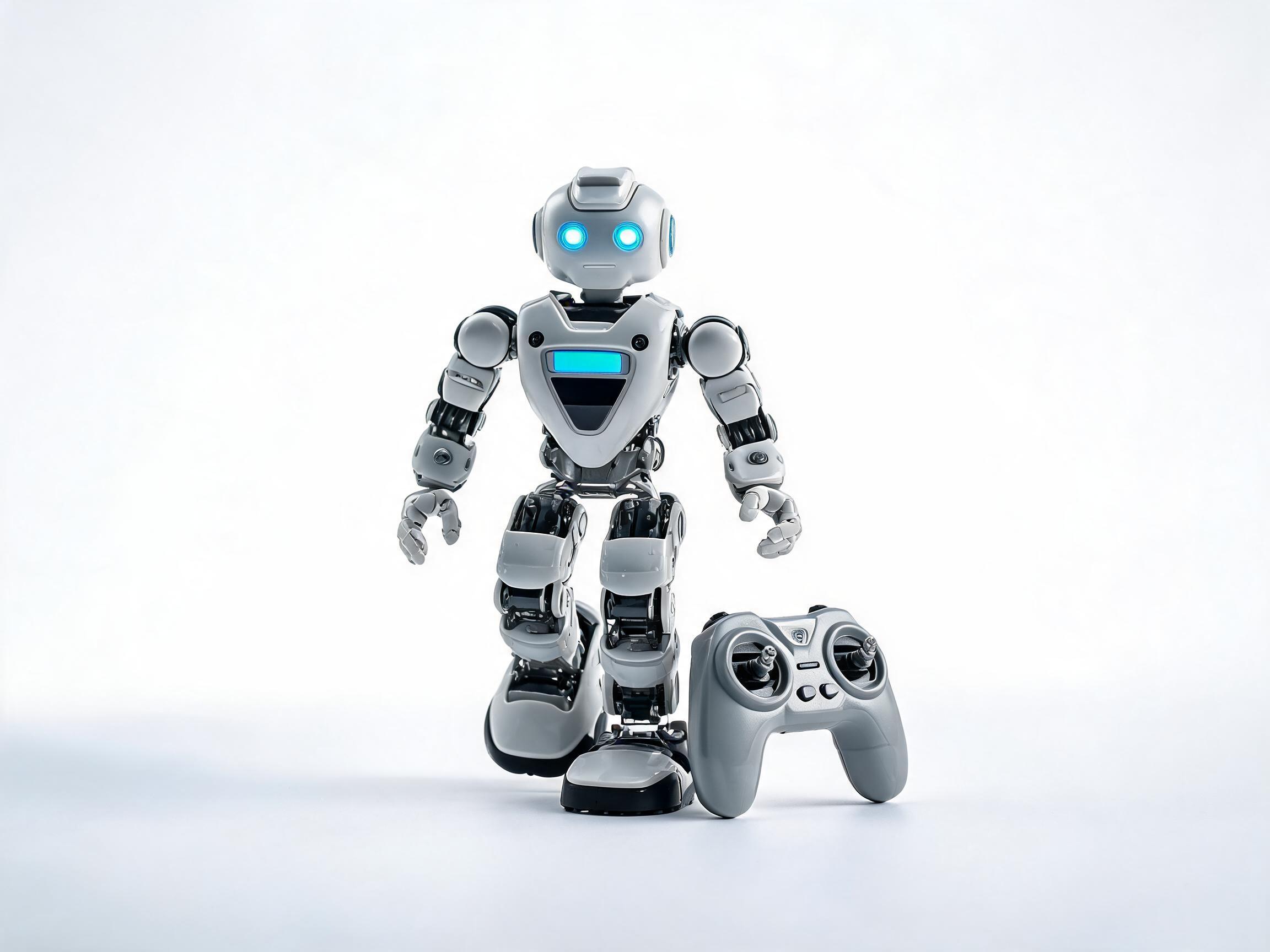
If you are evaluating robot toy suppliers for a retail program, start with a clear product brief: target age, market, required certifications, estimated annual volume, and any customization needs. That brief lets suppliers quote accurately and lets you compare responses on the same terms. For buyers who need to verify a specific supplier, request the compliance file for the exact model and batch before committing to a purchase order. For a ready reference in the RC robot segment, see Lequ Toys' RC walking robot with LED lights for indoor play, a two-channel walking robot with LED lights and rubber foot pads.