A practical buyer checklist for retailers, therapy-resource centres and schools ordering sensory toys for autism use. Covers safety certifications, material textures, washability, age grading, small-parts rules and the supplier verification questions that belong in every purchase file.
"Where to buy sensory toys for autism" is one of the most common questions buyers and programme coordinators search before they open a purchase file. The search intent is practical: they need to find a supplier who can deliver a compliant, repeatable order, not just a shelf of colourful items. This checklist sets out what to verify before a purchase order is issued.
Sensory toys used in autism support settings sit in a category where safety and material decisions matter more than decoration. The buyer's job is to confirm that the item is suitable for the stated age group, that it can survive repeated handling and cleaning, and that the supplier can provide the documentation a school or therapy centre needs to keep on file. The points below are written for that decision.
Key takeaways
- Match the toy to the age grade and check the small-parts status before anything else.
- Confirm which safety standard the export range is certified to, and ask for the documentation rather than assuming it.
- Texture, weight and sound should be described by the supplier in words, since sensory profiles differ from item to item.
- Washability and surface finish determine how long the toy stays in service in a shared environment.
- Use the supplier verification questions below to separate a capable manufacturer from a trading reseller.
What this guide covers
- Safety certifications and test evidence
- Material textures and sensory design considerations
- Washability, hygiene and shared-use environments
- Age grading and small-parts rules
- Supplier verification questions
- FAQ
Safety certifications: ask which standard, not whether it is safe
Every toy category has its own compliance route, and the sensory segment is no different. The question a buyer should put to a supplier is specific: which standard does the product you are quoting actually hold certification against? For export orders, the two standards that come up most often are EN71 for the European market and ASTM F963 for the United States.
A supplier who can name the standard, state which part of it applies, and produce the certificate on request is easier to work with than one who answers with a general claim of safety. It is also worth clarifying whether the certification covers the whole export range or only a subset of items, because a certificate issued for one product does not automatically extend to another.
Fujian Lequ Wanwan Co., Ltd. holds EN71 and ASTM F963 certification covering its export range, and operates an in-house QC laboratory for material inspection, small-parts testing and finished-product checks before packing. For a buyer, that means material and finished goods checks happen on site rather than being outsourced at the last stage. This is a relevant detail when a school or therapy centre asks how the batch was verified.
What to request in the purchase file
- The certificate number and the standard it references.
- Which product or product family the certificate covers.
- Whether testing is per batch or per design, and what triggers a re-test after a design change.
- Confirmation that the factory's own QC records are available for the specific order.
If any of these cannot be provided, treat it as an open item rather than a settled one, and confirm it before the order is placed.
Material textures and sensory design considerations
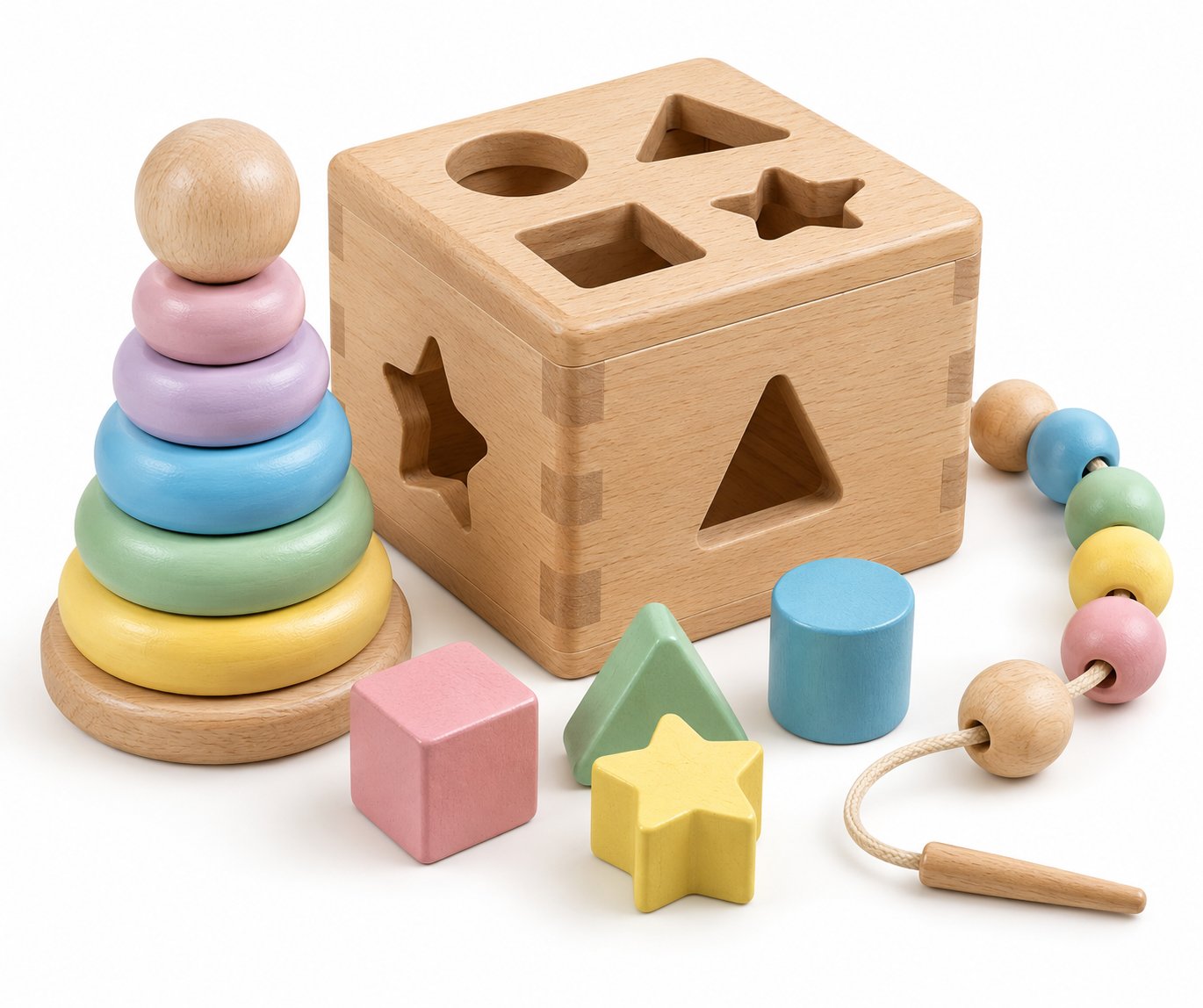
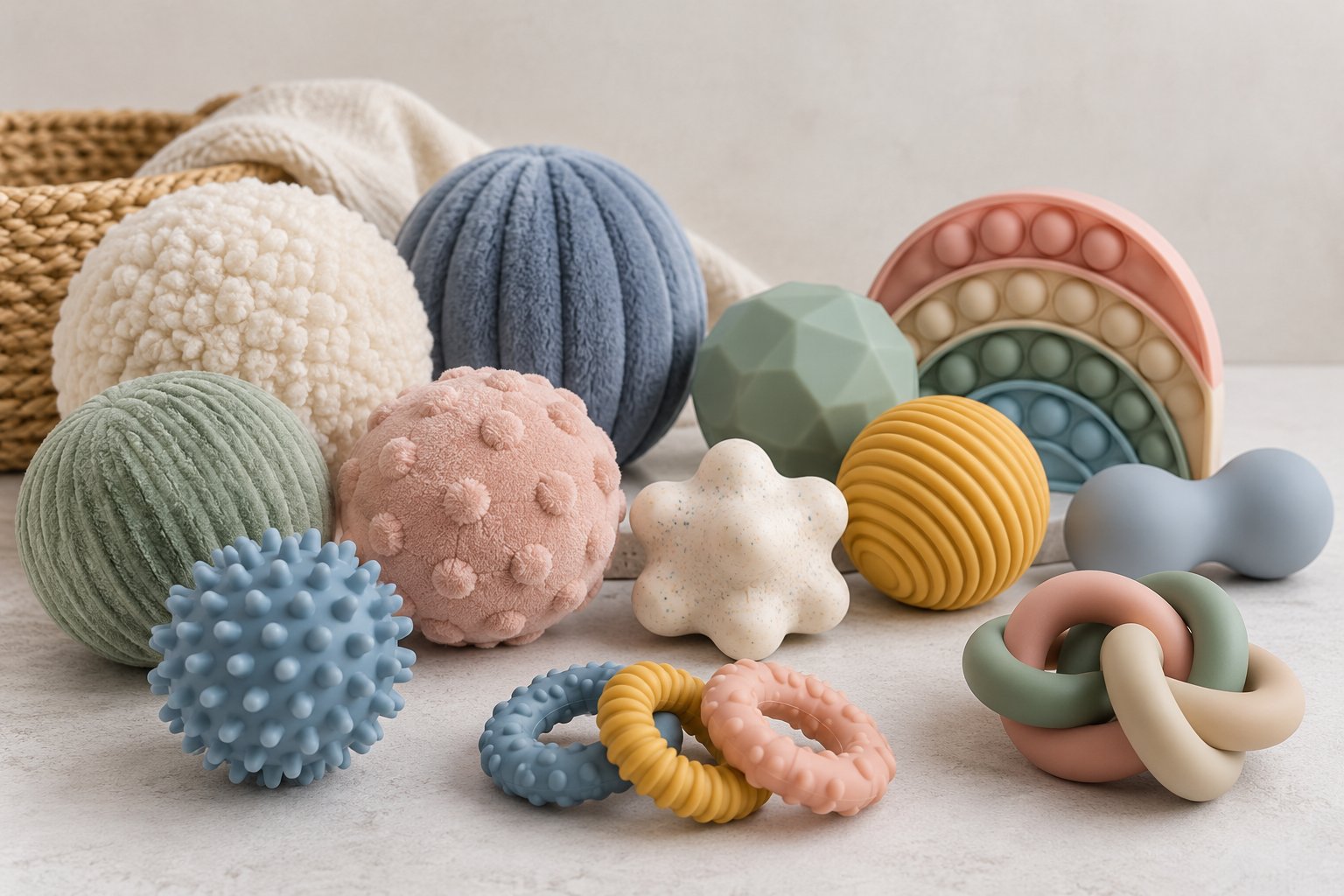
The sensory profile of a toy comes from its material, weight, surface finish and construction. A buyer ordering for a therapy resource centre or a classroom is usually looking for a spread of tactile experiences rather than a single best item, so the useful question is how the supplier describes each material and finish.
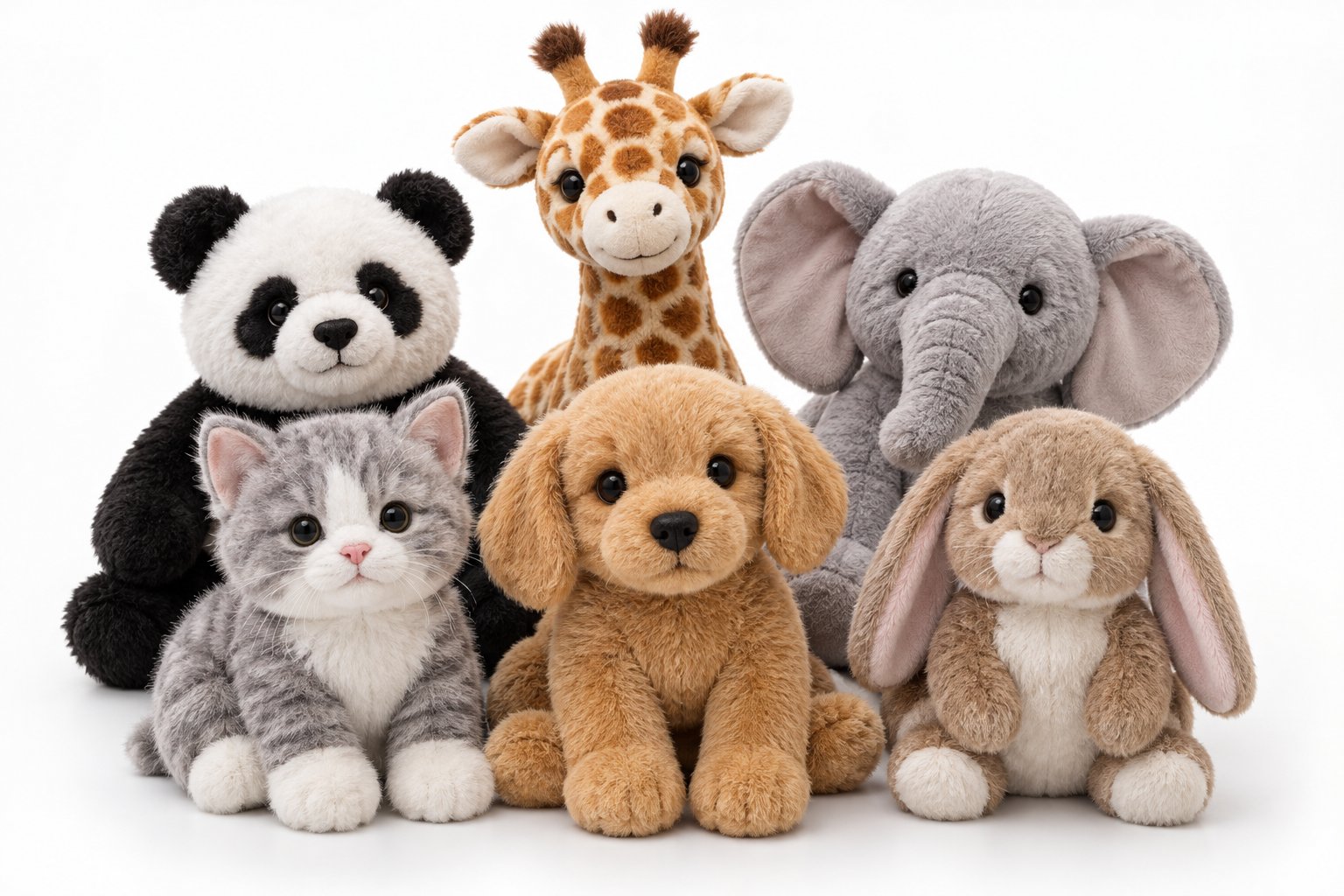
Common material decisions include soft fabric surfaces, embroidered rather than glued or attached features, rounded edges on rigid parts, and closures that do not rely on small detachable components. On the plush side, some manufacturers build to a design principle of embroidered features with no detachable small parts. That approach reduces the number of separate components a child can pull free, which is a practical consideration in shared-use settings.
Ask the supplier to describe the material and construction in writing. Vague descriptions such as "soft touch" do not help a buyer compare two quotes; a description that names the fabric type, the filling, the stitching method and the edge finish does.
Texture questions worth asking
- What is the outer material, and is there a backing or filling?
- Are decorative features embroidered, stitched or attached as separate parts?
- What is the surface finish on any rigid components, and are the edges rounded?
- Can the supplier produce a sample in the requested texture before a full order?
Washability and hygiene in shared environments
Shared-use environments drive a different set of requirements from a single-home purchase. A sensory toy used across a classroom or a therapy room will be handled by many people, so cleaning instructions and material durability become part of the buying decision, not an afterthought.
Ask for the cleaning method the supplier recommends for each material. Not every sensory item tolerates the same routine, and a supplier who can explain which items are surface-wipe only and which tolerate a fuller wash is easier to plan around. If the item is plush, ask whether the construction supports the cleaning method, and whether the embroidered features change how the item should be handled.
Where hygiene is a formal requirement, confirm the expected cleaning instructions in writing before the order, and check that the instructions printed on the product or packaging match what the supplier tells you in the quotation.
Age grading and small-parts rules
Age grading is one of the most common sources of mismatch between what a buyer intends and what a supplier ships. The age grade on the product determines which small-parts rules apply, and those rules in turn affect which components are permitted.
Before ordering, confirm the age grade for each item and check that it matches the intended user group. For younger age grades, the applicable small-parts requirements are stricter, and any component that could detach becomes a compliance problem rather than a design preference. This is where a supplier's position on detachable parts matters: a design that avoids separate small components is simpler to keep compliant across an age range than one that relies on them.
The in-house small-parts testing function mentioned above is part of how a manufacturer checks this before packing. Buyers should still confirm the age grade item by item, because a mixed order can contain products at different grades.
Checklist at a glance
| Check | What to confirm | Where it belongs in the file |
|---|---|---|
| Certification | Standard name, coverage, certificate reference | Compliance section of the purchase record |
| Materials | Fabric, filling, surface finish, edge treatment | Specification sheet |
| Washability | Cleaning method per material; instructions on pack | Care and hygiene notes |
| Age grade | Stated grade per item; small-parts status | Product data and label copy |
| Supplier | Manufacturing capability, QC process, customization options | Supplier evaluation record |
Supplier verification questions
Once the product checks are clear, the remaining question is whether the supplier can deliver consistently. These questions are useful for separating a manufacturer from a reseller, and for judging whether the supplier can support a repeat programme rather than a one-off order.
Ask before you commit
- Do you manufacture in-house, and what is your production capacity for this item?
- Can you describe your QC process from incoming material to packed carton?
- Do you offer OEM or ODM customization, and what does that change in lead time?
- Which markets do you currently export to, and which certifications apply there?
- Can you supply a sample that matches the production specification?
- What is your process if a batch fails the finished-product check?
Fujian Lequ Wanwan Co., Ltd. operates with 180 staff, runs its own QC laboratory, and offers OEM/ODM customization alongside its standard export range. For a buyer planning a repeat order, the relevant follow-up is how customization affects the certification position: if a design change alters components or materials, confirm whether the existing certificate still applies or whether a new test is required.
A supplier who can answer these questions in writing, with references to their own processes rather than general statements, is a more predictable partner for a multi-year procurement programme.
FAQ
What are sensory toys?
Sensory toys are products designed to provide tactile, visual, auditory or movement input through their material and construction. In procurement terms, they are a category defined by the sensory experience the item offers, which is why material and finish descriptions matter as much as safety documentation when you compare suppliers.
What do sensory toys do?
They provide a structured sensory experience through texture, weight, sound or movement. Buyers should note that this is a description of the product category, not a therapeutic claim; procurement decisions should focus on safety, material suitability, age grading and durability for the intended setting.
Where can I buy sensory toys for autism in bulk?
Most bulk orders come through manufacturers and exporters rather than retail channels. Look for a supplier who holds certification for your destination market, can describe materials and construction in writing, and operates its own QC process. Confirm certification coverage, age grading and cleaning instructions for each item in the order before placing it.
Should the certification cover the whole order?
Certification applies to specific products or product families, so confirm the coverage item by item. If your order mixes several designs, check which certificate applies to each, and ask what happens to certification if you request a customization.
Next step
If you are assembling a sensory toy order for a school, therapy-resource programme or retail range, start by listing the age grades and materials you need, then request certification coverage and material descriptions in writing. Fujian Lequ Wanwan Co., Ltd. can be reached to discuss the applicable export range, QC documentation and OEM/ODM options for your programme.