A procurement guide for buyers sourcing small and mini teddy bears in bulk — how to fix a size spec, verify infant-safety construction, and match MOQ, carton packing and OEM options before placing a purchase order.
Two buyers can order the same quantity of small teddy bears in bulk and end up with very different products: one gets a 30 cm comfort toy with embroidered features and double-stitched seams, the other gets a generic 15 cm keyring bear with glued-on eyes. The difference is decided before the order is placed — in the size spec, the safety construction and the MOQ terms. This guide walks through those three checks in the order a buyer should actually make them.
What this guide covers
- Step 1 — Fix the size spec before the price
- Step 2 — Safety features that decide which market you can sell into
- Step 3 — MOQ, carton packing and OEM terms
- A quick pre-order checklist
Key takeaways
- "Small" and "mini" are not standard measurements. Define the finished, seated and standing height you actually need.
- For infant items, the deciding feature is construction, not plush softness: embroidered eyes and nose, no detachable plastic parts, double-stitched seams.
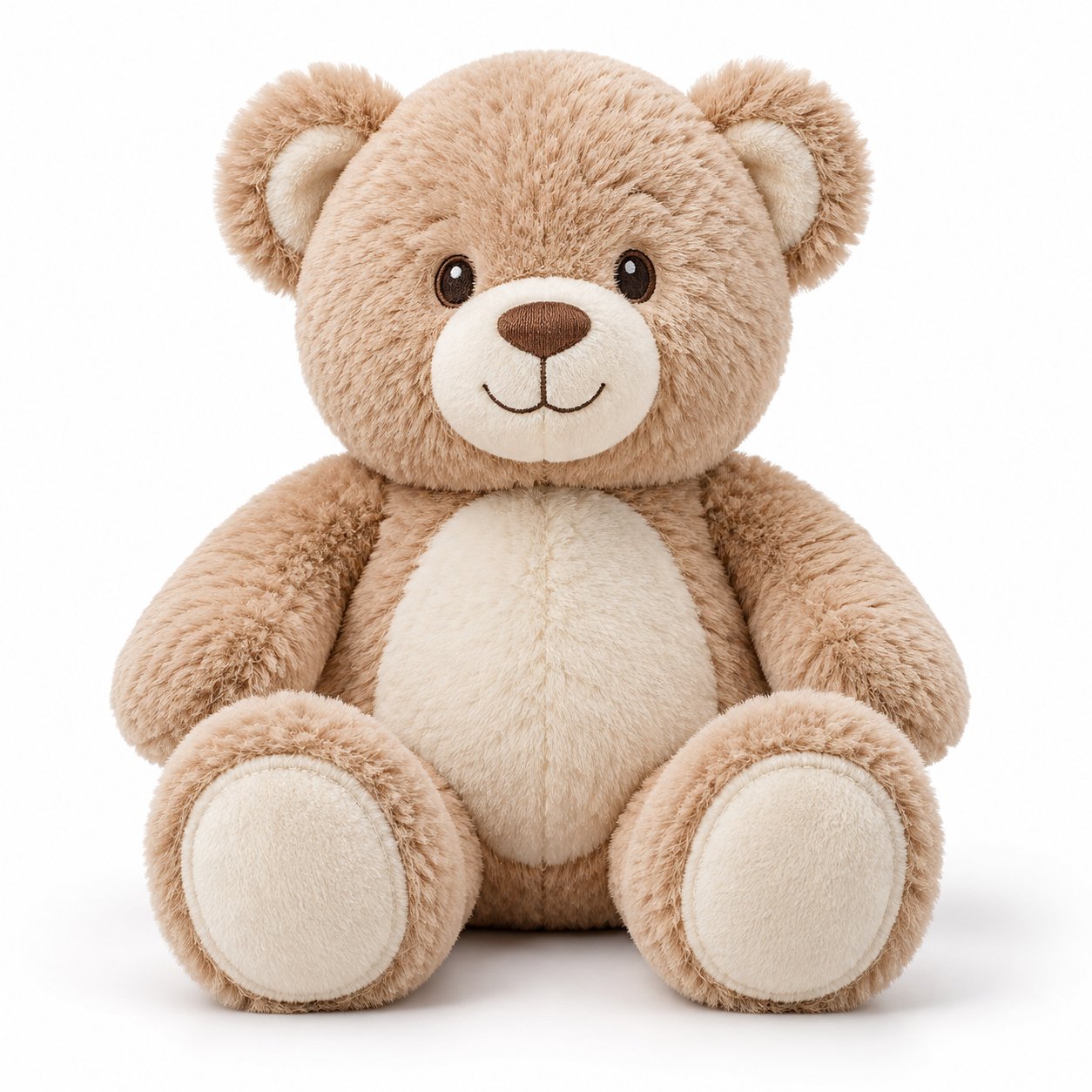
- The Plush Teddy Bear Comfort Toy is a 30 cm seated reference for this category: 60 pieces per carton, MOQ 1,000 pieces, EN71/ASTM F963 compliant.
- Size range, MOQ and certifications should be confirmed on the quotation, because they are what the purchase order will be measured against.
Step 1 — Decide what "small" means before you compare quotes
Most bulk inquiries start with a rough phrase like "small teddy bears, around 20 cm." That phrase means different things to different suppliers, and it is the single most common reason a sample arrives looking nothing like the buyer expected.
A teddy bear has more than one relevant dimension. Seated height, standing height and body width can all differ, and a bear measured from head to toe will be noticeably taller than the same bear measured while sitting. If your product will sit on a shelf or in a gift box, the seated figure is the one that matters. If it hangs from a clip or is packed flat, the overall length matters instead.
The safest approach is to write the spec as a finished, measured dimension rather than a category word. For buyers who need a defined comfort size, the Plush Teddy Bear Comfort Toy with Embroidered Features for Infants is specified at 30 cm seated height — a fixed figure that can be checked against a sample with a tape measure, not argued about.
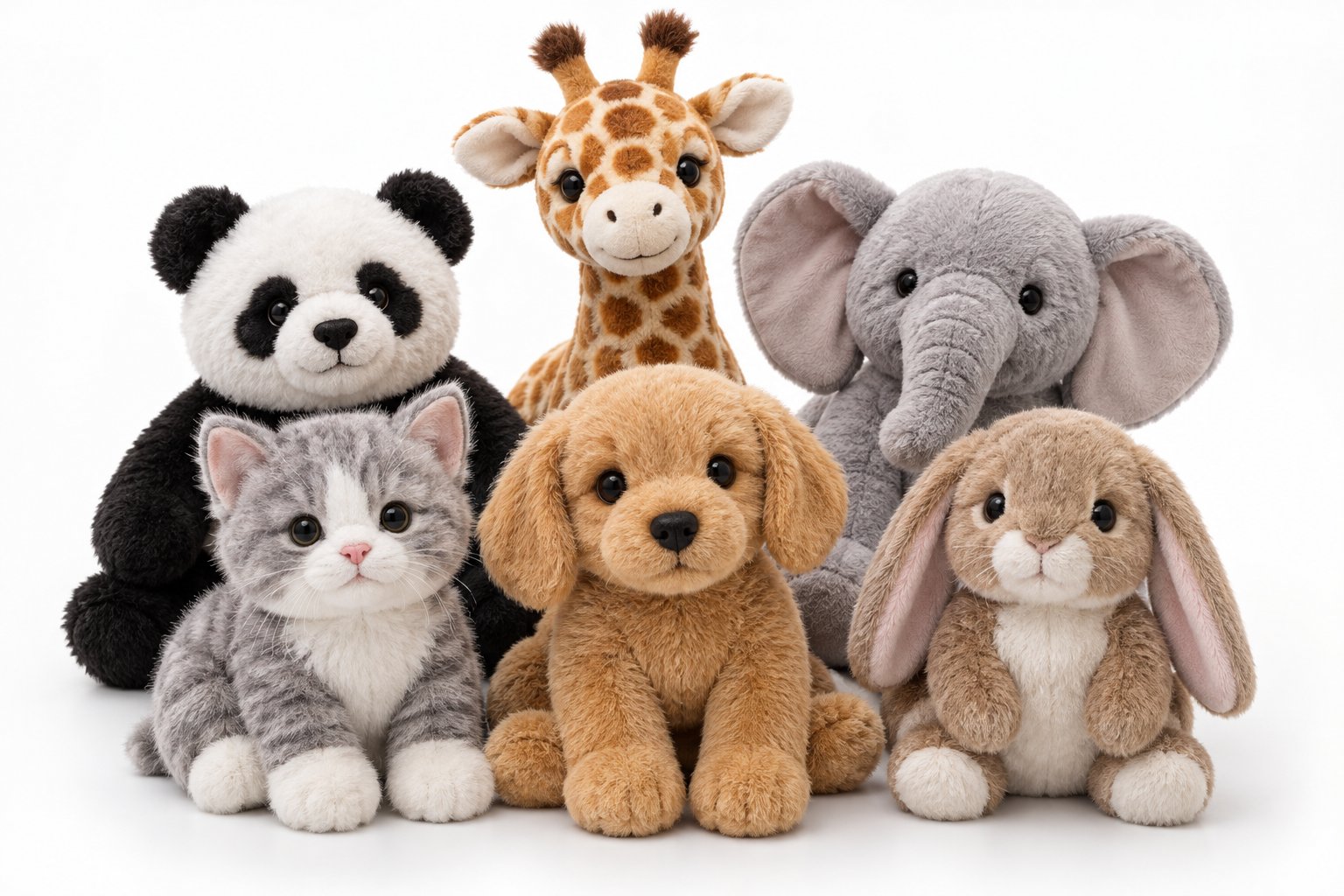
Buyers working with a wider size plan, such as a 15 cm keyring variant alongside a 40 cm gift bear, are usually better served by a custom programme. The Custom Plush Stuffed Animal with Hypoallergenic Filling for Gifting is size-customizable from 20 cm to 60 cm, which means the size decision moves from "which stock bear" to "which size do we specify on the drawing."
Questions that settle the size question
- Is your quoted size seated or standing, and from which point to which point is it measured?
- Will the bear be sold as a standalone item, or does it need to fit a box, bag or shelf plan?
- Do you need one size or a size ladder across a range?
- Does the size need to stay identical across repeat orders?
Step 2 — Check the safety construction, not just the certificate name
Buyers sourcing bulk mini teddy bears often plan to sell them for baby showers, nursery gifts and infant comfort use. That plan changes what the bear has to be, not just what it has to pass.
For items intended for infants, the features that come up first in a review are the small parts and the seams. The 30 cm comfort toy referenced above uses embroidered eyes and nose with no detachable plastic parts, short-pile plush, hypoallergenic polyester fibre filling and double-stitched seams. That combination is not decoration — it removes the parts that can be pulled loose and it reinforces the points that carry the most stress. It is also documented as EN71 and ASTM F963 compliant, which are the standards buyers in Europe and the United States usually ask for.
Safety details worth confirming in writing
- Are eyes and nose embroidered, or are they attached plastic components?
- Is there any glued-on trim, ribbon or tag that could be removed by hand?
- What filling is used, and is it declared as hypoallergenic?
- Are stress-bearing seams double-stitched?
- Which test standards apply to the exact model and size you are ordering?
Certification applies to the tested item, not to a category. A certificate held for one bear does not automatically cover a differently sized or differently constructed bear, so keep the tested model, size and construction aligned with what appears on your purchase order.
Step 3 — Match MOQ and packing to the quantity you can actually sell
MOQ is where small-item sourcing gets counter-intuitive. Mini teddy bears are cheap per unit, but the order quantity is set in pieces, not in value, and the carton packing determines how those pieces ship.
For the 30 cm comfort toy, the packing is 60 pieces per carton and the MOQ is 1,000 pieces. That means a minimum order is not one carton — it is roughly seventeen cartons, and the carton count matters as soon as you calculate freight, warehouse space and how many units a retail or promotional programme can realistically absorb. The custom stuffed animal programme carries a MOQ of 1,000 pieces as well, with size customizable from 20 cm to 60 cm.
| Check | Plush Teddy Bear Comfort Toy | Custom Plush Stuffed Animal |
|---|---|---|
| Size | 30 cm seated height | Customizable 20–60 cm |
| Fabric and filling | Short-pile plush; hypoallergenic polyester fibre filling | Hypoallergenic filling |
| Features | Embroidered eyes and nose, no detachable plastic parts, double-stitched seams | Built to the agreed custom specification |
| Carton packing | 60 pieces per carton | Confirm per final size and specification |
| MOQ | 1,000 pieces | 1,000 pieces |
| Standards | EN71 / ASTM F963 compliant | EN71 / ASTM F963 compliant |
| OEM / ODM | Available | Available |
Packaging and OEM questions to raise with the quotation
- How many pieces per carton, and what are the carton dimensions and gross weight?
- Are the bears individually poly-bagged, or packed loose in the carton?
- Does the MOQ apply per size, per colour or per design?
- What is included in OEM/ODM — artwork approval, labelling, hang tags?
- Can the supplier hold a consistent size and construction across repeat orders?
OEM and ODM are listed as available for both programmes above, so branding, labelling and design adjustments can be discussed. The exact scope of what is included should be confirmed in the quotation rather than assumed from the phrase "OEM available."
A pre-order checklist for bulk mini teddy bears
- Size written as a measured figure, with seated or standing stated.
- Eyes and nose construction confirmed as embroidered or attached — in writing.
- Filling type declared, and hypoallergenic status confirmed.
- Seam construction confirmed for stress points.
- Test standard named, with the model and size it covers.
- MOQ confirmed as pieces, and converted into cartons for freight planning.
- Carton quantity, dimensions and gross weight obtained for shipping quotes.
- OEM scope and artwork approval steps agreed before sampling.
Where this fits in a sourcing plan
Behind these checks is straightforward production capacity. Fujian Lequ Wanwan Co., Ltd. has operated since 2013 with six production lines and a monthly capacity of 1.2 million pieces, which is the order of volume these MOQ levels sit inside. For a buyer comparing suppliers on small teddy bears in bulk, the practical test is whether the supplier can answer the size, safety and packing questions above with specific figures rather than descriptions — and then hold those figures on the second order.
If your size, safety construction and order quantity are already clear, the next step is to confirm the specification for your target model and size. Send your required dimensions, the intended age group and your target quantity, and ask for confirmation of MOQ, carton packing and applicable test standards before sampling.