This sourcing guide explains how to build a profitable RC toy assortment—stunt cars, off-road vehicles, camera drones, and walking robots—and compares wholesale channels for retailers and distributors in North America and Europe. It covers MOQ, compliance, and channel suitability.
Retailers and distributors searching for where to buy RC toys usually face the same problem: the category is wide, buyer expectations differ by retail channel, and wholesale sources vary in what they actually stock. This guide treats the RC category as an assortment decision, not a single-product order. It covers which subcategories to carry, how each one behaves commercially, and which sourcing channel fits which type of buyer.
- RC toys split into four distinct buyer missions: indoor stunt, off-road, camera drones, and walking robots.
- MOQ 500 pieces is common across the three referenced products here; mixing SKUs within an order may be negotiable.
- EN71 and ASTM F963 compliance are baseline requirements for North America and Europe, not differentiators.
- Channel choice depends on whether you need speed, assortment depth, or private-label control.
Why the RC category rewards assortment planning
RC toys are not a uniform category. A parent buying a first indoor toy has different expectations from a hobbyist buying an off-road vehicle, and a gift buyer looking at a camera drone sits in a third segment. Wholesale sourcing only works when the assortment matches those segments instead of stocking one type of car in multiple colors.
The practical split for most retailers and distributors is:
- Entry indoor stunt cars — low-price, impulse-friendly, strong for gift and seasonal programs.
- Off-road vehicles — higher perceived value, suited to outdoor and hobby-adjacent shelves.
- Camera drones — higher retail price, stronger online and electronics-channel fit.
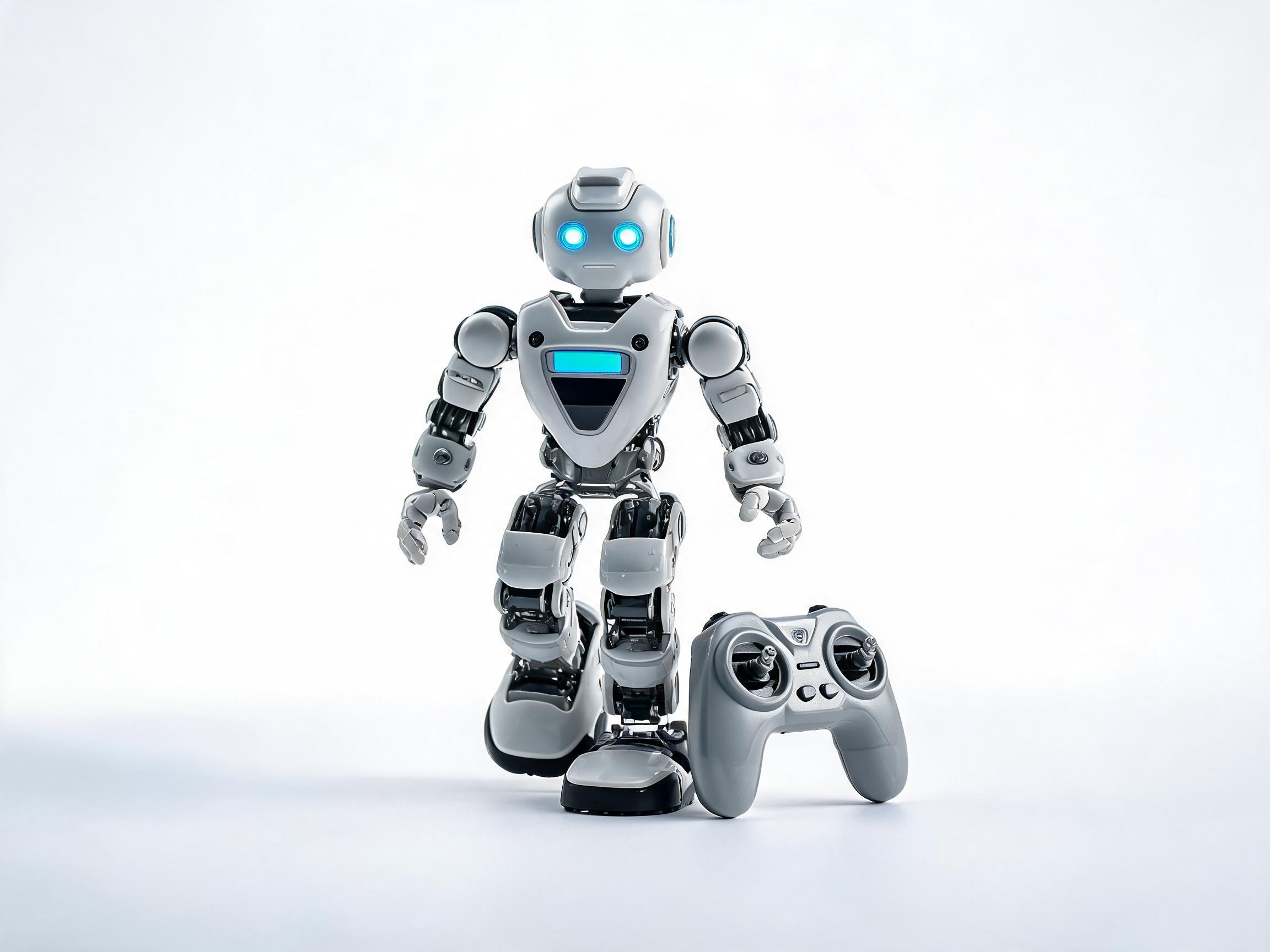
- Walking robots — novelty/educational positioning, often cross-merchandised with STEM or novelty aisles.
Each segment carries different compliance questions, packaging expectations, and return-risk profiles. A sourcing plan that ignores these differences tends to produce overstock in one segment and stockouts in another.
Which RC products to put in your assortment
The three products below illustrate how a category-level assortment can be built from one supplier relationship. They are all EN71 and ASTM F963 compliant and available with OEM/ODM.
Indoor stunt car — entry price point, high turnover
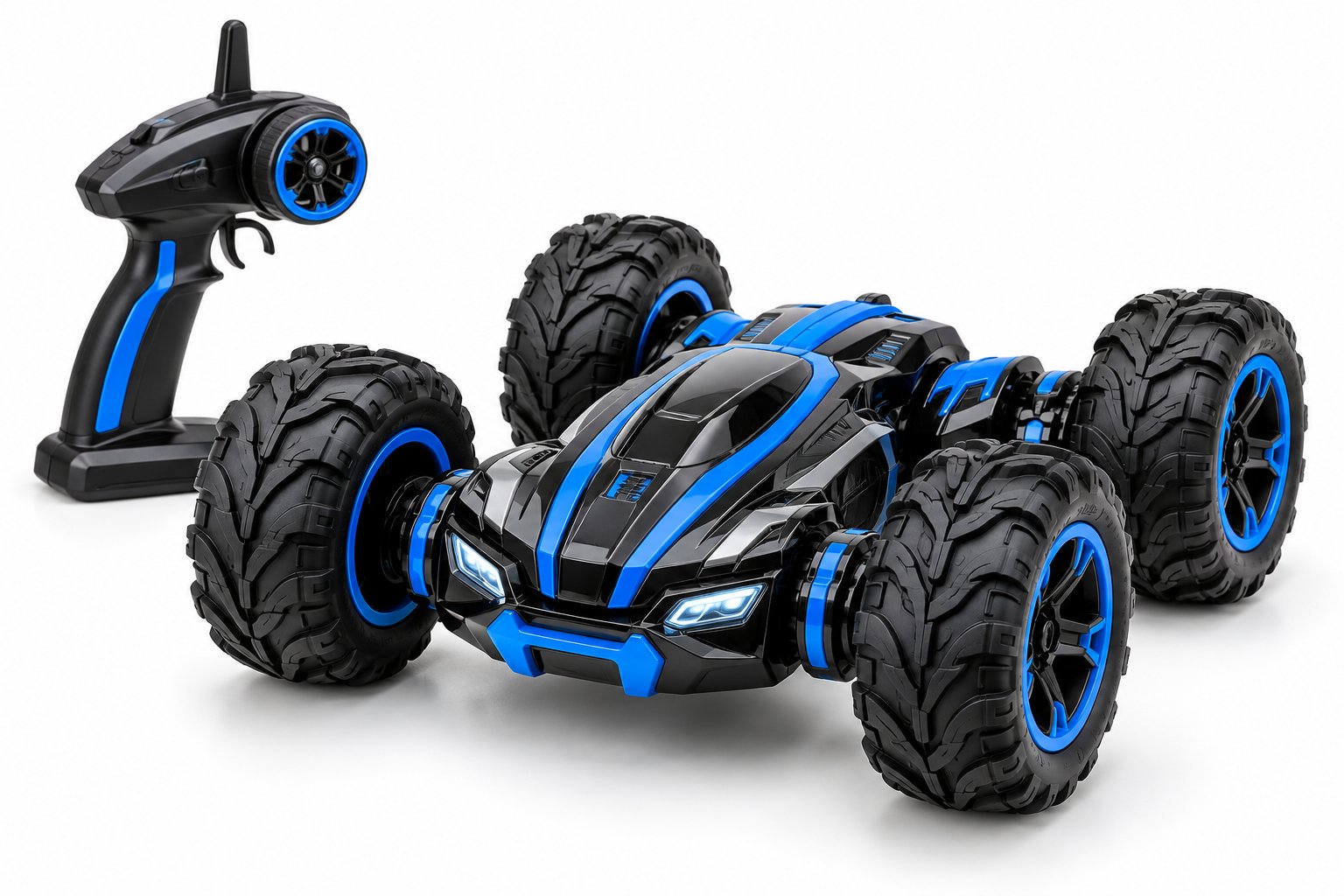
The 4-Channel RC Stunt Car with 360-Degree Spin is designed for indoor use with a low chassis and soft rubber wheels with deep tread. It measures 24 x 16 x 9 cm, runs on a 3.7 V USB-rechargeable battery, and the controller uses 2 x AA batteries. Control range is up to 30 m, and the age recommendation is 6+. MOQ is 500 pieces.
Commercially, this is the segment that drives trial purchases. It suits retailers who need a lower-priced entry SKU to anchor a promotional endcap or a gift assortment.
Off-road car — higher value, outdoor positioning
The 2.4GHz Remote Control Off-Road Car for Gravel and Grass uses a handheld 2.4GHz controller and is intended for gravel and grass surfaces. Age recommendation is 6+, and MOQ is 500 pcs.
For distributors, this is often the volume driver in toy and outdoor-adjacent channels because it supports a higher retail price than indoor stunt cars while remaining accessible to the 6+ age bracket.
Camera drone — differentiated, higher ticket
The Mini RC Drone with 720p Camera and Altitude Hold includes altitude hold and headless mode alongside a 720p camera. Age recommendation is 8+, and MOQ is 500 pieces.
Drones open a different buyer segment: older children and entry-level adult users. They also introduce different compliance questions, particularly around camera and radio equipment, which buyers should confirm with the supplier before listing.
Walking robots — novelty and educational cross-sell
Walking robots sit at the novelty end of the category. They are often merchandised alongside STEM and educational toys rather than in the same aisle as RC cars. Assortment fit depends on whether your shelf space supports a novelty buyer who is not already shopping for a vehicle.
Wholesale channels compared for RC toys
Most buyers compare three channel types: direct from manufacturers, trading companies/wholesalers, and marketplace-style B2B platforms. Each has a different trade-off between assortment depth, control, and speed.
| Channel | Best for | Assortment depth | Private label / OEM | MOQ consideration |
|---|---|---|---|---|
| Direct manufacturer | Buyers who need OEM/ODM, consistent specs, and category-level planning | High — can cover multiple RC subcategories from one source | Available (sampling offered) | Typically 500 pcs per SKU; mixing may be negotiable |
| Trading company / wholesaler | Buyers who want smaller, faster orders or a broad catalog | Medium — depends on what the trader stocks | Limited or unavailable | Often lower, but less control over specs |
| B2B marketplace platform | Buyers sourcing one-off or testing a new category | Variable — quality and compliance checks needed | Rarely offered | Platform-dependent; confirm with each seller |
For retailers building a category rather than filling a single SKU, the direct manufacturer channel is usually the only one that supports consistent packaging, compliance documentation, and OEM/ODM sampling across multiple RC types. Trading companies and marketplaces can work for test orders or when speed matters more than control.
MOQ and compliance checks before you commit
MOQ 500 pieces is the baseline for the three products referenced in this guide. That number matters differently depending on channel:
- Direct manufacturer: 500 pcs per SKU is standard; confirm whether mixed-SKU orders are accepted, since that affects your total buy-in.
- Trading company: MOQ may be lower, but you need to verify which factory produces the goods and whether the compliance certificate covers that specific product.
- Marketplace: MOQ varies by seller; compliance claims should be verified against original test reports, not listing descriptions.
On compliance, EN71 and ASTM F963 are the two baseline standards for toys sold into Europe and North America. For RC products, buyers should also confirm whether additional radio equipment or battery documentation is required in their destination market. The supplier can typically provide the applicable documentation as part of the sampling process.
How to choose a channel for your buyer profile
- Retail chain buyer: prioritize a manufacturer that can supply all four RC subcategories with consistent compliance and packaging. Sampling before production is essential.
- Independent retailer: a trading company or manufacturer with mixed-SKU flexibility may fit better than strict per-SKU MOQs.
- Online-only seller: camera drones and off-road cars often perform better online; confirm that product photography and specs are available from the supplier.
- Distributor: direct manufacturer relationships support territory-level assortment planning, OEM branding, and repeat orders.
Frequently asked questions
What is the typical MOQ for RC toys wholesale?
For the products referenced here, MOQ is 500 pieces. This is common for direct-from-manufacturer orders and can sometimes be negotiated for mixed containers.
Are EN71 and ASTM F963 required for RC toys?
They are baseline toy safety standards for Europe and North America respectively. Buyers should confirm that the specific product and model has been tested to these standards.
Can I order a mixed assortment of RC cars and drones?
Mixed-SKU orders depend on the supplier. With a manufacturer that produces multiple RC categories—such as the six production lines across four toy categories mentioned here—mixed orders are more likely to be workable than with a single-line supplier. Confirm at quotation stage.
What should I check before listing an RC drone for sale?
Beyond EN71/ASTM F963, check age labeling, camera-related compliance, and battery shipping documentation for your destination market. Request original test reports rather than summary certificates.
Next step
If you are mapping out an RC assortment for the next buying cycle, start by requesting samples and confirming MOQ, mixed-order policy, and compliance documentation for the specific products you plan to carry. A supplier that can cover stunt cars, off-road vehicles, drones, and novelty RC from one production base reduces the number of vendor relationships you need to manage.