A cost-structure comparison of catalog plush programs and custom plush development for retail buyers, gifting and promotion managers, and distributors — what each path actually pays for, where one becomes necessary, and the hidden line items that decide the final answer.
"How much does a plush cost" has two very different answers depending on which path you take. A catalog program and a custom development program are not the same product bought at different prices — they are two cost structures, and each one loads its expense into a different stage. The short version: stock plush usually costs less when your requirement fits an existing shape and you value speed; custom plush usually costs less when no catalog item fits and an off-spec compromise would create its own costs downstream. Below is the framework for deciding which applies to you.
Key takeaways
- Stock cost sits in the unit and the freight; custom cost sits in design, sampling and setup before a single saleable unit exists.
- Custom becomes the cheaper path when fit, safety configuration or brand requirement cannot be met by an existing catalog item.
- Both paths carry hidden items — packaging, labeling, compliance documentation, freight — that often move the total more than the unit figure.
- The decision checklist at the end maps the choice to retail, gifting/promotion and infant comfort programs.
On this page
Cost structure: what each path actually pays for
The two paths spend money on different things. Comparing them on unit price alone hides this, which is why two buyers can reach opposite conclusions from the same quotation.
| Cost stage | Stock (catalog) plush | Custom plush |
|---|---|---|
| Design and artwork | Already done by the factory; you select from what exists | Borne by you or shared with the supplier; includes artwork, colour and shape decisions |
| Sampling | Not required if you accept the catalog item as-is | Sample rounds needed before approval; each round has a cost and a calendar slot |
| Tooling / setup | None beyond order setup | Pattern, embroidery files and cutting setup created for your design |
| Unit cost | Reflects an existing, amortised design | Reflects your design, your material choices and your order quantity |
| Change flexibility | Low — you take the item as catalogued | High — size, fabric and detailing are set to your requirement |
| Time to first saleable unit | Short, because production can be scheduled from an existing pattern | Longer, because sampling and approval sit in front of production |
| Exclusivity | Typically shared with other buyers of the same item | Yours, subject to the agreement you reach |
The table compares where cost is incurred, not how much. Actual figures depend on your specification and quantity and should come from a supplier quotation.
The practical consequence: stock plush front-loads almost nothing and back-loads everything into unit and freight. Custom plush front-loads design, sampling and setup, then spreads that investment across the production run. That is why custom looks expensive at low quantities and can look reasonable at volume — and why stock looks cheap until your requirement forces a change.
Where custom becomes the cheaper answer
Custom is not a premium choice; it is the correct choice when the alternative is a catalog item that does not fit. The cost comparison tips toward custom in these situations:
- No catalog item matches the required form. If your product concept depends on a specific animal, proportion or pose, adapting a stock item may cost more in compromise than developing the right pattern.
- The safety configuration is fixed by your market. A comfort item for infants, for example, may need embroidered eyes and nose with no plastic parts and a hypoallergenic polyester fibre filling. If the catalog item you are looking at does not already specify that configuration, custom development is how you get it.
- Size is a design decision, not a detail. Custom development can set a size across a 20–60 cm range, so a program can be built around a shelf plan or a gift-with-purchase format rather than the other way round.
- Brand identity must appear on the item. If the plush carries a logo, character or licensed look, an unbranded stock item cannot substitute.
- You need to repeat the program. A custom pattern you control is a repeatable asset; a catalog item can be discontinued or taken up by other buyers.
In each case the comparison is not "custom unit price versus stock unit price." It is "custom total versus stock total plus the cost of the mismatch" — rework, a second sample, a rejected concept, or a program that cannot launch as designed.
Custom development, in practice
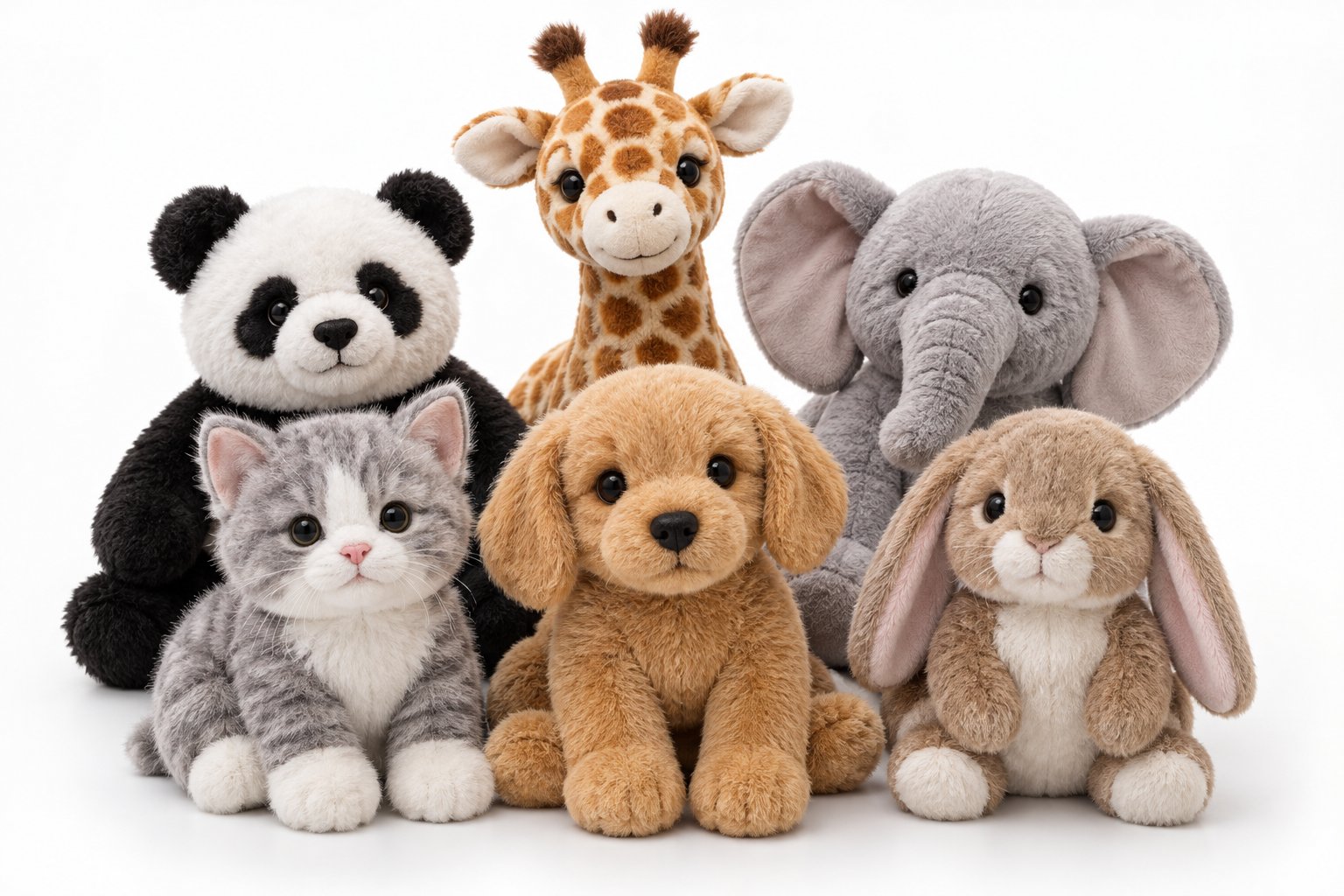
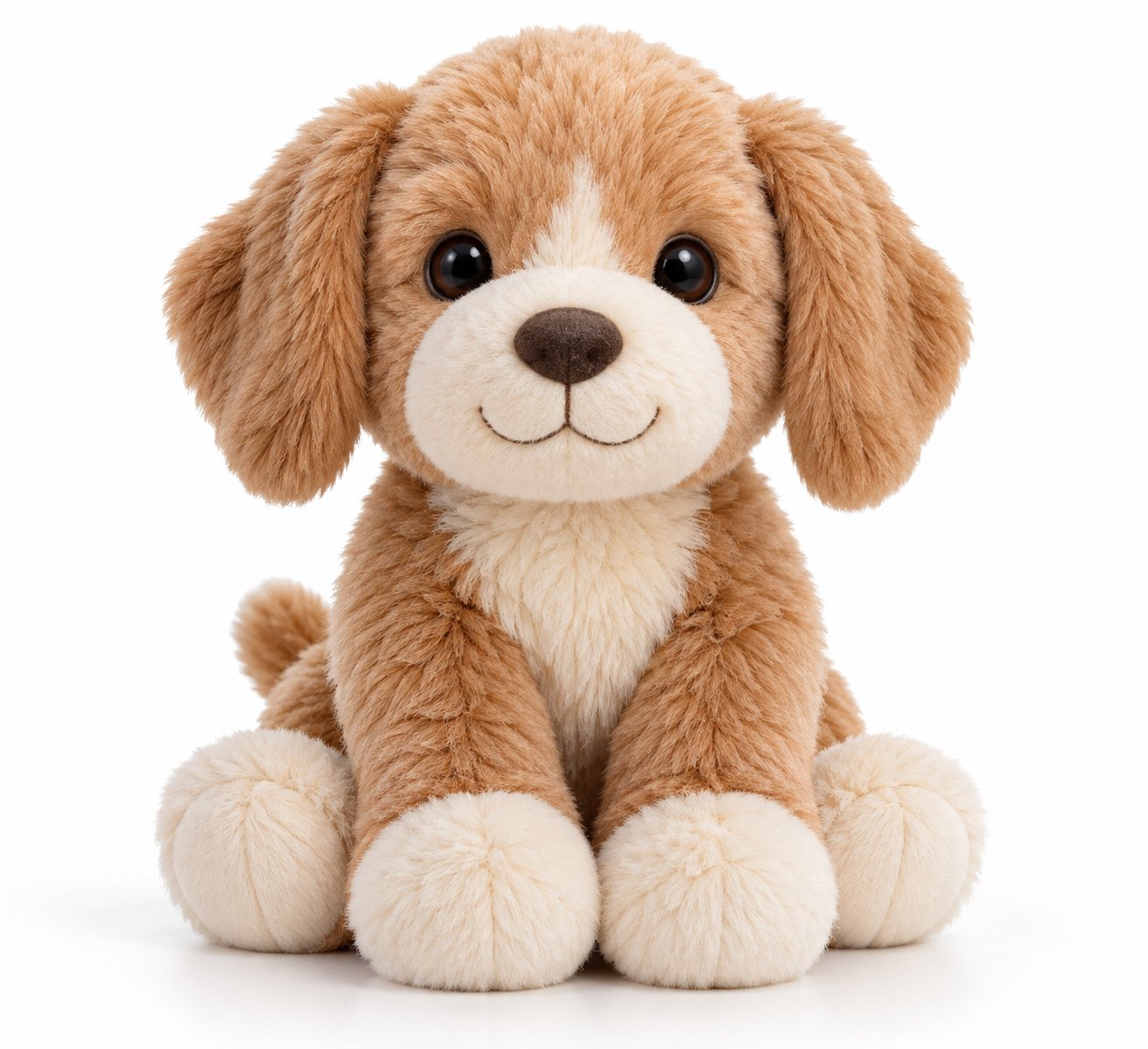
The Custom Plush Stuffed Animal illustrates the custom path: size customizable from 20 cm to 60 cm, soft plush fabric with hypoallergenic filling, durable stitching, OEM/ODM available, 0+ years, EN71/ASTM F963 compliant, MOQ 1,000 pieces. This is the format to quote against when your requirement cannot be met by an existing catalog item.
Where stock wins
Stock wins whenever the catalog item already satisfies the requirement. That sounds obvious, but it is the most commonly over-engineered decision in plush sourcing — buyers commission custom development for a program that a catalog item would have served, then carry sampling cost and a longer calendar for no commercial gain.
Stock is the lower-cost path when:
- The item is a giveaway, a counter display or a volume filler where exact form matters less than presence and safety.
- Your launch date does not allow for sampling rounds and approval before production.
- The program is a test — a first seasonal run, a new channel, a pilot promotion — where you want market feedback before committing to tooling.
- The catalog item already carries the configuration you need. A catalog comfort toy can be specified with embroidered eyes and nose, no plastic parts, hypoallergenic polyester fibre filling, double-stitched seams and a short-pile plush surface that wipes clean, at 30 cm seated height, 0+ years, EN71/ASTM F963 compliant, MOQ 1,000 pieces. If that is your brief, there is nothing left for custom development to add.
Stock, in practice
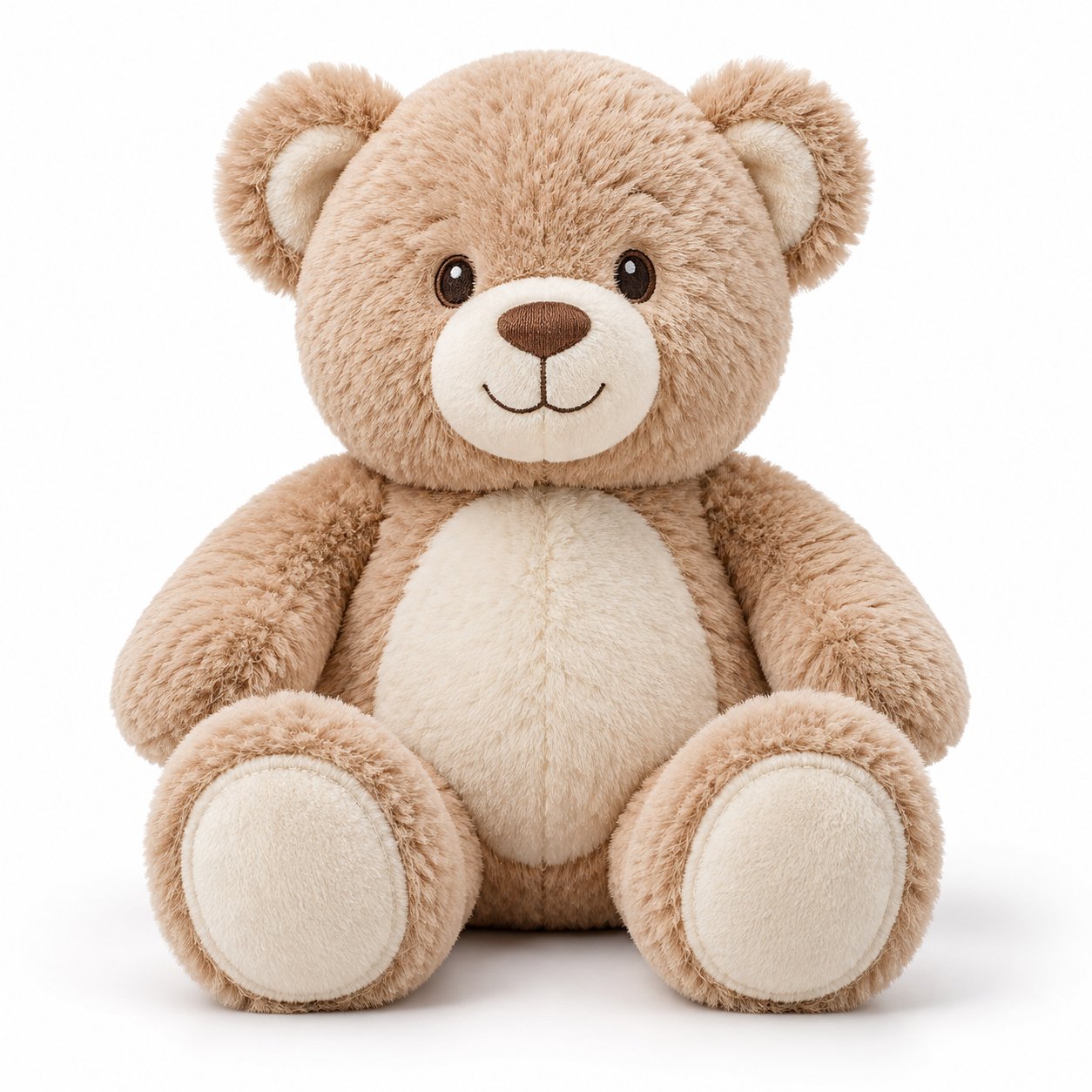
The Plush Teddy Bear Comfort Toy is an example of a catalog configuration that covers a common infant comfort brief without a development cycle: 30 cm seated height, embroidered eyes and nose with no plastic parts, hypoallergenic polyester fibre filling, double-stitched seams, short-pile plush that wipes clean, 0+ years, EN71/ASTM F963 compliant, MOQ 1,000 pieces.
Hidden cost items on both sides
Unit price rarely decides the comparison on its own. These line items appear on both paths and are frequently left out of a first-pass estimate.
- Packaging. Poly bag, header card, gift box or retail carton — the structure you need can add cost independently of the plush itself, and a custom shape may not fit standard packaging.
- Labeling and marking. Care labels, warnings, batch marking and market-specific text sit on top of the item cost and differ by destination.
- Compliance documentation. EN71 / ASTM F963 conformity is a specification on both products above, but the paperwork you need for your market and your customer's file is a separate cost and a separate lead item.
- Freight and volume. Plush is bulky. A larger custom size changes carton count and shipping cost even when the unit price is unchanged.
- Sampling and approval time. On the custom path this is a real cost in calendar terms, especially if a launch date is fixed.
- Change orders. Any amendment after a sample is approved reopens setup. On the stock path this risk is largely absent.
Both paths should be quoted on the same Incoterms basis and with the same packaging and labeling assumption. Otherwise you are comparing two different scopes, not two prices.
Decision checklist by buyer type
Retail buyers
- Does an existing catalog item match the size, look and safety configuration on the planogram?
- Is the item exclusive to your chain, or can competitors carry the same plush?
- Does the packaging need to be retail-ready and branded, and does the catalog item support it?
- Is there time for sampling, or does the shelf date rule out custom development this cycle?
Retail usually leans stock for filler and seasonal volume, and custom when the plush is a signature item or carries the retailer's own character.
Gifting and promotion program managers
- Is the plush branded or tied to a campaign identity? If yes, stock is unlikely to work.
- Is the quantity per drop large enough to absorb design and setup across the run?
- Will the program repeat, or is it one-off?
- Does the giveaway need a specific size to fit a mailer, a counter unit or a bundle?
Promotion programs split cleanly: unbranded volume giveaways go stock; branded or campaign-specific items go custom, where the setup cost is justified by the programme's visibility.
Infant comfort programs
- Does the item need embroidered eyes and nose with no plastic parts?
- Is the filling specified as hypoallergenic polyester fibre?
- Are seams specified as double-stitched, and is the surface a short-pile plush that wipes clean?
- Is the item rated 0+ years, and does it carry EN71 / ASTM F963 conformity?
If a catalog comfort item already meets all four points, custom development adds cost without adding compliance. If any point is unmet, custom is the path that delivers the configuration — and the comparison should be run on total programme cost, not unit price.
What to confirm with a supplier either way
Whichever path you choose, the same questions determine whether the quote you receive is comparable and buildable.
- What is included in the unit cost — item only, or item plus packaging and labeling?
- Which conformity documentation is provided, and for which standard?
- What is the MOQ, and is it the same for a repeat order? Both products referenced above are listed at MOQ 1,000 pieces.
- On the custom path: how many sampling rounds are included, and at what stage does the design freeze?
- On the stock path: how long will the catalog item remain available, and can the configuration be held for repeat orders?
- What packaging structure is assumed, and what changes if you need a different one?
Ask for both paths to be quoted against the same brief where possible. A stock and a custom figure sitting side by side, on identical packaging and documentation assumptions, is the only honest way to answer which costs less for your programme.