A practical guide for parents and educators on matching building block sets to a child's developmental stage, with a focus on STEM learning. Includes selection criteria, a detailed age-appropriate table, and answers to common questions about piece counts, safety, and getting the most from a STEM building blocks set.
Parent & Educator Guide
If you have ever stood in a toy aisle or scrolled an online listing wondering, “What age are building blocks for?”, the honest answer is: it depends on the block. A chunky 12-piece set for a one-year-old and a 500-piece engineering kit for a ten-year-old are both “building blocks,” yet they demand completely different skills. This guide walks through the developmental stages that matter for block play and shows how to match a set — especially a STEM building blocks set — to the child in front of you.
Key takeaways:
- Age labels are a starting point, not a rule; a child's fine-motor skills and attention span matter more.
- For ages 1–3, prioritize large, lightweight pieces with no small parts and rounded edges.
- For ages 4–6, look for sets with 50–150 pieces that introduce simple mechanisms like gears and wheels.
- For ages 7–9, a STEM building blocks 120 pieces set offers a good balance of challenge and independent play.
- For ages 10+, open-ended engineering kits with 300+ pieces and real mechanical concepts keep interest high.
- Always check the manufacturer's age recommendation and safety markings on the packaging.
In this article
Why Age Matters More Than Piece Count
The number of pieces in a box tells you very little about whether a set is right for a child. A 120-piece set can be overwhelming for a three-year-old and too simple for a twelve-year-old. What actually changes with age is the child's ability to:
- Grip and manipulate small objects without frustration
- Follow multi-step instructions or invent their own build goals
- Understand cause and effect — why a tower falls, why a gear turns
- Sustain attention on a single task for longer periods
These four abilities develop at different rates, but they generally follow predictable stages. Matching a set to the stage — rather than to the age printed on the box — is what keeps building play engaging instead of frustrating.
Matching STEM Building Sets to Developmental Stages
Ages 1–2: Sensory and Stacking Play
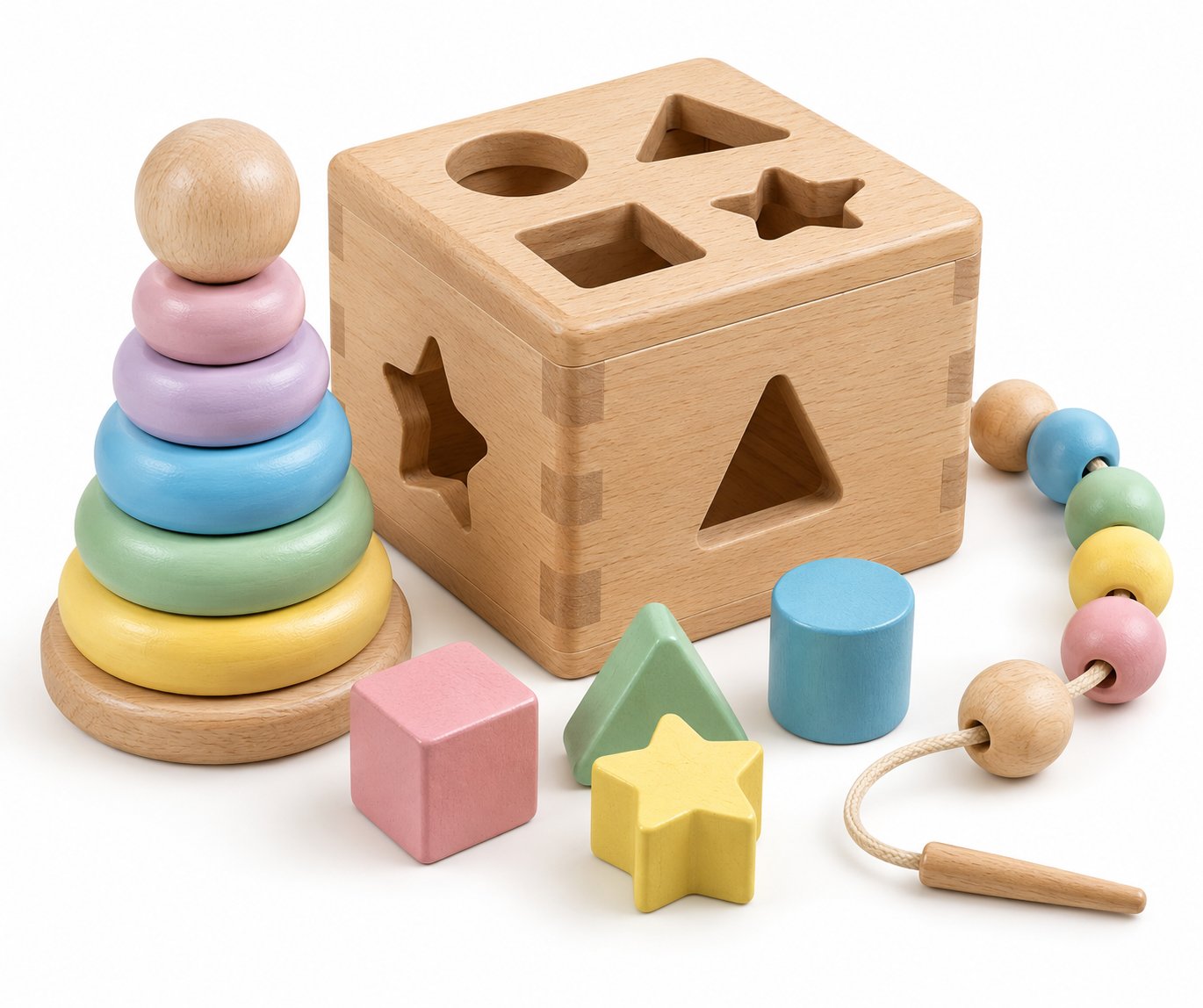
At this stage, “building” really means exploring. Toddlers stack two or three blocks, knock them down, and repeat. The goal is sensory feedback and basic cause and effect, not construction.
What to look for:
- Large, lightweight pieces (often 2–3 inches across) that are easy to grasp
- Rounded corners and no small detachable parts
- Non-toxic finishes and washable surfaces
- High contrast colors or textures for visual and tactile interest
Sets at this stage typically contain 10–30 pieces. Avoid anything with magnets, small connectors, or pieces that fit through a toilet-paper tube — those are choking hazards for children under three.
Ages 3–5: Simple Construction and Pattern Play
Preschoolers begin to build with intent. They copy simple models, sort by color and shape, and start to understand that pieces can connect in more than one way. This is also when many children first encounter gears, wheels, and basic pulleys.
What to look for:
- Interlocking pieces that click together firmly but release easily
- Sets of 30–80 pieces to allow experimentation without clutter
- Large, easy-to-follow picture instructions
- Introductions to simple machines (a wheel that spins, a lever that lifts)
At this age, adult supervision is still important, especially with smaller connector pieces. A set marketed as a STEM building blocks set for preschoolers should emphasize exploration over step-by-step assembly.
Ages 6–8: Structured Building and Early Engineering
By early elementary school, children can follow multi-step instructions, work independently for 20–30 minutes, and understand basic mechanical principles. This is the sweet spot for sets that combine a clear build goal with room for modification.
What to look for:
- Sets of 100–200 pieces — enough for a satisfying build without becoming unmanageable
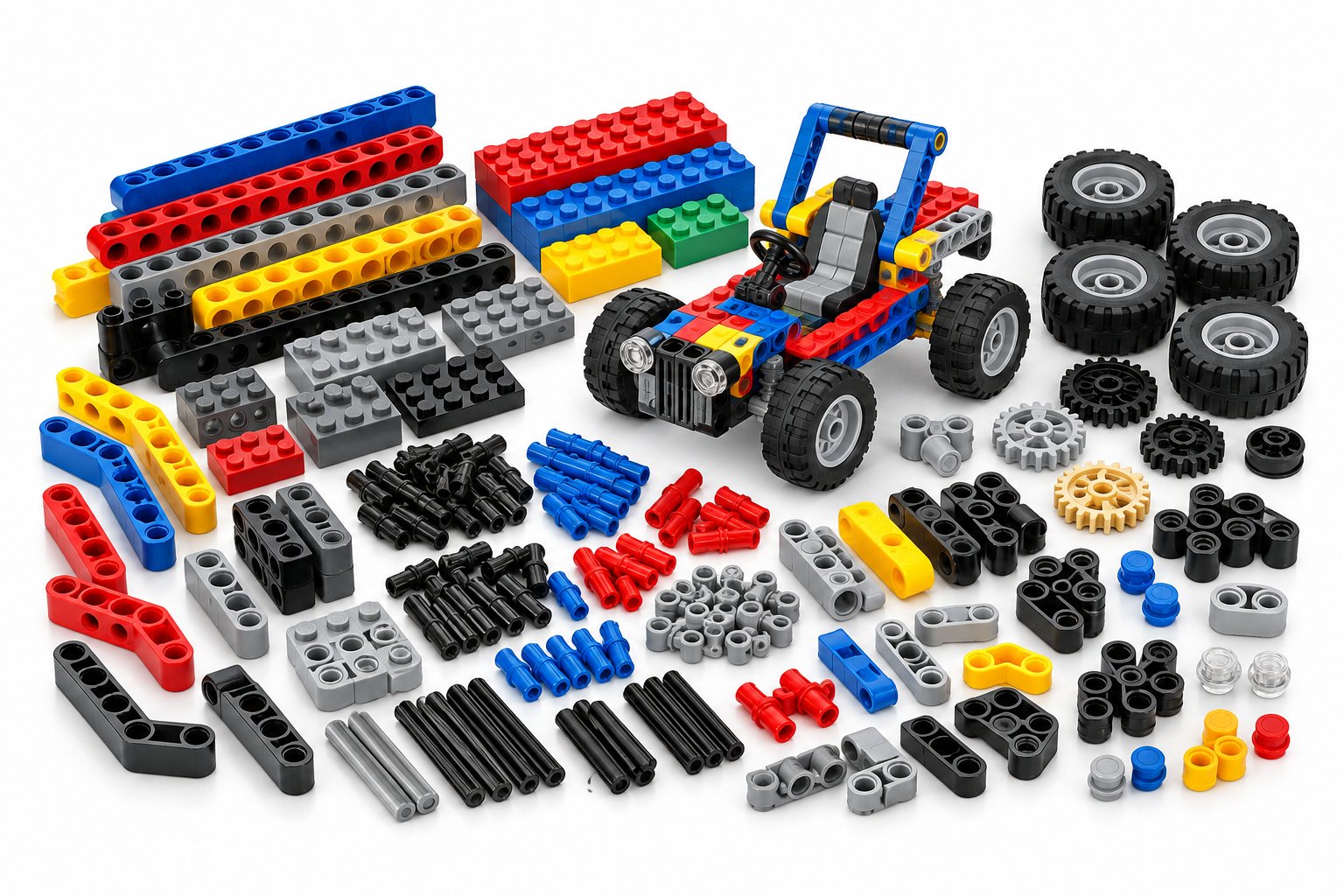
- Moving parts such as gears, axles, and linkages
- Instructions that explain why a mechanism works, not just where to place each piece
- Themes that connect to real-world engineering: bridges, cranes, vehicles, simple robots
A STEM building blocks 120 pieces set fits neatly into this range. It offers enough components for several different builds, yet the piece count is low enough that a seven- or eight-year-old can sort, assemble, and clean up without help. For families or classrooms buying one set to cover a wide age range, 120 pieces is a practical middle ground.
Ages 9–12: Advanced Mechanisms and Open-Ended Challenges
Older children want to solve problems, not just follow instructions. They can handle abstract concepts like gear ratios, structural tension, and basic coding logic. Sets at this stage often include motors, sensors, or programmable components.
What to look for:
- 300+ pieces, or modular kits that can be combined and expanded
- Real mechanical or electronic components (motors, LEDs, simple circuits)
- Open-ended challenges rather than a single model to copy
- Compatibility with other sets in the same system, so the collection can grow
At this age, the line between “toy” and “learning tool” blurs. A well-designed STEM building blocks set can introduce the same concepts found in introductory engineering courses, just at a smaller scale.
Ages 12+: Project-Based and Specialized Kits
Teenagers may gravitate toward robotics, architecture, or mechanical engineering kits. These sets often involve programming, precise measurement, and multi-session projects. The piece count can exceed 500, and the focus shifts from assembly to design, iteration, and troubleshooting.
At this stage, age matters less than interest. A motivated twelve-year-old may outpace a fifteen-year-old who is new to building. The best approach is to match the kit to the specific project or skill the teenager wants to develop.
Quick-Reference Table: Age vs. Set Type
| Age Range | Typical Piece Count | Key Features | What the Child Learns |
|---|---|---|---|
| 1–2 years | 10–30 | Large, lightweight, no small parts, rounded edges | Sensory exploration, stacking, cause and effect |
| 3–5 years | 30–80 | Interlocking pieces, simple machines, picture instructions | Pattern recognition, basic construction, color/shape sorting |
| 6–8 years | 100–200 | Gears, axles, linkages, explanatory instructions | Multi-step assembly, early engineering concepts |
| 9–12 years | 300+ | Motors, sensors, open-ended challenges, expandable systems | Mechanical reasoning, problem-solving, design iteration |
| 12+ years | 500+ | Programming, precision measurement, project-based kits | Advanced engineering, coding, independent project management |
How to Choose a STEM Building Blocks Set
When you are comparing sets, look beyond the age label. Use these criteria to judge whether a set will actually work for your child or classroom:
- Check the safety markings. In the U.S., look for the ASTM F963 designation; in the EU, the CE mark and EN 71 compliance. These indicate the set has passed applicable safety tests for its intended age group.
- Match the piece count to attention span. A good rule of thumb: a child can comfortably manage roughly 20–30 pieces per year of age. A six-year-old may enjoy a 120-piece set; a four-year-old may find it frustrating.
- Look for compatibility. If you plan to buy more sets later, check whether the pieces work with other kits from the same brand or standard system. Compatibility extends the life of the toy.
- Read the instructions. Good STEM instructions explain the principle behind the build. If the manual only shows where to put each piece without explaining why, the educational value is lower.
- Consider the storage. Sets with a tray or resealable bag are easier to keep together. Lost pieces are the most common reason building sets get abandoned.
Frequently Asked Questions
What age are building blocks for?
Building blocks are available for children as young as 12 months and continue to be useful through the teenage years. The right age depends on the size of the pieces and the complexity of the set. As a general guide: large, simple blocks for ages 1–3; interlocking sets for ages 3–5; structured STEM sets for ages 6–8; advanced engineering kits for ages 9+.
Is a 120-piece STEM building blocks set suitable for a 5-year-old?
It can be, with adult support. A five-year-old may need help sorting pieces and following instructions, but they can often complete simpler builds with guidance. If you want a set your five-year-old can use independently, look for one with 30–80 larger pieces first, then move up to a 120-piece set around age six or seven.
Are building blocks safe for toddlers?
Only if the blocks are specifically designed for children under three. Avoid any set with small parts that could be swallowed. Reputable manufacturers label their products with age recommendations and safety warnings. Always follow the manufacturer's guidance and supervise play.
How many pieces should a beginner STEM set have?
For a first STEM building blocks set, 50–150 pieces is a practical range. It gives enough components to build several models without overwhelming the child. A 120-piece set is a common starting point for children around age six and up.
Do building blocks really help with STEM learning?
They can, when the set is designed to introduce engineering concepts such as gears, structures, and simple machines. The key is the type of play the set encourages: open-ended building and problem-solving, rather than just following a single set of instructions. The educational value comes from the process of designing, testing, and revising a build.
Next Steps for Parents and Educators
Choosing the right building block set comes down to matching the pieces to the child's current abilities and interests. Start with the stage guide above, check the safety markings on any set you consider, and don't be afraid to begin with a smaller piece count and add more later.
If you are sourcing STEM building blocks for a school, retail chain, or educational program, the same principles apply at scale. Confirm the age grading, safety certification, and piece count for each SKU, and ask the supplier for the instructional materials that come with the set. Those details tell you more about the educational value than any marketing description.
Ready to compare options? Gather the age range, piece count, and safety requirements for your target market, then request samples or a specification sheet from your supplier. That information will let you judge whether a set fits your curriculum or customer base before you commit to a bulk order.