A buyer-oriented guide to selecting outdoor games for kids, covering categories, age and venue criteria, durability and safety checks, and bulk sourcing considerations for B2B procurement.
Buyer's Guide
If you are sourcing outdoor games for a retail chain, a school district, a playground operator, or an online store, the question "what are some good outdoor games for kids?" is not just about fun. It is about which products your target age group will actually play with, which will survive a season of use, and which meet the safety requirements of your market. This guide breaks down outdoor group game categories, selection criteria, and sourcing considerations so you can make informed purchasing decisions.
Main Categories of Outdoor Group Games
Outdoor games for kids generally fall into four broad categories. Each has different play patterns, age suitability, and durability requirements. Knowing the category helps you narrow down which products to stock or specify.
Toss Games
Toss games include bean bag tosses, ring tosses, and similar target-based activities. They are easy to set up, work on grass or pavement, and are typically suitable for preschool ages and up. Key considerations for buyers: bean bag weight and filling (avoid loose fill that can leak), ring material (plastic vs. foam), and whether the target board is freestanding or requires anchoring.
Racquet Sets
Racquet sets cover badminton, tennis, and paddle games. They are popular with schools and families. Buyers should check racquet head size, handle grip diameter (important for small hands), string tension, and whether the set includes a carry bag. Age suitability depends on racquet weight and length.
Flying Discs
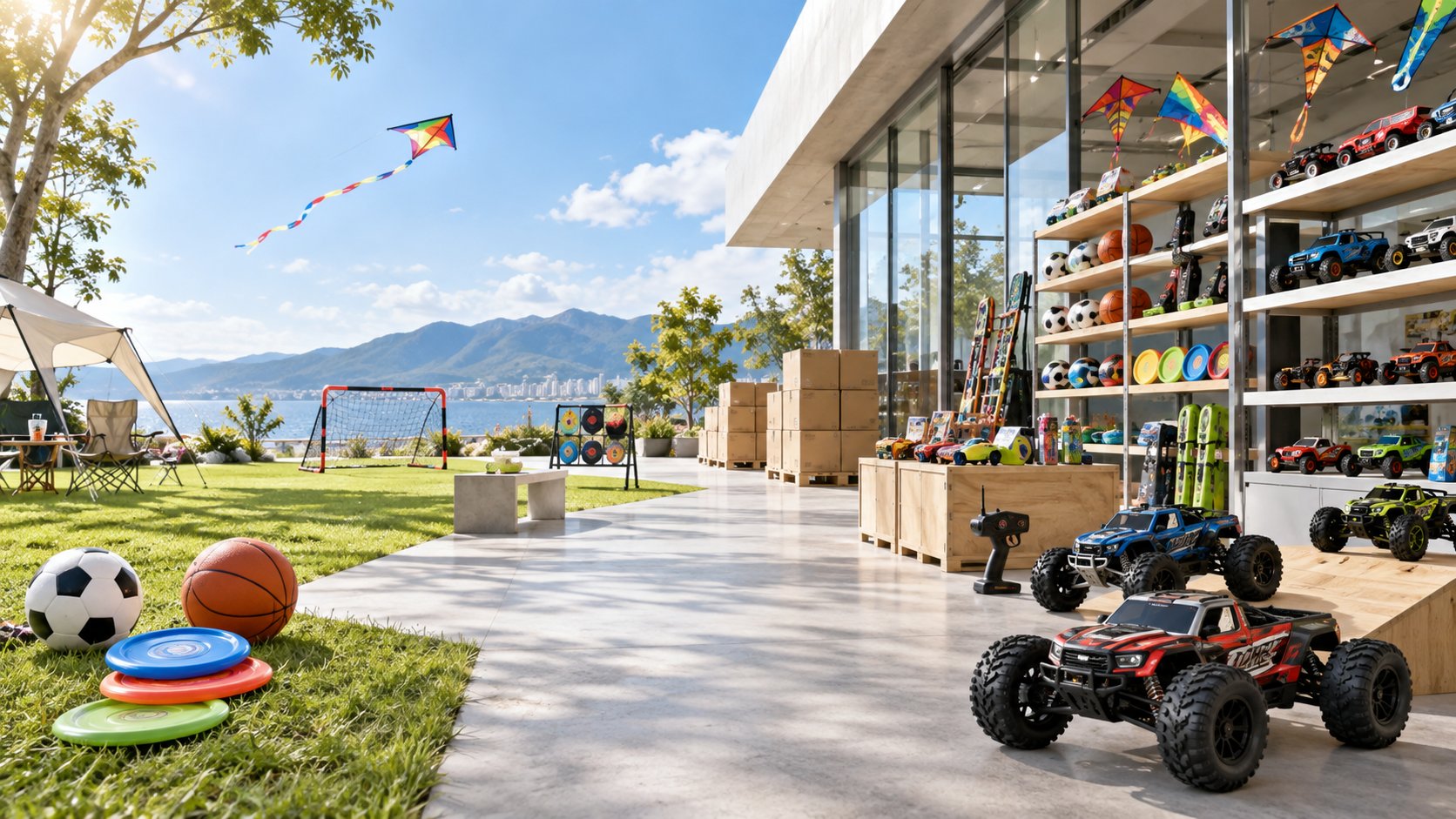
Flying discs are simple, portable, and appeal to a wide age range. Soft foam discs are safer for younger children, while standard plastic discs are better for older kids. Check disc diameter, weight, and material flexibility. A disc that is too hard can cause injuries; one that is too flimsy will not fly straight.
Ball Games
Ball games include playground balls, soccer balls, basketballs, and catch sets. They are the most versatile category. Buyers should specify ball size by age group based on the size grading each supplier uses for the model, together with material (rubber, PVC, or foam) and inflation requirements. Foam balls are a good choice for indoor/outdoor mixed use and younger children.
Selection by Age Group and Venue
Age and venue are the two most important filters. A game that is perfect for a young child in a backyard may be unsuitable for an older child on a school playground. Use the table below as a starting point.
| Age Group | Recommended Categories | Key Criteria | Venue Notes |
|---|---|---|---|
| Preschool (about 3–5) | Soft toss games, foam balls, large flying discs | Lightweight, large size, no small parts, soft edges | Backyards, indoor play areas, preschools |
| Early school age (about 6–8) | Racquet sets (light), bean bag toss, medium balls | Adjustable or small-grip handles, durable stitching | School yards, parks, community centers |
| Older children (about 9–12) | Standard racquets, soccer balls, flying discs, target games | Higher durability, competitive play | Playgrounds, sports fields, camps |
| Teens | Full-size balls, advanced racquet sets, disc golf | Performance materials, adult sizing | Sports facilities, parks, clubs |
Venue also affects material choice. For pavement or hard surfaces, choose rubber or heavy-duty plastic that resists abrasion. For grass, weight and stability matter more—lightweight targets may blow over. For indoor or mixed use, foam and soft materials reduce damage and injury risk.
Durability and Safety Checks
When evaluating samples or supplier specifications, focus on these areas:
- Material quality: Look for UV-resistant plastics and fade-resistant fabrics. Outdoor games are exposed to sun and rain; inferior materials become brittle or lose color quickly.
- Construction: Check seams, joints, and connection points. Reinforced stitching and solid welds indicate better durability. For inflatable items, verify valve quality and seam strength.
- Edge and surface finish: Sharp edges, burrs, or exposed screws are safety hazards. Require rounded corners and smooth surfaces on all plastic and metal parts.
- Small parts: For products intended for children under 3, ensure no small parts that could detach and become a choking hazard. For older children, verify that components like rings, discs, and balls meet size and weight guidelines.
- Compliance: Confirm that the product meets the safety standards required in your market. For North America, ASTM F963 is the relevant toy safety standard. For Europe, EN71 applies. These are baseline requirements for toy products; verify that your supplier can provide test reports for the specific model.
As a B2B buyer, you should request test reports and certificates for each product you intend to order. Fujian Lequ Wanwan Co., Ltd., a B2B toy manufacturer and exporter founded in 2013, serves North American and European buyers with outdoor sports toys among its four toy categories. The company holds EN71 and ASTM F963 compliance and ISO 9001:2015 certification, and operates six production lines. This kind of supplier profile is a useful starting point, but always verify that the specific product you are sourcing has the required documentation.
Bulk Sourcing Considerations
When sourcing outdoor games for kids in bulk, the following factors affect total cost and operational efficiency:
- Packaging: Consider retail-ready packaging vs. bulk packaging. Retail packaging adds cost but may be required for your channel. Confirm packaging dimensions and weight to estimate shipping costs.
- MOQ and lead time: Minimum order quantities vary by product and supplier. Discuss MOQ early, especially if you are testing a new category. Lead time should account for production, quality inspection, and shipping.
- Customization: Many suppliers offer OEM/ODM services, allowing you to customize colors, logos, and packaging. If you need custom designs, confirm the supplier's design capabilities and sample lead time.
- Storage and logistics: Outdoor games can be bulky. Consider how products will be stored in your warehouse or store. Collapsible or stackable designs save space. Check carton dimensions and pallet configuration for efficient shipping.
- After-sales support: Clarify the supplier's policy on defective units, spare parts, and replacement components. A supplier that can provide replacement parts reduces your return rate and improves customer satisfaction.
For buyers new to outdoor games, start with a small trial order across two or three categories to test market response. Use that data to refine your selection for larger orders.
FAQ: Age Suitability and Storage
What age are outdoor games suitable for?
Most outdoor group games are designed for preschool ages and up, but suitability varies by product. Toss games and foam balls are often suitable for young children with supervision. Racquet sets typically start at early school age. Ball games and flying discs have versions for every age group. Always check the manufacturer's age recommendation and any small-part warnings.
How should outdoor games be stored?
Storage depends on the material. Plastic and rubber items should be stored indoors or under cover to prevent UV degradation. Fabric items should be dry before storage to prevent mold. Inflatable items should be deflated and folded loosely. For retail or institutional buyers, consider products that come with storage bags or are collapsible to save space.
Can outdoor games be left outside?
Not all outdoor games are designed for permanent outdoor exposure. Check the supplier's specifications for UV resistance and weather resistance. Products intended for permanent outdoor use will have specific material claims. For others, recommend storing them when not in use.
Next Steps for Buyers
Choosing the right outdoor games for kids comes down to matching product categories to your target age group and venue, verifying durability and safety compliance, and working with a supplier who can meet your volume and customization needs. Start by defining your market requirements—age range, safety standards, and packaging—then request samples and test reports from potential suppliers. A structured evaluation process reduces risk and helps you build a product line that sells.