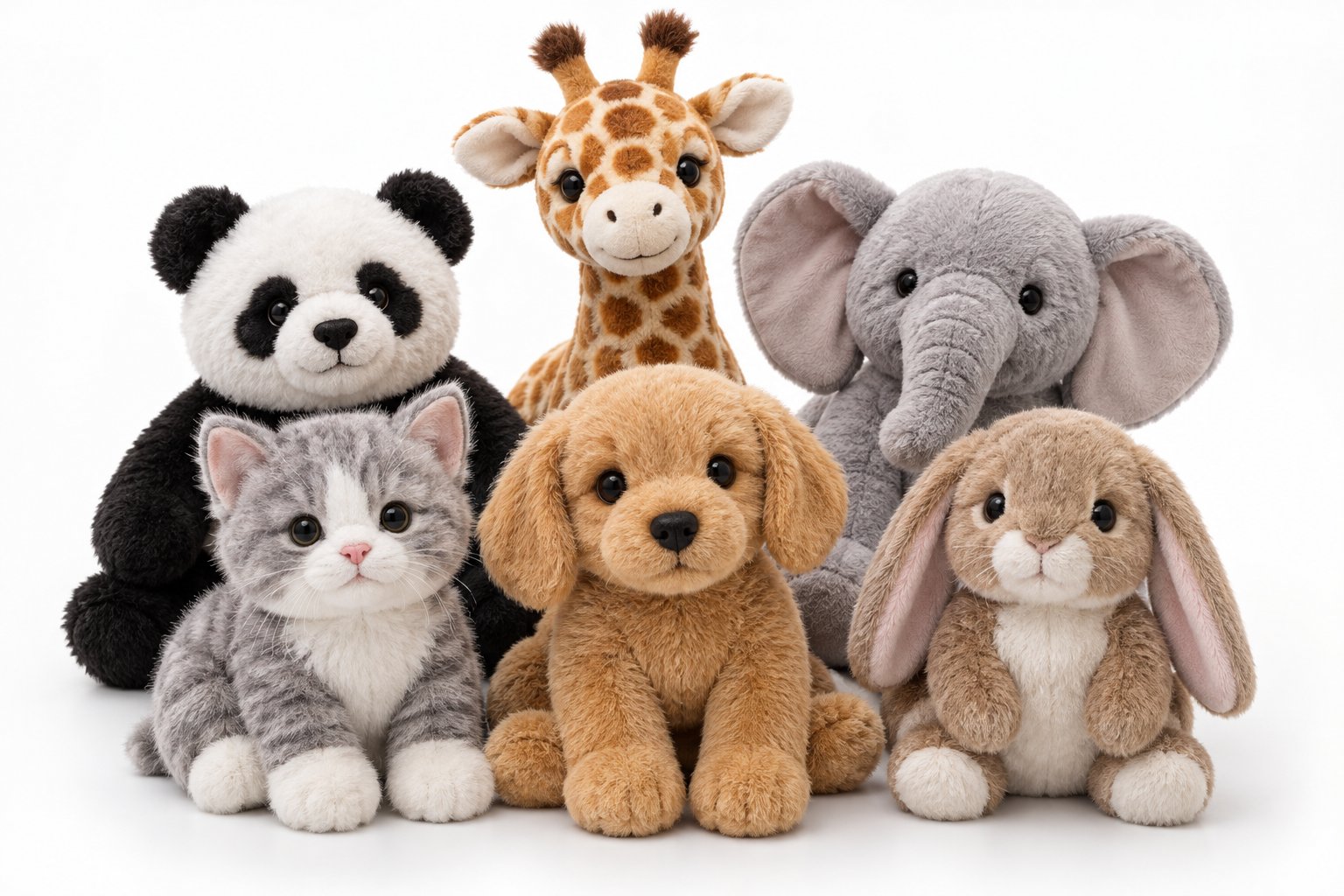
Stuffed animal, plush, soft toy, plushie — the same product carries different names depending on who is asking. This glossary explains where each term comes from, how buyers and retailers use them, and how naming choices affect product listings, search visibility, and OEM communication with a plush factory.
Search "what is stuffed animals called" and you get four answers that are all correct: stuffed animal, plush, soft toy, plushie. The right one depends on who is reading. A US gift shop buyer says stuffed animal. A UK retailer says soft toy. A licensing manager says plush. A TikTok shopper says plushie. For anyone sourcing from an OEM plush factory, knowing which term belongs in which context prevents mismatched quotes, weak product listings, and confused sample requests.
- Stuffed animal — the everyday American term; standard in US retail and gift channels.
- Plush / plush toy — the industry term used in manufacturing, licensing and wholesale.
- Soft toy — the British and European retail term, also common in toy-safety documentation.
- Plushie — informal, collector- and community-driven; strong in online and hobby retail.
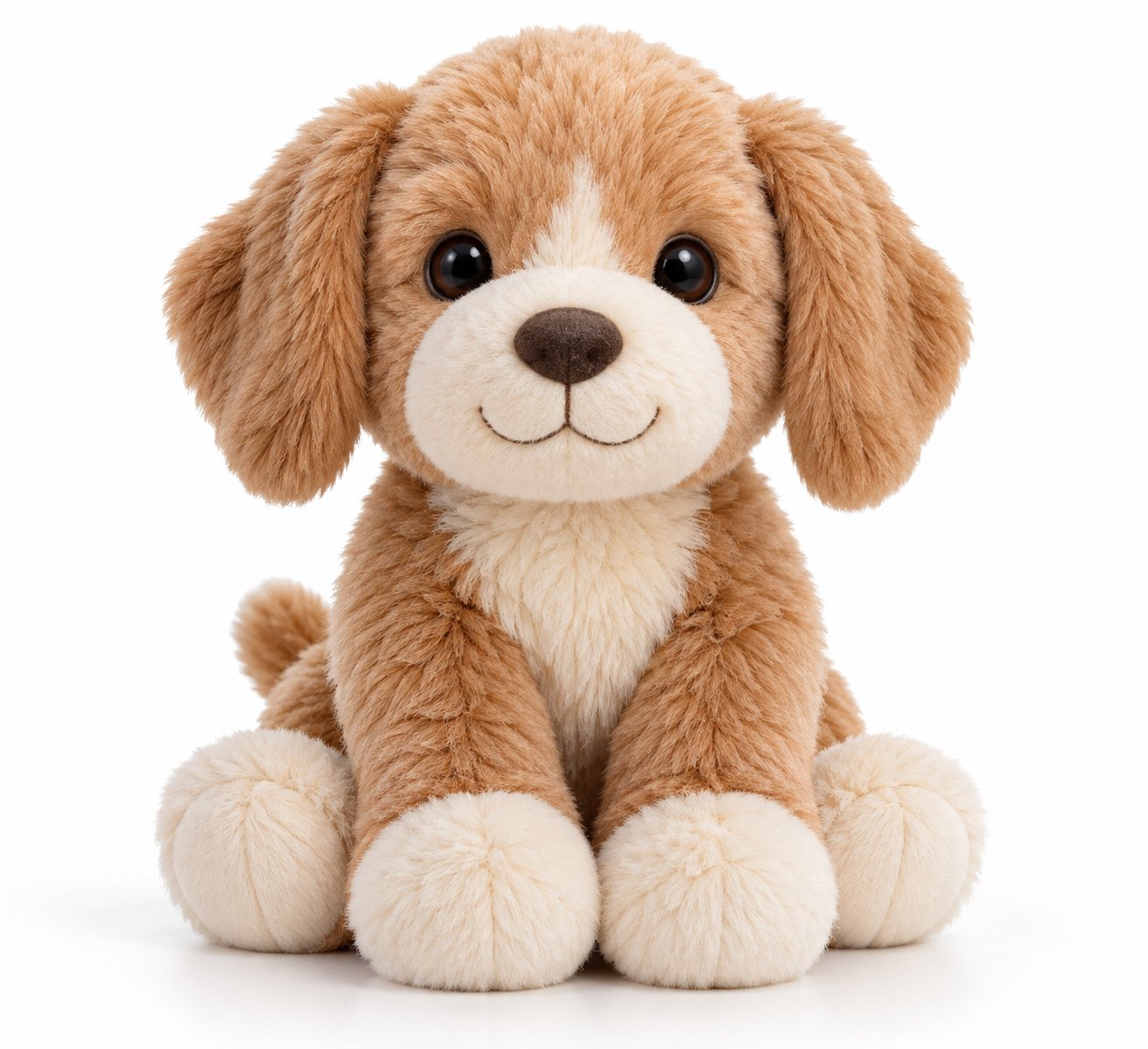
Why one product has four names
The terms split along three lines: region, industry, and community.
Region. "Stuffed animal" dominates US search and shelf language. "Soft toy" is the norm in UK retail and appears frequently in European toy-safety paperwork. Both describe the same object: a fabric body, sewn and filled, made for children and collectors.
Industry. Inside manufacturing and licensing, "plush" is the working word. A buyer asking for a "custom plush stuffed animal" is using the lay term and the trade term in the same phrase, which is exactly how most sourcing conversations start. "Plush" also covers products that are not animals at all — plush pillows, plush keychains, character plush — so it is broader than "stuffed animal."
Community. "Plushie" comes from collector and fan culture. It signals a softer, more affectionate relationship with the product. Retailers targeting younger online audiences often use it deliberately in titles and tags, even when the supplier calls the same item a plush toy.
Term-by-term reference for retail and sourcing
| Term | Where it fits | Typical audience |
|---|---|---|
| Stuffed animal | US retail listings, gift shops, mass-market shelves | General consumers, parents, gift buyers |
| Plush / plush toy | Wholesale, OEM orders, licensing, factory communication | Importers, brand owners, product managers |
| Soft toy | UK/EU retail, toy-safety documents | European buyers, compliance teams |
| Plushie | Online communities, collector lines, social commerce | Younger shoppers, hobby collectors |
| Soft plush animal toy | Long-tail product titles combining several terms | Shoppers searching with mixed vocabulary |
One practical note: "stuffed animal" and "plush" are not fully interchangeable in a listing title. "Stuffed animal" reads as a child's toy; "plush" can describe a decorative or adult-collectible item. A retailer selling the same SKU to both audiences may need two title variants rather than one forced compromise.
How the naming choice affects product listings
Retailers who treat these words as synonyms lose search coverage. Shoppers type all four. A listing optimized only for "stuffed animal" will not surface for "soft toy" or "plushie" queries.
A workable approach for a product line:
- Pick one primary term for the title, based on the main market and audience.
- Work the other terms into the description, bullet points or tags naturally — not stacked into a keyword line.
- Keep the child-facing term in the title if the item is sold mainly as a toy, and reserve "plush" or "plushie" for collector or decor variants.
- Match the term to the age and use case: a product sold for ages 0+ with hypoallergenic filling reads more clearly as a baby-safe soft toy than as a generic "plush."
These choices also affect how a supplier reads your brief. A request for "soft toys, 25 cm, gift channel" tells the factory the market, size band and end use — enough to start a quote. A vague "cute plush, whatever size" usually comes back with a list of questions instead.
What OEM buyers should specify alongside the term
Naming only gets you part of the way. When placing a custom plush stuffed animal order, the term should travel with the practical details that determine cost and feasibility:
- Size — finished height or length in centimeters. Custom sizes are commonly handled in the 20–60 cm range.
- Filling — for gift and baby channels, hypoallergenic filling is a common requirement.
- Fabric and design — color, shape and artwork are usually customized per project.
- Target age — items from 0+ carry different labeling and safety expectations than collector pieces.
- Compliance — EN71 and ASTM F963 are the standards most often named by European and North American buyers; confirm which applies to your destination market.
- Quantity — MOQ is typically 1000 pcs for OEM/ODM runs.
- Packing — poly bag plus export carton is the standard presentation.
If your product page already links to a soft plush stuffed animal toy specification, use the same terms in your inquiry so the quote matches the item you are actually asking about.
How the factory side uses these terms
A plush manufacturer sees the vocabulary from the other direction. Incoming briefs blend retail language and trade language, so the first job is mapping the request to a build: a fabric body, sewn seams, hypoallergenic filling, finished at a stated size.
Durable stitching matters more in this category than most buyers expect, because the product is handled, squeezed and washed by its end user. That is a construction point to raise with the supplier, not an assumption to carry into a listing.
Capacity also shapes which terms make sense commercially. A factory running six production lines with 1.2 million pieces per month and roughly 180 staff can absorb both small gift-channel runs and larger licensed programs. Company-level credentials such as ISO 9001 describe the facility's management system — they are not a product-level certification, so keep product claims tied to the specific item and its test documentation.
Buyers sourcing for North America and Europe typically care about three things at the naming stage: the term their market uses, the size and filling they can buy at MOQ 1000, and the compliance documents covering the destination. Get those aligned before artwork starts.
FAQ
Is "plush" the same as "stuffed animal"?
In everyday use, yes — both describe a sewn, filled fabric toy. In sourcing, "plush" is the broader trade term and can include pillows, keychains and non-animal shapes, while "stuffed animal" usually means an animal-shaped toy.
Which term should I use in a product listing?
Use the term your main market searches for as the primary title term, then include the others naturally in the description. US audiences lean toward "stuffed animal"; UK and EU audiences lean toward "soft toy."
What should I include when requesting a quote?
Specify size in centimeters, filling type, target age, destination market and compliance requirements, plus quantity. Custom sizes are commonly made in the 20–60 cm range, and OEM/ODM orders typically start at MOQ 1000 pcs.
Do certification requirements change with the name I use?
No. Compliance depends on the product, its materials and the destination market, not on whether you call it a soft toy or a plush. Confirm the applicable standard — EN71 and ASTM F963 are the ones most often requested by European and North American buyers — with the supplier for your specific item.
Need a custom plush run quoted?
Tell the supplier the term your market uses, the size band, filling and target age, plus your destination market. That is enough to match your brief to the right construction and start a sample discussion.
Request product details