Weighted stuffed animals use filling beads to add mass and change how a plush sits, feels, and behaves in the hand. This category-level guide explains what the weight actually does, what is inside the filling, how the construction works, and what B2B buyers should verify — stitching, age labeling, and filling containment — before stocking a line.
Weighted stuffed animals are a distinct plush construction category: an outer soft toy combined with an internal filling that adds mass. Buyers ask what the weight actually does, what is inside, and how to judge a line before placing an order. This guide answers the functional and construction side of the category — no therapy claims and no specification figures — so retail buyers and sourcing teams know what to compare.
Key takeaways
- The added weight changes how a plush behaves in the hand and how it sits on a surface — it stays put instead of shifting.
- The weight comes from a dense filling — usually beads or granules — held in an inner compartment rather than mixed loose with standard fiberfill.
- Buyer checks that decide reorder rates: seam and stitching strength, age labeling and small-part rules, and how well the filling is contained.
- Weight is a construction choice, not a health device. Claims beyond material, feel, and workmanship belong in the hands of your compliance team, not the catalog copy.
In this guide
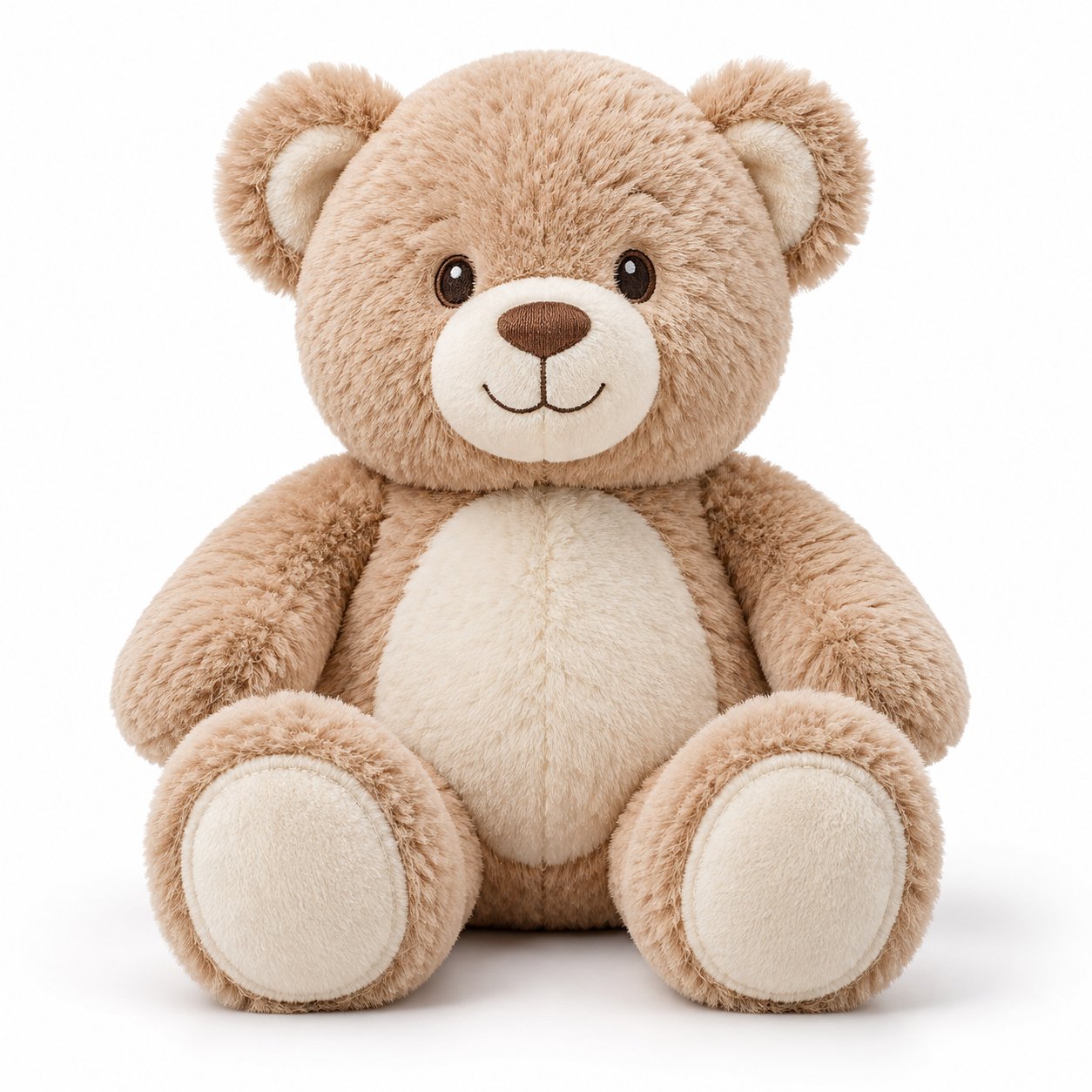
What weighted stuffed animals do
Strip away the marketing language and a weighted plush changes three things for the person holding it.
- It resists movement. A standard stuffed animal is light enough to be knocked aside or to slide when placed on a bed or chair. Added mass makes the plush stay where it is put, which is the single most noticeable difference at retail.
- It changes hand feel. The weight sits low and dense in the body or base, so the toy feels anchored rather than airy. Buyers describe this as a more substantial product for the price point.
- It becomes a quiet, hands-on object. Because the mass is enclosed and the surface is soft, it suits use in the lap, on a desk, or on a bed where a child returns to it repeatedly. That repeated-use pattern is exactly why construction quality matters more than the headline weight.
What a weighted plush does not do is defined by its manufacturing alone. Anything framed as a health, sleep, or developmental benefit is a claim your compliance and legal reviewers must clear for the destination market before it appears on packaging or a listing.
What is inside weighted stuffed animals
The core difference from a conventional plush is the filling build. There are two layers to think about.
The outer layer
Standard soft toy filling — polyester fiberfill — gives the plush its shape and softness. Fiberfill is light by nature, so on its own it cannot produce a weighted feel.
The weight layer
The mass comes from a dense filling material, typically beads or granules, placed inside the toy. In a properly built product this dense filling is not mixed loosely with the fiberfill. It is held in a separate inner compartment or pouch, often in the base, limbs, or body core, so the weight stays where the designer intended and the plush keeps a natural silhouette.
That inner containment is the part buyers should ask about directly. It is the difference between a plush that still feels even after a season of use and one that develops a lumpy base or shifting mass. Because containment construction varies by factory and by design, the practical step is to ask your supplier how the weight layer is separated from the outer fiberfill and how that inner compartment is closed and secured.
How the weight works in the construction
The mechanics are simple: mass plus containment plus a strong outer shell.
- Mass gives the plush its anchored feel. The weight can be distributed through the body, concentrated in the base, or placed in limbs and extremities — each produces a different handling experience, and the intended use case should guide the choice.
- Containment keeps the dense filling from migrating. A closed inner pouch or compartment prevents the beads from settling into corners or shifting to one side.
- The outer shell has to carry the extra load. Heavier contents put more stress on seams, especially at stress points such as the base, arms, and the closure where the toy is stuffed and finished. This is why seam engineering — not the weight figure — is the real quality variable in this category.
A useful way to frame the trade-off for your own product brief: more mass improves the anchored feel, but it also increases load on every seam and on the filling closure. The design goal is a construction where the weight is fully supported by the outer shell and the inner pouch, so the product holds its shape through normal handling and repeated use.
What B2B buyers should check
Before stocking a weighted plush line, evaluate suppliers against these three areas. They map directly to the returns, claims, and compliance questions that follow a product after it ships.
| Check | What to verify | Why it matters |
|---|---|---|
| Stitching and seam strength | Reinforced seams at stress points; secure closure where the toy is stuffed and finished; a consistent stitch pattern on your approved sample vs. production | Added mass puts more load on seams, so weak stitching is the most common failure point in this category |
| Age labeling and small parts | Correct age grading for the destination market; labeling applied consistently across the range; small-part requirements reviewed against the target market's rules | Age marking and small-part compliance are regulated buyer requirements, not marketing choices |
| Filling containment | How the dense filling is separated from the outer fiberfill; how the inner pouch or compartment is closed; whether the weight stays in place after handling | Poor containment leads to shifting mass, lumpy shape, and possible filling escape — a direct driver of returns |
Bring a physical sample through handling and a simple drop test before committing a full order, and confirm that the mass does not migrate and that no filling escapes at the seams or base. Ask your supplier to document the age labeling and any small-part evaluation for your destination market, and keep that documentation with the approved sample. These checks are cheap at the sampling stage and expensive after a container lands.
For OEM and ODM programs, ask early which parts of the build can be specified — the outer shell fabric and finish, the shape and size of the plush, the inner weight compartment, and the labeling. Capability varies by factory and by project, so confirm what is available for your specific design rather than assuming a standard build.
FAQ
How do weighted stuffed animals work?
The outer layer is standard soft toy filling that gives shape and softness. A dense filling — usually beads or granules — sits in a separate inner compartment and adds the mass. The weight makes the plush resist movement and changes its hand feel; the inner compartment keeps the dense filling in place, and the outer shell carries the extra load.
What is inside weighted stuffed animals?
A soft outer shell, ordinary fiberfill for shape, and a dense filling material held in a separate inner pouch or compartment. The separation between the outer fiberfill and the dense filling is the key construction detail — it is what keeps the plush from becoming lumpy or shifting mass with use.
Are weighted stuffed animals different from standard plush in production?
Yes, in three ways: the inner weight compartment adds a production step, the outer shell must be engineered to carry more load, and the weight distribution has to be consistent across units so retail sizing and hand feel stay uniform. Those differences are why this category should be sampled and inspected with more care than a plain plush.
Fujian Lequ Wanwan is a B2B plush toy manufacturer working to EN71 and ASTM F963-compliant production, with OEM and ODM available across the company. Buyers can request build details — outer shell materials, inner filling construction, labeling, and packaging — and confirm what applies to their specific market and design.