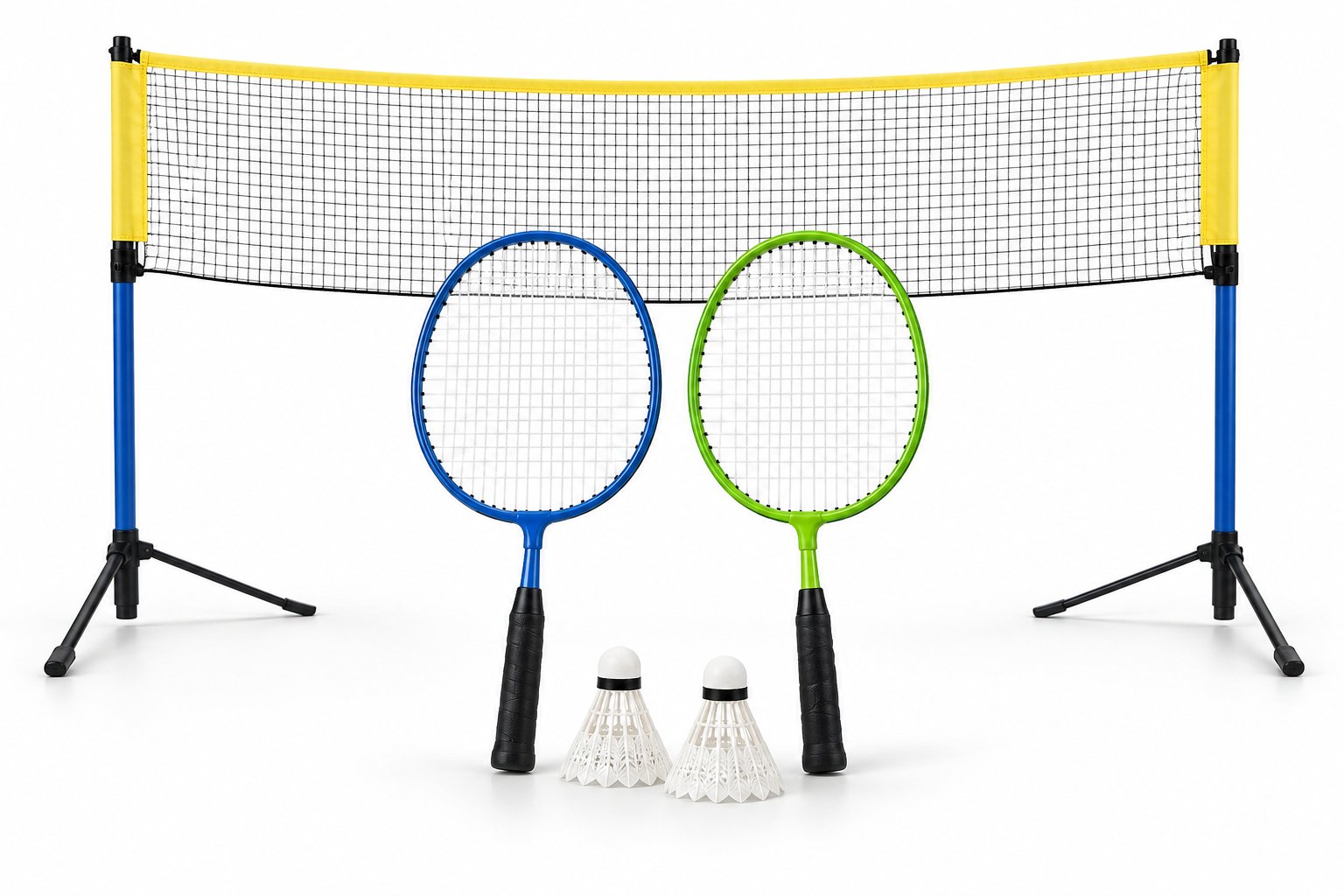
A badminton net is a regulated piece of sports equipment, not a generic accessory—its dimensions, material, and construction determine playability and compliance. This guide covers official net height, key specifications buyers must verify, and why even a junior badminton set with net needs the same attention to quality. Ideal for importers, distributors, and facility managers sourcing nets for schools, clubs, and retail.
A badminton net is the dividing line that defines the game. It affects shot trajectory, rally speed, and player safety. For importers, distributors, and facility managers, the net is not a generic accessory—it is a regulated piece of sports equipment with specific dimensions and material expectations. Getting the specification wrong leads to returns, player complaints, and potential compliance issues. This guide explains what a badminton net is, the official height and size, and the checks that separate a sellable net from a problematic one.
Key Takeaways
- Official badminton net height: 1.524 m (5 ft) at the center, 1.55 m (5 ft 1 in) at the posts.
- Standard net length: 6.1 m (20 ft), with a depth of 0.76 m (2 ft 6 in).
- Mesh size typically ranges from 15 mm to 20 mm square; smaller mesh reduces shuttle passage and improves durability.
- For junior badminton sets with net, height often adjusts to 1.37 m or lower to match younger players.
- Buyers should verify material, top tape, side pockets, and post attachment method—not just the headline dimensions.
What Is a Badminton Net?
A badminton net is a rectangular mesh barrier suspended across the center of a badminton court. It separates the two halves of the court and must allow the shuttlecock to pass over it while blocking low shots. The net itself is typically made from nylon or polyester mesh, with a reinforced top tape (often white or dark-colored) and side pockets or sleeves that slide over the posts.
Unlike a volleyball net, a badminton net is shallower and has a finer mesh. The mesh size matters: if the openings are too large, the shuttle can pass through rather than over, which changes play. If too small, the net becomes heavy and may sag. Most competition-grade nets use a 15–20 mm mesh. The cord thickness also influences how the net hangs and how it responds to shuttle impact.
For buyers, the net is one component of a system. Posts, tensioning cords, and court markings all interact with it. A net that meets official dimensions but lacks proper tensioning will sag and fail height checks. That is why sourcing decisions should consider the complete setup, not just the net alone.
Official Badminton Net Size and Height
The Badminton World Federation (BWF) sets the standard dimensions for competition. These are widely adopted for professional and serious amateur play:
| Specification | Official Dimension (Metric) | Official Dimension (Imperial) |
|---|---|---|
| Net height at center | 1.524 m | 5 ft 0 in |
| Net height at posts | 1.55 m | 5 ft 1 in |
| Net length | 6.1 m | 20 ft 0 in |
| Net depth (width) | 0.76 m | 2 ft 6 in |
| Mesh size (typical) | 15–20 mm | 0.6–0.8 in |
Note: The net is suspended so that the center is slightly lower than the posts. This 2.54 cm (1 in) difference prevents the net from sagging below the legal height during play.
These dimensions apply to full-court badminton. For portable or recreational sets, manufacturers may deviate—sometimes significantly. If you are sourcing for schools or retail, confirm whether the net is intended to meet BWF standards or is a casual-play version. Both have markets, but they should not be sold under the same specification claims.
Why Net Height and Tension Matter for Buyers
Height is the most common point of failure. A net that is too high or too low changes the game's dynamics and can lead to injuries from awkward shots. More importantly, a net that cannot hold its height after repeated use will generate returns. The top tape and the tensioning system determine whether the net stays at 1.524 m at center throughout a match.
Buyers should look for nets with a reinforced top tape (often 5–7.5 cm wide) that resists stretching. The side pockets should be deep enough to accommodate standard post diameters, usually 2.5–3.8 cm. If the net uses a cord-through-sleeve design, the cord should be pre-stretched and UV-resistant. These details are not always visible in a product photo, so request a sample or a detailed spec sheet before placing a bulk order.
Materials and Construction: What to Check
Badminton nets are commonly made from nylon, polyester, or polyethylene. Each has trade-offs:
- Nylon: Good strength and elasticity, but can stretch over time if not stabilized. Often used in competition nets.
- Polyester: Excellent UV resistance and low stretch. A common choice for outdoor or long-term indoor installations.
- Polyethylene: Lower cost, but may degrade faster under UV. Suitable for entry-level or junior sets where price is the primary driver.
Beyond the mesh, check the top tape material. A canvas or reinforced PVC tape holds its shape better than a thin fabric strip. The stitching at the corners and along the tape should be dense and even. Loose or uneven stitching is a sign of inconsistent manufacturing and a potential failure point.
For outdoor nets, UV stabilization is critical. Without it, the mesh becomes brittle within a season. Ask the supplier for UV test data if the net is intended for outdoor use. Indoor nets may not need the same level of UV protection, but they still benefit from anti-rot treatments in humid climates.
Junior Badminton Sets with Net: Special Considerations
A junior badminton set with net is a distinct product category. These sets are designed for younger players, schools, and family use. The net height is often adjustable—common settings include 1.37 m (4 ft 6 in) for younger juniors and 1.524 m for older juniors transitioning to full court. Some sets use a telescopic or push-button post system to change height quickly.
When sourcing a junior set, the net's durability is even more important than in adult play. Children may not handle the net carefully. The mesh should be resistant to tearing, and the posts should be stable enough to withstand occasional contact. Look for sets that include a carry bag and clear assembly instructions—these reduce the likelihood of misuse and returns.
Also consider the shuttlecock. A junior set with net usually includes plastic or foam shuttles. The net's mesh size should be compatible with these shuttles; if the mesh is too large, the shuttle may pass through and confuse young players. A 20 mm mesh is generally a safe choice for junior sets.
Installation and Compatibility Checks
Before finalizing a purchase order, verify the following:
- Post diameter compatibility: The net's side pockets or sleeves must fit the posts you intend to use. Standard posts are 2.5–3.8 cm in diameter. If you are selling the net separately, specify the compatible range.
- Tensioning method: Some nets use a cord and pulley system; others use a ratchet or hook. The method affects setup time and how well the net holds tension. For portable sets, a simple cord with a tension buckle is common.
- Court width: The net length of 6.1 m assumes a doubles court width. For singles-only courts, a shorter net may be acceptable, but this is rare in standard play.
- Storage and portability: If the net will be taken down frequently, consider a net with a carry bag and quick-release attachments. This reduces wear and tear.
For buyers sourcing complete systems, confirm that the net, posts, and any ground anchors are sold as a compatible set. Mixing components from different suppliers can lead to height and tension problems that are difficult to resolve after delivery.
Quality Control and Supplier Evaluation
When evaluating a supplier, request a pre-shipment sample and perform these checks:
- Measure the net length, depth, and mesh size against the specification. Allow for a tolerance of ±2% on length and depth.
- Set up the net on a flat surface and check the center height. It should be 1.524 m when properly tensioned.
- Inspect the top tape for width consistency and stitching quality.
- Check the side pockets for depth and reinforcement. They should not tear when the net is tensioned.
- Confirm the material composition and UV resistance if applicable. A simple burn test can indicate fiber type, but rely on supplier documentation for UV claims.
If the supplier cannot provide a detailed spec sheet or a sample, that is a red flag. A professional manufacturer should be able to document mesh size, material, tape width, and breaking strength.
Frequently Asked Questions
What is the official height of a badminton net?
The official height is 1.524 m (5 ft) at the center and 1.55 m (5 ft 1 in) at the posts. This slight difference ensures the net does not sag below the legal height during play.
How long is a badminton net?
A standard badminton net is 6.1 m (20 ft) long and 0.76 m (2 ft 6 in) deep. These dimensions cover a doubles court.
What mesh size should I look for?
Most competition nets use a 15–20 mm mesh. A smaller mesh is more durable and prevents the shuttle from passing through. For junior sets, 20 mm is a common choice.
Can I use a volleyball net for badminton?
No. Volleyball nets are longer, deeper, and have a larger mesh. They also require different post heights. Using a volleyball net for badminton will not meet official height or playability standards.
What should I check in a junior badminton set with net?
Check the height adjustability, mesh durability, post stability, and included accessories. The net should be easy to set up and resistant to tearing. A carry bag is a plus for portability.
Ready to source badminton nets? Request a sample and a detailed specification sheet from your supplier. Verify the dimensions, material, and construction before committing to a bulk order. For junior sets, confirm the height settings and mesh size to ensure they suit your target market.