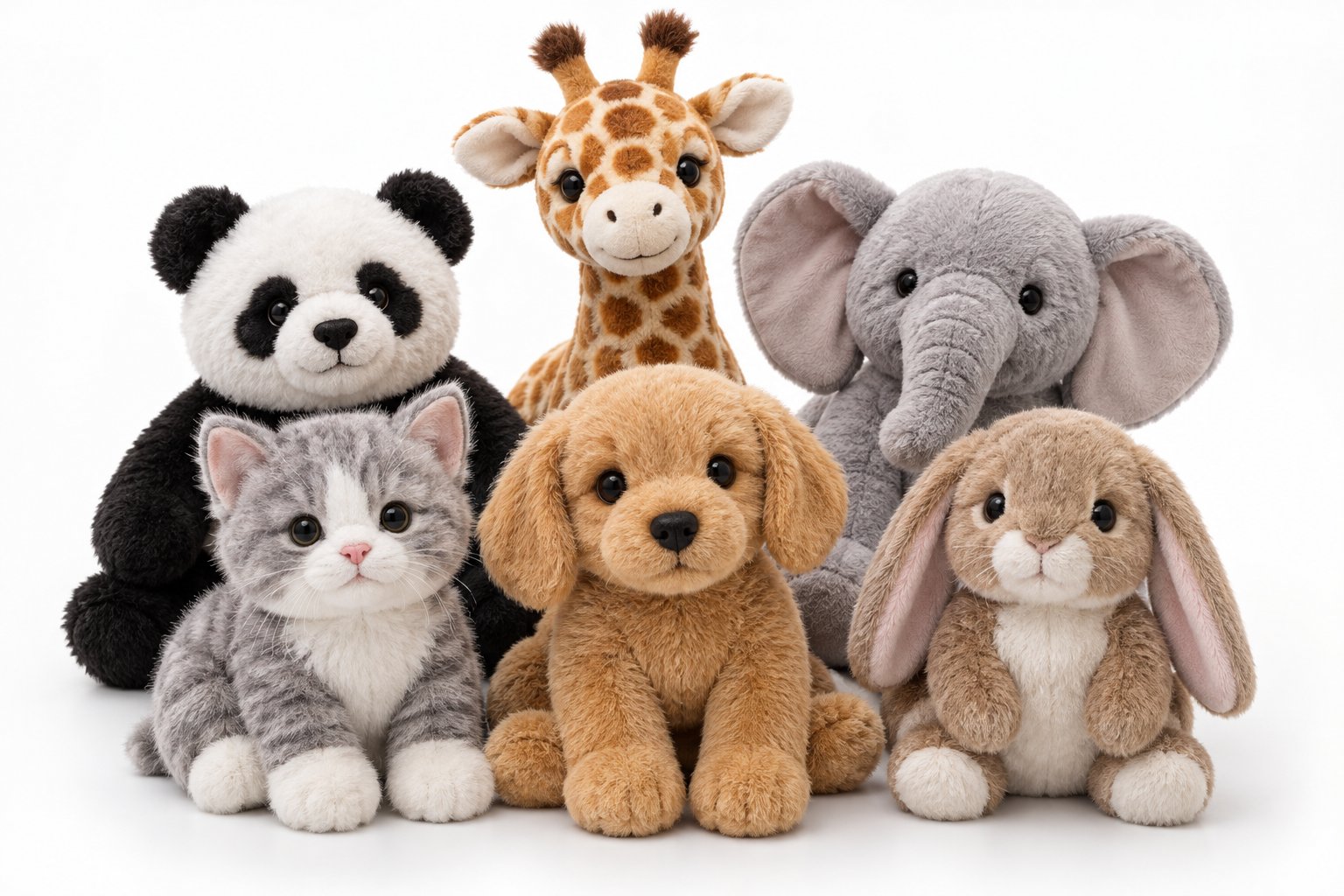
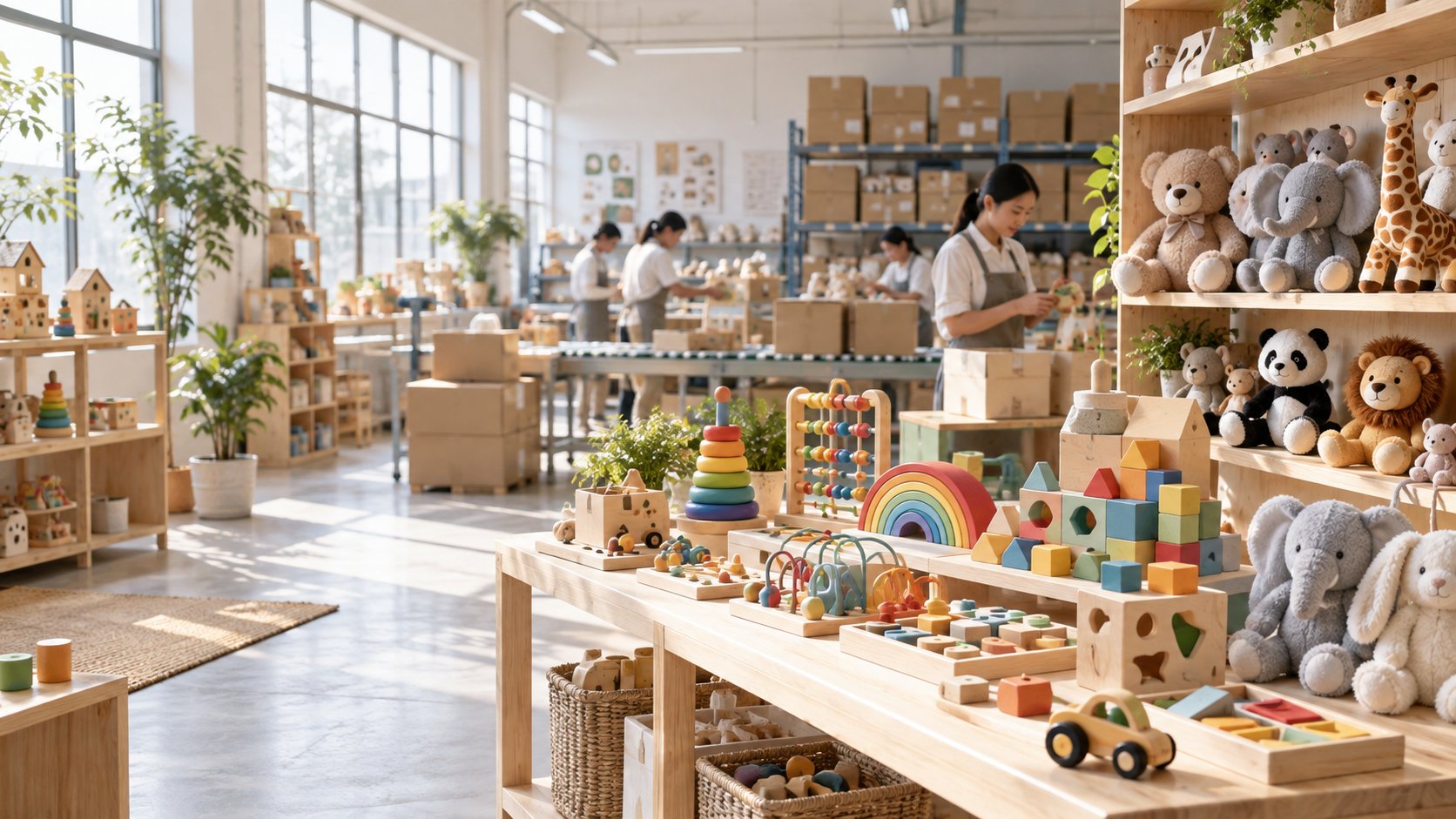
Plush is a soft, raised-surface fabric used on the outer shell of stuffed animals. Buyers ordering OEM plush toys should specify the face fabric construction, backing, pile height, and filling type — not just the toy size. This guide explains what plush fabric is, the common face fabrics and fillings, and what to put in a purchase specification.
If you are sourcing stuffed animals, the answer to "what material is plush?" decides most of your landed cost, your tactile quality, and whether the toy passes the safety review you are paying for. Plush is not one material. It is a category of soft, raised-surface fabrics — almost always built on a synthetic fibre base — that forms the outer shell of the toy. What sits underneath it, the filling, is a separate choice. Buyers who treat "plush" as a single specification often approve a sample that cannot be repeated at volume.
Key takeaways
- Plush refers to the outer face fabric, typically a pile fabric with a cut or looped surface. General industry practice is to build it on polyester, though the exact fibre, backing, and pile height vary by supplier.
- The filling is a separate material decision. Hypoallergenic filling is the standard requirement for children's toys; confirm what your supplier uses rather than assuming.
- Your OEM specification should state fabric construction, pile height, backing, colour reference, filling, and stitching requirements — not just size and MOQ.
What plush fabric actually is
Plush is a pile fabric: a base cloth with fibres raised above the surface to create softness. The two structural elements buyers should distinguish are the pile (the raised surface you touch) and the backing (the ground fabric that holds the pile and gives the material its stability when cut and sewn).
In the stuffed-animal trade, plush is usually a knitted polyester pile fabric. "Polyester" here is a general industry term, not a promise about a specific supplier's blend — always confirm the actual composition with the factory quoting you. What matters commercially is that the material is soft, colour-fast enough to survive handling and packing, and stable enough to be cut, sewn, and stuffed without the pile shedding at the seams.
Pile height is the specification most buyers underestimate. A short pile reads as smooth and velvety; a longer pile reads as fluffy and luxurious. They behave differently on the same pattern, they photograph differently, and they demand different care when the factory cuts panels. If your sample and your bulk order have different pile heights, they will look like different products even if the colour matches.
Common face fabrics buyers will see quoted
Suppliers quote plush by construction family rather than by brand name. The table below maps the terms you are likely to receive in a quotation to what they mean in practice. Exact weights, pile heights, and fibre blends vary by mill, so treat these as descriptions of the family, not fixed values.
| Face fabric term | What it describes | Typical buyer use |
|---|---|---|
| Short-pile plush | Dense, closely cropped raised surface | Smooth, "velvety" animals; crisper printed or embroidered details |
| Long-pile plush | Longer raised fibres, softer and fluffier hand feel | Fluffy bears, oversized comfort toys, seasonal ranges |
| Loop or bouclé-type pile | Looped rather than cut surface texture | Accent panels, curly-fur looks, contrast details |
| Minky-type smooth plush | Very short, ultra-smooth surface with a soft sheen | Baby and infant ranges where a gentle hand feel is the priority |
Two smaller decisions sit alongside the face fabric. Backing weight affects how well the fabric holds its shape after stuffing; a lighter backing can distort on large patterns. Colour method — dyed yarn versus printed surface — affects how the toy looks after repeated handling and how closely bulk matches your approved sample. Neither is visible in a photo, which is why physical swatches matter more than digital renderings at sample approval.
Fillings: what is inside the shell
The filling is a separate purchase decision from the plush fabric, and it is the one most often left vague in enquiry emails. Standard practice for children's plush toys is a hypoallergenic filling. In the industry this typically means a synthetic fibre fill chosen to reduce common allergic reactions, rather than natural down or untreated fibre. Confirm with your supplier what specific fill they use, because "hypoallergenic" is a product claim that should be supported by the factory's own documentation for the material they actually buy.
Filling weight is specified per toy by the factory based on the pattern and the size you order. If you are comparing quotations, ask each supplier for the fill weight they propose for your target size, and ask how firm the finished toy will be. A soft, floppy toy and a firm, upright toy can use the same pattern and the same plush fabric — the difference is the filling ratio.
What to specify in an OEM order
An OEM plush order that only says "plush, 30 cm, 1000 pcs" leaves the mill and the factory to make half your product decisions. Bring the following to a supplier and you will get comparable quotations and a sample you can actually repeat.
- Face fabric: construction family, pile height, and fibre composition (e.g. polyester) — and the reference swatch you approved.
- Backing: weight and stability, especially for large patterns or heavy fills.
- Colour: a physical reference standard from your brand, with a defined tolerance for the production run.
- Filling: the fill type (hypoallergenic) and the target fill weight per size.
- Size range: confirm the range the supplier can produce — for example, 20–60 cm on customised patterns.
- Stitching and trims: seam strength expectations, embroidery versus printed features, and any small parts such as eyes, which must be secured to the relevant toy safety standard.
- Age grading and compliance: state the intended age group and the safety standard you need the finished toy to meet.
- Packaging: polybag or carton format, labelling, and any retail-ready requirements.
- Quantity and lead time: confirm MOQ and production schedule in writing.
The right place to lock these down is the sample stage. A supplier working under a documented quality system will produce a sample against your written specification, and the bulk order should be checked against that approved sample, not against a photograph of it.
How this works with a toy manufacturer
Fujian Lequ Wanwan Co., Ltd. is a B2B plush toy manufacturer and exporter founded in 2013, with 180 staff serving buyers in North America and Europe. The company holds ISO 9001:2015 and its toys are produced to EN71 and ASTM F963 requirements, and it runs OEM/ODM programmes with custom colours, sizes, materials, and packaging. Standard plush construction uses a soft plush fabric outer with hypoallergenic filling, child-safe fabric, and durable stitching; sizes can be customised in a 20–60 cm range, with an MOQ of 1000 pcs.
For a buyer, that combination matters at the point where the fabrication is decided, not after. Bring your fabric specification and your target market's safety standard to the sample stage and confirm both in the same conversation — that is where material choices, size grading, and compliance stop being separate questions.
Buyer FAQ
Is plush the same as polyester?
Not the same thing. Plush describes the fabric's structure — a raised, soft pile surface. Polyester is a common fibre used to make that pile in stuffed-animal production. A factory should be able to tell you the fibre composition of the specific plush it quotes, along with the pile height and backing weight.
What is the difference between plush fabric and the stuffing?
The plush is the outer shell. The stuffing, or filling, is the material that gives the toy its shape and softness. They are purchased, tested, and specified separately, so your order should state both a face fabric specification and a filling specification.
Does plush fabric affect toy safety compliance?
Yes, along with every other component. Safety standards such as EN71 and ASTM F963 cover the finished toy, including the fabric, the filling, and attached small parts. Your supplier's existing compliance history is a starting point, but you should confirm that the standard applies to your specific toy design and production run.
Can plush fabric be customised for my brand?
Custom colours, sizes, materials, and packaging are part of typical OEM/ODM plush toy programmes. Provide a physical colour reference and a written fabric specification; colours shown on a screen are not a reliable production standard. Confirm sample approval before bulk production begins.
What is the minimum order quantity for a custom plush toy?
For a custom plush order, an MOQ of 1000 pcs applies. Quantity, size range, and packaging should all be confirmed in your quotation so that all parties are working from the same document.
Material and specification details above describe standard plush toy construction. For a specific order, confirm the exact fabric composition, pile height, filling type, and compliance requirements with your supplier in writing before sampling, and approve a physical sample before mass production.