A practical sizing guide for buyers sourcing kids garden bowling sets and 10 pin bowling sets for children. Covers ball diameter and weight by age group, pin dimensions, lane footprint, and the spec points to confirm before placing a wholesale order.
Sizing Guide for Importers and Retail Buyers
A kids garden bowling set has no single standard ball size. The ball that works for a three-year-old and the ball that works for a ten-year-old sit at opposite ends of the range. This article lays out the measurements you need to write a clear purchase specification: ball diameter, ball weight, pin height, and the ground area the set occupies once assembled.
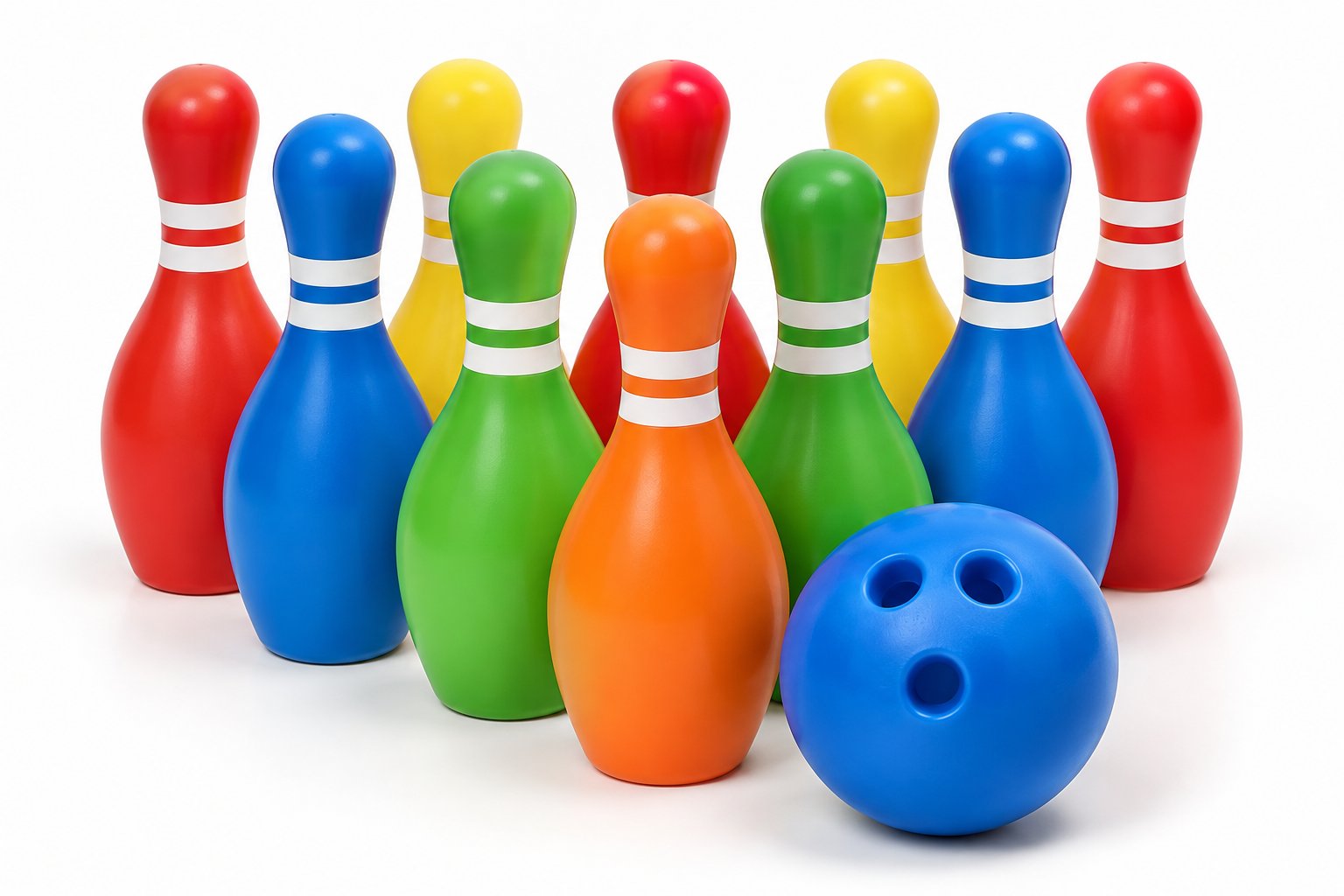
Short answer: There is no fixed industry size for a kids bowling ball — the diameter is chosen per age band and confirmed per supplier. As an anchoring example, a 10-pin weather-resistant PE garden set for ages 5+ uses a 16 cm ball with 28 cm pins, so the ball is sized to knock the pins over at a short garden distance. Confirm the nominal diameter and tolerance per SKU with your supplier. Weight is the constraint that matters more than diameter — a ball that a child cannot lift is a ball the set will not get used.
Why "Kids Bowling Ball Size" Has No Fixed Answer
Bowling in a licensed centre uses a regulated ball. Tenpin balls for adults run roughly 218 mm (8.5 in) in diameter and are capped at about 7.26 kg (16 lb). Those numbers come from the sport's equipment rules and are not a useful reference for a garden set, because the garden version is not played under those rules.
What a garden set actually needs to do is let a child roll or throw a ball down a short strip of grass or patio and knock over something that looks like a pin. That shift from regulation play to back-garden play is what opens up the size range. Suppliers and buyers choose a size based on three things:
- The target age band on the retail packaging or listing.
- The play surface, which sets how far the ball travels and how much control a small child needs.
- The channel the product sells through — mass retail toy aisles tend to age down, while sporting-goods buyers sometimes want a heavier, closer-to-real set.
Because of this, two suppliers can both quote "kids bowling ball" and ship something visibly different in diameter without either being wrong. That is why the size has to be written into the purchase order rather than assumed.
Ball and Pin Specs: A Confirmed Example
The figures below come from a product datasheet that has been verified field by field: a weather-resistant PE garden bowling set graded for ages 5 and up. Treat this as an anchoring example for how a specification should read, not as a published industry standard — there is no single international standard governing toy bowling ball diameter.
| Spec point | Confirmed example (ages 5+ PE set) | Other suppliers |
|---|---|---|
| Ball diameter | 16 cm | Varies by age band — confirm with a stated tolerance |
| Pin height | 28 cm | Varies by set format |
| Set format | 10 pins + 1 ball | 6-pin and 10-pin configurations both exist |
| Material | Weather-resistant PE | Polymer varies — request the material declaration |
| MOQ | 500 sets | Varies by supplier and customization |
Weight is the real limiting factor
A diameter figure tells you whether a child's hand fits around the ball. It does not tell you whether the child can carry it to the line and release it without dropping it on their foot. For garden sets aimed at younger children, weight is usually the number that drives returns and negative reviews: too heavy, and the parent ends up bowling instead of the child.
Two practical checks when evaluating a sample:
- Can an adult hold the ball at chest height and drop it onto a hard floor without cracking the shell? This tells you about wall thickness and material, not weight.
- Does the ball roll in a straight-ish line on short grass, or does it stop almost immediately? Hollow, very light balls often stall before reaching the pins on anything other than a hard, smooth surface.
Pin Size and the Rest of the Set
Ball size and pin size have to be scaled together. A small ball paired with full-size pins will not knock them down reliably, and an oversized ball will flatten a set of undersized lightweight pins on the first roll. Garden bowling pins are typically shorter and narrower than regulation tenpin pins, which stand about 381 mm (15 in) tall.
| Component | Confirmed example | What to confirm with other suppliers |
|---|---|---|
| Pin height | 28 cm | Height, and whether pins are single-piece or two-piece assemblies |
| Pin base | Confirm per datasheet | Base diameter — a wider base stands more stably on grass |
| Pin count | 10 | 6-pin sets pack smaller and cost less to produce |
| Pin weight | Confirm per datasheet | Very light pins blow over in wind; heavier pins need a heavier ball |
| Playing distance | Confirm per datasheet | Should match the strength of the target age band |
A 10 pin bowling set for children normally ships in one of two formats: a triangle of ten pins that stands freely, or ten pins plus a plastic pin deck that keeps spacing consistent on uneven ground. The deck adds to the tooling cost and the packed size, but it removes the single most common complaint about garden sets — pins that will not stand up on grass.
Lane Footprint: What the Set Occupies
Buyers writing product listings often need the assembled footprint for images and for the "is it too big for my garden" question. Three factors decide it:
- Pin triangle depth and width scale with the pin base diameter, so taller pins mean a larger standing footprint.
- Bowling distance should be matched to the strength of the target age band — younger children need a shorter distance to have any success.
- The play surface: grass shortens the roll, while a hard patio lets a lighter ball travel further.
For a typical family garden, a set like the confirmed example — 28 cm pins with a 16 cm ball — is designed to play comfortably on a short strip of lawn or patio. Ask the supplier for the recommended playing distance and assemble the set once to measure the real footprint before you write it into a listing.
Spec Points to Confirm Before Ordering
If you are sourcing a kids garden bowling set, these are the fields to lock down in writing. They are the ones that most often come back different from the sample if left to assumption.
- Ball diameter and tolerance
- State the nominal diameter and the acceptable variation. Without a tolerance, units from different moulds can arrive visibly different in size.
- Ball weight
- Give a target weight and a range. Weight is driven by wall thickness and material, not by diameter, so it must be specified separately.
- Ball construction
- Solid, hollow, or hollow with a filler. This affects weight, roll behaviour, and cost.
- Finger hole diameter and spacing
- For a three-hole ball, specify hole diameter and the centre-to-centre span for the target hand size.
- Pin dimensions and weight
- Height, base diameter, and per-pin weight. Also confirm whether the pins are single-piece or two-piece assemblies.
- Pin count
- 6-pin or 10-pin configuration, and whether a pin deck or spacing frame is included.
- Material and finish
- Which polymer is used, and whether the set meets the toy safety requirements of your destination market. The applicable standard depends on the market and the age grading on the packaging — confirm the specific standard and the test report with your supplier rather than assuming one covers all destinations.
Packaging and Cost Implications of Ball Size
Ball size drives carton dimensions more than most buyers expect: a larger ball and the taller pins needed to match it can push a master carton into the next dimensional weight band.
For sets that will be sold in a carry bag or a box with a handle, check the ball diameter against the bag opening early in development — a mismatch only surfaces at the packing stage.
Where shipping cost is the dominant constraint, the usual route is a smaller ball paired with lighter, shorter pins, sold to a younger age band. Where the product needs to feel substantial on the shelf, the usual route is a larger, heavier ball and a pin deck to keep the pins standing.
Frequently Asked Questions
What size is a kids bowling ball in millimetres?
There is no fixed answer — toy bowling ball diameter is set per age band and per supplier. A confirmed example: a weather-resistant PE garden set for ages 5+ pairs a 16 cm ball with 28 cm pins. For any other set, request the measured diameter with tolerance before ordering.
How heavy should the ball be for a five-year-old?
Weight matters more than diameter. The practical test is whether the child can pick the ball up with one hand, walk to the line, and release it without losing control. Confirm the target weight for your age band with the supplier before ordering.
How many pins should a children's set have?
Both 6-pin and 10-pin configurations are common. A 10 pin bowling set for children matches what most families recognise from bowling alleys, while 6-pin sets pack smaller and cost less to produce. The choice is usually driven by the target price point and the shelf space available.
How much space does a garden bowling set need?
Plan for a short strip on grass or patio. The bowling distance should match the strength of the target age band, so younger children need a shorter distance to have any success. Ask the supplier for the recommended playing distance and verify it with an assembled set.
Can the same set work on grass and on a patio?
Pins stand more stably on a hard, level surface. On grass, pins with a wider base or a supplied pin deck hold position better, and a slightly heavier ball rolls more consistently than a very light hollow one.
Next Step
If you are specifying a kids garden bowling set for your market, send your target age band, the price point you need to hit, and your destination market's toy safety requirement. Those three inputs determine the ball diameter, ball weight, and pin dimensions, and they are enough to build a sample against. Ask your supplier to quote ball diameter with a tolerance and ball weight as separate line items — those are the two numbers that decide whether the set works in a child's hands.