A practical sourcing guide for retail buyers and distributors comparing manufacturer-direct, trading company, and marketplace channels for wholesale fidget toys, with a supplier vetting checklist covering certifications, sample policy, QC process, and shipping terms.
Sourcing Guide
Buyers who search for where to buy fidget toys in bulk usually arrive with the same three questions: which sourcing channel gives the best combination of price, consistency, and compliance; how to tell a real factory from a reseller; and what to verify before placing a first order. The short answer is that manufacturer-direct sourcing is the strongest fit for retail chains and distributors who need stable quality, documented compliance, and room for custom packaging or private label. Trading companies make sense for small mixed orders across many unrelated categories. Marketplaces are best treated as a discovery tool, not a primary supply chain. The rest of this article explains how the channels compare and what to check before you commit.
- Manufacturer-direct gives you control over quality, compliance documents, and customization, but usually expects a real commitment to volume.
- Trading companies are flexible on order mix, but you lose visibility into who actually makes the goods.
- Marketplaces suit sampling and small trials, not repeat bulk supply.
- Whatever the channel, vet certifications, sample policy, QC process, and shipping terms before you pay a deposit.
The main channels for buying fidget toys in bulk
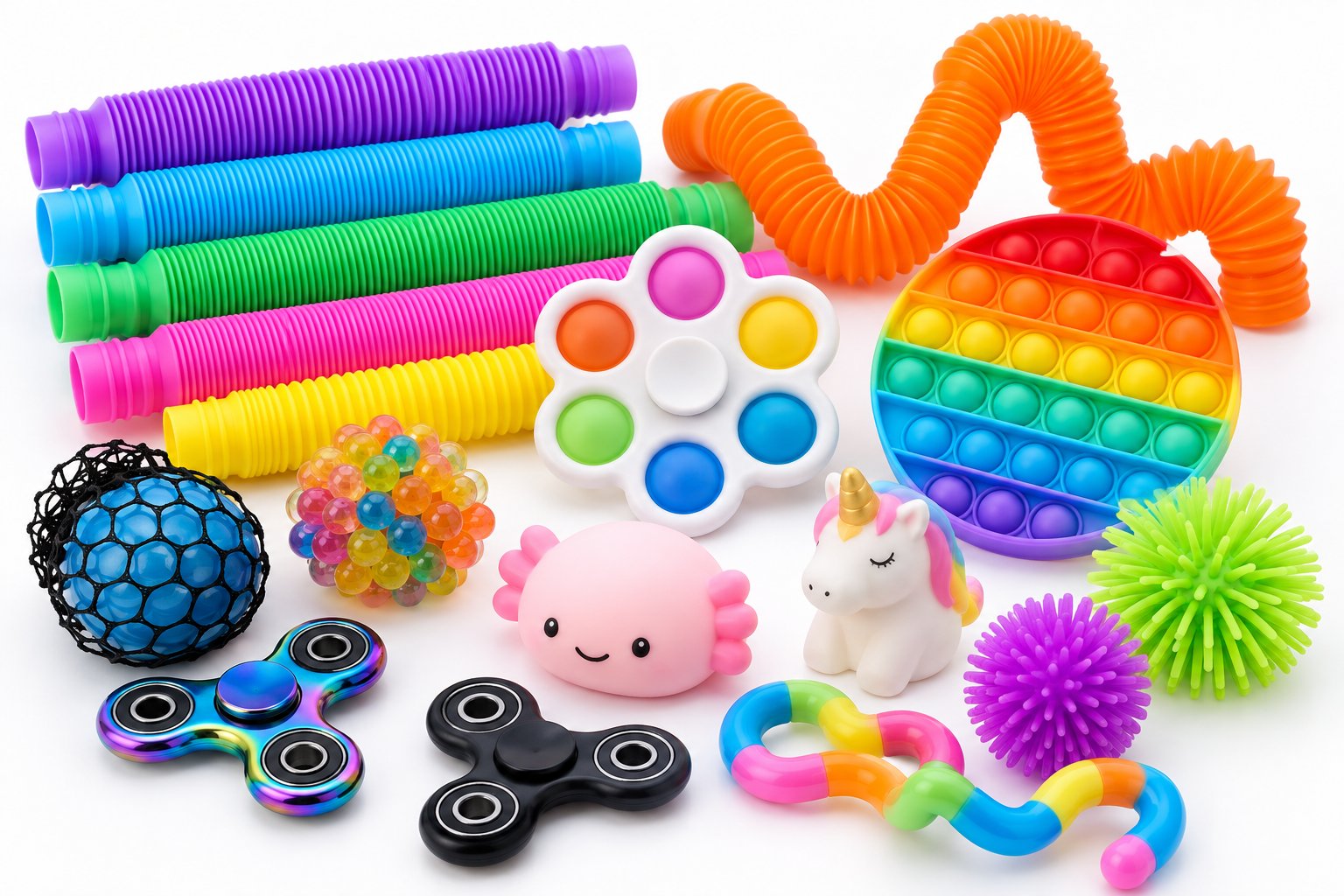
Fidget toys are a category where unit cost is low but quality variance is high. A spinner that wobbles, a popper that tears at the seam, or a sensory item that fails a safety test can cost you far more in returns and compliance headaches than the few cents you saved per piece. That is why channel choice matters more here than in many other toy categories.
Manufacturer-direct
You buy from the factory that actually produces the goods. This is the channel that gives you the most control: you can request specific materials, colors, packaging, and private label, and you can audit the production process. The trade-off is that factories in this category typically work with distributors and retail buyers at meaningful volumes, and they may not carry every odd item you want.
Fujian Lequ Wanwan, for example, is a B2B toy manufacturer and exporter established in 2013, serving North American and European buyers. Its 12,000 square meter facility runs six production lines with a monthly capacity of 1.2 million pieces, and it operates an in-house QC laboratory. For buyers who need OEM or ODM customization and traceable quality control, this is the profile to look for.
Trading companies
A trading company aggregates products from multiple factories and sells them as a single point of contact. The advantage is breadth: you can order fidget toys alongside unrelated items and consolidate shipping. The disadvantage is that you often cannot see the factory, and quality depends on how well the trader manages its suppliers. If a problem appears, the trader is your only recourse.
Online marketplaces
B2B marketplaces and general sourcing platforms are useful for comparing rough price ranges and finding product ideas. Many of the sellers there are traders, and listings frequently reuse the same photos across dozens of accounts. Use marketplaces to build a shortlist, then verify the real manufacturer behind the listing before you order.
| Channel | Best for | Main risk | Quality control visibility |
|---|---|---|---|
| Manufacturer-direct | Repeat bulk orders, private label, compliance documentation | Higher volume expectations | High: factory audit, in-house QC lab |
| Trading company | Mixed-category orders, small initial volume | Opaque supply chain, quality varies by source factory | Low to medium |
| Marketplace | Sampling, price benchmarking, product discovery | Many sellers are resellers, listing photos are reused | Low |
What to verify before you place a bulk order
The channel tells you where the goods come from. The vetting checklist tells you whether that source is reliable. Work through these points in order.
Certifications that match your market
Fidget toys are toys in most jurisdictions, and toy safety rules are strict. For European sales, EN71 is the baseline. For the United States, ASTM F963 applies. Ask for the actual certificates, not a logo on a website, and check that the certificate names the specific product and the standard it was tested against. Fujian Lequ Wanwan holds EN71, ASTM F963, and ISO 9001:2015 certifications, which gives buyers in both regions a starting point. Always confirm the certificate covers the exact item you are ordering.
Sample policy and lead time
A serious manufacturer will send samples and tell you the lead time for both samples and bulk production. Ask:
- How long does a sample take to produce and ship?
- Is the sample cost refundable against a bulk order?
- Can the sample be produced to your packaging or color requirements?
Vague answers here usually predict vague answers later in the order.
Quality control process
Ask how the factory checks quality and at what stages. A manufacturer with an in-house QC laboratory, like Fujian Lequ Wanwan, can describe incoming material checks, in-line inspection, and final inspection. If the supplier cannot explain the inspection stages, assume there is no formal process.
Shipping terms and Incoterms
Confirm which Incoterms apply, who handles export clearance, and how the goods are packed. Fidget toys are often small and light, so packaging and carton efficiency directly affect your landed cost. Ask for carton dimensions and gross weight per carton before you compare quotations.
Customization and OEM/ODM capability
If you plan to sell under your own brand, ask whether the factory offers OEM or ODM customization, what the minimum order is for custom packaging, and who owns the tooling or artwork. Get these answers in writing.
Red flags when sourcing wholesale fidget toys
- The supplier cannot name the factory or refuses a video walkthrough.
- Certificates are outdated, cover a different product, or cannot be produced on request.
- Prices are far below the market range with no explanation of material differences.
- The sample differs noticeably from the bulk order, and the supplier calls it normal.
- Payment terms require full prepayment to a personal account.
- Responses are fast before the deposit and slow after it.
Frequently asked questions
Is it better to buy from a factory or a trading company?
For repeat bulk orders where quality and compliance matter, a factory is usually the better long-term partner. For small mixed orders across unrelated categories, a trading company can save you coordination effort.
What certifications should I ask for?
It depends on your market. EN71 for Europe, ASTM F963 for the United States, and ISO 9001:2015 as an indication of a managed quality system. Confirm the certificate matches the exact product you are buying.
Can I private-label fidget toys?
Many manufacturers offer OEM or ODM customization, including custom packaging. Ask about the minimum order for custom work and confirm ownership of artwork or tooling in writing.
How do I compare quotations fairly?
Ask every supplier for the same information: unit price at the same volume tier, carton dimensions and weight, Incoterms, lead time, and certification coverage. Without matching data points, a lower price may simply exclude shipping or compliance.
Next step
Start with the channel that matches your volume and brand plans, then run every candidate through the checklist above. If you are sourcing fidget toys for retail or distribution and need manufacturer-direct supply with documented EN71, ASTM F963, and ISO 9001:2015 certification, contact the supplier directly to discuss your product, packaging, and volume requirements.