A practical sourcing guide for gift shop, pharmacy, and gift-retail buyers comparing wholesale channels for soft toys, with a manufacturer's checklist for selecting display-ready plush animal assortments.
Gift shop, pharmacy, and gift-retail buyers searching for where to buy soft toys are usually weighing the same trade-off: order from a wholesale distributor and accept whatever assortment they push, or work directly with a manufacturer and control the mix, the packaging, and the display format. This guide compares the main sourcing channels and then walks through the criteria that matter when you evaluate a plush animal assortment or a counter display box from a manufacturer.
Key takeaways
- Distributors offer speed and low minimums; manufacturers offer assortment control and display-ready packaging.
- For gift shops and pharmacies, the display format often decides sell-through more than the individual toy design.
- Evaluate any plush assortment against counter footprint, size grading, safety documentation, and reorder consistency.
Where to Buy Soft Toys: The Main Retail Sourcing Channels
Most retail buyers end up choosing between four channels. Each has a different cost structure and a different level of control over what lands on your shelf.
| Channel | What you get | Where it fits |
|---|---|---|
| Wholesale distributors | Mixed-brand catalog, low order quantity, fast replenishment | Testing a category or filling gaps between seasons |
| Importers and trading companies | Curated overseas product, some customization available | Buyers who want import pricing without managing factory communication |
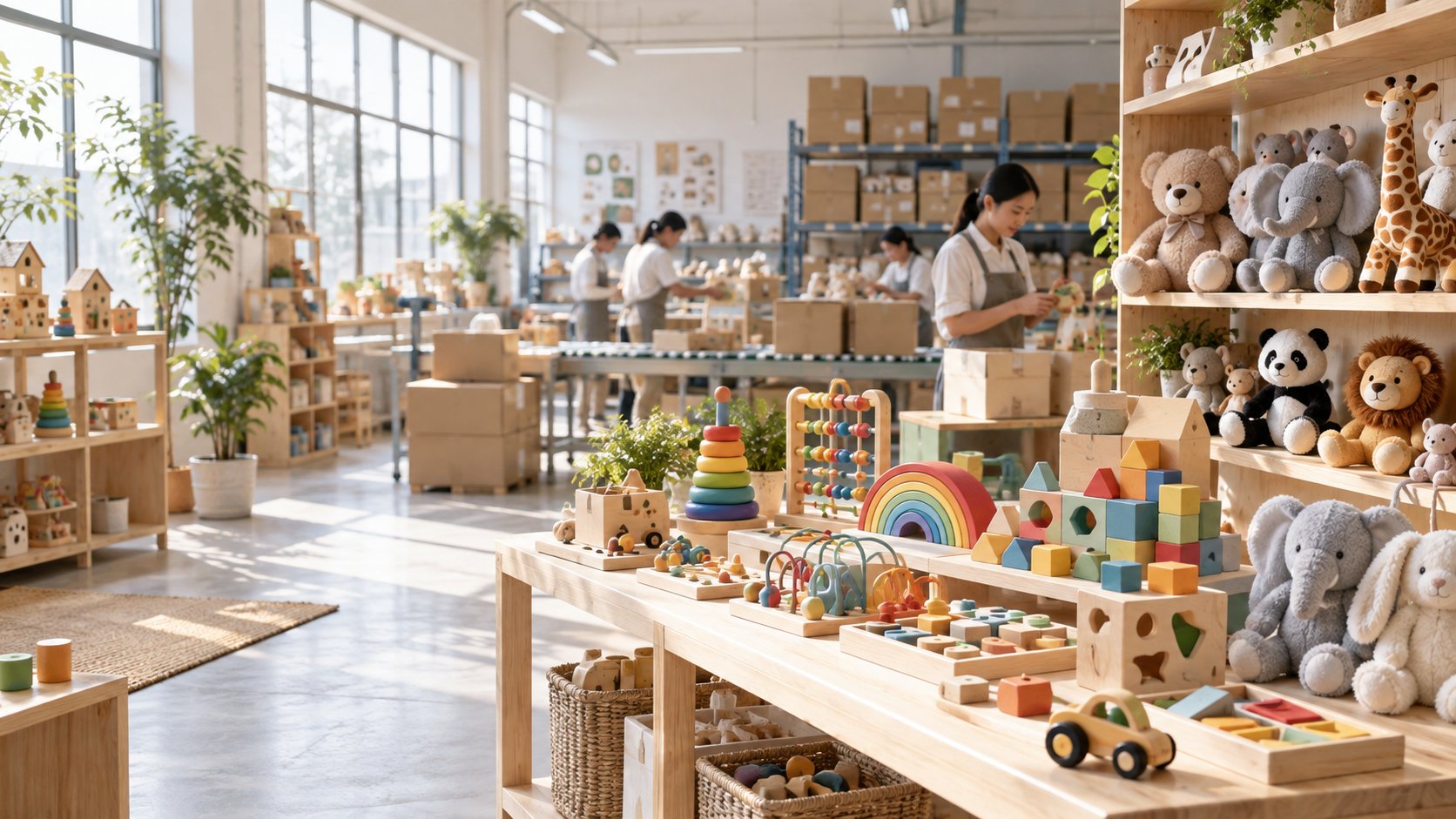
| Manufacturers direct | Assortment design, display packaging, private-label options | Retailers building a repeatable plush program |
| Trade shows and sourcing platforms | Side-by-side comparison, sample requests | Shortlisting suppliers before committing to a program |
Distributors are the fastest route when you need small quantities of known products. The limitation is assortment control: you generally choose from what is in stock, and the display packaging is whatever the distributor received. If your store relies on a consistent counter presentation, that variability becomes a problem at reorder time.
Working directly with a manufacturer changes the equation. You can specify the animal mix, the size range, and the way the toys are packed for display. The trade-off is that you need to plan further ahead and evaluate the supplier more carefully — which is what the rest of this checklist is for.
Why Counter Display Boxes Matter for Gift Shops and Pharmacies
Counter display boxes are the format most often requested by gift shops and pharmacies, and the reason is practical rather than decorative. A counter display keeps a plush assortment at eye level near the till, where impulse purchases happen, without occupying shelf space reserved for higher-value inventory.
From a manufacturer's perspective, a display-ready assortment is not just toys in a printed carton. It involves decisions that affect how the box performs in your store:
- Footprint: The box has to fit the counter you actually have. Measure the available depth and height before choosing a format, not after.
- Size grading: Mixed sizes read as a fuller assortment. A box with one size repeated looks sparse even when the unit count is high.
- Animal mix: A balanced assortment avoids leftover stock of unpopular designs. Ask how the mix is composed and whether it can be adjusted.
- Display stability: Toys should stand or sit without collapsing when a customer removes one. This depends on how the box is divided and how the plush is shaped.
- Refill logic: If the display is refillable, confirm that individual toys can be reordered separately from the full box.
These points matter because a weak display format undercuts an otherwise good product. Buyers who test a plush program usually report that presentation drives the first sale, and product quality drives the repeat order.
Selection Checklist for a Plush Animal Assortment
When you compare suppliers, use the same set of questions for each one. The goal is to separate suppliers who can support a repeatable program from those who can only fill a one-time order.
Product and assortment
- Is the plush animal assortment fixed, or can the mix be adjusted by species, color, or size?
- Are individual designs available as standalone reorders, or only as part of the full assortment?
- What is the size range within the assortment, and is it consistent between production runs?
- Are materials and stitching documented, and can the supplier confirm the filling used?
Display and packaging
- Does the counter display box arrive assembled, or does your staff need to build it?
- What are the packed dimensions and the display footprint once set up?
- Is the box printed with generic branding, or can it carry your store or private label?
- How many units does one display hold, and how does that compare with your expected sell-through cycle?
Compliance and documentation
- Which safety standards apply in your market, and can the supplier provide the relevant test reports for the specific product?
- Do the reports cover the exact assortment you are ordering, including size variants?
- Are age-suitability markings and warning labels included on the product or packaging where required?
Supplier reliability
- Can the supplier repeat the same assortment and packaging on the next order?
- What is the lead time for a reorder versus a first order?
- Are samples available before committing, and do sample and bulk production match?
- How are mixed-carton or assortment-specific packing requirements handled?
The answers to these questions tell you whether a supplier is set up for retail programs or for one-off wholesale sales. For a pharmacy or gift shop, the difference shows up at the second order, when you need the same display and the same mix again.
Comparing Product Formats
Most plush sourcing conversations settle on one of three formats. The right choice depends on your counter space and how you want to present the category.
| Format | Best for | Considerations |
|---|---|---|
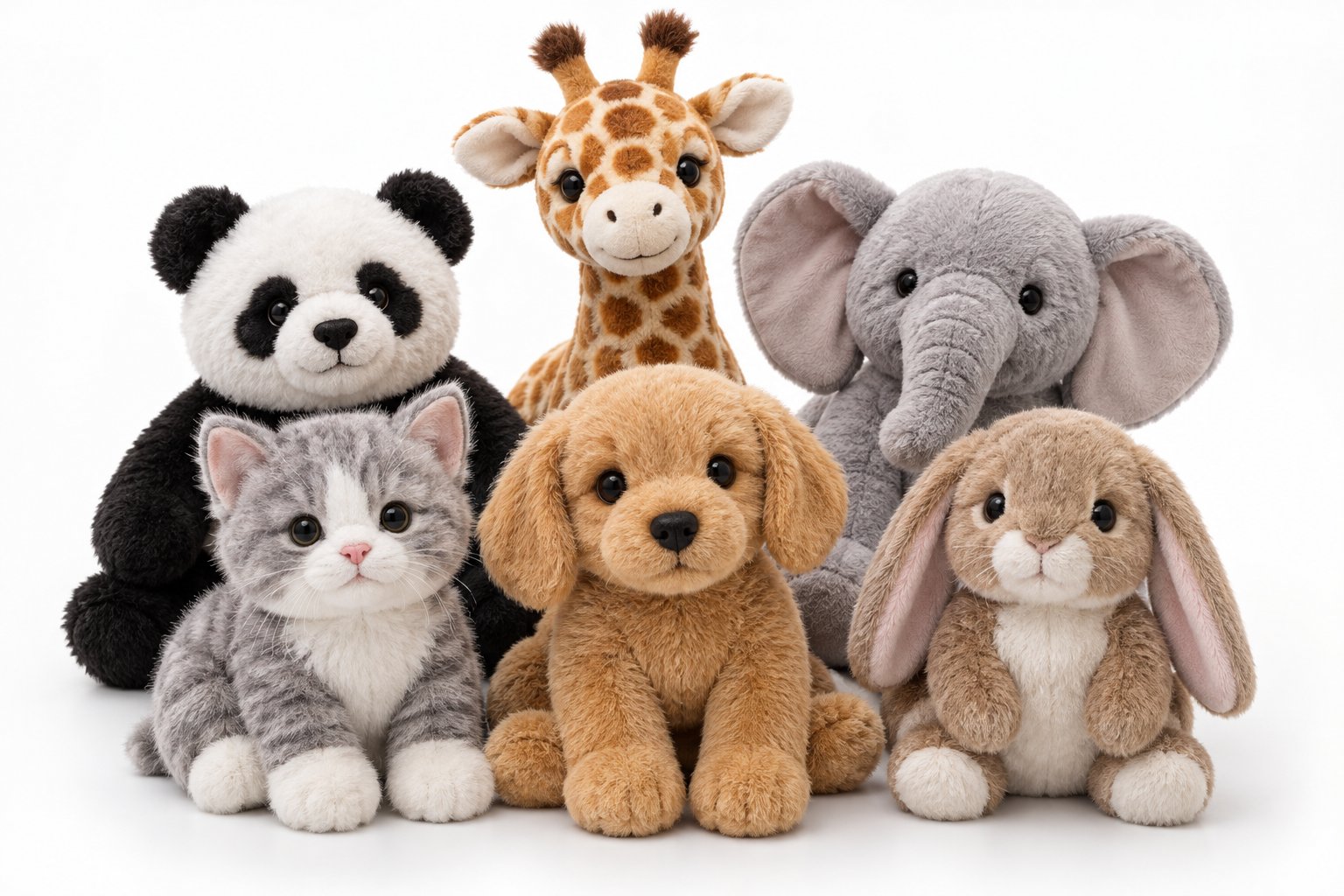
| Display pack assortment | Counter placement, mixed-animal appeal, impulse purchase | Confirm footprint, unit count, and refill availability |
| Individual plush toys | Shelf or basket merchandising, single-design reorders | Presentation depends on your own display; less compact |
| Teddy bear comfort toy | Gift occasions, comfort and nursery segments | Often a single hero item rather than a mixed assortment |
A display pack assortment typically works best when you want a complete counter presentation in one order. Individual plush toys suit stores with existing shelving and a clear merchandising plan. Teddy bear comfort toys serve a more specific buying occasion and often anchor a gift-focused display.
Direct Manufacturer vs Distributor: When to Switch
A distributor is a reasonable first step if you are testing whether plush sells in your store. Once you know the category works, the calculation changes. At that point you are paying for assortment control, packaging consistency, and the ability to repeat the exact display that performed well.
Manufacturers can also support private-label or custom display packaging, but this depends on the specific supplier and order. Ask directly rather than assuming, and request samples of both the product and the display before committing to a program.
Frequently Asked Questions
Where do gift shops usually buy soft toys for retail?
Most start with a wholesale distributor for small test orders, then move to a manufacturer or importer once they need consistent assortments and display packaging. Pharmacies often prefer counter display formats because they use minimal shelf space.
What is a plush animal assortment display pack?
It is a set of mixed plush animals packed in a counter-ready display box. The assortment typically combines several species or sizes, and the box is designed to be placed directly on a counter or shelf.
Can counter display plush toys be reordered by individual design?
This varies by supplier. Some manufacturers allow individual design reorders alongside full display packs; others only supply the complete assortment. Confirm this before your first order, because it affects how you manage leftover stock.
What should I check before choosing a supplier?
Confirm the assortment mix, display dimensions, unit count, safety documentation for your market, and whether the supplier can repeat the same order consistently. Request samples and check that bulk production matches them.
Planning a plush program for your store?
If you are comparing display-ready assortments or individual plush toys, share your counter dimensions, target unit count, and market requirements. Those three details let a supplier tell you quickly which formats fit and what documentation is available.