
There is no single place to buy teddy bears in bulk. The right channel follows your order type — a repeat-stock retail SKU, a branded gift programme, or an infant 0+ range — and the document set each channel can produce is what separates a real supplier from a listing. This guide maps order type to channel and lists the verification items specific to each branch before you pay a deposit.
There is no single answer to where to buy teddy bears in bulk, because the right channel follows the order type. A repeat-stock retail SKU, a branded gift programme and an infant 0+ range each put different demands on a supplier, and each one needs a different set of documents before a deposit makes sense. The document set is the real dividing line: a marketplace listing can show you a photo and a unit count, but it cannot tell you who is accountable for the goods, what standard they were tested to, or who answers when a carton arrives short.
This guide organises the decision by order type. Find your branch, note the channel that fits, and work through the verification items specific to it. Read the teddy bear wholesale supplier conversation in that order and you will spend your vetting time on the questions that actually change the outcome.
Short version: reorder-driven retail SKUs favour a factory or a factory-authorised trading partner with a stable specification record. Branded gift programmes favour suppliers who control decoration and packing under one roof. Infant 0+ ranges favour suppliers who can produce the test documentation for the exact model you are buying — not for a similar one.
Branch A: a repeat-stock retail SKU you intend to reorder
Channel that fits: the factory directly, or a trading partner that can name the factory and keep the same specification between runs.
Why this channel
A reorder SKU lives or dies on sameness. If the second run has a different pile height, a slightly different eye placement or a different filling density, your shelf looks inconsistent and your returns rate moves. A direct factory relationship gives you one specification record to hold against each production run. A trading partner can work too, provided they will put the producing factory's name in writing and let you hold that specification across orders.
What to verify
- A written specification sheet for the exact model: dimensions, fabric, filling, seam construction, eye and nose construction, packing quantity per carton. This is the document you will point to if run two drifts.
- Pre-production sample approval in writing, with the approved sample retained by both sides. Verbal approval of a photo is not a specification record.
- Carton configuration and pack format stated before the order, including poly bag and export carton terms and the units per carton. These details are usually where a reorder quietly changes.
- An inspection arrangement — who checks the goods, at what stage, and against which document. If the answer is vague, treat it as a gap rather than a yes.
- A named contact for production questions, not just a sales contact, so a specification query reaches someone who can answer it.
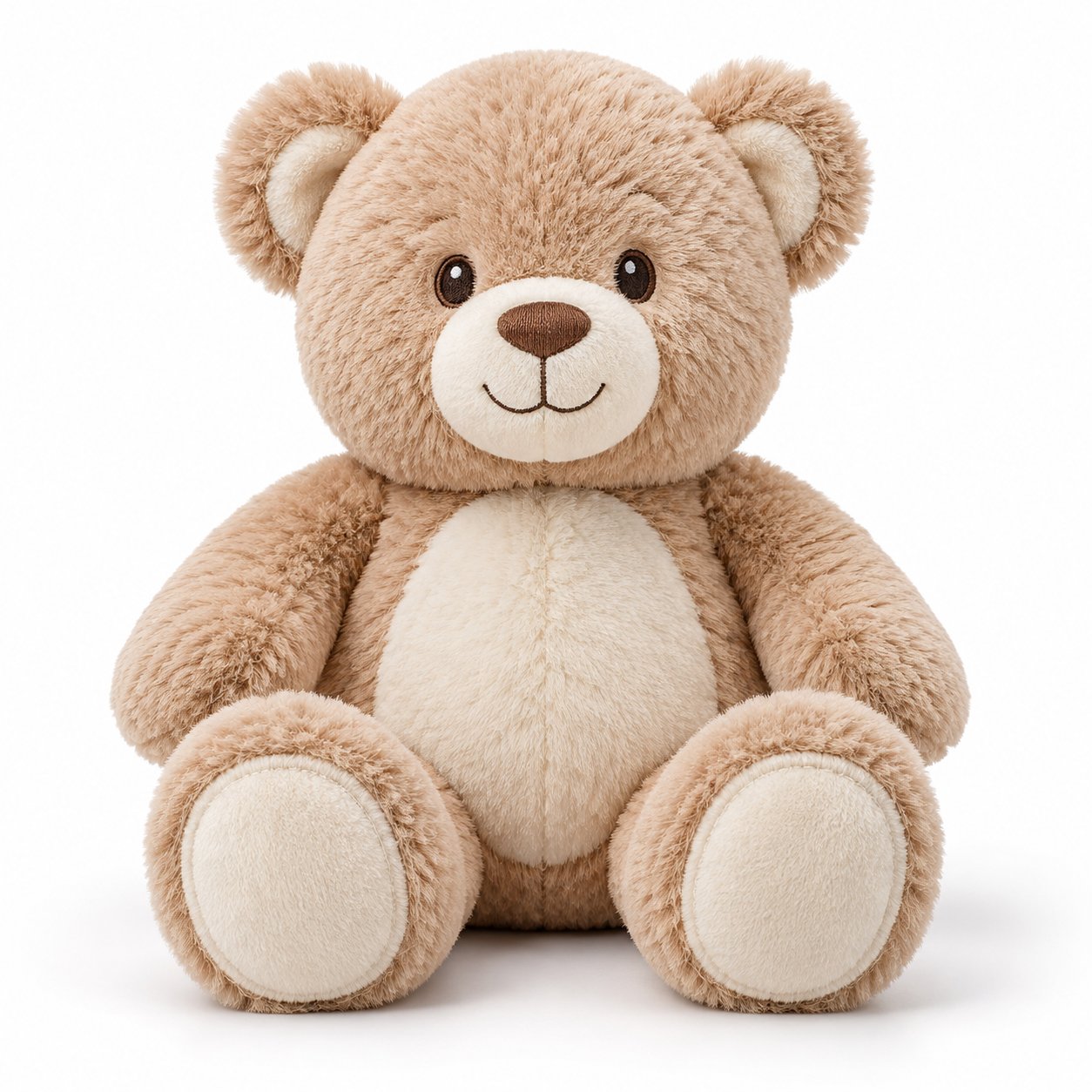
For a model with a published record you can hold a supplier to, the plush teddy bear comfort toy shows the level of detail a specification sheet should carry: short-pile plush surface, hypoallergenic polyester fibre filling, 30 cm seated height, double-stitched seams, and 60 pieces per export carton. Ask for the equivalent sheet on whatever model you choose.
Branch B: a branded gift or promotional programme
Channel that fits: a supplier who controls decoration and packing in one place, and who will confirm the decoration method against your artwork before production.
Why this channel
Gift and promotional programmes fail on coordination, not on the bear. The artwork, the decoration placement, the individual packing and the delivery window all have to line up, and a channel that hands decoration to a third party adds a step where your programme dates can slip. Keeping decoration and packing with one accountable supplier is the practical choice.
What to verify
- Decoration method and placement confirmed on a physical pre-production sample, not on a digital mock-up. Embroidery, printing and label attachment each behave differently on plush.
- Artwork ownership and approval trail — who approves the final artwork, and where that approval is recorded.
- Individual packing specification: poly bag, header card, insert or gift box, and how the packed unit sits in the export carton.
- The programme date written into the order, and what the supplier states if the date moves. Ask what happens to the schedule if artwork approval is late.
- Whether the same supplier handles both the bear and the packing. If not, find out who is accountable for the finished packed unit.
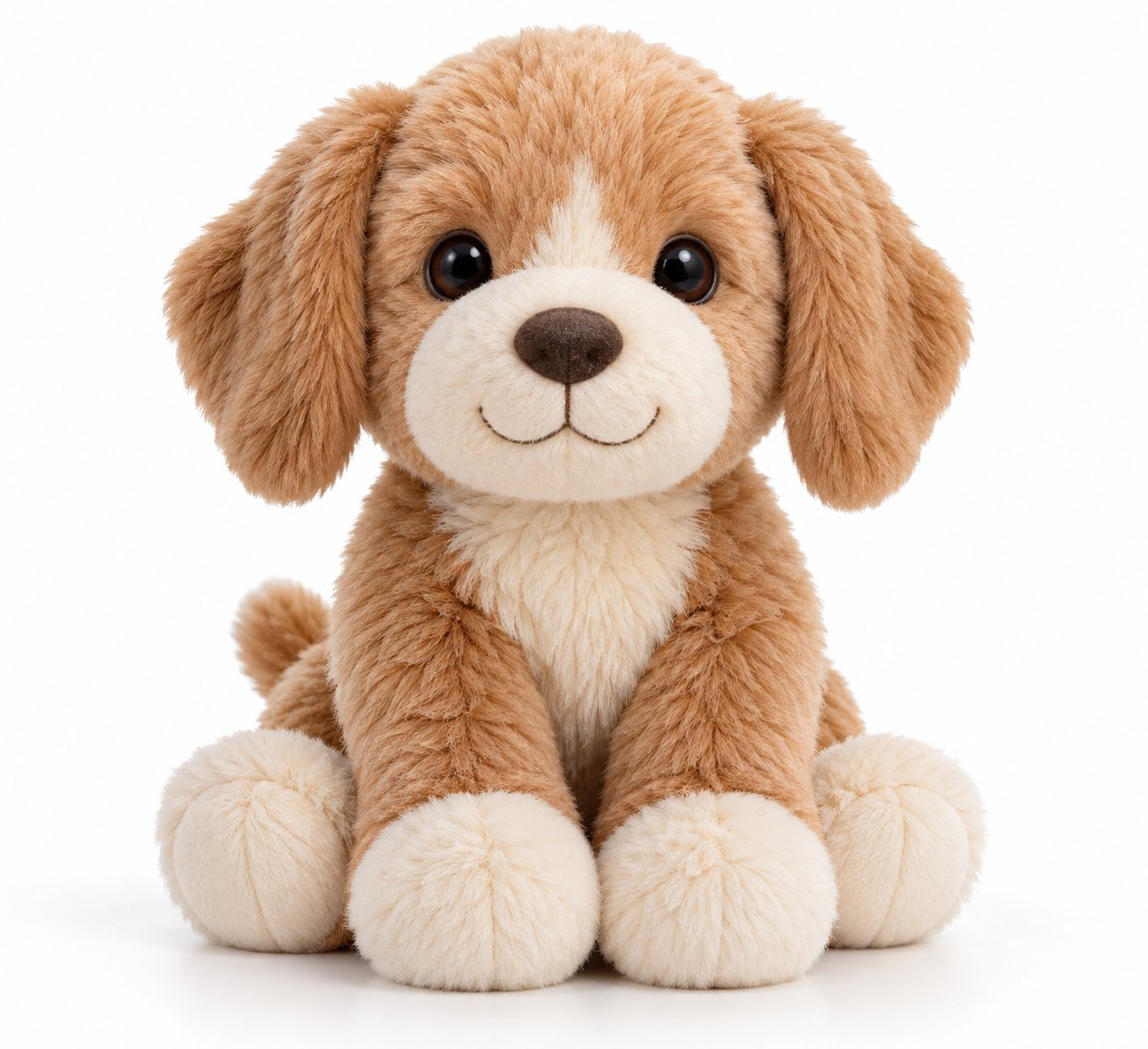
Where the gift programme needs a specific size or a specific look, the custom plush stuffed animal with hypoallergenic filling is size-customisable in the 20–60 cm range, which is the practical band for most branded gift formats. MOQ on that model is 1,000 pieces; MOQ differs by model, so confirm it against your actual specification.
Branch C: an infant and 0+ range with stricter safety expectations
Channel that fits: a supplier who can produce model-specific test documentation and whose construction choices remove small-part risk by design.
Why this channel
An infant range carries a different burden of proof. The question is not whether the supplier has ever made a safe plush toy, but whether they can show you the documentation for the exact model, in the exact construction, that will land in your warehouse. Construction matters as much as paperwork: embroidered eyes and nose instead of plastic parts remove the small-component detach risk rather than relying on a test to catch it.
What to verify
- Test documentation tied to the specific model, not to a similar product in the same range. Confirm the standard cited — EN71 and ASTM F963 are the references for the two models described here — and check that the report describes the construction you are ordering.
- Construction detail in the specification: embroidered features rather than attached plastic parts, seam construction, and surface finish. These are the facts a safety reviewer will ask about.
- Age grading stated explicitly on the specification and the packaging, and consistent between the two.
- Cleaning instructions that match the construction, so the retail copy and the product agree.
- Whether any change to the model triggers new documentation. A supplier who cannot answer this is telling you something.
The infant model referenced above is designed around this branch: age 0+, 30 cm seated height, embroidered eyes and nose so there are no small components to detach, double-stitched seams, and a surface fabric that wipes clean with a damp cloth. MOQ is 1,000 pieces with poly bag and export carton packing; confirm MOQ against your specific project, since it varies by model.
What each document actually proves
Buyers often collect a thick file and still cannot answer the one question that matters: what does this paper establish, and what does it leave open? Use the mapping below to read a supplier's document set honestly.
| Document or data | What it proves | What it does not prove |
|---|---|---|
| Written specification sheet for the model | There is a defined article to produce and to check against | That the delivered goods match it — that needs inspection against the sheet |
| Approved pre-production sample, retained by both sides | Both parties agreed on a physical reference before production | That mass production will reproduce it consistently across cartons |
| Test report citing EN71 or ASTM F963 | The tested sample met the cited standard under the test conditions | That every unit in your shipment is identical to the tested sample, or that untested variants are covered |
| Carton and packing specification | How the goods are packed, bagged and counted per carton | That packing will be identical on a later run unless it is written into the order |
| Artwork approval record (gift programmes) | Which artwork was approved, by whom, on what date | That decoration on the production line will match without a physical sample check |
| Factory name and location in writing | Who is producing the goods and where | That the factory holds any particular certification or audit result |
| Supplier's stated MOQ | The minimum quantity for that model as offered | That the same MOQ applies to a different size, fabric or packing format |
One caution on the test report row: a document citing a standard is evidence about the tested sample. If your order changes the fabric, the size, the filling or the attached components, ask whether the documentation still describes what you are buying. That is a question for the supplier, and their answer — or their inability to answer — is useful sourcing information in itself.
What to check when the first delivery arrives
Incoming inspection is where the document set meets the carton. Work against the specification sheet you approved, not against memory.
- Count and carton condition. Confirm units per carton against the packing specification and note any carton damage before signing.
- Compare against the retained sample. Pull units from more than one carton — pile, colour, filling firmness, eye and nose construction, seam line.
- Check the construction details that carried the safety case. If embroidered features were the reason the model suited an infant range, confirm they are embroidered on the delivered goods.
- Check the packaging copy. Age grading, cleaning instructions and any programme artwork should match the approved version.
- Record deviations with photos and carton numbers, and raise them against the specification sheet rather than in general terms. A specific claim is easier to resolve than a general complaint.
Keep the approved sample and the signed specification sheet for the life of the SKU. They are the reference for every reorder, and they are what makes a second run verifiable.
Questions buyers ask before choosing a channel
Can I buy teddy bears in bulk from a marketplace listing and still get documentation?
Sometimes, but you have to ask for it before paying. Request the specification sheet, the packing detail and the test documentation for the exact model, then check that the document describes the construction in the listing. If the seller cannot connect the paperwork to the product, the listing is not a supply relationship.
Is a trading company a worse choice than a factory for a reorder SKU?
Not automatically. The risk with a trading partner is specification drift between runs, not the trading model itself. Ask them to name the producing factory in writing and to hold the same specification across orders. If they will do both, the channel can work; if they will not, you have no lever on run two.
What if my order is below the MOQ on the model I want?
MOQ is stated per model and varies with size, fabric, decoration and packing format. The two models referenced here carry an MOQ of 1,000 pieces, but that figure does not transfer to a different specification. Confirm the MOQ for your actual project before you plan quantities, and treat any quoted MOQ as tied to the specification it was quoted against.
How do I know the price I am quoted is the one I will be invoiced?
A plush quote is conditional. Fabric, size, embroidery work, MOQ tier and packaging form all move the number, which is why a fixed figure quoted before your specification is settled is not a real price. Send the specification, the target quantity and the packing format, and ask for a quote against that specification — then compare suppliers on the same basis.
What to prepare before you contact suppliers
Suppliers sort themselves quickly once you present a clear brief. Before you open conversations, write down four things: the target quantity for the first order and the likely reorder volume; the market the goods will be sold in, since that drives which safety standard matters; the packaging form you need, including whether units are individually bagged, carded or boxed; and the age grading for the product. Add the order type from the branches above — repeat retail SKU, branded gift programme or infant 0+ range — because that determines which documents you will ask for first.
With those five points in hand, request the specification sheet and the relevant documentation before discussing price. A supplier who answers the document questions in detail is showing you how they will behave after the deposit. A supplier who sends a price and a photo and nothing else has told you something too.


