Compare the three realistic sourcing routes for weighted plush — wholesale marketplaces, toy fairs, and direct-from-manufacturer OEM/ODM — and use a due-diligence checklist covering sample testing, stitching and filling containment, age labeling, and compliance documentation.
Sourcing Guide
If you are searching for where to buy weighted stuffed animals, you are usually choosing between three very different supply routes — not three shops. Each route changes your control over filling behavior, stitching integrity, age labeling and the compliance file you can hand to a retailer or customs broker. This guide compares them and gives you a checklist you can run before placing any order.
Key takeaways
- Marketplaces and toy fairs are discovery channels; they are not a substitute for verifying the factory that actually sews and fills the item.
- The filling is the product. A stuffed animal is not a weighted stuffed animal unless the weight is contained, distributed and secured in a way the factory can describe and you can test.
- Age labeling and the compliance file are decided at the sourcing stage, not at the packaging stage.
- Ask every candidate the same questions. A supplier that cannot answer them in writing is a risk, regardless of price.
What this guide covers
- Comparing the three sourcing channels
- What a weighted plush actually is
- Sample testing before you commit
- Stitching and filling containment
- Age labeling for the destination market
- Compliance documentation: build the file early
- Supplier due-diligence checklist
- Frequently asked questions
Comparing the three sourcing channels
The channel you choose determines who owns the specification, who carries the compliance burden and how much you can change before production. A rough comparison:
| Channel | Best used for | What you control | Main risk |
|---|---|---|---|
| Wholesale marketplaces | Small test buys, sampling a category, filling a gap in an existing range | Little. You choose from what exists; specification is fixed by the listing. | The trading company may not be the factory, so filling and stitching details are second-hand. |
| Toy fairs | Seeing physical samples, meeting factories, comparing construction side by side | Moderate. You can negotiate changes after the show, but the sample on the booth is a display piece, not a production guarantee. | Show samples are often hand-finished. Production units can differ in filling density and seam allowance. |
| Direct from manufacturer (OEM/ODM) | Building your own specification, your own label, repeat orders | High. Fabric, filling placement, labeling and packaging are agreed in writing before tooling and cutting. | Requires more upfront work: you must define the spec and verify it, not just pick a SKU. |
Most buyers end up combining them: browse marketplaces and fairs to understand the market, then move to a direct manufacturer once the specification matters. For example, Fujian Lequ Wanwan is a B2B plush manufacturer that runs OEM/ODM programs and produces to EN71 and ASTM F963 requirements — the kind of supplier you would approach on the direct-manufacturer route rather than through a reseller listing. That is a company-level fact, not a claim about any particular item in your target specification.
What a weighted plush actually is
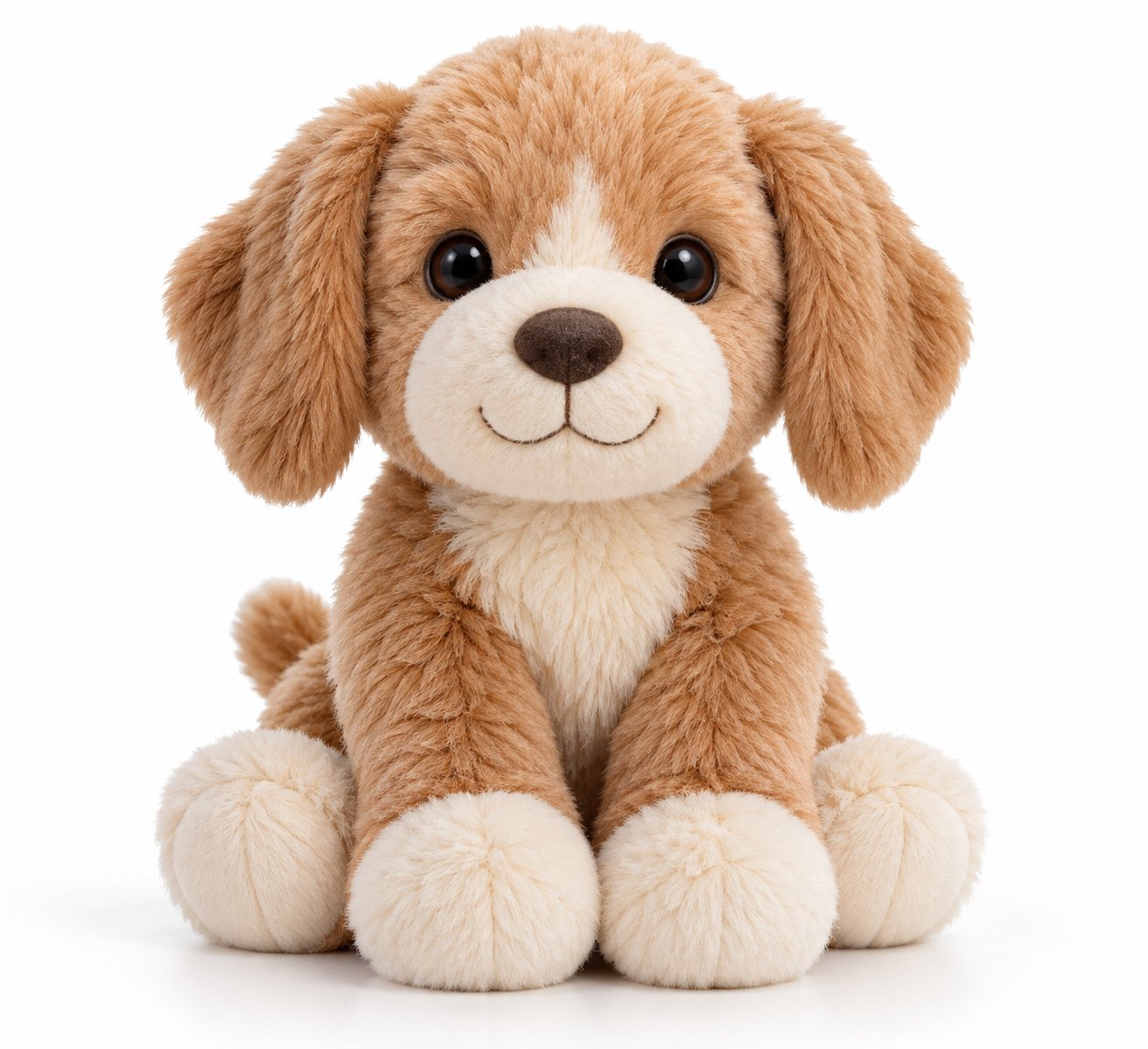
"Weighted" is not a fabric or a shape — it is a decision about how mass is added and held. Common approaches include sealed inner pouches, compartmentalized filling, or weighted inserts stitched into a lining. Each behaves differently in a wash cycle, in a drop test and under a child's grip.
When you evaluate a supplier, ask them to describe, in writing:
- What material provides the weight, and whether it is inside a sealed containment layer.
- Whether the weight is concentrated in one area or distributed across the body.
- How the weighted layer is secured relative to the outer shell, and whether it can migrate.
- What the intended cleaning method is, and whether that method is compatible with the containment.
If the answer is vague, you have found your first elimination criterion.
Sample testing before you commit
A pre-production sample is your only cheap opportunity to catch problems. Treat it as a test object, not a photo prop. A practical sequence:
- Weigh and measure the sample against the specification you agreed, and record the tolerance rather than a single number.
- Inspect every seam under tension, especially around the weighted section and any access opening.
- Check that the filling reads as evenly distributed when the item is held, squeezed and shaken.
- Confirm the label text, language, age marking and any warnings match the destination-market requirement.
- Wash or wipe the sample according to the intended care instructions and re-check seams and filling containment afterward.
- File the sample result with the date and the exact revision it corresponds to, so a later production comparison has a baseline.
Stitching and filling containment
Weighted plush fails in predictable places: the seam nearest the weighted area, the closure of the inner pouch, and the point where the weighted layer meets the softer body. These are construction questions, and they are answered by the factory's own process description and by your hands on a sample — not by a product photo.
Ask the factory to state whether the weighted containment is closed by stitching, sealing or both, and what inspection step verifies that closure before the outer shell is finished. An item whose inner containment cannot be inspected after assembly needs a defined in-process check.
Bar-tacks, double-stitched seams, and reinforced openings are common techniques, but which ones apply to your item depends on the design, the weight and the fabric. Ask the supplier to explain their choice for your specification rather than accepting a generic list of techniques.
Age labeling for the destination market
Age labeling is not decoration; it is a legal statement about who the product is intended for and what testing regime applies. It is also one of the first things a retailer or customs officer checks.
Before you order, confirm with the supplier:
- The intended age grade for your specification, and the basis for it.
- The exact wording, language and placement of the age marking and any warnings on the product and the packaging.
- Whether the label artwork must be approved by you before production, and at what stage.
- How labeling is controlled during production so the correct version is applied to the correct batch.
Compliance documentation: build the file early
The compliance file is easier to assemble before an order than after. At the sourcing stage, ask what documentation the manufacturer can provide for the specific item and market, and keep the answer factual.
A direct manufacturer with an established export program can typically discuss test standards such as EN71 for the European market and ASTM F963 for the United States, and can point to the reports that apply to the tested item. Note the important boundary: a report applies to the sample and conditions it describes, so always check that the report matches your material, construction and age grade — not just the factory name.
Keep the paperwork aligned with the physical goods:
- Confirm the report or certificate references the correct item, material and age grade.
- Check the issue date and whether a re-test is needed for a changed material or construction.
- Match the document to the production batch it covers.
- Store specification, sample record, label artwork and compliance documents together by revision.
Supplier due-diligence checklist
Use the same list with every candidate so the answers are comparable. This is a checklist for asking, not a substitute for verifying.
- Who physically manufactures the item — the supplier you are talking to, or a third party?
- Can they describe the weighted containment construction for your specification in writing?
- What sampling process and lead time applies, and what is the revision control on the sample?
- What in-process checks apply to seams and filling containment?
- Which markets do they currently produce for, and which test standards apply there?
- What documentation can they provide for the specific item, and what does it cover?
- How are label artwork and age marking approved and controlled in production?
- What are the packing, carton and shipping terms for your destination?
Frequently asked questions
Are weighted stuffed animals sold on general marketplaces the same as those from a factory?
Not necessarily. A marketplace listing tells you what the seller offers, not who made it or how the weighting is contained. If you need a repeatable specification, confirm the manufacturing source and the construction details directly.
Can I ask a factory to add weight to an existing design?
This is a common OEM/ODM request, but it is a redesign of the internal construction, not a simple addition. Expect changes to the pattern, the lining and the seam plan, and expect a new sample round. The feasibility depends on the original design and the target weight distribution, so ask the factory to assess your specific design.
What should I check first on a sample?
Start with the seams around the weighted area and the containment closure, then check filling distribution, then the label. These three checks catch the most expensive problems early.
How early should compliance documents be discussed?
At the enquiry stage. The applicable standard and the age grade shape the materials and construction you choose, and reversing those decisions after production starts is costly.
Next step
If you are moving from browsing to sourcing, gather your specification — target size, weight distribution, fabric preference, age grade, label requirements and destination market — and put the same questions to the manufacturers you shortlist. If you would like to discuss a plush OEM/ODM project with a manufacturer that produces to EN71 and ASTM F963 requirements, send us your specification and we will tell you what is feasible and what needs to be confirmed.