A sourcing guide comparing custom plush manufacturer channels — factory-direct, trade fairs, B2B marketplaces, and referrals — with a vetting checklist and the OEM/ODM brief-to-sample workflow.
Buyers asking where to get custom plushies made usually have a specific product in mind: a branded mascot, a retail character, a promotional giveaway, or a fully original design. The question behind the search is rarely "is there a factory?" — thousands exist. It is "which channel gives me a supplier I can actually verify?"
This guide compares four realistic sourcing channels, explains how to vet each one, and walks through the brief-to-sample workflow used in OEM and ODM programs. Pricing is covered in a separate article; here the focus is on where to look and what to check.
Key takeaways
- Factory-direct sourcing gives you the most control, but only if you verify the factory itself — not just the sales office.
- Trade fairs are efficient for meeting production staff in person; follow-up document checks still decide the outcome.
- B2B marketplaces widen the pool but mix manufacturers with trading companies, so identity checks matter more.
- Referrals shorten the shortlist but do not replace your own sample and compliance review.
- Compliance, not design, is usually the hardest requirement to clear: confirm EN71 or ASTM F963 testing against your exact materials.
Channel 1: Manufacturer-direct sourcing
In this channel you contact the factory that will cut, sew, fill, and pack the plush item. A direct relationship typically means clearer control over materials and revisions, and fewer translation layers between your brief and the production line.
The catch is that not every company presenting itself as a plush toy maker owns the equipment. Some are trading companies that outsource sewing. That is not automatically disqualifying — a good trading partner can manage quality and logistics — but you should know which model you are buying into before you commit.
How to vet a factory-direct supplier
- Confirm the legal entity and site. Check the business license, registered address, and factory address. A historically established company (for example, founded in 2013) with in-house design and QC teams can describe how those teams sit in the production flow.
- Ask who owns each process. Cutting, sewing, stuffing, and final inspection should have named owners inside the factory, not "a partner workshop" with no further detail.
- Request a sample against your brief. The sample is your first real data point on stitch quality, fill density, and how faithfully the factory reads a spec sheet.
- Check compliance for your target market. For North America and Europe, ask specifically about ASTM F963 and EN71 as applied to your materials and age grading.
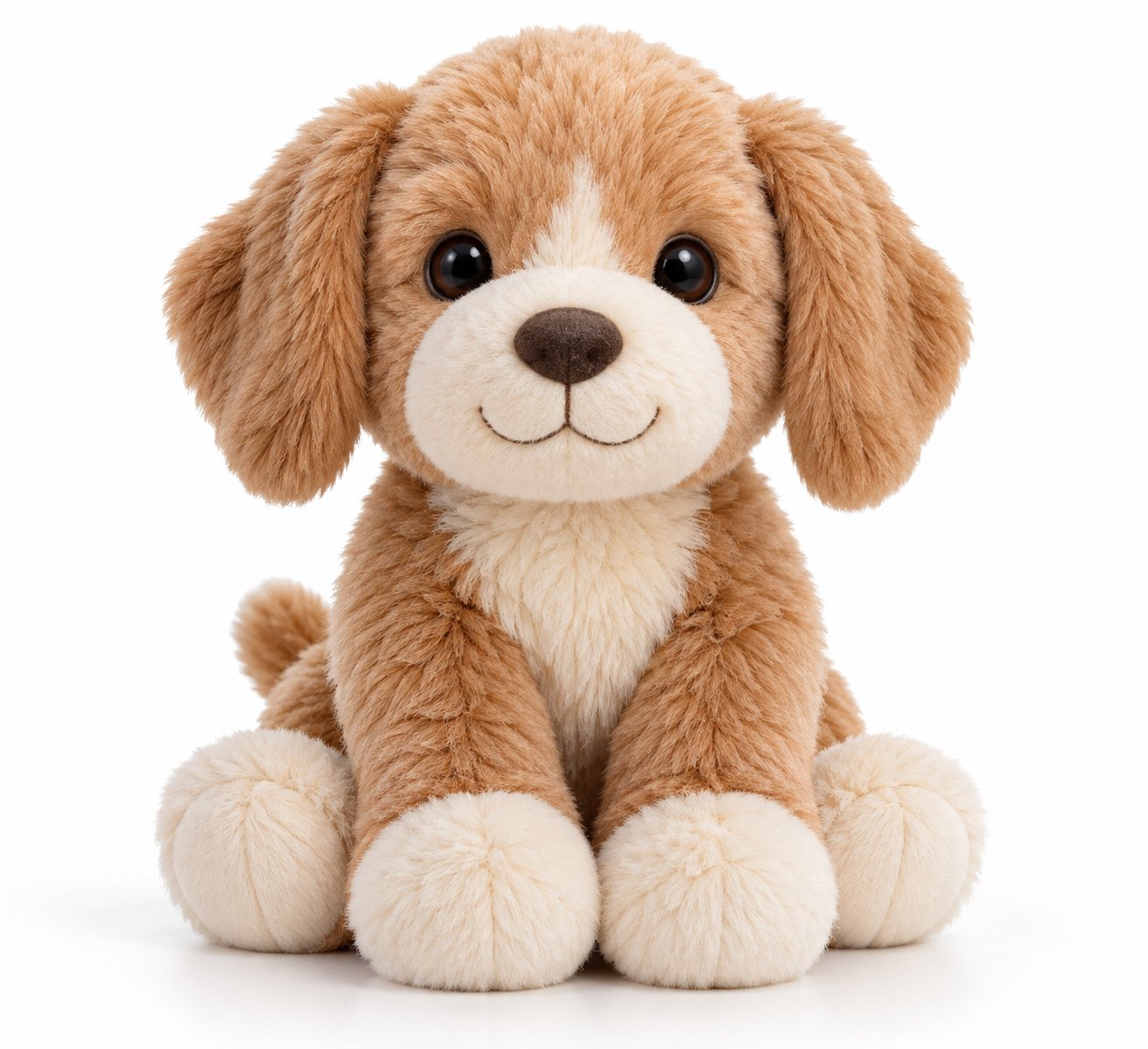
If you need a concrete product reference for what a direct manufacturer can deliver, the Custom Plush Stuffed Animal example lists soft plush fabric, hypoallergenic filling, 20–60 cm customizable sizing, durable stitching, EN71/ASTM F963 compliance, an MOQ of 1,000 pcs, and OEM/ODM availability. Use specs like these to compare how each channel responds to the same request.
Channel 2: Trade fairs
Trade fairs such as toy and gift exhibitions compress a lot of supplier meetings into a few days. You can handle samples, look at stitch density under good light, and meet the people who will actually answer your technical questions. For first-time custom plush sourcing, that face-to-face time often shortens the shortlist faster than weeks of email.
What you cannot verify at a booth is current compliance paperwork, production capacity at this moment, or whether the person you met is factory staff or an agency. Treat the fair as the beginning of vetting, not the end.
How to vet after a fair meeting
- Ask for the same document set you would request from any manufacturer: license, test reports, and sample records.
- Confirm who your contact reports to, and whether they can authorize sample revisions without escalation delays.
- Follow up within a week while your notes on the booth sample are still fresh.
- Match every claim made in person against the written spec you receive afterward.
Channel 3: B2B marketplaces
B2B marketplaces are useful for screening widely and getting quick responses on MOQ and lead-time ranges. They also have a structural weakness: the platform does not verify that a listed company is a manufacturer. Two listings with identical titles can be a factory and a middleman with very different quality controls.
| What to check | Why it matters |
|---|---|
| Factory address vs. registered address | Mismatch can indicate outsourcing or a trading operation |
| Who performs final inspection | Determines how defects are caught before shipment |
| Sample lead time and cost terms | Reveals whether sampling is treated as a real engineering step |
| Test report scope | Confirms the report covers your materials, not just a generic product |
Marketplace badges and response-rate scores measure communication, not manufacturing capability. Use them to filter, never to approve.
Channel 4: Referrals
A referral from a buyer who has already produced a custom plush item is a strong signal — that supplier has cleared at least one real production and shipping cycle. But another buyer's specification, volume, and market are not yours. A supplier that performed well on a 2,000-piece promotional run may not fit a licensed retail program with tighter tolerance and audit needs.
Treat referrals as a warm introduction. Then run the same checks you would run on any new supplier, including a fresh sample against your own brief.
Comparing the channels at a glance
| Channel | Strength | Main risk | Core verification step |
|---|---|---|---|
| Manufacturer-direct | Control over materials and revisions | Trading company posing as factory | Confirm entity, site, and process ownership |
| Trade fair | Fast, in-person assessment | Unverified claims made at the booth | Request and review documents afterward |
| B2B marketplace | Wide pool, quick quotes | Mixed manufacturer and middleman listings | Verify factory identity and inspection ownership |
| Referral | Pre-tested relationship | Different spec, volume, or market fit | Re-run sample and compliance checks |
The OEM/ODM workflow: from brief to approved sample
Once you have a shortlist, the process is similar across channels. OEM means you supply the design; ODM means the manufacturer adapts an existing pattern. Either way, the sequence below is where most projects are won or delayed.
Step 1: Brief
Give the factory your reference artwork, target size within the offered range (for example 20–60 cm), fabric preference, filling expectations, color standards, age grading, and destination market. Vague briefs produce samples you cannot approve.
Step 2: Feasibility review
A competent custom plush manufacturer reviews the brief before quoting: can the shape be sewn at the requested size, will the eyes and nose meet safety rules for the age group, does the fabric take the print or embroidery you want?
Step 3: Sample
You receive a physical sample made to the brief. Inspect stitching durability, fill distribution, seam alignment, label placement, and color against your reference. Document every requested change in writing.
Step 4: Revision
Revise until the sample matches the spec. Confirm in writing that the approved sample becomes the production standard.
Step 5: Compliance confirmation
Test the production materials against EN71 or ASTM F963 as required by your market. Verify the report names the actual materials and the model you are buying.
Step 6: Bulk production and inspection
Production follows the approved sample, with in-house QC at defined checkpoints and a pre-shipment inspection before packing.
What to verify before you place a bulk order
- MOQ and whether it applies per design or per order.
- Sample and production lead times in writing, not verbal estimates.
- Test report validity for your specific materials and destination market.
- Packing method and carton configuration for your shipping mode.
- Named quality owner and the defect-handling process.
FAQ
Can I source custom plushies if I have no design file?
Yes, if the manufacturer offers ODM. You provide reference images or a concept, and their design team adapts an existing pattern. OEM is the right route when you already have full artwork and specs.
Is a factory always better than a trading company?
Not always. A capable trading partner can manage quality and logistics well. What matters is knowing which model you are buying into and who controls production, so you can verify the right party.
What MOQ should I expect?
MOQ depends on size, materials, and complexity. The product example here starts at 1,000 pcs for OEM/ODM. Ask each candidate for their MOQ against your exact brief.
How do I confirm compliance for Europe or North America?
Ask for EN71 or ASTM F963 test reports that name your specific materials and model. Confirm the report is current and issued for the item you are ordering.
Ready to compare suppliers against the same brief?
Send your reference artwork, target size, fabric preference, and destination market. We will confirm feasibility, MOQ, and sampling steps for your project.
Request product details