A practical guide for retailers on the stages of wooden block play and activities that drive sales. Learn how to choose block sets, train staff, and create engaging displays to meet customer needs.
As a retailer, you know that wooden blocks are a staple in any toy aisle. But do you know how to help your customers get the most out of them? Understanding the stages of block play—and the activities that support each stage—can turn a simple purchase into a repeat sale. This guide walks you through the developmental stages, suggests age-appropriate activities, and offers practical tips for merchandising and staff training.
Key Takeaways for Buyers:
- Block play progresses through distinct stages: carrying, stacking, bridging, and complex construction.
- Different block types (unit, plank, hollow) suit different stages and ages.
- Retailers can boost satisfaction by aligning product recommendations with a child's current stage.
- Staff training and in-store play areas increase confidence and sales.
Why Wooden Blocks? A Retail Perspective
Wooden blocks are a durable, open-ended toy that grows with a child. Unlike electronic toys, they require no batteries and can be used in countless ways. For retailers, this translates to a product that appeals to a wide age range (typically 1–8 years) and offers high play value. Parents and educators often seek blocks that are safe, sustainably sourced, and built to last. When you understand the stages of block play, you can guide customers to the right set and build loyalty.
Stages of Wooden Block Play
Children's block play generally follows a predictable sequence. While individual timelines vary, knowing these stages helps you recommend appropriate products.
Stage 1: Carrying and Exploring (Ages 1–2)
Toddlers treat blocks as objects to hold, mouth, and transport. They may carry them around, bang them together, or drop them. At this stage, lightweight, smooth-sanded blocks with rounded edges are ideal. Large cardboard or foam blocks are often used, but wooden blocks of a size that are easy to grasp (e.g., 2–3 inch cubes) work well.
Retail tip: Stock small sets of chunky wooden blocks. Highlight non-toxic finishes and rounded corners on packaging.
Stage 2: Stacking and Building Rows (Ages 2–3)
Children begin to stack blocks vertically and place them in a row horizontally. They enjoy knocking down towers and may repeat the action many times. This stage builds fine motor skills and early math concepts like balance and symmetry.
Retail tip: Offer sets with a variety of shapes (cubes, rectangles, cylinders) to encourage experimentation. Display photos of simple towers on the shelf.
Stage 3: Bridging and Enclosures (Ages 3–4)
Now children start to connect blocks across space (bridges) and enclose areas (fences, walls). They may create simple enclosures for toy animals or cars. This stage shows emerging problem-solving and spatial reasoning.
Retail tip: Recommend sets that include longer planks or double-unit blocks. These allow for bridging and enclosure building.
Stage 4: Complex and Symbolic Construction (Ages 4–6+)
Older children plan and build elaborate structures, often naming them (e.g., "a castle," "a garage"). They use blocks to represent other objects and may incorporate other toys. This stage supports creativity, storytelling, and collaboration.
Retail tip: Offer larger sets or add-on packs. Consider bundling with small figures or vehicles to inspire symbolic play.
Comparing Block Types by Stage
| Block Type | Typical Size | Best for Stage | Key Features |
|---|---|---|---|
| Unit Blocks | 1.5–5.5 inches | 2–8 years | Standardized proportions, hardwood, smooth edges |
| Planks | Long and thin | 3–8 years | For bridging, ramps, and balance |
| Hollow Blocks | Large, open-ended | 3–8 years | Lightweight, easy to grasp, for big builds |
| Jumbo Blocks | Oversized | 1–3 years | Safe for mouthing, promotes carrying and stacking |
Activity Ideas to Share with Customers
Provide these activity suggestions on your website, social media, or shelf talkers. They add value and encourage repeat purchases.
- Stage 1: "Fill and dump" – provide a container and blocks for filling and emptying.
- Stage 2: "Build a tower" – challenge children to stack as high as they can.
- Stage 3: "Make a bridge for toy cars" – use blocks to create a bridge and test it with toys.
- Stage 4: "Design a city" – encourage planning and building a multi-structure scene.
Merchandising and Staff Training
To maximize sales, create a dedicated block play area in your store where children can try before you buy. Train staff to ask about the child's age and interests, then suggest blocks that match their stage. Use signage that explains the stages and benefits. Consider offering a "block play guide" as a free download or printout.
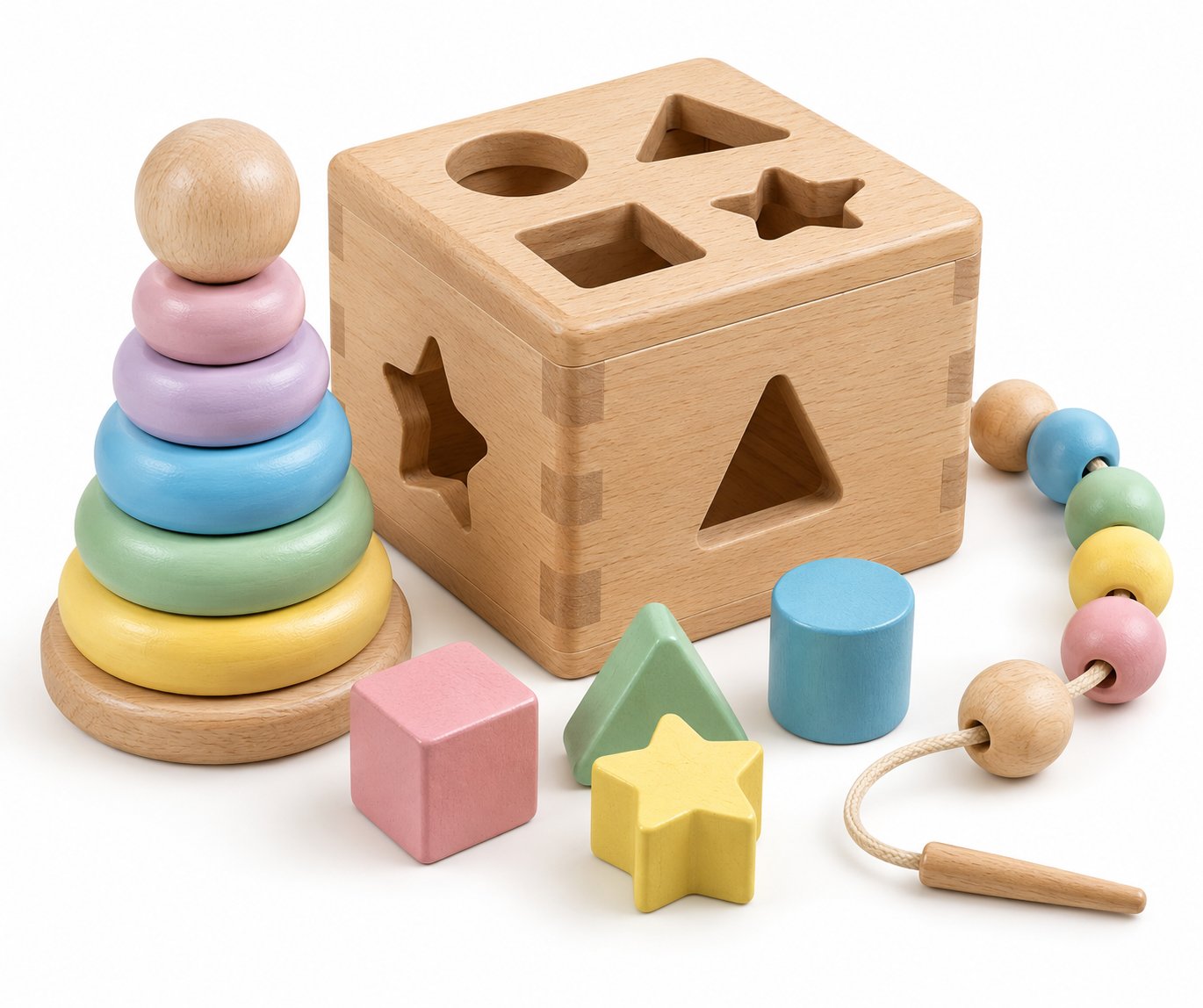
For a preschool-ready reference set that covers several of these stages at once, see the wooden Montessori learning set with shape sorting and threading, which combines shape sorting, stacking and bead threading toys in one early-development range.
Frequently Asked Questions
Next Steps for Retailers
Ready to enhance your block selection? Contact your supplier for a catalog of unit blocks, planks, and hollow blocks. Ask about bulk pricing and custom sets. With the right inventory and knowledge, you can become the go-to destination for quality block play in your area.