RC car bodies are made from different plastics depending on the grade of the vehicle. Toy-grade RC cars commonly use ABS or similar impact-resistant plastics, while hobby-grade models often use lighter polycarbonate-style shells. This article explains how material choice affects weight, impact resistance, and cost, and what buyers should confirm with suppliers before ordering.
The body shell is the most visible part of any RC car, and it is also one of the most common points of failure. Buyers searching for what RC car bodies are made of are usually trying to answer a practical question: will this shell survive real use, and can I get replacements or custom versions when I need them? The answer depends heavily on whether you are dealing with a toy-grade car or a hobby-grade model.
Toy-Grade RC Car Bodies: ABS and Similar Plastics
In toy-grade RC vehicles, the body shell is typically made from ABS (acrylonitrile butadiene styrene) or comparable impact-resistant plastics. ABS is widely used in this category because it offers a workable balance of toughness, moldability, and cost. It can be molded into detailed shapes with visible features like spoilers, grilles, and wheel arches, and it holds color well across large production runs.
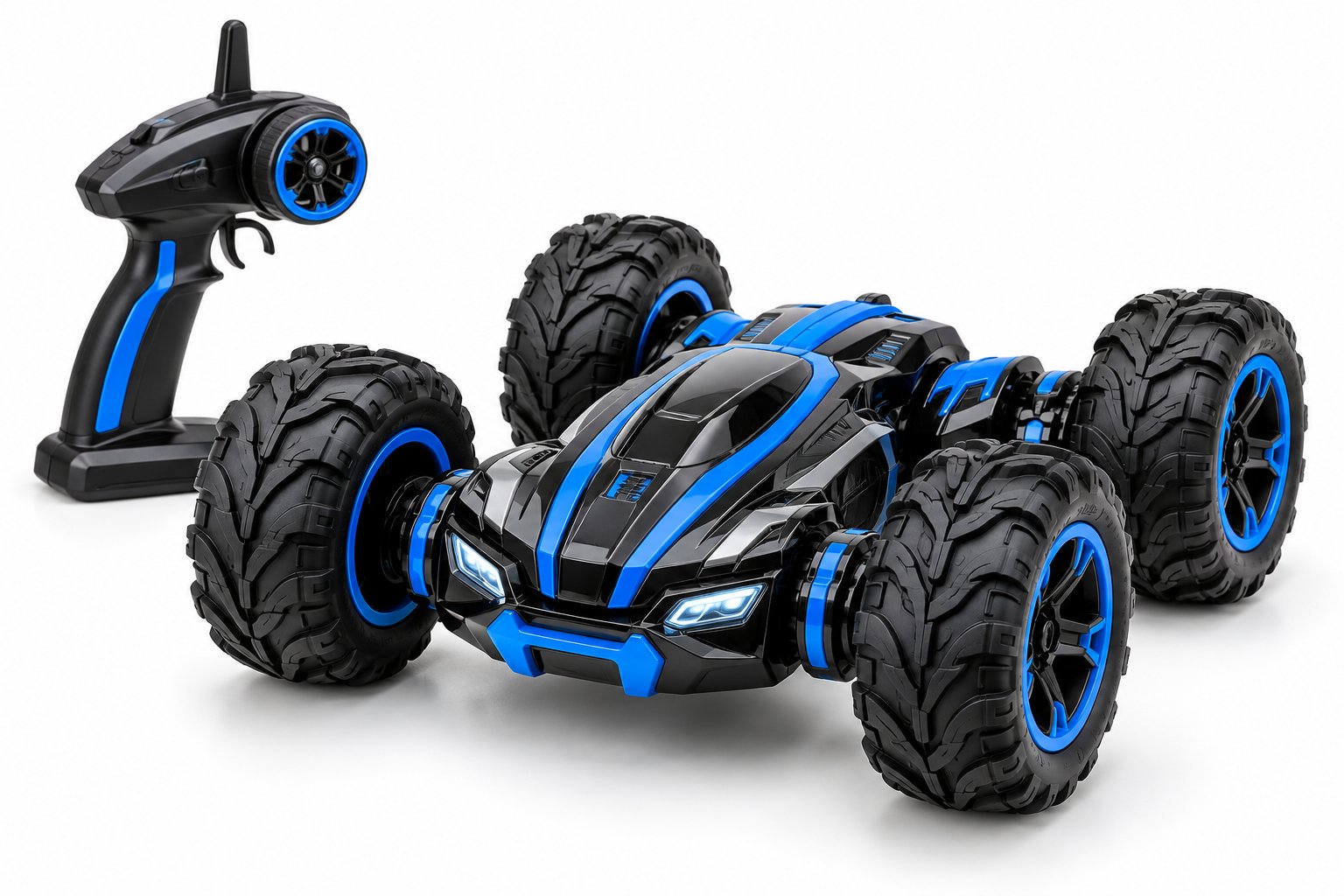
Our 4-Channel RC Stunt Car with 360 Spin uses an ABS body and soft rubber wheels. This is a representative example of the material profile you find in toy-grade RC cars: a rigid, impact-resistant shell paired with grippy rubber tires. The car is rated for ages 6+ and is EN71 / ASTM F963 compliant.
ABS shells tend to be heavier than polycarbonate alternatives, which is generally acceptable in toy-grade vehicles where top speed and racing performance are not the primary design goals. The trade-off is straightforward: ABS gives you a solid feel and molded detail at a lower tooling and material cost than specialty shell materials.
Hobby-Grade RC Car Bodies: Lightweight Polycarbonate-Style Shells
Hobby-grade RC cars, especially those intended for racing or high-speed off-road use, often use lighter polycarbonate-style shells. These are typically thinner and more flexible than ABS. The advantage is reduced weight, which improves acceleration, handling, and flight characteristics over jumps. The trade-off is that a lighter shell can be more prone to cracking or puncturing under hard impacts, depending on how it is mounted and reinforced.
It is worth noting that material choice in hobby-grade RC is not just about the plastic itself. The mounting system, body posts, and whether the shell is painted or clear all affect how the body performs in real use. Buyers sourcing hobby-grade models should ask suppliers about the specific shell material rather than assuming all RC bodies are the same.
How Material Choice Affects Weight, Impact Resistance, and Cost
The three factors buyers care about most—weight, impact resistance, and cost—are linked. Understanding the trade-offs helps you specify the right body for your market.
| Factor | ABS (common in toy-grade) | Polycarbonate-style (common in hobby-grade) |
|---|---|---|
| Weight | Heavier, solid feel | Lighter, better for speed and handling |
| Impact resistance | Resists cracking under normal play; can crack under extreme impact | Flexible; resists shattering but can puncture or tear |
| Detail and finish | Holds molded detail well; easy to paint or color-mold | Often requires painting; detail may be simpler |
| Cost | Generally lower material and tooling cost | Higher material cost; more finishing steps |
| Typical use | Toy-grade RC for ages 6+ | Hobby-grade racing and off-road |
For toy-grade products aimed at younger users, ABS is often the practical choice because it balances durability with cost and can be produced in high volumes with consistent color and shape. For hobby-grade products, the lighter polycarbonate-style shell is preferred when performance matters more than molded detail.
What Buyers Should Confirm with Suppliers
When sourcing RC cars, the body material is not always listed explicitly in product descriptions. Buyers should confirm the following points directly with the supplier before placing an order.
- Material specification: Ask for the exact material of the body shell—ABS, polycarbonate-style, or another plastic. If the supplier cannot name the material, treat that as a gap in the specification.
- Finish: Clarify whether the body is painted, color-molded, or supplied clear. This affects both appearance and the amount of finishing work needed before retail.
- Spare body availability: Confirm whether replacement body shells can be ordered separately and at what minimum quantity. This matters for after-sales support and for markets where customers expect spare parts.
- Customization: If you need custom colors or body styles, confirm what the supplier can do and whether tooling or setup costs apply.
Our 2.4GHz RC Off-Road Car is an example of a model that offers customizable colors and body styles, is EN71 / ASTM F963 compliant, and is available for OEM/ODM. This kind of flexibility is useful when you want to differentiate your product line without changing the underlying chassis.
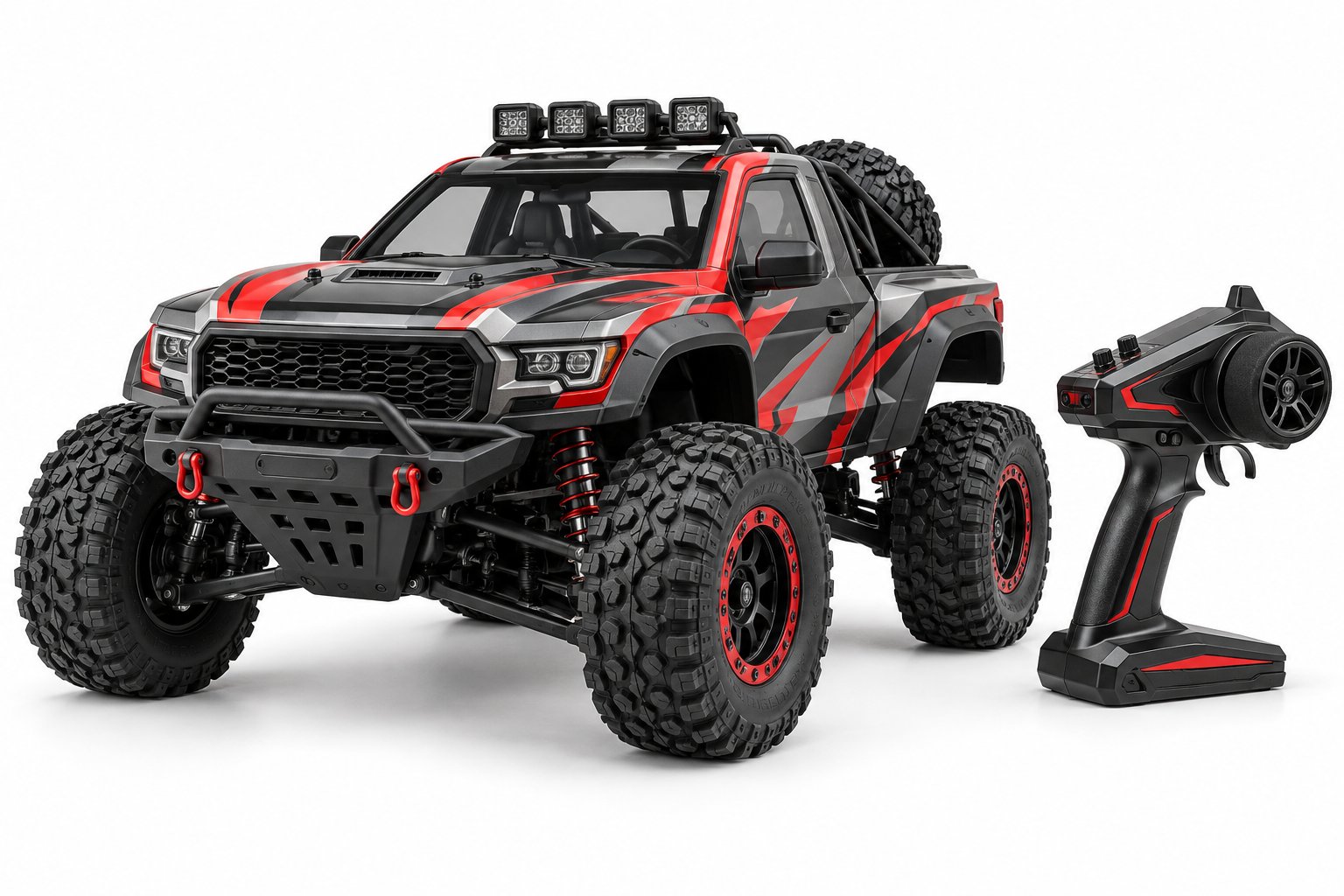
For off-road applications, the body shell also needs to work with the tires and suspension. Our 4WD RC Off-Road Truck uses an impact-resistant body shell and soft rubber deep-tread tyres, which is a good example of how body material and tire choice are matched to the intended terrain.
Matching Body Material to the Intended Market
The right body material depends on who will use the car and how. For younger children, a heavier ABS shell with molded detail may be more appropriate because it feels substantial and resists typical play impacts. For hobbyists, a lighter shell that improves performance is usually preferred, even if it requires more careful handling.
If you are sourcing for a mass-market toy channel, confirm that the material and finish meet the safety standards required in your destination market. Our toy-grade RC cars are EN71 / ASTM F963 compliant, which covers common requirements for toys sold in the EU and US. Buyers should always verify that the specific certification applies to the exact model and configuration they are ordering.
Frequently Asked Questions
Are all RC car bodies made of ABS?
No. ABS is common in toy-grade RC cars, but hobby-grade models often use lighter polycarbonate-style shells. The material should be confirmed per model with the supplier.
Which material is more durable?
It depends on the type of impact. ABS is rigid and resists cracking under normal play. Polycarbonate-style shells are more flexible and resist shattering but can puncture or tear. Neither is universally better; the choice depends on use case.
Can I get custom body colors or styles?
Some suppliers offer customizable colors and body styles, as well as OEM/ODM services. Our 2.4GHz RC Off-Road Car is available with customizable colors and body styles and OEM/ODM support. Confirm the scope and any tooling requirements with the supplier.
Do I need to order spare body shells separately?
Spare body availability varies by supplier and model. Ask whether replacement shells can be ordered separately and at what minimum order quantity.
What certifications should I look for?
For toy-grade RC cars sold in the EU or US, EN71 and ASTM F963 are common requirements. Our toy-grade RC cars are compliant with these standards. Always confirm that the certification applies to the specific model you are ordering.
Next Steps for Sourcing
If you are evaluating RC car bodies for an upcoming order, start by clarifying the material, finish, spare part availability, and customization options with your supplier. These details affect cost, durability, and after-sales support. For specific product inquiries, including material specifications and sample requests, contact the supplier directly with your target market and volume so they can confirm what is available.
Key takeaway: Toy-grade RC car bodies are commonly ABS or similar impact-resistant plastics. Hobby-grade bodies are often lighter polycarbonate-style shells. Confirm material, finish, spare body availability, and customization options before ordering.