Private label toy manufacturing lets retailers and brand owners sell toys under their own brand, but control is not unlimited. This article separates the specifications you can change—size, colour, design details, packaging, and labels—from the safety test basis and certification scope that stay tied to the tested item, using two real products to show the difference.
Private label manufacturing in toys means a retailer or brand owner sells a toy made by a factory under the buyer's own brand name. The factory produces the item, and the buyer's label, packaging, and product identity sit on top. The buyer does not own the factory, the tooling, or the base design unless those are separately negotiated. What the buyer does control is narrower than many first-time buyers expect, and the line between changeable and fixed is where most private label programmes succeed or fail.
- Private label gives you brand ownership and selected customisation—not ownership of the manufacturing process.
- Size, colour, design details, packaging, and your own labels are typically within your control.
- The safety test basis and the certification scope stay tied to the tested item. You cannot rebrand your way around them.
- A plush toy and a building block set show how far customisation can go before the compliance boundary changes.
- Ask the factory to put the customisation limits, test scope, and label responsibilities in writing before you commit.
Private label vs. white label: one short clarification
White label and private label are often used interchangeably, but they describe different levels of involvement. A white label product is a finished item the factory already makes and sells to multiple buyers, usually with only the label changed. A private label product is made for your brand with a defined level of customisation—colour, size, packaging, and design details—agreed between you and the factory. In toys, the practical difference matters because white label usually means you accept the product as tested and documented, while private label may allow changes that affect how the product is evaluated. This article focuses on private label manufacturing, where customisation is part of the offer.
What you control under private label
Control in private label toys is not absolute. It is a set of variables the factory agrees to manage for your order. For most B2B toy programmes, the controllable elements include:
- Size. Dimensions can often be adjusted within the factory's existing production range. For plush toys, size customisation is a standard option.
- Colour. Material and fabric colours can be matched to your brand palette, subject to the factory's available colour range and minimum order quantities.
- Design details. Shape, features, and visual elements can be modified where the factory has the capability and the change does not alter the safety basis of the tested product.
- Packaging. Poly bags, storage boxes, export cartons, and printed packaging can carry your brand identity.
- Labels and branding. Your brand name, logo, and product information appear on the product and packaging instead of the factory's.
These are the levers buyers typically negotiate. What they do not include is the underlying safety testing and certification scope. That is the fixed side.
What stays fixed
The safety test basis and the certification scope of the tested item remain tied to the product that was actually evaluated. If a toy is EN71 or ASTM F963 compliant, that compliance applies to the specific configuration, materials, and construction that were tested. Private label does not remove the need for testing, and it does not transfer a certification from one product to another. When you change a material, a component, or a construction detail, you may change the basis on which the product was tested. The factory can tell you which changes stay within the tested scope and which require re-evaluation. This is not a limitation the factory invents; it is how toy safety compliance works.
How two real products show the difference
The boundary between controllable and fixed becomes clearer when you compare two products with different customisation ranges. The STEM Building Blocks Set with 120 Pieces and the Custom Plush Stuffed Animal with Hypoallergenic Filling illustrate the point.
STEM Building Blocks Set with 120 Pieces
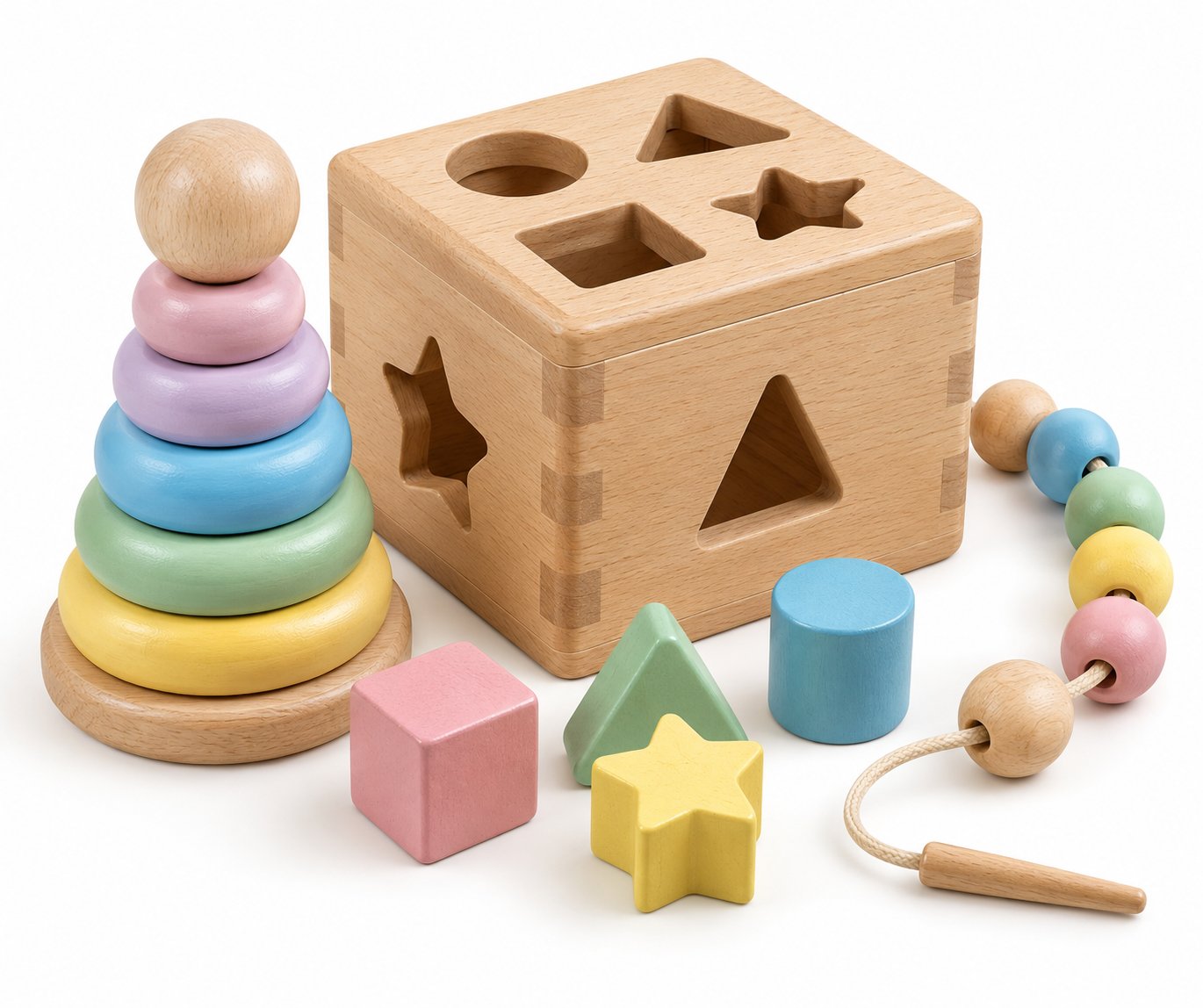
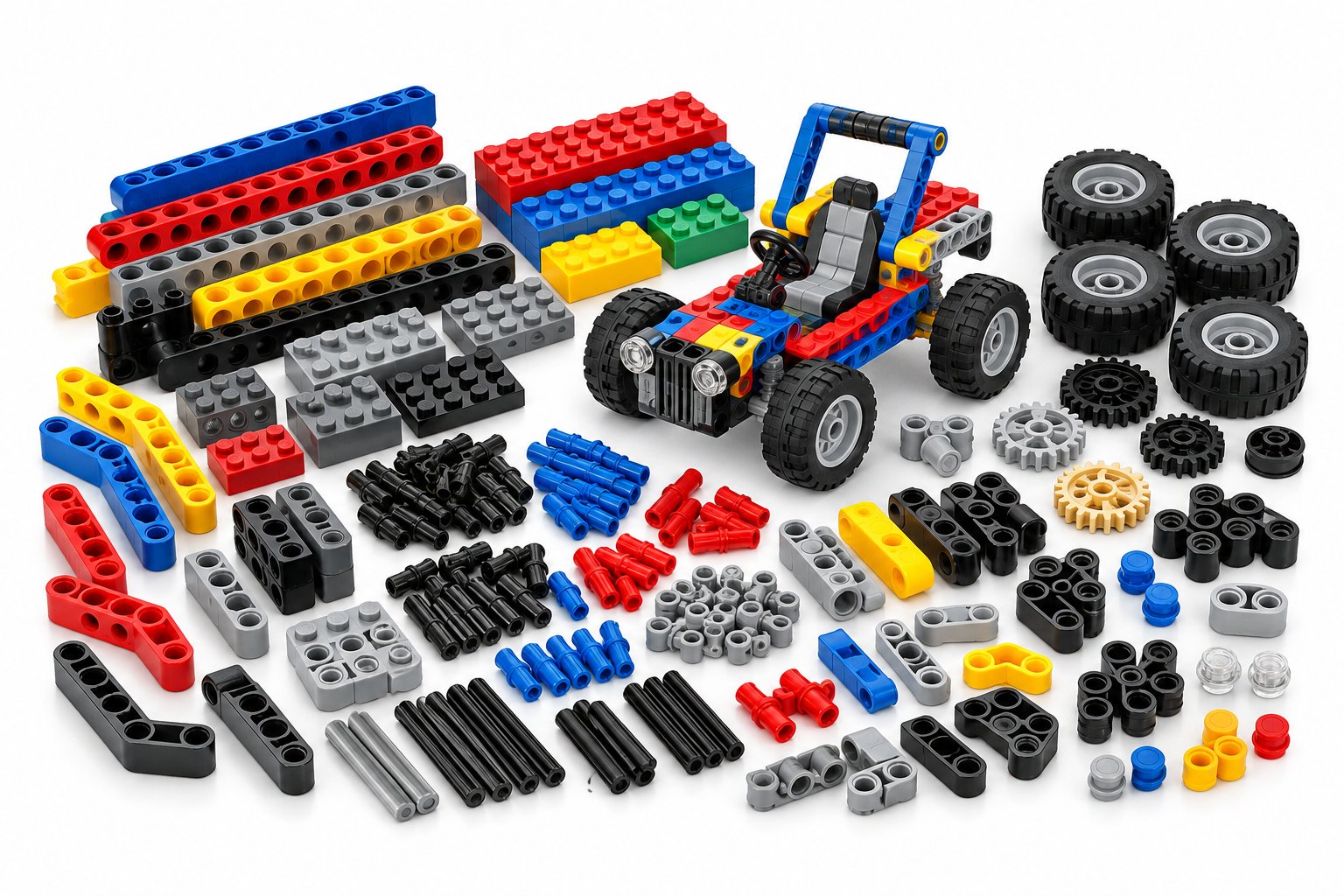
This set is made of ABS plastic, BPA-free, and rated for age 4+. It contains 120 building pieces, including beams, plates, wheels, and connectors, with press-fit assembly and no tools required. It ships with a storage box and export carton, has an MOQ of 500 sets, and packs 12 sets per carton. OEM and ODM are available, and the product is EN71 and ASTM F963 compliant.
Under private label, you can typically control the packaging and branding: your logo on the storage box and export carton, your product name, and your label information. You may discuss colour changes to the pieces within the factory's colour range. However, the piece count, the material specification, and the press-fit assembly method are part of what makes the product compliant and functional. Changing the number of pieces or the plastic compound could move the product outside its tested configuration. The fixed element is the tested basis of the 120-piece ABS set. The controllable element is how that set is presented and branded.
Custom Plush Stuffed Animal with Hypoallergenic Filling
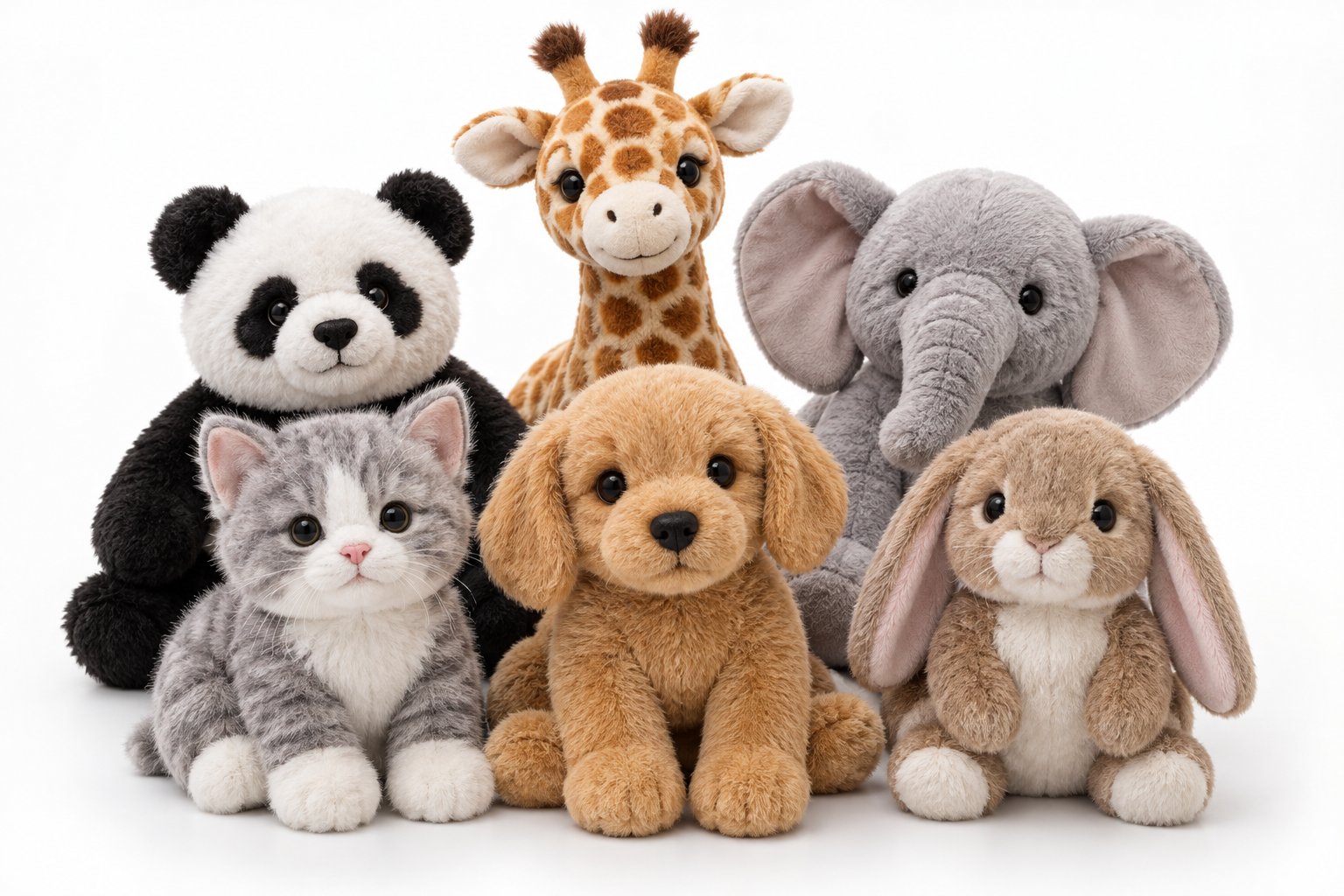
This plush toy has a size range of 20 to 60 cm, child-safe huggable fabric, hypoallergenic filling, smooth surface and secure seams. It is rated age 0+, packs in a poly bag and export carton, has an MOQ of 1,000 pieces, and is EN71 and ASTM F963 compliant. Size, colour, and design can be customised to match a brand.
The plush product offers a wider customisation range. You can specify size within the 20–60 cm range, choose colours, and adjust design details to match your brand. Packaging and labels are also yours to define. What stays fixed is the safety basis of the tested plush construction: the fabric type, the filling, and the seam security that were evaluated. If you change the fabric or the filling to something outside the tested specification, the compliance basis may need to be re-established. The factory can advise which design changes remain within the tested scope.
| Element | STEM Building Blocks Set | Custom Plush Stuffed Animal |
|---|---|---|
| Size | Fixed piece dimensions within the set | Customisable 20–60 cm |
| Colour | Discuss within factory colour range | Customisable to brand |
| Design details | Limited by tested configuration | Customisable within tested material and construction |
| Packaging | Storage box and export carton, brandable | Poly bag and export carton, brandable |
| Labels and branding | Your brand on product and packaging | Your brand on product and packaging |
| Safety test basis | Fixed to the tested 120-piece ABS set | Fixed to the tested plush construction |
| Certification scope | EN71 / ASTM F963 for the tested item | EN71 / ASTM F963 for the tested item |
| MOQ | 500 sets | 1,000 pieces |
What to ask the factory to put in writing
Before you commit to a private label toy programme, ask the factory to document the following points. This list turns vague assurances into checkable commitments.
- Customisation limits. Which size, colour, design, and packaging changes are included, and which would require a new sample or re-evaluation?
- Test scope and certification. Which exact product configuration was tested for EN71 and ASTM F963, and what changes would fall outside that scope?
- Label and packaging responsibilities. Who supplies the artwork, who approves the proofs, and who is responsible for the final label content?
- MOQ and packing. Confirm the minimum order quantity and the packing configuration, such as sets per carton or pieces per carton, for your specific order.
- Change control. What is the process if you want to modify a design detail after the initial order? Will the factory flag any compliance implications before production?
FAQ
Does private label mean I own the toy design?
No. Private label typically means you own the brand and the agreed customisation, not the underlying product design or tooling. Ownership of design files and moulds is a separate negotiation.
Can I change the colour of a private label toy without new testing?
Sometimes, if the colour change stays within the tested material specification. Ask the factory to confirm whether the new colour falls inside the tested scope or requires re-evaluation.
Is private label worth it for a small retailer?
It depends on your order volume and brand strategy. MOQs such as 500 sets for the building blocks or 1,000 pieces for the plush toy set a minimum commitment. If your volume fits and you want brand ownership, private label can be a practical route. If not, white label may be a better starting point.
What is the difference between private label and white label in toys?
White label usually means a standard product with your label applied. Private label involves a defined level of customisation—size, colour, design, packaging—agreed with the factory. The compliance implications differ because customisation can affect the tested basis.
If you are evaluating a private label toy programme, the next step is to define which elements you need to control and which you are prepared to leave as tested. A B2B toy manufacturer serving North American and European buyers can tell you which changes are feasible within their existing product platforms and what documentation accompanies each configuration. Bring your brand requirements and your volume estimate to the conversation, and ask for the customisation limits in writing.