
A practical RFQ checklist for B2B buyers sourcing remote-control toy cars: how to state battery chemistry and voltage, choose USB rechargeable packs versus replaceable cells, separate controller batteries, confirm connector type and spare-pack supply before sampling, and plan for carton weight and after-sales impact.
B2B Sourcing Guide
When retail chains, distributors and importers ask “what is the best RC car battery,” the honest answer is that there is no single best pack. There is a best specification for your order — one that is written clearly enough for suppliers to quote against and checked early enough that battery decisions do not surface as carton-weight surprises or after-sales returns.
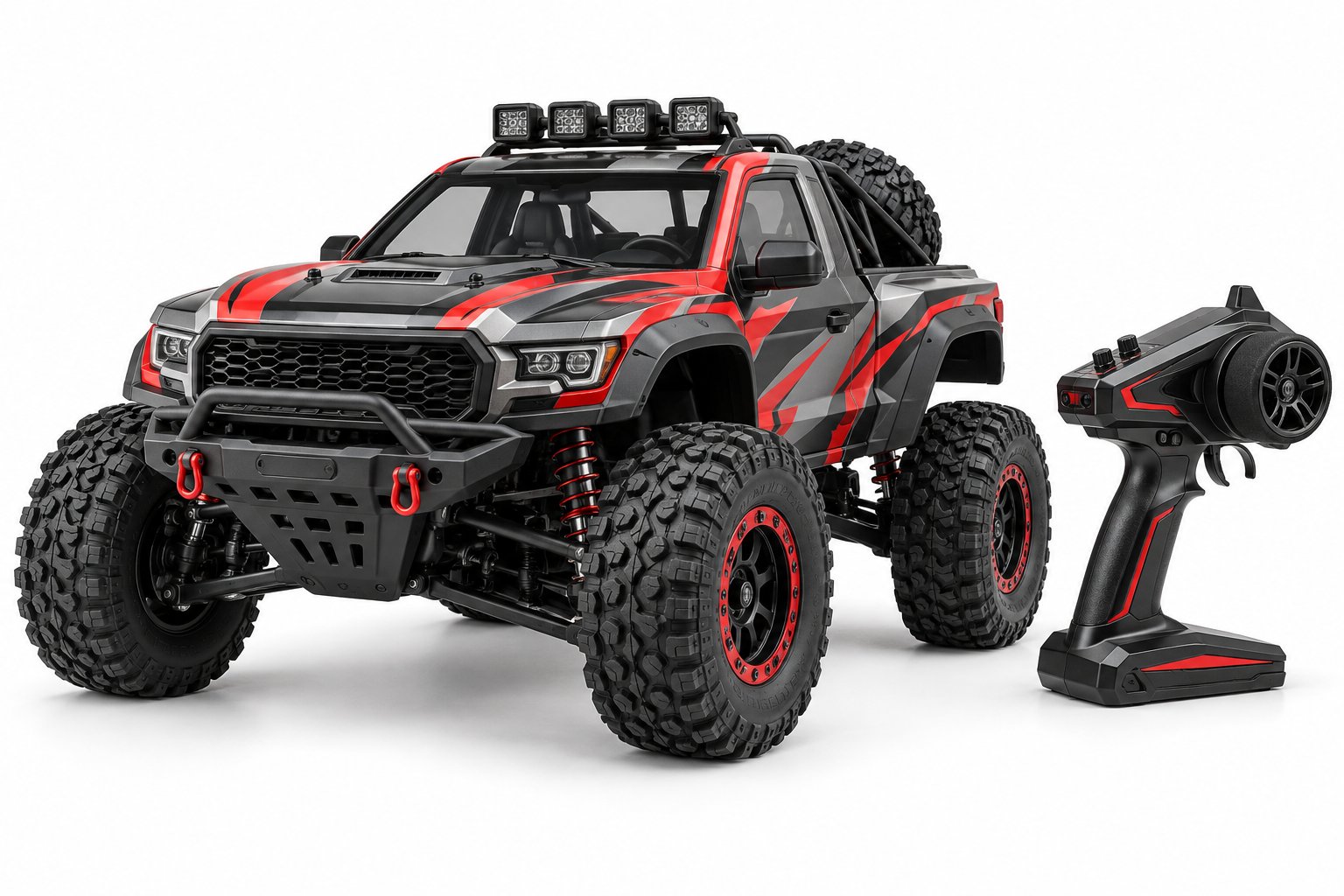
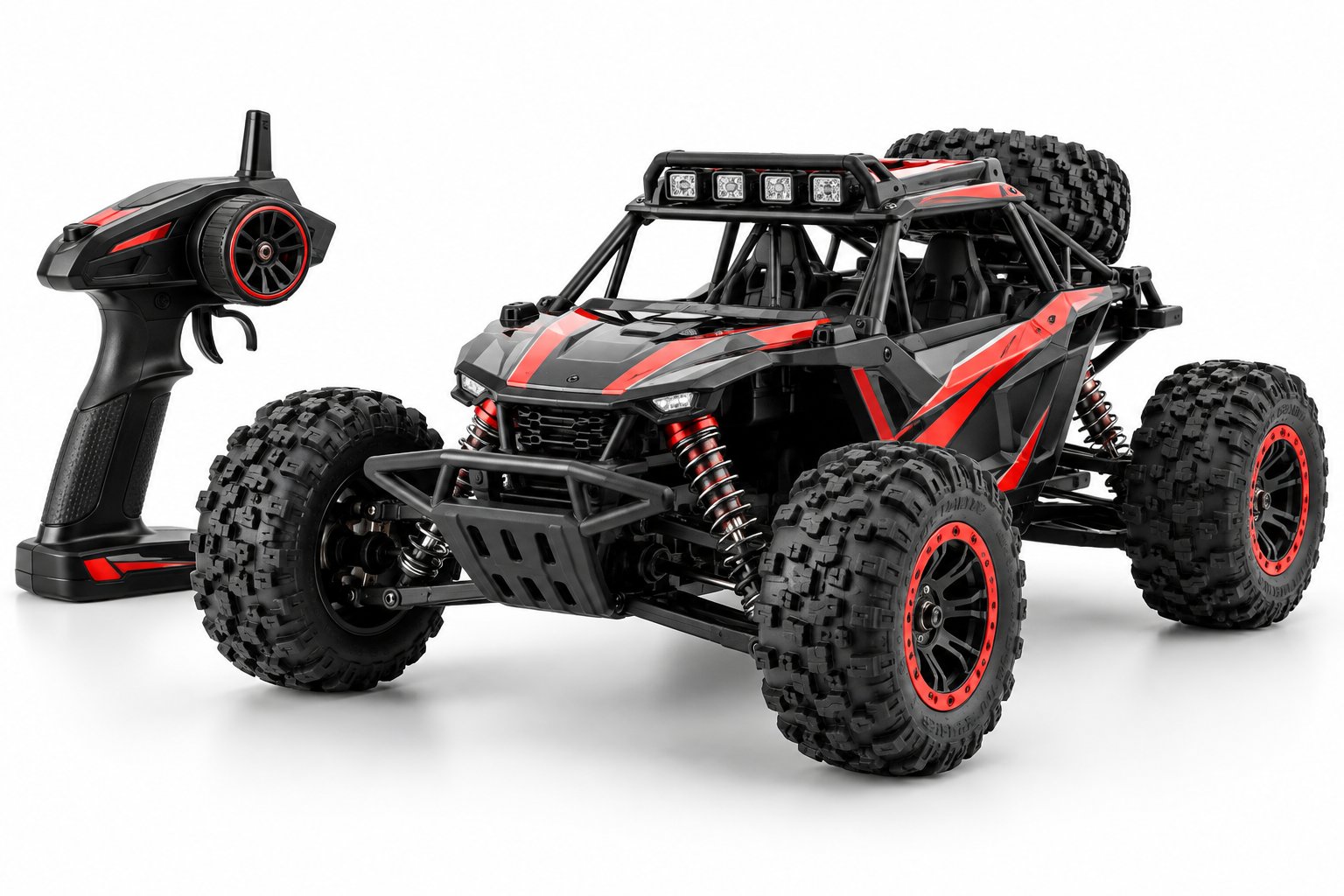
This article turns that question into an RFQ checklist. It covers chemistry and voltage, USB rechargeable packs versus replaceable cells, controller batteries as a separate line item, what to confirm before sampling, and how the battery spec affects carton weight and after-sales handling. For a supplier-side view of how those specs look in a real product, see the 4WD RC Off-Road Truck and the 2.4GHz Remote Control Off-Road Car.
- Write chemistry, nominal voltage and pack configuration into the RFQ — do not leave the battery as “rechargeable” only.
- Decide up front between a rechargeable pack with USB charging and replaceable cells, because they affect packaging, accessories and after-sales scripts.
- Specify controller batteries on a separate line; the truck may use a 7.4 V pack while the controller takes 2 x AA (not included).
- Before sampling, confirm connector type, spare-pack availability and how the pack sits in the packaging.
- Battery choice changes carton weight and the questions your customer-service team will receive.
Chemistry and voltage: state them clearly
“Rechargeable battery” is a category, not a specification. A supplier cannot quote consistently against a category, and your quality team cannot inspect against it. The first block of your battery spec should name the chemistry family and the nominal voltage of the pack, then say how the pack is configured.
For example, the 4WD RC Off-Road Truck is listed with a 7.4 V rechargeable battery and USB charging. That is the kind of statement that belongs in the RFQ: a voltage, a rechargeable pack, and a charging method. Whether the pack is built from cells in series or parallel is a separate configuration point, and it should be written down if your market or internal compliance process requires it.
Why put voltage first? Because voltage ties directly to the motor and electronics the supplier pairs with the pack. If you leave voltage open, you are effectively letting each supplier choose its own drive system, and the “same” product from two factories may not share spare parts, chargers or after-sales assumptions. A stated voltage is a constraint that keeps the product comparable across quotations.
| RFQ field | What to write | Why it matters |
|---|---|---|
| Chemistry family | Name the family you require, or ask the supplier to state theirs in the quotation | Different families carry different handling and transport considerations |
| Nominal voltage | e.g. 7.4 V, stated on the pack and in the manual | Keeps drive system and charger matched to the pack |
| Pack configuration | Describe how the pack is built, if your market requires it | Supports consistent spares and inspection criteria |
| Charging method | USB charging, stated as a product feature | Determines what is in the box and what the buyer must supply |
The values above are examples of how to write the field, not a claim that every supplier uses the same pack.
Rechargeable pack with USB charging vs replaceable cells
The second decision is whether the car ships with a rechargeable pack charged over USB, or with a compartment for replaceable cells. Both approaches appear in the toy channel, and they lead to different packaging, accessory lists and customer conversations.
A USB rechargeable pack, as listed on both the 4WD RC Off-Road Truck and the 2.4GHz Remote Control Off-Road Car, means the buyer does not depend on the end customer buying cells before the first run. The pack is part of the product, so it must appear on the packing list, in the manual and in the spare-parts plan. It also means the charging cable is an accessory you need to specify — whether it is included, and whether it is a USB cable only or a USB power adapter.
Replaceable cells shift the first-use cost to the end customer and can simplify the box contents, but they introduce a dependency: if the customer does not have the right cells, the product appears not to work. For a retail chain, that is a customer-service call, not a product defect.
The useful RFQ question is not “which is better” in the abstract, but “which one do you want to support in your after-sales script.” If your team can explain USB charging in one sentence, the rechargeable pack is easier to support. If your market expects cells to be user-supplied, state that clearly and put it on the box.
Controller batteries: a separate RFQ line
Buyers often bundle the car and the controller into one battery question. Suppliers should not. The car’s drive pack and the controller’s cells are separate specifications with separate inclusion decisions.
The 4WD RC Off-Road Truck illustrates the split: the truck uses a 7.4 V rechargeable battery with USB charging, while the controller takes 2 x AA batteries that are not included. That single sentence has several consequences for a buyer. The AA cells must appear on the packaging as “not included,” the manual must say so, and the retail listing should not imply otherwise. If your channel requires batteries to be included, that is a variation to negotiate explicitly, not an assumption to leave in the quotation.
Write the controller battery line separately in the RFQ, with the cell size, the quantity and the inclusion status. Then write the car battery line separately, with voltage, chemistry and charging method. Keeping them apart prevents the most common battery-related mismatch: a quotation that includes a rechargeable pack for the car but silently omits the controller cells.
What to confirm with the supplier before sampling
Before you approve a sample, three battery details are worth confirming in writing. They are not exhaustive, but they are the ones that most often change a buyer’s cost or after-sales plan after the sample has been approved.
Connector type
Ask which connector the pack uses and whether the charger or USB cable matches it. A pack that fits the sample but not the spare packs in your replenishment order creates a compatibility problem you will discover at the worst time. If the supplier offers more than one connector option, ask which one is standard and which one is a variation.
Spare-pack availability
Ask whether spare packs can be ordered separately and in what quantity. A buyer who plans to sell replacement packs needs that answer before committing to the main order; a buyer who does not plan to sell them still needs to know how an end customer would obtain a replacement. The answer belongs in your commercial file, not just in an email thread.
Packaging insertion
Ask how the pack is placed in the packaging: pre-installed in the car, packed separately in the box, or shipped in a bag outside the car. Each choice changes assembly time, the risk of the pack moving in transit and the customer’s first-use experience. For a retail chain, it also changes what the customer sees when the box is opened, which affects returns and reviews.
These are questions to put to any supplier. They are not a claim about how a particular factory answers them.
How battery spec affects carton weight and after-sales
Battery choices are usually discussed as a product feature. For a B2B buyer, they are also a logistics and service variable.
Carton weight. A rechargeable pack and a controller that requires 2 x AA cells are different weights and different box contents. If you change the battery spec after the carton is designed, the carton weight, the inner packing and possibly the outer carton quantity change with it. That affects freight calculations and the declarations on the shipping documents. The practical rule is to freeze the battery spec before the packaging is approved, not after.
After-sales. The battery spec determines what your customer-service team will be asked. A USB rechargeable pack leads to questions about the cable and the charging indicator. A controller that takes 2 x AA (not included) leads to questions about which cells to buy. Neither is a defect, but both are predictable calls, and the manual and retail listing should answer them before the customer picks up the phone.
For buyers who also handle compliance, the battery spec sits alongside the product’s existing conformity claims. The two products referenced here are listed as EN71 / ASTM F963 compliant, with a MOQ of 500 pieces and ages 6+. Those statements describe the product as listed; they do not extend to a different pack or a different configuration you may request. If you change the battery, ask the supplier what that means for the conformity documentation.
A battery spec block for your RFQ
The checklist below is written as an RFQ block rather than a lecture. Copy it, fill in your requirements and send it with the rest of the product spec.
| Field | Your requirement | Supplier to confirm |
|---|---|---|
| Car battery chemistry | State the family you require | Chemistry of the quoted pack |
| Car battery voltage | e.g. 7.4 V | Voltage printed on pack and manual |
| Charging method | USB charging | Cable included? Adapter included? |
| Controller cells | 2 x AA, included or not included | Inclusion status on box and manual |
| Connector type | State the connector you require | Standard connector and any variations |
| Spare packs | Orderable separately: yes / no | Availability and quantity basis |
| Packaging insertion | Pre-installed / separate / bagged | Confirmed packing method |
| Carton weight | Target weight per carton | Weight with the specified battery configuration |
Two product examples show how the block maps to a real listing. The 4WD truck states 7.4 V, USB charging, 2 x AA controller cells not included, a control range up to 40 m, MOQ 500 pieces and ages 6+. The 2.4GHz car states a rechargeable battery with USB charging, a handheld 2.4GHz controller, MOQ 500 pieces and ages 6+. Neither listing is a template for every product you buy, but both show the level of detail a buyer can reasonably expect to put in a quotation file.
FAQ
Is a higher-voltage pack always better for a toy RC car?
No. Voltage has to match the motor and electronics the supplier pairs with the pack. A higher figure on its own does not tell you the car will perform better, and it may not be compatible with the rest of the product. State the voltage you require and ask the supplier to confirm the drive system it is paired with.
Should the RFQ ask for mAh capacity?
Capacity is part of a complete battery spec, but it has to be quoted together with the chemistry, voltage and configuration the supplier is actually offering. Ask the supplier to state the capacity of the quoted pack in the quotation rather than writing a target figure and assuming it will be met.
Can the controller batteries be included in the box?
That is a commercial and packaging decision, not a fixed product rule. The 4WD truck as listed ships with 2 x AA controller cells not included. If your channel requires inclusion, raise it in the RFQ as a variation and ask the supplier to confirm the packaging and carton-weight impact.
Does changing the battery change the product’s compliance position?
The two products referenced here are listed as EN71 / ASTM F963 compliant. That statement applies to the product as listed. If you request a different pack or a different configuration, ask the supplier what documentation applies to the changed product before you approve the sample.
The short version
The best RC car battery for a B2B order is the one you can describe precisely enough for a supplier to quote and for your team to inspect. State the chemistry and voltage, choose between a USB rechargeable pack and replaceable cells deliberately, list the controller batteries as their own line, confirm connector type, spare-pack supply and packaging insertion before sampling, and freeze the battery spec before the carton weight is set. That sequence turns a vague buyer question into a manageable purchase order.


