Buyers verifying material safety before ordering will find a practical, evidence-based framework for assessing plastic and wood building blocks. This article explains common material families, highlights key checks such as odor, edge finish, and age grading, and grounds the discussion in a real classroom set: the STEM Building Blocks Set with 120 Pieces.
When a kindergarten or educational-equipment buyer asks what are building blocks made of, the answer is not a single material. Construction blocks—the interlocking or stacking pieces used in classrooms and play centers—are typically produced from a small set of plastic or wood families. Each family brings different tactile qualities, weight, sound, and surface finish. For buyers, the practical question is not a chemistry lesson; it is whether the material and its processing meet the safety and durability expectations of the children who will use them.
This article outlines common material families and then provides a buyer-facing materials check framework. The checks below cover odor, edge treatment, surface coating, and age grading—the points that most often surface in pre-order verification, especially when a shipment is destined for a school or daycare setting.
Key Takeaways
- Plastic blocks are commonly made from ABS or PP; wood blocks from solid or engineered wood (species vary by supplier).
- Material identity alone does not guarantee safety—processing and finishing matter equally.
- Run a consistent pre-order check: smell, edges, surface coating, fall height, and age grading.
- Request current compliance documents for the exact product and batch you are ordering.
On This Page
Common Material Families for Building Blocks
Most building blocks on the international market fall into two broad categories: thermoplastics and wood. Within each, the exact grade, additives, and finishing processes determine the final feel and safety profile.
Plastics: ABS and PP
ABS (acrylonitrile butadiene styrene) and PP (polypropylene) are the two most frequently encountered plastics in classroom block sets. Both are rigid, impact-resistant, and can be molded into precise shapes that hold their fit over repeated assembly cycles.
- ABS blocks tend to have a crisp, hard surface, good color retention, and a satisfying "click" when parts press together. Many premium educational sets use ABS for its dimensional stability.
- PP blocks are somewhat softer and more flexible, often chosen for larger, lighter pieces or where a more muted surface finish is acceptable. PP is also common for food-contact items, but block manufacturing varies widely.
Neither material is inherently "safe" just because of its chemical name. Safety depends on whether the manufacturer uses food-contact-grade or toy-grade resin, avoids certain additives, and controls molding parameters. For example, BPA-free formulations are available in both ABS and PP. Buyers should request written confirmation of the specific grade and any migration or heavy-metal test reports relevant to their destination market.
Wood: solid and engineered
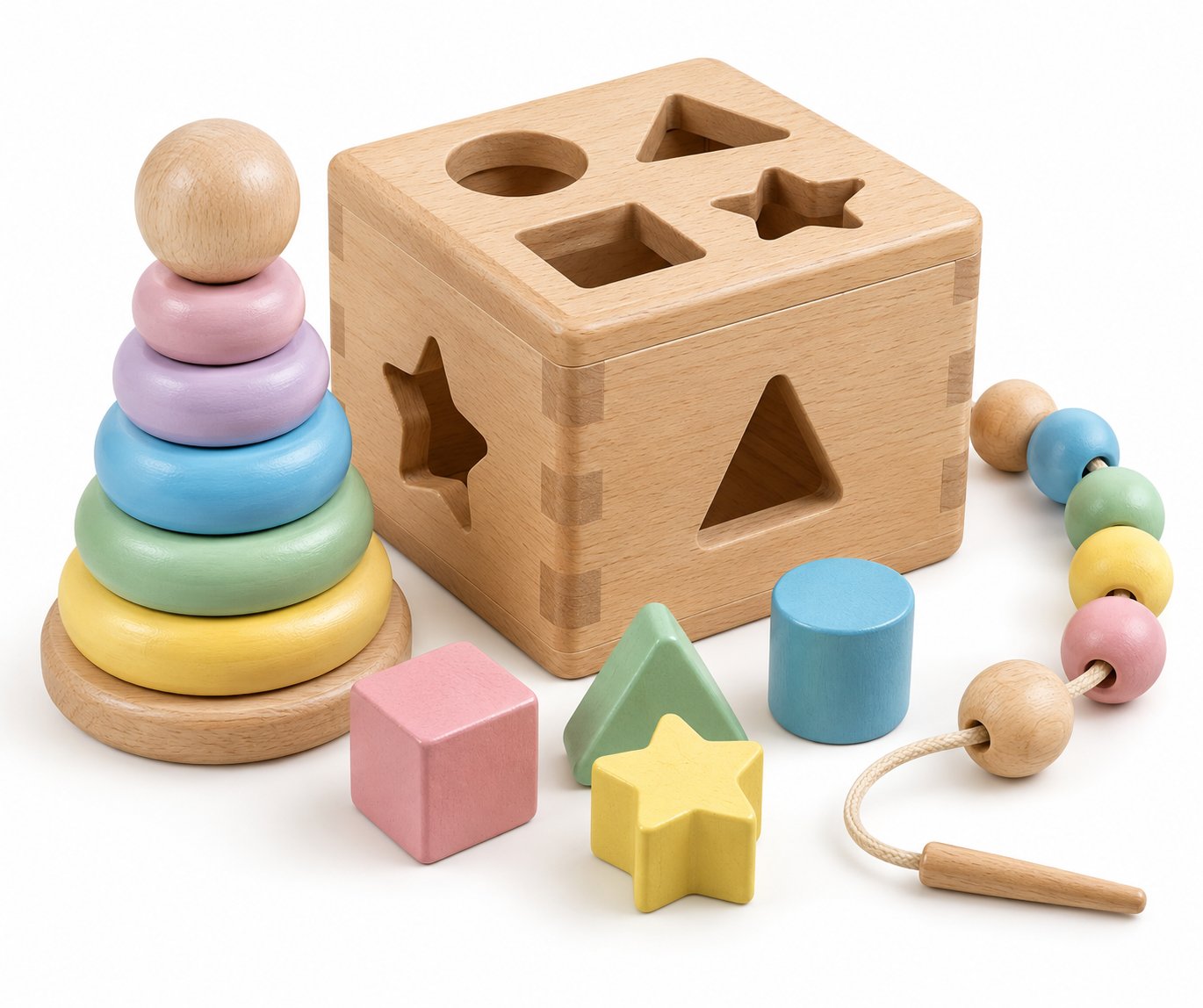
Wooden blocks are valued for their natural weight, warmth, and open-ended play value. They may be made from solid hardwood, softwood, or engineered wood (such as plywood or MDF) depending on the manufacturer. Species choice affects density, grain, and cost, but buyers should not assume a specific species from a catalog photo. Instead, ask the supplier to state the wood type and provide evidence of moisture content and formaldehyde emission compliance where applicable.
A Buyer's Materials Check Framework
The following checks are designed for procurement teams who need to verify a shipment before placing a bulk order. They are practical, low-tooling assessments that can be performed on a sample set. Pair them with a review of the supplier's test documents.
| Check | What to do | Why it matters |
|---|---|---|
| Odor | Unpack the sample in a well-ventilated room. Smell immediately and again after 24 hours. A strong, persistent chemical or solvent smell is a concern. | Odor can indicate residual monomers, insufficient curing of coatings, or low-quality recycled resin. Children may be sensitive to lingering fumes. |
| Edges & corners | Run a finger along all edges and corners. They should be deburred, rounded, or chamfered. Avoid sharp flash or rough mold parting lines. | Sharp edges can cause cuts or scratches during play. Rounded edges are easier to clean and reduce injury risk. |
| Surface coating | Inspect for paint, lacquer, or printed graphics. Check adhesion with a gentle scrape or tape test (if permitted). Look for chipping, peeling, or inconsistent coverage. | Coating failure can release small particles or expose substrate. Coatings must be appropriate for toy use and tested for heavy metals where required. |
| Age grading | Confirm the stated age on the packaging and instructions matches the intended user group. For under-3 settings, ensure no small parts that could detach. | Age grading is a safety communication tool. Mismatched grading can lead to inappropriate use and compliance issues. |
| Compliance documents | Request current test reports or certificates for the exact product and batch (e.g., EN71, ASTM F963). Verify the report covers the materials and colorants used. | Regulatory compliance is market-specific. A certificate for one product does not automatically cover another. |
These checks are not a substitute for laboratory testing, but they help buyers filter suppliers before committing to a purchase order. If a sample fails any check, ask the supplier for corrective action or a revised sample.
Grounding the Check in a Real Classroom Set
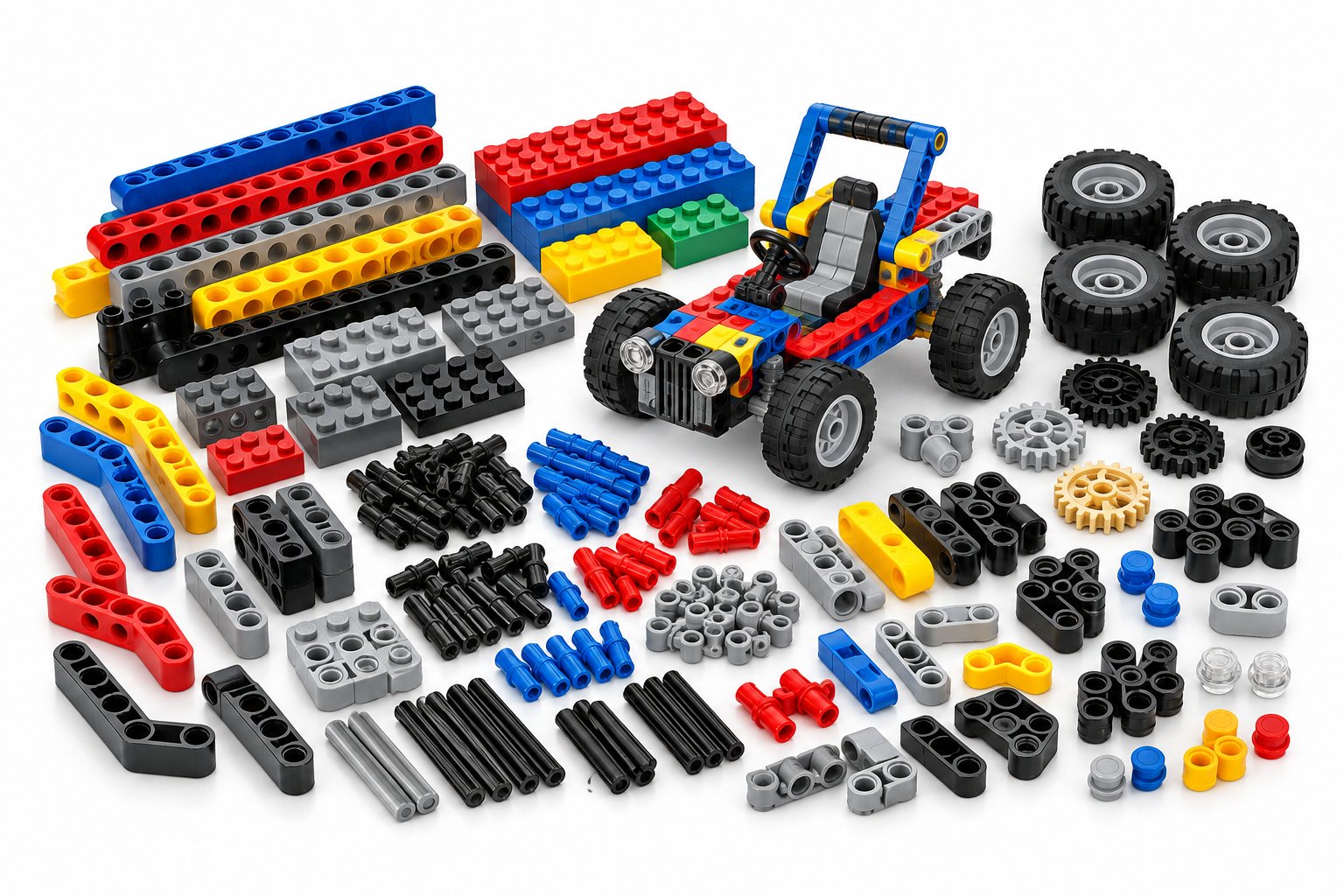
To see how the framework applies, consider a set designed for group play: the STEM Building Blocks Set with 120 Pieces for Classroom Group Play. According to the product specification, this set is made from ABS plastic and is BPA-free. It includes 120 building pieces in the form of beams, plates, wheels, and connectors. The connectors are press-fit and require no tools, which simplifies classroom setup and reduces the risk of loose small parts.
The set is rated for age 4+, making it suitable for kindergarten and early primary groups. It contains enough pieces for several children to build together, and a storage box is included to help keep parts organized. For buyers, the receipted compliance information includes EN71 / ASTM F963 compliance. MOQ is 500 sets, with 12 sets per carton. OEM/ODM is available for custom requirements.
Applying the buyer's check framework to this set would involve: smelling a sample to confirm no strong odor, inspecting the press-fit connectors and beams for smooth edges, verifying that the ABS surface has no chipping or peeling, and confirming that the age 4+ grading aligns with the intended classroom. Because the set is BPA-free and carries EN71 / ASTM F963 compliance, it addresses common material-safety questions upfront. Buyers should still request the current test reports for the specific production batch they plan to order.
For larger group settings or mixed-age classrooms, the same check framework applies: verify that the material composition, edge finishing, and age grading are appropriate for the children who will use the blocks.
FAQ for Procurement Teams
Does BPA-free mean the blocks are safe for all ages?
BPA-free addresses one chemical of concern, but safety also depends on edge finishing, small parts, and age grading. A BPA-free block set rated for age 4+ is not automatically suitable for under-3 settings. Always check the full compliance picture for your target age group.
How can I verify the material if the supplier only states "plastic"?
Ask for a material declaration or a test report that identifies the polymer type. For ABS, a report may reference specific tests; for a generic claim, request clarification. A sample check—odor, surface feel, and edge quality—can also help you distinguish between material families, though it is not definitive.
What documents should I request before ordering?
At minimum, request the relevant safety test report (e.g., EN71 or ASTM F963) for the exact product and production batch, plus a declaration of material composition and any colorant or coating compliance statements. Confirm that the report is current and covers the configurations you are buying.
Can I order a custom material or color?
OEM/ODM availability depends on the supplier's capabilities. The STEM Building Blocks Set referenced here lists OEM/ODM as available, but specific material changes (e.g., switching from ABS to PP) should be confirmed with the supplier, as they may affect tooling, MOQ, and compliance testing. Discuss your requirements directly.
What is the MOQ and carton configuration for this classroom set?
The receipted data shows a MOQ of 500 sets, with 12 sets per carton. These figures are for the standard configuration; custom orders may have different terms. Confirm with the supplier when requesting a quotation.
When evaluating building blocks for a classroom, the material family is the starting point—not the final answer. Use the check framework to move from a general material name to specific, verifiable safety and durability attributes. For the STEM Building Blocks Set, the receipted ABS/BPA-free specification and EN71 / ASTM F963 compliance provide a documented baseline. To discuss your project's requirements, request product details and current test documents from the supplier.