Building blocks are modular play pieces that children assemble, stack, or sort. For toy buyers, the category splits into three sourcing options—interlocking plastic sets, wooden unit blocks, and shape sorters—that differ in age fit, play value, durability, and order profiles. This guide compares them on the criteria that matter when deciding what to stock.
Buyer Education / Selection Guide
Building blocks are modular play pieces that children assemble, stack, or sort to create structures, patterns, or simple shape matches. For toy importers and retail buyers, “building blocks” is not a single product category. It covers several distinct types—each with its own age fit, play pattern, durability profile, and order economics. The sourcing decision is not about which type is “best” overall, but which type fits your target age group and sales channel. This guide compares three common types—interlocking plastic sets, wooden unit blocks, and shape sorters—on the criteria that matter before you place an order.
Key takeaways
- Building blocks vary by type: interlocking sets suit older children (4+), wooden unit blocks and shape sorters suit younger children (2+).
- Age grading is the first filter—it determines safety requirements, play value, and retail placement.
- Durability and packaging needs differ: plastic interlocking sets face joint-wear and bagging concerns; wooden blocks face weight and corner protection; shape sorters need compact, drop-resistant packaging.
- The two products referenced in this guide are both offered at MOQ 500 sets; MOQ for other styles depends on the supplier, piece count and packaging.
- Start with your target age and channel, then compare types on the criteria below.
In this guide
What are building blocks?
In sourcing terms, building blocks are construction toys made from repeated geometric units that connect, stack, or fit together. The category includes open-ended building sets (where children decide the outcome) and closed-ended matching toys (where pieces fit in only one way). Both develop fine motor skills and spatial reasoning, but they serve different age groups and play patterns.
The key distinction for buyers is how the pieces connect: interlocking joints (plastic), simple stacking (wooden unit blocks), or shape matching (sorters). That connection method drives age grading, durability risks, and packaging requirements—the three factors that most affect your sourcing decision.
The three types buyers compare
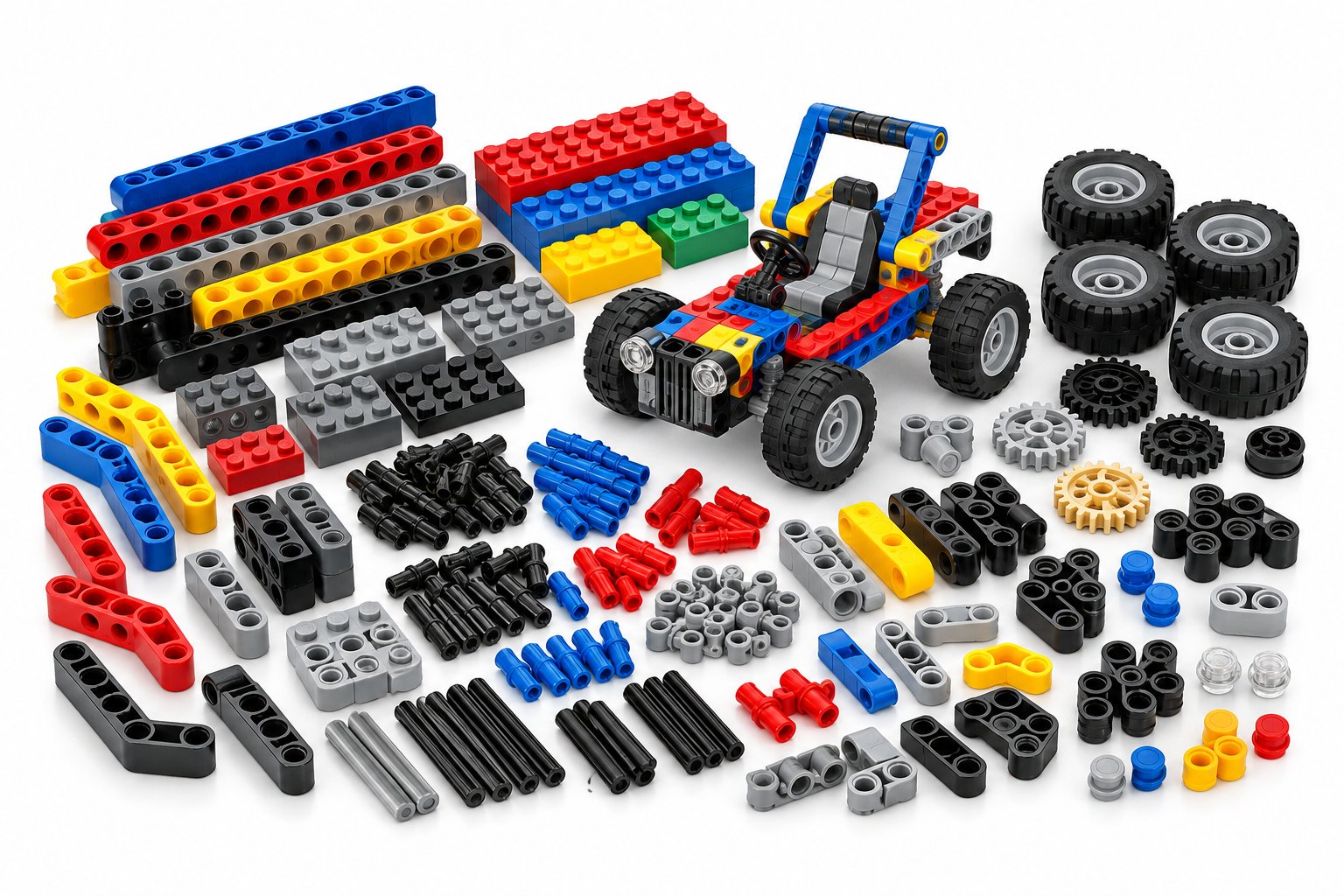
1. Interlocking plastic building blocks
These sets use studs, tubes, or clips to lock pieces together. They allow stable, larger structures and are typically recommended for ages 4 and up, when children have the dexterity to align and press joints. Plastic interlocking sets often carry STEM positioning and are sold in higher piece counts.
Example from our range: the STEM Building Blocks Set 120pcs is a 120-piece interlocking ABS set, BPA-free, recommended for age 4+, with MOQ 500 sets. The product record references EN71 and ASTM F963 standards; confirm the applicable test reports for your order.
2. Wooden unit blocks
Wooden unit blocks are classic open-ended building pieces—cubes, cylinders, arches, and planks—that stack without interlocking. They suit ages 2+ because they require only simple placement and balancing. Play value is open-ended: children build, knock down, and rebuild. Durability concerns are weight, edge wear, and moisture sensitivity; packaging must protect corners and manage shipping weight.
This guide does not attach a specific wooden unit block model to this type; available sets, piece counts, materials and finishes should be confirmed with your supplier before you compare quotes.
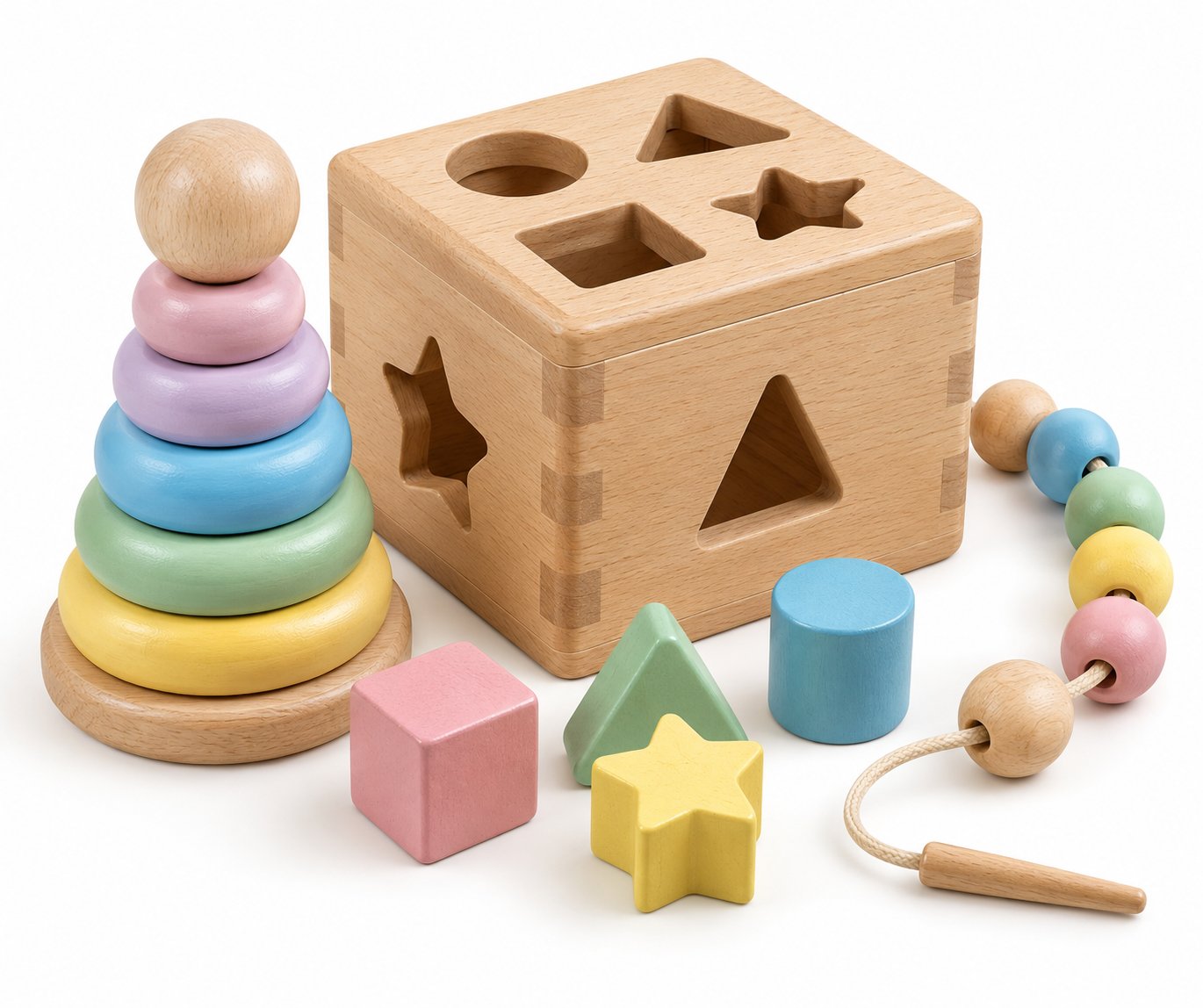
3. Shape sorters
Shape sorters are closed-ended matching toys: a container with cutouts and corresponding blocks. They suit ages 2+ and focus on shape and color recognition. Durability concerns are drop resistance and hinge/closure integrity. Packaging is typically compact and retail-ready, with lower piece counts.
Example from our range: the Wooden Shape Sorter Cube is a wooden cube with 12 blocks in 4 shapes and 4 colors, recommended for age 2+, MOQ 500 sets.
Type-by-type comparison
| Criteria | Interlocking plastic | Wooden unit blocks | Shape sorters |
|---|---|---|---|
| Age fit | 4+ (dexterity to align joints) | 2+ (simple stacking) | 2+ (shape matching) |
| Play value | Open-ended construction; STEM positioning | Open-ended building; balancing and creativity | Closed-ended matching; shape/color recognition |
| Durability focus | Joint wear, clutch power over time | Edge wear, moisture resistance, weight | Drop resistance, hinge/closure integrity |
| Packaging / shipping | Bagging or boxed; small pieces need secure containment | Corner protection; heavier per unit | Compact retail box; lightweight |
| Typical order profile | Higher piece counts; MOQ 500 sets (STEM set above) | Bulk sets; MOQ varies by style and supplier | Lower piece counts; MOQ 500 sets (sorter above) |
| Standards referenced | EN71 and ASTM F963 referenced on product record | No specific model referenced in this guide | Confirm with supplier per model |
Table reflects available product records only; “Standards referenced” is not a certification claim. Always confirm current test reports and certifications for your specific order.
Typical order profiles
Order profiles differ by type because piece count, packaging complexity, and target retail price point vary.
- Interlocking plastic sets typically involve higher piece counts (e.g., 120 pieces) and may require more elaborate packaging to contain small parts. The referenced STEM set has an MOQ of 500 sets. Buyers should confirm bagging or boxed configuration and whether sorting trays are included.
- Wooden unit blocks are often sold in bulk sets or buckets. Weight per set is higher, so shipping cost per unit is a larger factor. MOQ depends on the set; confirm piece count, corner protection and moisture barrier in packaging with your supplier.
- Shape sorters usually have lower piece counts (e.g., 12 blocks) and compact retail packaging. The referenced sorter has an MOQ of 500 sets. Confirm drop-test packaging and closure durability.
How to decide what to stock
Start with your target age group. If you sell to preschool or toddler channels (2+), wooden unit blocks and shape sorters fit. If you sell to older children or STEM-focused channels (4+), interlocking plastic sets fit.
Next, consider your channel’s packaging and shipping constraints. Plastic sets need secure containment for small parts; wooden blocks need corner protection and weight management; shape sorters need compact, drop-resistant boxes.
Finally, check order profiles against your warehouse and cash flow. The two products referenced in this guide are both offered at MOQ 500 sets; for other styles, confirm MOQ with the supplier, since piece count and packaging complexity affect unit cost and handling.
For specific product details, see the STEM Building Blocks Set 120pcs and the Wooden Shape Sorter Cube.
FAQ
What age are building blocks for?
Age grading depends on type: interlocking plastic sets are typically 4+, while wooden unit blocks and shape sorters are typically 2+. Always follow the age recommendation on the product record and confirm with your supplier.
Are building blocks safe for toddlers?
Safety depends on the specific product and its compliance with applicable standards. For the STEM Building Blocks Set 120pcs, EN71 and ASTM F963 are referenced on the product record. For other products, request test reports from the supplier.
What is the MOQ for building blocks?
MOQ varies by product. The two products referenced here have an MOQ of 500 sets. Confirm MOQ with your supplier for other items.
Which type has the best play value?
Play value depends on the child’s age and interests. Open-ended types (interlocking plastic and wooden unit blocks) support creative building; closed-ended shape sorters support early shape and color recognition. There is no single “best” type—match the type to your target age and channel.