
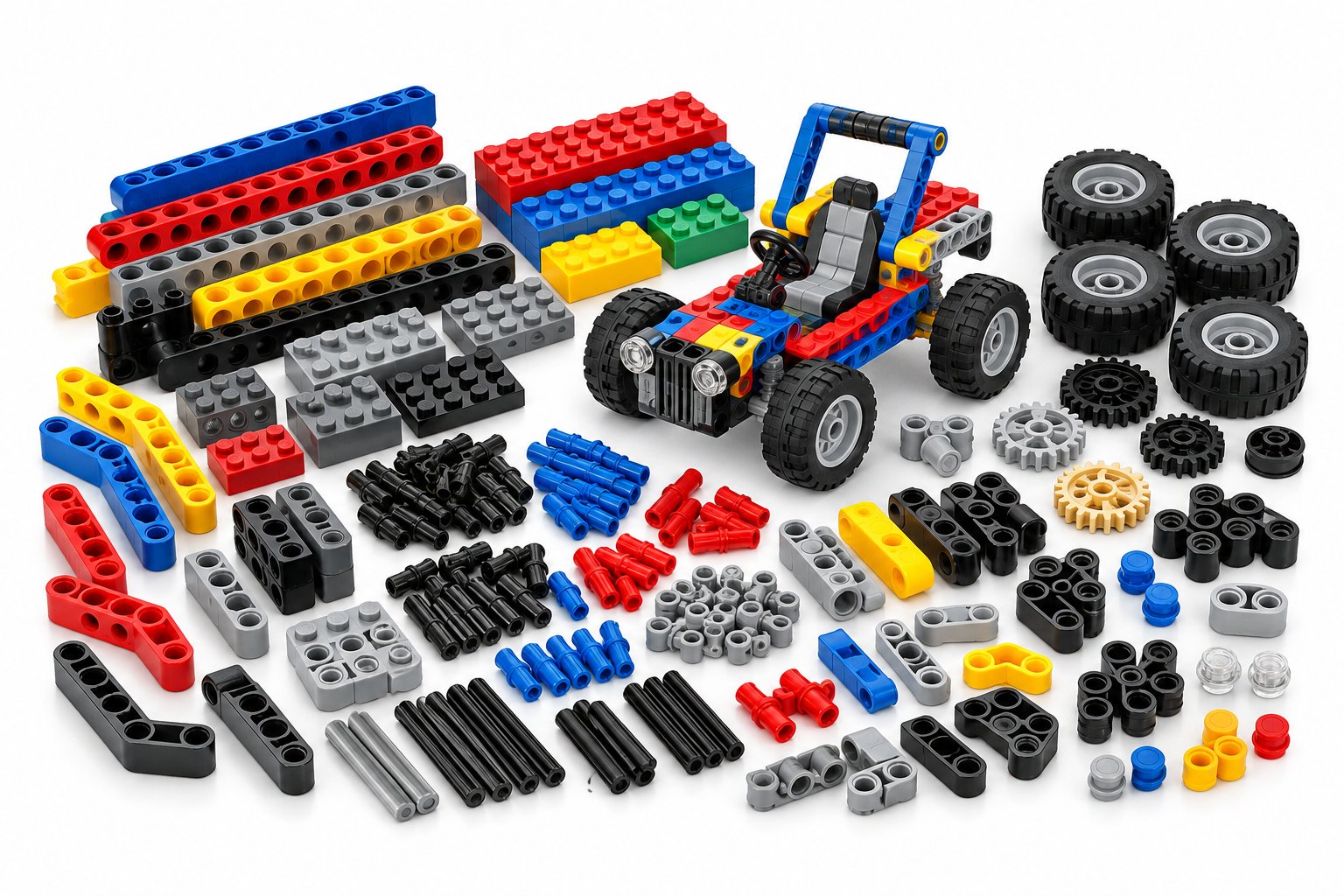
A practical sourcing map for B2B buyers of STEM toys: direct from manufacturers for bulk and OEM, education and teaching-aid distributors, B2B wholesale marketplaces, and local retail importers. Includes a verification checklist covering age grading, safety compliance, piece count for group play, MOQ, and packaging. Product specifics from the STEM Building Blocks Set with 120 Pieces illustrate the checks in practice.
Where Can I Buy STEM Toys? Sourcing Channels That Work
If you are a distributor, a teaching-aid buyer, or a retail buyer looking for STEM toys, the answer depends on your order size, your need for customization, and how much control you want over compliance. This article maps four sourcing channels that work for STEM toys as a category—kits and sets designed for learning outcomes and group builds—and gives you a verification checklist before you place an order.
Key Takeaways
- Direct from manufacturer is best for bulk orders, OEM/ODM, and full control over compliance and packaging.
- Education and teaching-aid distributors suit smaller, curriculum-aligned orders with local support.
- B2B wholesale marketplaces offer quick access to many suppliers but require extra verification of safety documents.
- Local retail importers are useful for low-volume, fast-turnaround needs but limit customization.
- Always check age grading, safety compliance paperwork, piece count for group play, MOQ, and packaging before ordering.
STEM toys are not a uniform product. A set of 120 interlocking building blocks for classroom group play has different sourcing requirements from a coding robot or a chemistry kit. The channels below apply across the category, but the verification steps matter most when the toy is intended for schools, where age grading and safety documentation are non-negotiable.
Channel 1: Direct from the Toy Manufacturer (Bulk and OEM)
Buying directly from a manufacturer is the standard route for distributors and large retail buyers who need consistent supply, custom packaging, or their own brand on the product. It is also the only channel that supports OEM/ODM work—modifying colors, adding teaching guides, or changing the piece mix—because you are working with the factory that controls production.
For example, a STEM Building Blocks Set with 120 Pieces for Classroom Group Play is available with OEM/ODM options. The set contains 120 interlocking pieces—beams, plates, wheels, and connectors—that press-fit without tools. That design choice matters for classroom use: children can build without extra equipment, and the piece count is enough for several children to build at the same time. The set is packaged in a storage box, which helps with classroom organization and resale.
When you buy direct, you also get clearer answers on compliance. The same set is made from ABS plastic, BPA-free, and is EN71 / ASTM F963 compliant. Age grading is 4+. These are the details you need to confirm in writing before ordering, and a manufacturer can provide the relevant paperwork.
MOQ direct from the manufacturer for this set is 500 sets, with 12 sets per export carton. That carton configuration affects your landed cost and warehouse handling, so ask for it early.
Best for: Distributors, retail chains, and education buyers placing repeat orders of 500 sets or more, or anyone needing OEM/ODM.
Channel 2: Education and Teaching-Aid Distributors
Education distributors specialize in supplying schools, teacher-training centers, and after-school programs. They often carry a curated range of STEM products and can bundle multiple items into a single purchase order, which reduces administrative work for school buyers. Many also provide local support, such as product training or curriculum alignment.
The trade-off is that distributors typically resell, so customization is limited and pricing includes their margin. If you need a specific piece count or packaging format—like the 120-piece set in a storage box—confirm that the distributor stocks that exact configuration rather than a similar-looking variant. Ask for the compliance documentation for the specific batch they will ship, not just a general statement.
Best for: Schools, small teaching-aid buyers, and organizations that need a single invoice across multiple product types.
Channel 3: B2B Wholesale Marketplaces
B2B marketplaces list many suppliers and product types, making them useful for comparing options or finding niche STEM items. You can often request quotes from multiple suppliers at once. However, because the marketplace is an intermediary, you must verify the supplier’s compliance claims yourself.
For STEM toys, the key risk is inconsistent safety documentation. A listing may state “EN71 compliant” without specifying which parts or which test report. Before ordering, request the actual certificate or test report for the product you intend to buy, and check that the report covers the age grade and materials. For a set like the 120-piece building blocks, confirm that the ABS plastic is BPA-free and that the press-fit connectors have been assessed for the 4+ age group.
Marketplaces can also obscure MOQ and packaging details. Ask the supplier directly: what is the MOQ, how many sets per carton, and what is the packaging format? For the 120-piece set, the answers should be 500 sets, 12 sets per export carton, and storage box packaging.
Best for: Buyers who need to compare multiple suppliers quickly, or who are sourcing mixed STEM categories in small volumes.
Channel 4: Local Retail Importers
Local importers hold stock in your market and can supply smaller quantities with short lead times. They are useful for testing a new STEM product line or filling gaps between direct shipments. Because they have already imported the goods, they should be able to provide local compliance documentation—but you still need to confirm it applies to the exact product you are buying.
The limitation is customization. If you need OEM/ODM, custom packaging, or a specific piece count, the importer may not be able to accommodate. They also add a margin, so the unit cost is higher than buying direct. Use importers when speed and low volume matter more than price and flexibility.
Best for: Retailers testing demand, small institutions, and buyers needing immediate stock.
Verification Checklist Before You Order
No matter which channel you choose, run the same checks before placing an order for STEM toys. The checklist below uses the 120-piece building blocks set as a reference, but the questions apply to any STEM product.
| Check | What to Confirm | Example: 120-Piece STEM Building Blocks Set |
|---|---|---|
| Age grading | Is the age grade clearly marked and supported by the design? For group play, check that the piece size is appropriate for the youngest user. | Age 4+ |
| Safety compliance | Request the actual EN71 or ASTM F963 test report. Confirm it covers the materials and the age grade. | EN71 / ASTM F963 compliant; ABS plastic, BPA-free |
| Piece count for group play | Does the piece count support the intended number of children building at once? Are there enough connectors and wheels for multiple builds? | 120 interlocking pieces (beams, plates, wheels, connectors); enough for several children to build at the same time; press-fit connectors need no tools |
| MOQ | What is the minimum order quantity? Does it align with your sales forecast and storage capacity? | 500 sets |
| Packaging | What is the packaging format? Is it suitable for retail or classroom storage? How many units per export carton? | Storage box packaging; 12 sets per export carton |
| Customization | Is OEM/ODM available? What can be customized (colors, pieces, packaging, instructions)? | OEM/ODM available |
Two points deserve extra attention. First, safety compliance is not a one-time check. Ask for the test report for the production batch you will receive, and keep it on file. Second, piece count is often marketed loosely. For classroom use, confirm the actual number of functional pieces—beams, plates, wheels, connectors—not just a total count that includes decorative elements.
Which Channel Should You Choose?
Use this quick guide based on your order profile:
- You need 500+ sets, OEM/ODM, or consistent repeat supply: buy direct from the manufacturer. You get control over compliance, packaging, and piece configuration.
- You are a school or small teaching-aid buyer needing multiple products on one invoice: use an education distributor.
- You want to compare suppliers or source mixed STEM categories in small volumes: start with a B2B marketplace, but verify compliance documents carefully.
- You need stock immediately in small quantities: buy from a local retail importer.
Many buyers combine channels—for example, sourcing the core 120-piece set direct from the manufacturer and filling gaps with a local importer. The checklist above applies to every order, regardless of channel.
Next Step
If you are evaluating STEM toys for distribution, classroom use, or retail, the STEM Building Blocks Set with 120 Pieces is a concrete example to test your checklist against. Request the compliance documents, confirm the MOQ and carton configuration, and ask about OEM/ODM options for your market.


