ASTM F963 is the U.S. toy safety standard that North American importers and retail buyers rely on when qualifying toy suppliers. This article explains what the standard covers, how it differs from EN71 and CE marking, and gives buyers a practical checklist for verifying a supplier's certificate scope and applicable version year before placing an order.
If you are qualifying a toy supplier for the North American market, ASTM F963 is one of the first documents you will be asked to confirm. Buyers searching what is ASTM F963 or what does ASTM F963 mean usually want the same thing: a plain-language explanation of the standard, plus a way to check that a supplier's certificate actually covers the products they are quoting.
ASTM F963 is the U.S. consumer safety specification for toy safety. It is the toy safety standard referenced by U.S. toy regulations, and it is separate from the European EN71 standard and CE marking. An ASTM F963 certificate confirms that a specific product was tested against that standard — but the scope, the applicable version year, and what was actually tested are what a buyer needs to verify.
What ASTM F963 Covers, in Buyer Terms
ASTM F963 is a safety specification for toys intended for children. Because it is written as a product safety standard rather than a marketing label, it addresses the physical and mechanical risks that toys can present, along with other safety considerations that apply to the toy category. For an importer, the practical meaning is straightforward: the standard gives you a shared technical reference to ask a supplier about, instead of relying on a vague claim that a product "meets safety requirements."
What the standard does not do is certify a factory, a product line, or a brand. A certificate is tied to a defined product and a defined set of tests. That distinction matters when you are comparing quotes from several suppliers, because two certificates can look identical at a glance while covering different products or testing against different version years of the standard.
The Current Search Questions Buyers Ask
Buyer questions around this standard tend to cluster into a few forms. Understanding what each one is really asking helps you frame the right follow-up with a supplier.
| Question a buyer asks | What the buyer actually needs |
|---|---|
| What is ASTM F963? | A definition of the standard and confirmation that it is the U.S. toy safety specification. |
| What does ASTM F963 mean? | What the standard implies for a purchase — i.e., which products it applies to and what a certificate proves. |
| What are ASTM F963 standards? | The scope of the specification and the fact that it exists in multiple version years. |
| What does "conforms to ASTM F963" mean? | Whether the supplier's claim is backed by a test report covering the specific product. |
| What is ASTM F963-23? | Which version year of the standard is being applied, since versions differ over time. |
Version years matter. ASTM F963 has been revised over time, and the applicable year is part of what a supplier should be able to state for a given product. Buyers should confirm the version year with the supplier rather than assuming the newest one was used.
ASTM F963 vs. EN71 and CE Marking
These two systems are often mentioned together, and for good reason: many factories that supply North America also supply Europe. But they are separate market systems, and the documentation does not transfer automatically.
- ASTM F963 is the U.S. toy safety specification. It is what North American importers and retailers typically ask about.
- EN71 and CE marking belong to the European system. EN71 is the European toy safety standard series, and CE marking is the European conformity marking.
A product marked as compliant with both is not unusual for a supplier that sells into both regions, but you should treat each claim as a separate item to verify. A certificate for the U.S. standard does not, on its own, tell you anything about EN71 testing, and the reverse is also true. If your sales channel is North America, ASTM F963 is the one to confirm; if you also ship into the EU, verify the European documentation separately. For a fuller explanation of the European side, see our guide to what EN71 is and how it relates to CE marking, and to what CE marking on toys covers and what buyers should verify.
Key Takeaways for Buyers
- ASTM F963 is the U.S. toy safety specification; EN71 and CE are the European system.
- A certificate is tied to a defined product and test scope, not to a brand or a factory.
- The standard has multiple version years — confirm which one applies to your product.
- Ask for the test report and check that the listed product matches your order.
- Treat U.S. and EU compliance as two separate verification tasks.
How to Verify a Supplier's ASTM F963 Certificate
A certificate is only useful if it covers what you are buying. Use the following sequence when a supplier states that a product "conforms to ASTM F963."
- Ask for the certificate and the underlying test report. The certificate names the product; the report shows what was tested. Ask for both.
- Match the product to your order. Check that the model, category, or description on the document matches the item being quoted — not just the factory's general capability.
- Confirm the applicable version year. Ask which version of ASTM F963 the product was tested against and record the answer. Version years change, and the answer should be specific.
- Check the scope of coverage. A certificate that covers one product category does not automatically extend to a different category. Ask the supplier to identify which categories are covered.
- Confirm validity and issuing details. Ask who issued the document and whether it is current. If a document's status cannot be confirmed, treat the claim as unverified until it is.
- Verify the EU side separately if you sell in Europe. Request EN71 documentation on its own terms rather than assuming the U.S. paperwork covers it.
What This Looks Like in Practice
Consider a supplier that holds an ASTM F963 certificate covering several toy categories and an ISO 9001:2015 quality management certificate. That is a useful starting point — it tells you the factory has been assessed for quality management and that at least some of its products have been tested against the U.S. standard. It does not tell you, by itself, that the specific model you are ordering is covered.
That is why the verification steps above focus on the specific product. A supplier that can quickly point you to the right report, name the version year, and describe what is covered is easier to work with than one that only repeats the phrase "conforms to ASTM F963." The phrase is a starting point for a conversation, not the end of one.
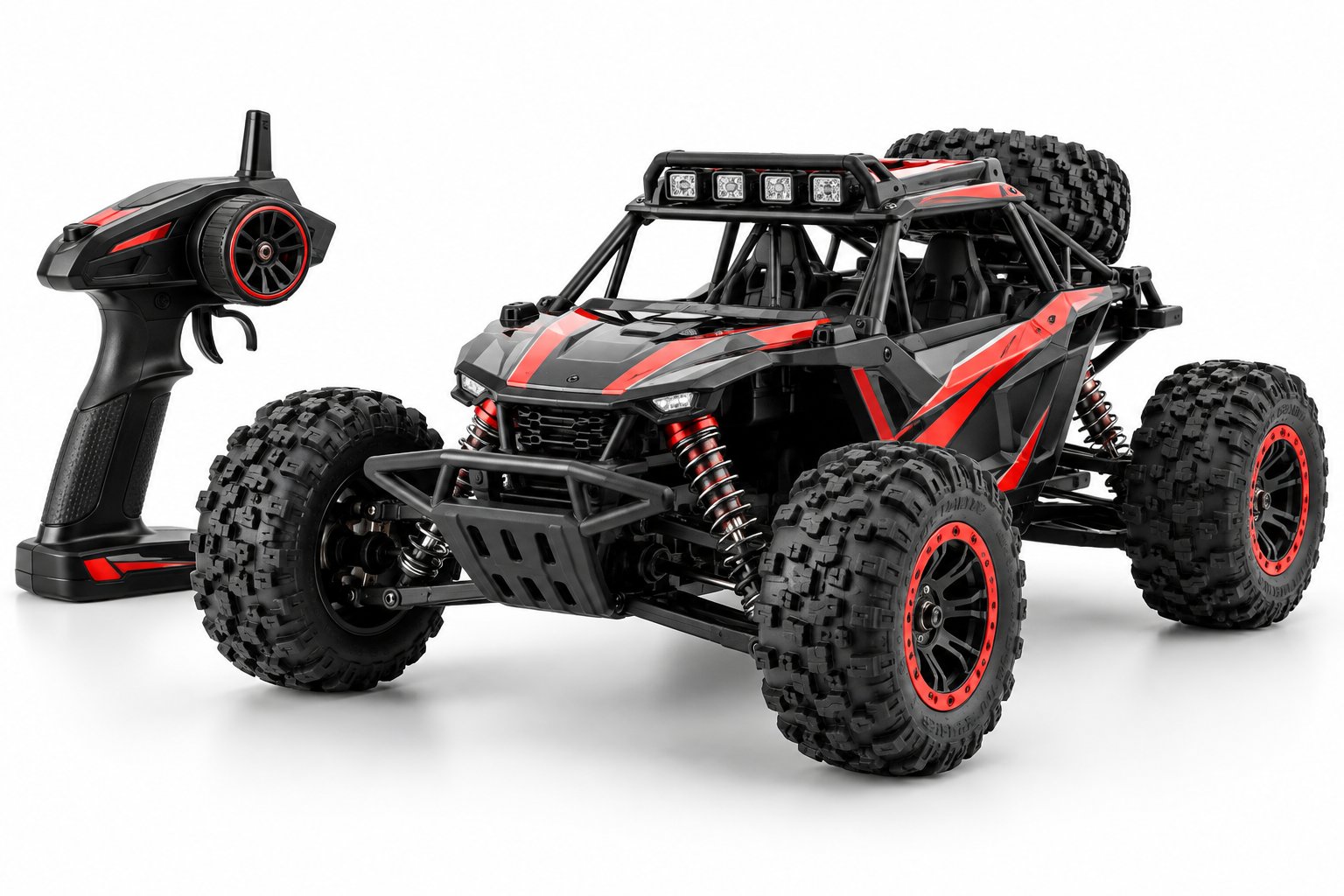
For an example of how compliance claims appear on a product specification, our own remote control car toy product page lists EN71 and ASTM F963 compliant in its specification table — useful because it shows the claim tied to a named product rather than stated in the abstract.
Questions to Put in Writing to a Supplier
Written questions create a record and make vague answers visible. A short list is usually enough:
- Which version year of ASTM F963 applies to this product?
- Can you send the test report, not only the certificate?
- Which product categories does your certificate cover?
- Is the certificate current, and who issued it?
- If we also sell in the EU, what EN71 documentation can you provide?
FAQ
Is ASTM F963 the same as CE marking?
No. ASTM F963 is the U.S. toy safety specification. CE marking is the European conformity marking, and EN71 is the European toy safety standard series. They belong to different market systems.
Does an ASTM F963 certificate cover every product from a factory?
No. A certificate is tied to the product and test scope it names. Confirm that the document covers the specific item you are ordering.
Why does the version year matter?
ASTM F963 has been revised over time, so products may be tested against different versions. Buyers should ask the supplier which version applies and note the answer in their records.
What does "conforms to ASTM F963" mean on a spec sheet?
It is a claim of compliance. Treat it as a prompt to request the supporting test report and to confirm the product and version year, rather than as a complete verification.
Next Step
If you are evaluating a toy supplier for North America, start by requesting the ASTM F963 documentation for the exact product you intend to order, and confirm the applicable version year at the same time. If you also sell in Europe, request the EN71 documentation in the same message so the two market requirements are handled as separate items from the beginning.