A technical explanation of what CPSIA is, how CPSIA certification works, and how to verify a supplier's tracking label — written for North American toy importers and retail buying teams who need to screen a factory before placing an order.
Toy Compliance · Buyer Verification Guide
The Consumer Product Safety Improvement Act (CPSIA) is the U.S. federal law that governs children's product safety, including toys. For a toy importer it answers three practical questions: which rules apply to the product, what paperwork and markings must accompany it, and how you verify a supplier is telling you the truth before you place a purchase order. This article explains the law, how it differs from technical standards such as ASTM F963, what a tracking label contains, and the documents a buyer should request before confirming an order.
Key takeaways
- CPSIA is a law; ASTM F963 and similar standards are the technical test methods used to demonstrate compliance with parts of that law.
- CPSIA certification rests on third-party testing by an accredited laboratory, not on a supplier's own declaration.
- A tracking label is a permanent marking that lets you trace a finished toy back to its production batch and manufacturer.
- Ask for the children's product certificate, the test report behind it, and a sample of the tracking label — and match all three to the exact product you are buying.
In this article
What CPSIA is
CPSIA is U.S. legislation administered by the Consumer Product Safety Commission (CPSC). It applies to products designed or intended primarily for children twelve years old or younger, and it sets out requirements that importers, manufacturers, and retailers must meet before a product can be sold in the United States. For toys, the law works by pointing to technical rules and standards: it prohibits certain substances, sets limits that testing must confirm, and requires that children's products carry a certificate of compliance and a permanent tracking label.
Two things about CPSIA matter most to an importer. First, the law is not a test you can run once and forget; it attaches to the product, and if the design, materials, or manufacturing source changes, the underlying evidence may no longer describe what you are shipping. Second, responsibility for compliance sits with the U.S. importer or domestic manufacturer who places the product on the market — so a supplier's assurance, by itself, does not transfer the obligation away from you.
What CPSIA certification actually means
When people search for "what is CPSIA certification," they usually mean the children's product certificate (CPC). A CPC is a document in which the importer or domestic manufacturer certifies that a children's product complies with the applicable rules and standards. It is based on testing performed by a CPSC-accepted third-party laboratory, not on an internal review. The certificate identifies the product, lists the rules and standards it was tested against, names the manufacturer or importer, gives the date and place of manufacture and testing, and cites the laboratory that did the work.
For an importer, the useful part is the chain of evidence behind the certificate:
- Test report. The laboratory report shows what was tested, the samples involved, the methods used, and the results. The certificate is a summary; the report is the record.
- Product match. The model or item number on the certificate and report should match the product you intend to order, not merely its category.
- Laboratory status. The testing laboratory should be one the CPSC accepts for the relevant standard.
- Currency. If materials, components, or the factory change, ask what triggers retesting before you assume the old certificate still applies.
CPSIA and ASTM F963: how they divide the work
A frequent source of confusion is treating CPSIA and ASTM F963 as competing requirements. They operate at different levels. CPSIA is the legal framework that makes certain requirements mandatory for children's products. ASTM F963 is a technical toy safety specification covering hazards such as sharp edges, small parts, certain mechanical and physical properties, and heavy elements in accessible materials. Testing to ASTM F963 is one way a manufacturer demonstrates that a toy meets the technical expectations that the legal framework requires.
| CPSIA | ASTM F963 (and related rules) | |
|---|---|---|
| What it is | U.S. federal law for children's products | Technical standard and mandatory toy safety rule |
| What it does | Sets obligations, prohibited substances, certificate and tracking-label duties | Defines test methods and hazard criteria for toys |
| How compliance is shown | Children's product certificate based on third-party testing | Laboratory test report referencing the applicable clauses |
| Who is responsible | The U.S. importer or domestic manufacturer | The manufacturer produces test evidence; the importer relies on it |
European buyers face a similar division between the Toy Safety Directive framework and the EN 71 series. If you also source for the EU market, our guide to what EN 71 is and where it sits behind CE marking explains that parallel structure, and our overview of what CE marking on toys covers covers the buyer's verification side.
The tracking label: what it contains
A tracking label is a permanent marking on the product or its packaging that allows the finished item to be traced back through the supply chain. The requirement is a stable part of the law, and the label's contents are standard industry knowledge rather than a numeric limit:
- Manufacturer or private labeler name. Identifies the party responsible for the product.
- Production location. City, state or province, and country, or a code that identifies the location.
- Production date. At minimum the month and year; a batch or run code is common.
- Cohort information. Any code that identifies the specific production batch, so a problem can be isolated to that run.
For a buyer, the value of the tracking label is that it connects a physical unit on the shelf to a production batch and a test record. When you receive pre-production samples or a first shipment, check that the tracking label is present, legible, and that its batch code matches the code referenced in the supplier's inspection or test documents. A label that cannot be tied back to a production run is hard to use in a recall or a retailer audit.
A pre-order verification checklist
Compliance paperwork is easiest to verify before production, not after. The checklist below separates what you request from what you verify once it arrives.
| Stage | Action | What you are confirming |
|---|---|---|
| Before quotation | Ask for the children's product certificate and the laboratory test report for the exact item and age grade | That third-party testing exists and covers the product you want |
| Before quotation | Ask which clauses and standards were tested, and get the report, not just the certificate | That the technical standard requirement is documented |
| Sample stage | Inspect the tracking label on the sample and photo-document it | Name, location, date, and batch code are present and readable |
| Sample stage | Ask for a sample inspection report or internal QC record covering the item | That routine production is checked against agreed criteria |
| Before shipment | Confirm the batch code on shipped goods matches the code in the inspection record | Traceability between the physical goods and the paperwork |
| If anything changes | Ask the supplier to state in writing what triggers retesting | Whether the evidence still describes the current product |
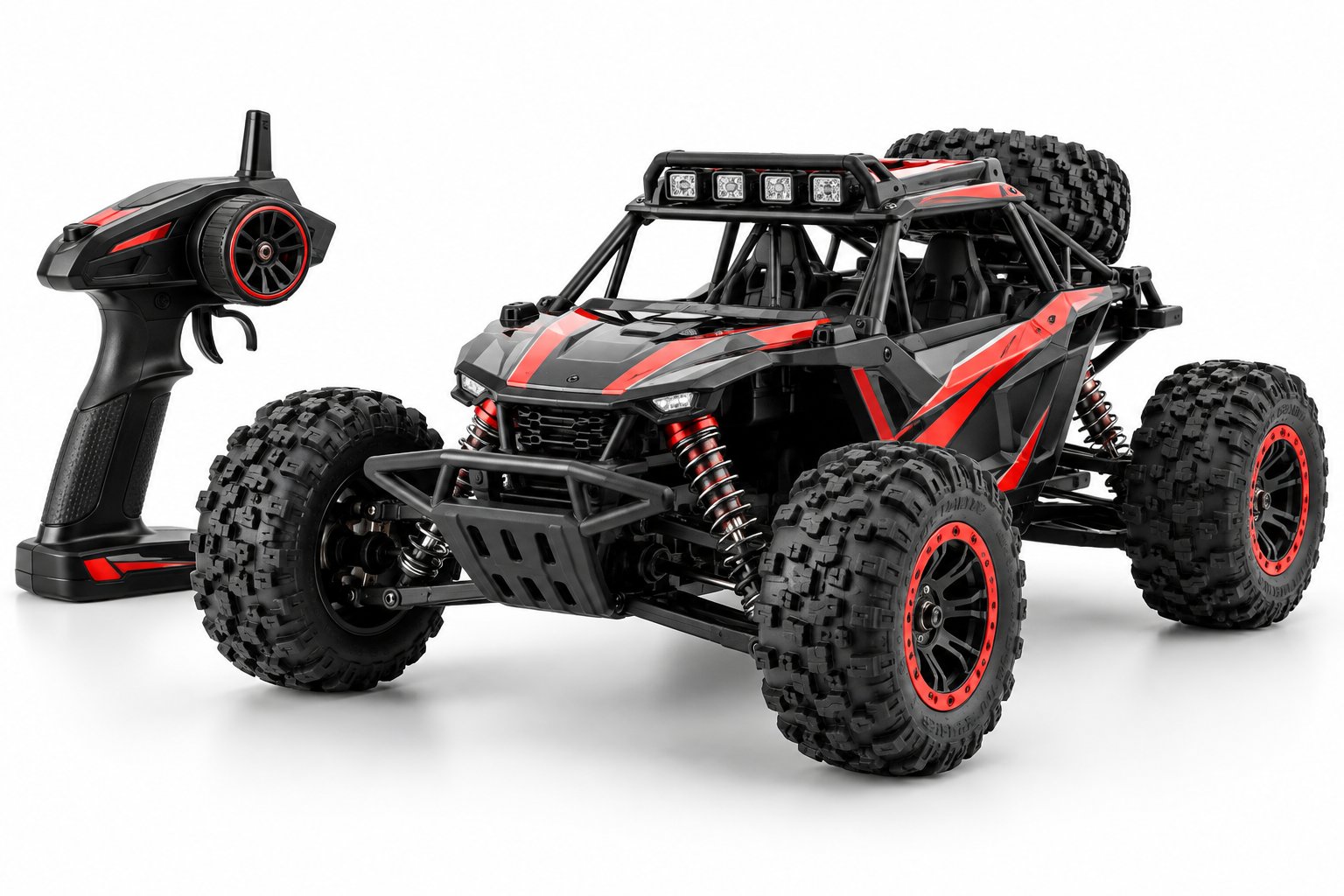
A supplier with a documented quality system can usually supply these records without delay. Fujian Lequ Wanwan Co., Ltd., for example, serves buyers in North America and Europe across four product categories, holds ASTM F963 and EN 71 certificates for those categories, and maintains an internal QC laboratory with documented quality control. Its product listings state compliance as "EN71 / ASTM F963 compliant" on a per-product basis. An example is this RC remote control car toy, where the compliance line appears alongside the product specification.
Two practical points follow. First, certificates are issued for a defined product and scope, so ask for the one that names your item rather than a general company certificate. Second, verify the supplier's internal QC by looking at what it records — inspection criteria, batch codes, and the file that ties them to the tracking label — not merely at the fact that a laboratory exists.
FAQ
Is CPSIA certification a document or a test?
It is both, in sequence. The test is performed by a CPSC-accepted third-party laboratory; the certification is the children's product certificate issued on the basis of that testing.
Does the supplier's certificate cover my shipment?
Only if the certificate identifies the same product, model, and relevant construction as your order, and the production source has not changed in a way that affects the tested properties. Confirm this in writing before production.
What should I check on a tracking label?
Manufacturer name, production location, production date, and batch or cohort code — then match the batch code to the inspection or test record for your shipment.
How is CPSIA different from ASTM F963?
CPSIA is the law that imposes obligations on children's products. ASTM F963 is a technical toy safety standard used to demonstrate compliance with the applicable mandatory requirements. Compliance with the standard does not, by itself, discharge every CPSIA duty, and CPSIA does not replace the need for technical testing.
What if the supplier cannot show a test report?
Treat that as missing evidence rather than as proof of non-compliance. Before ordering, ask which items have test reports, who performed the testing, and whether the report covers your exact item. If the answer is unclear, that uncertainty is a commercial risk you are accepting.
This article explains CPSIA requirements in general terms for importers and buying teams. It does not quote legal limits, penalty amounts, effective dates, or substance thresholds; always confirm the current mandatory requirements with the Consumer Product Safety Commission or your compliance counsel, and confirm product-specific certificates and test reports with the supplier before placing an order.