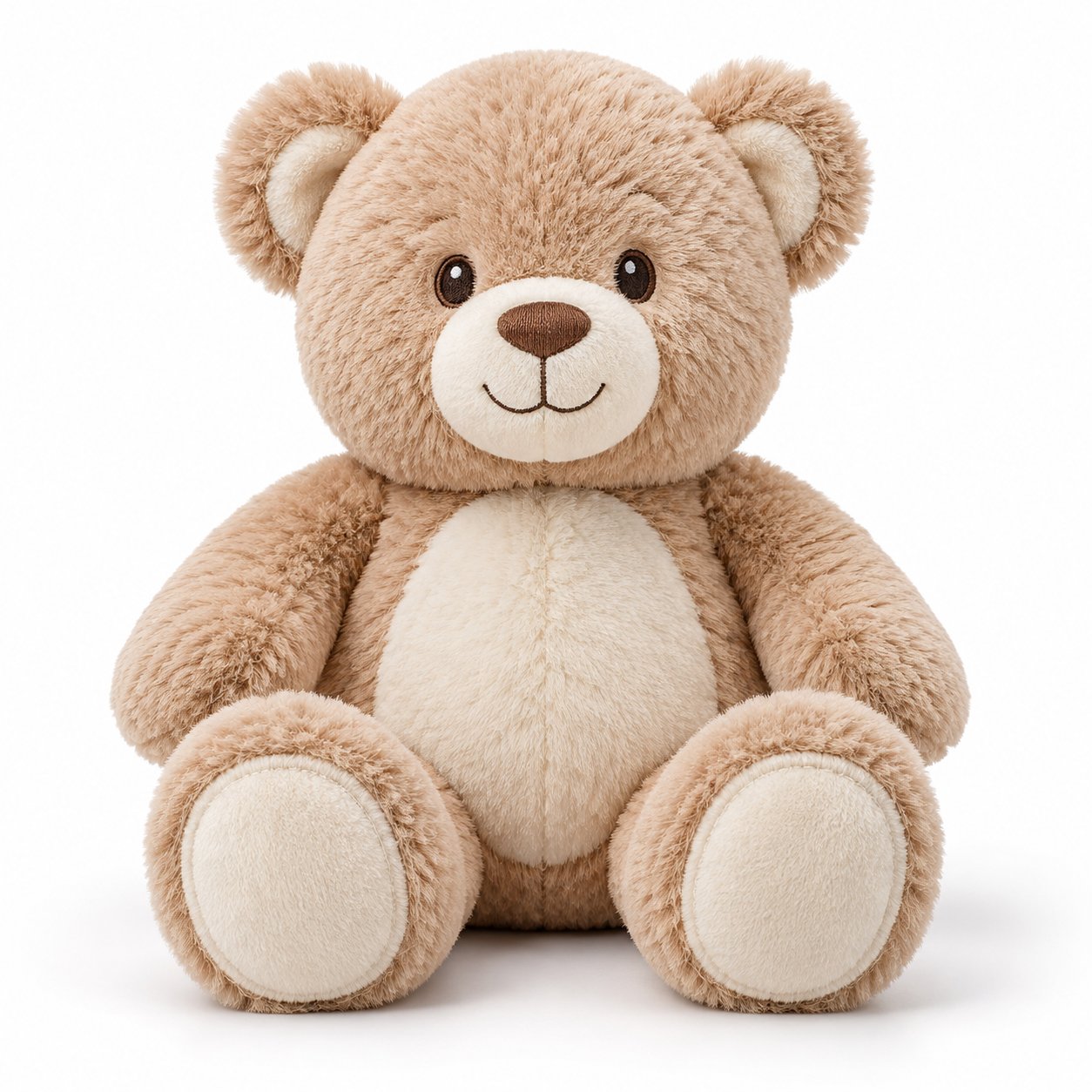
A stuffed animal's cost is driven by size, filling and materials, customization depth, and order quantity. This guide explains each factor as a budgeting variable, so you can request accurate quotes per specification and avoid surprises.
If you are sourcing stuffed animals for retail or promotional use, the question "how much does a stuffed animal cost?" cannot be answered with a single figure. Cost depends on four main factors: size, filling and materials, customization depth, and order quantity. Each factor interacts with the others, so two plush toys that look similar on a shelf can carry very different price tags when you order them wholesale. The only reliable way to budget is to request a quote based on a detailed specification. This article breaks down each factor so you know what information to provide and what to expect when quotes come back.
Key Takeaways
- Size matters: Larger plush animals require more fabric, filling, and labour, which raises unit cost.
- Filling and materials affect both safety compliance and durability; hypoallergenic options may carry a premium.
- Customization depth — from stock colours to fully bespoke designs — is a major cost driver.
- Order quantity impacts per-unit cost because setup and tooling costs are spread across the run.
- To get an accurate quote, prepare a spec sheet covering size, materials, customization level, and target quantity.
Size: The Most Obvious Cost Driver
Stuffed animal size is usually measured in centimetres or inches, either seated height or total length. As a rule, larger toys consume more raw materials and require more filling, stitching time, and packaging. A 20 cm plush keychain and a 60 cm cuddle toy are fundamentally different products in terms of material consumption and production complexity.
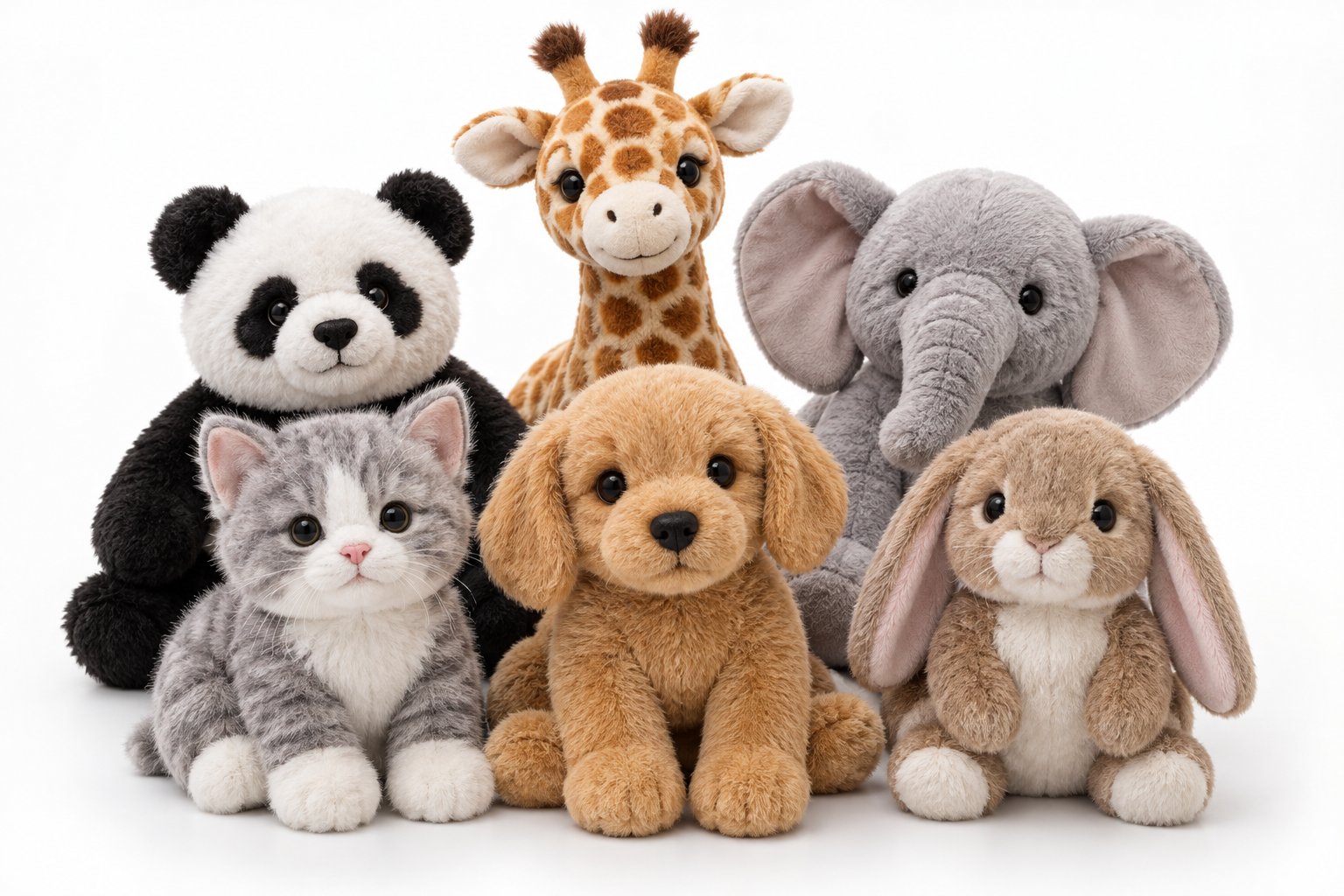
Consider the range: a compact 18 cm seated animal designed for counter displays (like the Plush Animal Assortment in Counter Display Box) uses far less fabric and filling than a 30 cm seated teddy bear (such as the Plush Teddy Bear Comfort Toy). At the upper end, a custom plush can be specified up to 60 cm in size (see the Custom Plush Stuffed Animal with Hypoallergenic Filling). Each size increment brings additional cost, but the relationship is not always linear because pattern efficiency and fabric yield vary by shape. A long, thin animal may waste more fabric per unit than a rounder one of similar height.
When briefing a supplier, always state the intended size and whether it is seated or standing height. This removes ambiguity and allows the factory to calculate material requirements accurately.
Filling and Materials: Safety, Durability, and Cost
The materials used inside and outside a stuffed animal directly affect both cost and compliance. Polyester fibre filling is common, but the grade and quality can vary. Hypoallergenic filling, for instance, may require additional processing or certification, which can add to the unit cost. Similarly, outer fabrics range from basic cotton blends to softer, more durable plush materials. The choice of fabric influences not only cost but also the look and feel—and whether the toy meets safety standards such as EN71 for Europe or ASTM F963 for North America.
Some designs incorporate embroidered features instead of plastic parts (eyes, noses). Embroidery is generally more durable and avoids small-part choking hazards, but it adds stitching time and therefore cost. Double-stitched seams, as found on the Plush Teddy Bear Comfort Toy, increase durability but also require more labour. When budgeting, decide which features are essential for your market and which are nice-to-have.
It is worth noting that material costs fluctuate with global commodity prices, so quotes are often valid for a limited time. Ask your supplier about the validity period and whether they offer price locks for large orders.
Customization Depth: From Stock to Fully Bespoke
Customization is where costs can escalate quickly. At one end, you have stock plush toys with your logo added—a relatively simple process that may involve a woven label or a printed tag. At the other end, fully custom designs require new patterns, prototyping, and multiple sampling rounds. Each step adds cost, but the per-unit impact depends on order quantity.
Custom plush projects typically involve:
- Design and pattern making: Creating a new pattern from a sketch or reference sample.
- Prototyping: Producing a physical sample for approval. This may take one or more iterations.
- Material selection: Sourcing specific fabrics or fills that meet your requirements.
- Decoration: Embroidery, printing, or appliqué.
- Packaging: Custom hang tags, poly bags, or display boxes.
The more of these steps you require, the higher the upfront development cost. However, for large orders, the development cost per unit becomes negligible. For smaller orders, it can be a significant portion of the total. If you are new to custom plush, our article Stock vs Custom Plush: Which Costs Less? explains the trade-offs in detail.
When requesting quotes, specify the level of customization: Do you need a completely new design, or can you adapt an existing shape? Do you require custom packaging? The more precise you are, the more accurate the quote.
Order Quantity (MOQ): Spreading Fixed Costs
Order quantity, or MOQ (minimum order quantity), is a critical factor in unit cost. Manufacturing involves fixed costs—pattern making, sample production, machine setup, and quality control processes—that do not change with the number of units produced. These fixed costs are divided by the number of units to determine the per-unit price. Therefore, larger orders typically have a lower per-unit cost.
For example, the Custom Plush Stuffed Animal with Hypoallergenic Filling has an MOQ of 1000 pieces. If you order exactly 1000 pieces, the fixed costs are spread across that quantity. If you order 5000 pieces, the fixed cost per unit drops, potentially reducing the unit price—though material and labour costs remain variable. MOQ is often negotiable for long-term partnerships or for designs that reuse existing patterns.
It is important to discuss MOQ early in the negotiation. If your budget or storage capacity limits you to smaller quantities, ask if the supplier offers a lower MOQ for stock items or simplified customization. Some factories may accept lower MOQs with a surcharge to cover setup costs.
Other Factors That Can Influence Cost
Beyond the four main factors, several others can affect the final quote:
- Packaging: Standard poly bags are inexpensive; custom display boxes or gift packaging add cost.
- Compliance testing: If your market requires specific certifications (e.g., EN71, ASTM F963), the supplier may need to conduct testing, which can be a one-time or per-batch cost.
- Logistics: Shipping terms (FOB, CIF, etc.) and destination affect the total landed cost. For a detailed explanation, see What Does It Cost to Ship a Stuffed Animal?
- Payment terms: Some suppliers offer discounts for early payment or require deposits that impact cash flow.
These factors are often negotiable and should be clarified during the quoting process.
How to Get an Accurate Quote
To receive a meaningful quote, you need to provide a detailed specification. Here is a checklist of information to include:
- Size: Height (seated or standing) and any other key dimensions.
- Materials: Outer fabric type, filling type (e.g., hypoallergenic polyester fibre), and any special requirements.
- Customization: Level of customization (stock design with logo, modified stock, or fully custom), decoration method, and packaging requirements.
- Order quantity: Your target quantity and expected annual volume if applicable.
- Compliance: Required certifications and testing standards for your market.
- Delivery: Preferred shipping terms and destination port.
With this information, a reputable supplier can provide a quote that reflects the true cost of your project. Vague inquiries often lead to vague quotes that are difficult to compare. For a broader overview of what moves wholesale prices, read What Do Plushies Cost? What Moves the Wholesale Price.
Ready to source stuffed animals? Fujian Lequ Wanwan Co., Ltd. offers OEM/ODM services with in-house sampling and QC. Share your specifications and we will provide a detailed quote. Contact us today to discuss your project.
Frequently Asked Questions
Does a larger stuffed animal always cost more?
Generally, yes, because larger sizes require more materials and labour. However, pattern efficiency and fabric yield can affect the relationship. A well-designed pattern may use fabric more efficiently, reducing waste and cost.
Can I get a lower price for a larger order?
Yes, larger order quantities typically reduce the per-unit cost because fixed costs are spread across more units. However, the exact discount depends on the product and the supplier's pricing structure.
What is the typical MOQ for custom plush toys?
MOQs vary by supplier and product complexity. For custom designs, MOQs are often around 1000 pieces, but some suppliers may offer lower MOQs for stock items or simplified customization. Always confirm MOQ with your supplier.
Are hypoallergenic materials more expensive?
Hypoallergenic filling and fabrics may carry a premium due to additional processing or certification. However, the cost difference is usually modest and can be justified by safety and market appeal.
How long does it take to get a quote?
Quote turnaround depends on the completeness of your specification and the supplier's workload. Providing detailed information upfront can speed up the process. Most suppliers respond within a few business days.